
























Online stores have become an essential part of business strategy. Competition is growing, and simply having a website or app is not enough to drive meaningful sales. By 2027, 23 % of all retail purchases are expected to take place online.
To benefit from this growth, brands must focus on strategies that boost sales, loyalty, and repeat purchases. Without these, high traffic alone will not translate into revenue or loyalty.
For brands aiming to beat competition, understanding and applying ecommerce growth hacks is extremely necessary. In this blog, we will cover ten actionable ecommerce growth hacks that drive sales, engagement, and long-term growth.
Overview
- Ecommerce growth hacking combines data-driven experimentation and creativity to drive faster sales and stronger customer engagement.
- Mobile-first optimization, fast-loading pages, and app-specific features are essential to reduce friction and increase conversions.
- Personalization, push notifications, and dynamic layouts turn casual visitors into repeat buyers and loyal customers.
- Social proof, user-generated content, and AR-enhanced product experiences build trust and shorten decision-making time.
- Strategic pricing, scarcity, loyalty programs, and localized global approaches help maximize order value and long-term growth.
What is Ecommerce Growth Hacking?
Ecommerce growth hacking is a set of smart, data-driven tactics designed to grow your online store faster without huge budgets. For Shopify merchants, D2C brands, and SMBs, it means finding creative ways to increase sales, engage customers, and stand out from competitors.
Unlike traditional marketing, growth hacking focuses on experimentation, using tools like AI-powered personalization, push notifications, and dynamic layouts to capture attention and drive conversions quickly. At the same time, it builds long-term value by improving loyalty, repeat purchases, and brand visibility.
Now that we understand what growth hacking is, let’s explore ten actionable strategies proven to boost sales and engagement effectively.
Also Read: E-commerce Mobile App Development: A 2026 Guide
Top 10 Ecommerce Growth Hacks for 2026
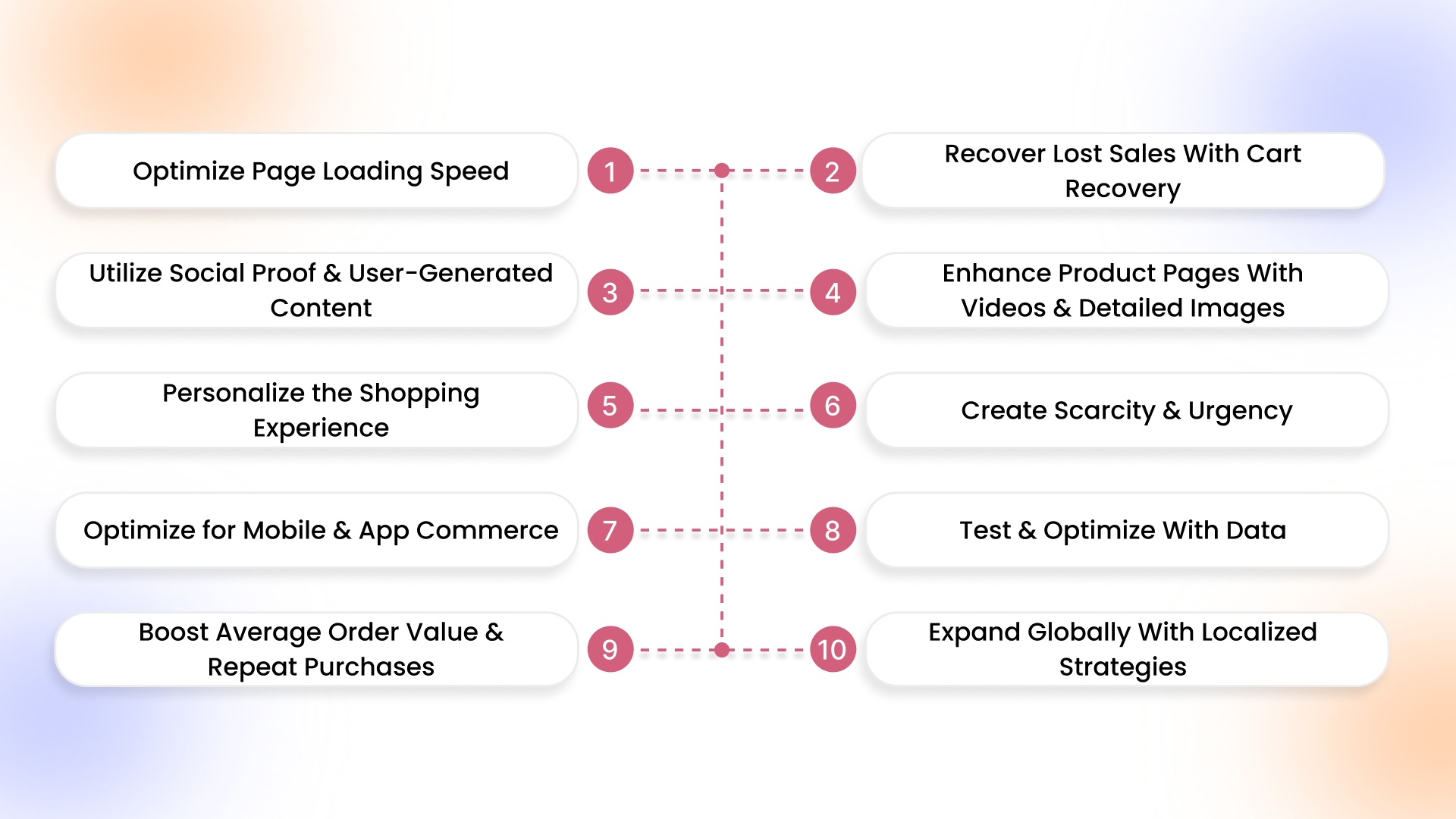
Most “growth hacks” fail because they’re generic or half-baked. These ten strategies go beyond basics, delivering real, actionable ways to boost sales, engage customers, and build loyalty for Shopify and D2C brands. They are prioritized for impact, top-brand adoption, and relevance in mobile-first, AI-driven ecommerce.
1. Optimize Page Loading Speed
Every second counts in ecommerce. Slow pages frustrate shoppers, increase bounce rates, and reduce conversions, especially on mobile or app-based stores. Speed directly impacts revenue, engagement, and SEO. To make it actionable, focus on clear improvements your team can implement immediately.
Consider these key steps:
- Prioritize mobile-first optimization for app and browser experiences.
- Compress and properly size images without sacrificing quality.
- Minimize unnecessary scripts and third-party plugins.
- Use monitoring tools like Google PageSpeed Insights or GTmetrix to track performance.
- Implement caching and CDN solutions for faster content delivery.
2. Recover Lost Sales With Cart Recovery
Abandoned carts are a goldmine if approached strategically. Many US shoppers leave items behind but are willing to return if prompted correctly. Recovery is about timely, personalized nudges that bring customers back.
To make it effective:
- Send abandoned cart emails within the first hour, using clear visuals of products left behind.
- Use push notifications via mobile apps to remind users of pending items. They achieve 85% higher engagement than email.
- Deploy exit-intent pop-ups with limited-time offers or discounts.
- Introduce gamified experiences like a “Cart Casino” for extra engagement.
- Segment users based on behavior to personalize messaging and increase conversions.
3. Utilize Social Proof & User-Generated Content
Shoppers trust other shoppers more than brands. US consumers especially rely on reviews and real-life experiences before buying. Social proof is indeed a conversion engine.
Key steps to utilize social proof include:
- Highlight customer reviews, testimonials, and star ratings prominently on product pages.
- Integrate shoppable UGC in emails, landing pages, and app feeds to inspire purchases.
- Collaborate with micro-influencers to create authentic, relatable content.
- Showcase real customer photos and videos to increase trust.
- Use UGC to guide product recommendations and boost engagement in app and mobile channels.
4. Enhance Product Pages With Videos & Detailed Images
Product pages can make or break sales. US shoppers expect rich visuals and interactive content to reduce uncertainty. Static images aren’t enough, so you must give them an experience.
To optimize pages:
- Include high-quality product videos, 360° views, and AR try-ons to reduce returns.
- Highlight key specs, features, and FAQs clearly on the page.
- Offer interactive comparisons for similar products to help with decisions.
- Ensure images and videos are optimized for mobile and app viewing.
- Test layouts and placement to find the design that drives the most conversions.
5. Personalize the Shopping Experience
Shoppers expect brands to anticipate their needs. Generic product feeds rarely convert, but tailored experiences drive engagement and repeat purchases.
To implement effectively:
- Use AppMaker’s Rubik AI to deliver product recommendations based on browsing, purchase history, and engagement patterns.
- Dynamically adjust app and mobile layouts for returning visitors.
- Trigger push notifications and personalized emails highlighting relevant products or promotions.
- Introduce VIP or subscription tiers with exclusive perks for loyal customers.
- Continuously analyze behavior and engagement metrics to refine recommendations, boost conversions, and increase customer lifetime value.
6. Create Scarcity & Urgency
Urgency drives shoppers to act quickly. Scarcity works best when it’s visible, measurable, and exclusive.
To make it actionable:
- Run flash sales and limited-edition product drops with strict timeframes.
- Use waitlists for pre-order or sold-out items to capture high-intent leads.
- Display real-time countdown timers on product pages and app banners.
- Send app notifications or SMS alerts for exclusive drops or low-stock items.
- Highlight trending or nearly sold-out products to encourage immediate purchases.
7. Optimize for Mobile & App Commerce
Mobile and app experiences drive engagement, conversions, and retention. Optimizing for small screens and app-first behaviors ensures shoppers complete purchases quickly and effortlessly.
To implement effectively:
- Ensure a responsive design that adapts seamlessly across devices and screen sizes.
- Optimize your app's visuals as updating icons and screenshots can result in 2X higher install rates.
- Enable mobile-specific features like one-tap checkout, saved payment methods, and in-app loyalty rewards.
- Use navigation and reduce friction with intuitive gestures and menus.
- Continuously monitor mobile performance metrics to refine app flows and increase conversions.
8. Test and Optimize With Data
Data-driven optimization separates top-performing stores from the rest. Continuous testing helps identify what truly brings conversions.
To make it actionable:
- Conduct A/B tests for product pages, CTAs, and app layouts to find the most effective variations.
- Use heatmaps, session recordings, and analytics dashboards to understand user behavior.
- Run conversion rate optimization loops to implement insights quickly.
- Experiment with micro-copy, images, and personalization placements.
- Monitor performance metrics regularly to prioritize changes that maximize sales and engagement.
9. Boost Average Order Value & Repeat Purchases
Driving higher revenue per customer requires intentional strategies. Behavior-driven upsells, tailored bundles, and post-purchase campaigns encourage shoppers to spend more while building loyalty and repeat visits.
To implement effectively:
- Display contextual upsells and cross-sells based on cart contents and browsing patterns.
- Offer bundle deals or free shipping thresholds to incentivize larger orders. According to the 2025 BFCM Strategy Report, bundles capture 85% of impulse buyers, increasing AOV and profit per session by offering pre-purchase options like starter kits and multipacks.
- Launch post-purchase campaigns with personalized recommendations, e.g., “Complete the set” or complementary items.
- Integrate loyalty points or VIP tiers to reward repeat purchases.
- Track metrics like AOV and repeat purchase rate to refine offers in real time.
10. Expand Globally With Localized Strategies
Global expansion succeeds when every interaction feels tailored to the local market. Multilingual support, localized pricing, and region-specific marketing help brands connect authentically and convert international shoppers effectively.
To reach new markets efficiently:
- Enable multilingual support, local currencies, and region-specific payment methods.
- Adjust pricing, promotions, and app content based on regional buying behavior.
- Use AI-driven campaigns to target high-potential markets with personalized messaging.
- Test localized product launches and track engagement, retention, and repeat purchase rates per region.
- Implement push notifications, emails, and loyalty offers tailored to each market for long-term growth.
Having discussed the top ten growth hacks, let’s look at real brands that have successfully implemented some of these strategies to boost sales and engagement.
Also Read: Mobile App Native vs Hybrid: Differences, Pros & Best Choice in 2026
Proven Ecommerce Growth Tactics from Real Brands
Growth hacks work when executed strategically. The followings brands have applied mobile-first, AI-driven, and personalization-focused strategies to boost conversions, engagement, and repeat purchases.
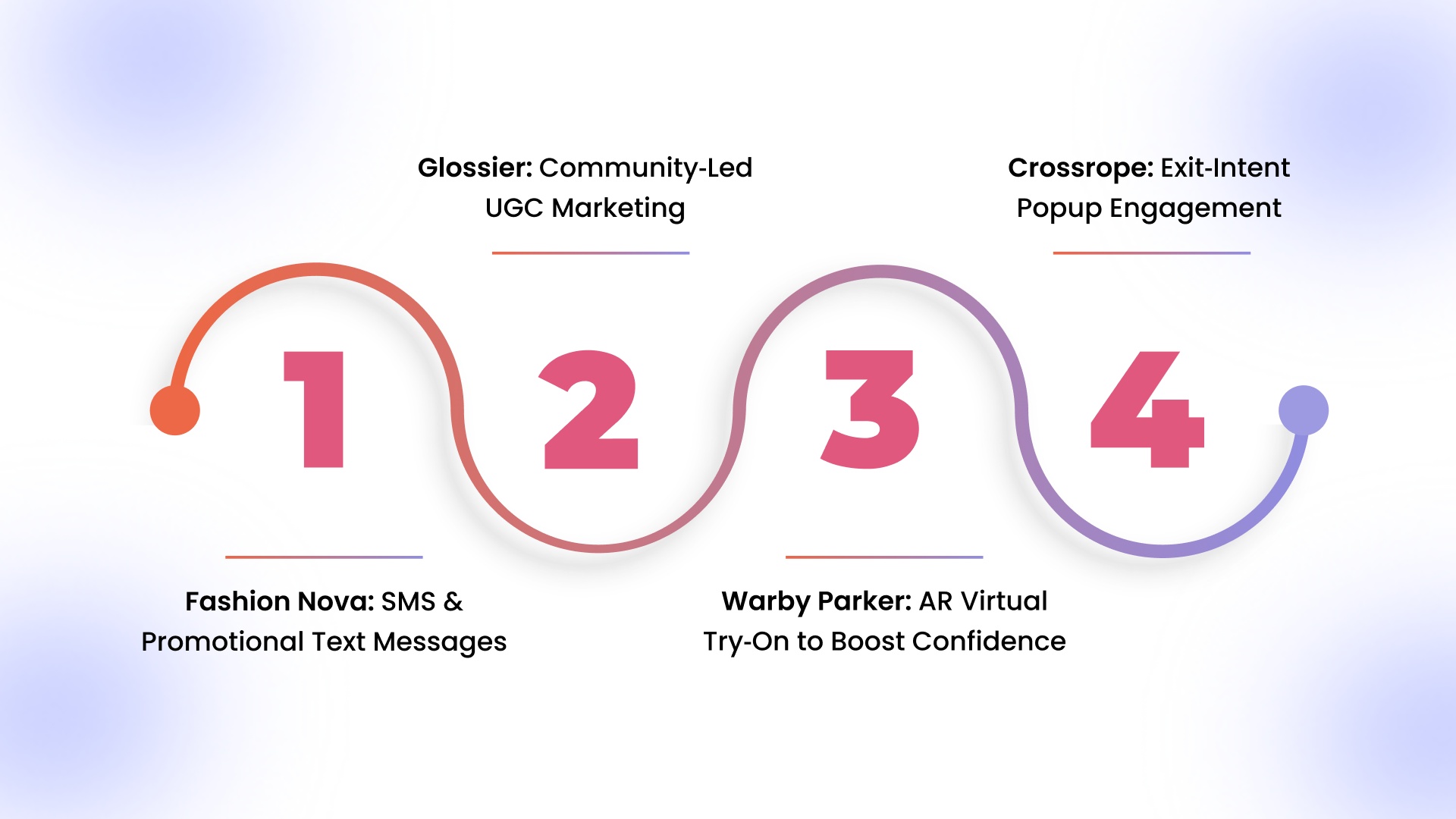
1. Fashion Nova: SMS & Promotional Text Messages
Fashion Nova, a fast‑fashion DTC brand, uses marketing SMS messages and email lists to communicate promotional deals and product launches directly to subscribers who opt in during signup. By sending mobile alerts about new arrivals, special discounts, and time‑sensitive offers, the brand keeps customers engaged with timely updates and incentives to return and shop.
2. Glossier: Community‑Led UGC Marketing
Glossier, a beauty and skincare brand, utilizes user‑generated content and customer voices across social and email. The brand encourages customers to share real product photos with hashtags like #Glossier, then features this authentic content in campaigns and newsletters, reinforcing trust and relatability.
3. Warby Parker: AR Virtual Try‑On to Boost Confidence
Warby Parker, an eyewear innovator, integrated an AR‑powered virtual try‑on feature that lets shoppers preview frames on their own faces before buying. This technology gives customers confidence in fit and style, which has been linked with higher conversion rates, fewer home try‑on kit requests, and reduced return rates for users who engage with the tool.
4. Crossrope: Exit‑Intent Popup Engagement
Crossrope, a fitness gear and jump rope brand, used exit‑intent popups to engage visitors about to leave their site before purchase. By showing targeted offers before users exit and capturing their email opt‑ins, the brand strengthened follow‑up marketing.
After having a look at these real-brand examples, up next, let’s explore how AppMaker can help your brand apply similar strategies efficiently.
How AppMaker Boosts Ecommerce Growth
AppMaker turns mobile apps into powerful growth engines that help brands boost sales, engagement, and loyalty. Every feature is designed to support the strategies, whether recovering abandoned carts, creating urgency, increasing repeat purchases, or delivering personalized experiences.
Here’s what we offer:
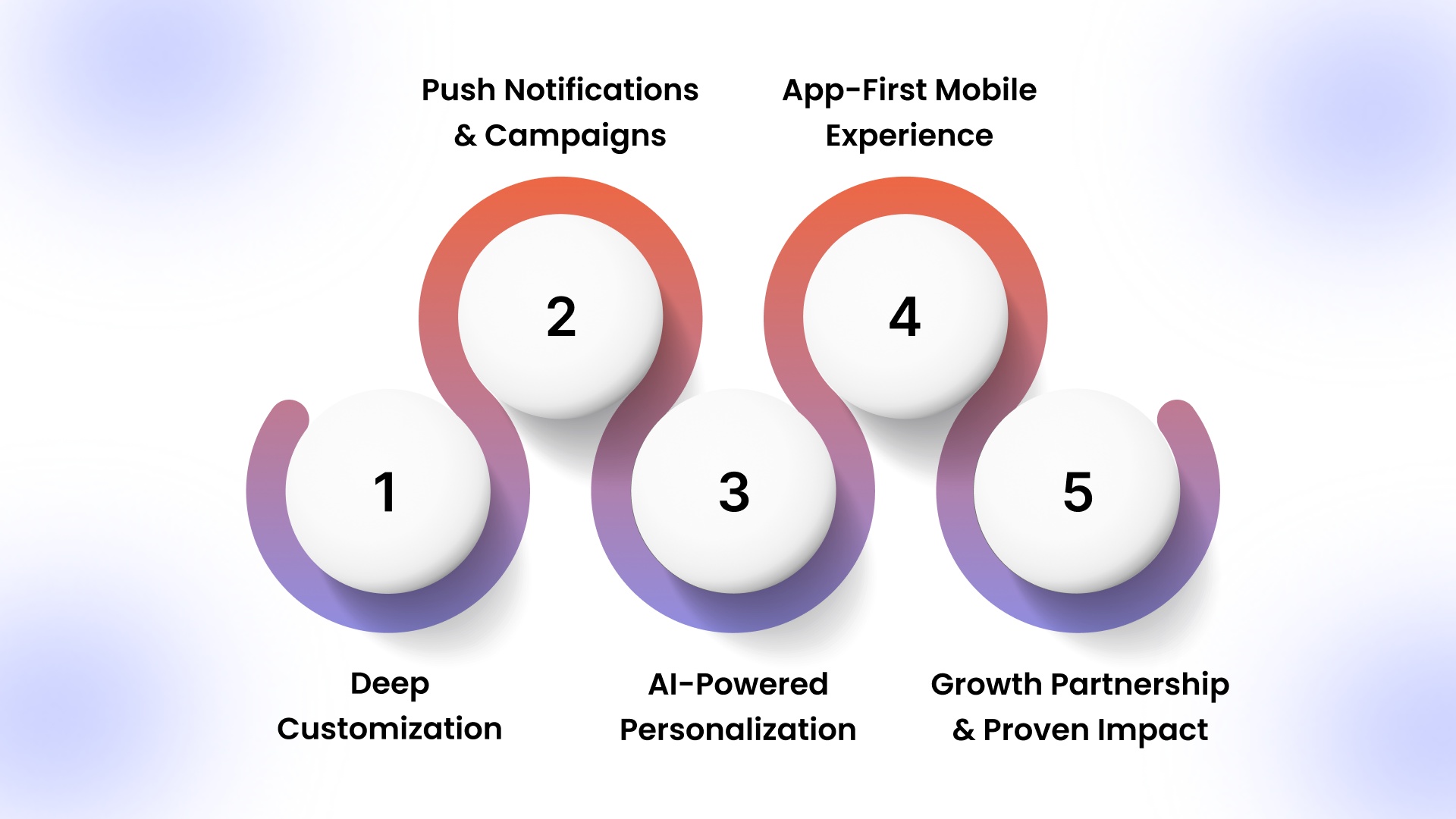
- Deep Customization: AppMaker Studio gives brands complete control over layouts, UI/UX, and integrations, with code-level access for limitless flexibility.
- Push Notifications & Campaigns: Re-engage customers instantly with cart reminders, flash offers, and exclusive drops to drive conversions and retention.
- AI-Powered Personalization: Rubik AI adjusts layouts, product recommendations, and content dynamically based on user behavior, ensuring every experience feels personal.
- App-First Mobile Experience: One-tap checkout, responsive design, and app-optimized browsing improve conversions across devices.
- Growth Partnership & Proven Impact: Beyond building apps, our expert team helps them scale, generating over 1,000 Cr+ GMV in 2025 alone.
With AppMaker, brands gain more than an app. We provide a measurable growth platform that executes every hack efficiently.
Also Read: How to Improve App Engagement in 2026: 8 Proven Strategies
Conclusion
Ecommerce growth requires smart, actionable strategies. From speeding up page load times to personalizing the shopping experience and creating urgency, the right combination of hacks can make all the difference. Applying these tactics thoughtfully ensures your brand stays ahead in a competitive market.
AppMaker makes executing these strategies simple and effective. With deep customization, push notifications, AI-powered personalization, and an app-first mobile experience, brands can bring growth hacks to life. Our team also partners with you to scale your app, turning every feature into a tool that drives conversions, repeat purchases, and measurable results.
Take the next step in scaling your ecommerce business. Contact us to discover how AppMaker can help you build a high-performing mobile app that boosts sales, retention, and customer engagement.
FAQs
1. What are the biggest challenges in ecommerce growth hacking?
The main challenges include identifying high-impact strategies, executing them without overspending, tracking measurable results, and maintaining personalized customer experiences across multiple channels.
2. What are the top 5 growth hacks for an e-commerce startup?
For startups, the most effective hacks are: optimizing page speed, recovering abandoned carts, and using social proof. Personalizing shopping experiences and creating scarcity or urgency can also help.
3. Can growth hacking be outsourced by e-commerce startups? If so, how?
Yes. Agencies or platforms can handle strategy, execution, and analytics. They bring expertise, tools, and tested playbooks, allowing startups to scale faster while focusing on core operations.
4. What are some ecommerce growth pricing hacks to increase sales?
Ecommerce growth pricing hacks involve strategies like dynamic pricing based on demand and bundling products for higher perceived value. It also includes offering limited-time discounts, using tiered pricing to encourage bigger purchases, and A/B testing price points. These approaches can boost conversions, average order value, and repeat purchases when executed thoughtfully.