






















Improving app engagement is critical for driving long-term growth, retention, and revenue for mobile apps. While getting users to install an app is important, sustained success depends on how often users return, interact, and continue to find value over time.
Industry benchmarks highlight how challenging this is. Research shows that retention typically drops to just 3% by Day 30, highlighting the need to actively improve app engagement rather than relying on downloads alone.
In this article, we’ll explore how to improve app engagement using practical, proven strategies. You’ll learn actionable app engagement strategies to increase app users, boost app usage, and create mobile app experiences that keep users coming back consistently.
Quick Snapshot
- Improving app engagement is essential for increasing app users, retention, and long-term app usage.
- Strong onboarding, personalization, and performance have the biggest impact on early and ongoing engagement.
- Push notifications and re-engagement tactics work best when triggered by user behavior, not frequency.
- Tracking metrics like retention rate, session frequency, and churn helps refine engagement strategies over time.
- Apps that prioritize user experience and continuous iteration see more sustainable engagement growth.
- For Shopify brands, native app capabilities and real-time updates make it easier to improve app engagement at scale.
What Is App Engagement and Why Does It Matter?
App engagement refers to the extent to which users interact actively with your mobile app over time. This includes actions like opening the app, browsing content, completing key tasks, and returning regularly. High engagement indicates that users find ongoing value in your app.
Improving app engagement is crucial because it directly impacts retention, lifetime value, and overall growth.
- Apps with low engagement struggle to increase app users organically, as disengaged users are less likely to return, convert, or recommend the app to others.
- From a business perspective, app engagement is closely tied to performance metrics such as daily active users (DAU), session frequency, and retention rate.
- Focusing on engagement helps increase app usage, strengthen user relationships, and create a foundation for sustainable mobile growth.
Despite understanding the importance of app engagement, many apps still struggle to keep users active. The reasons are often practical and avoidable.
How to Improve App Engagement: 8 Proven Steps That Drive Repeat Usage
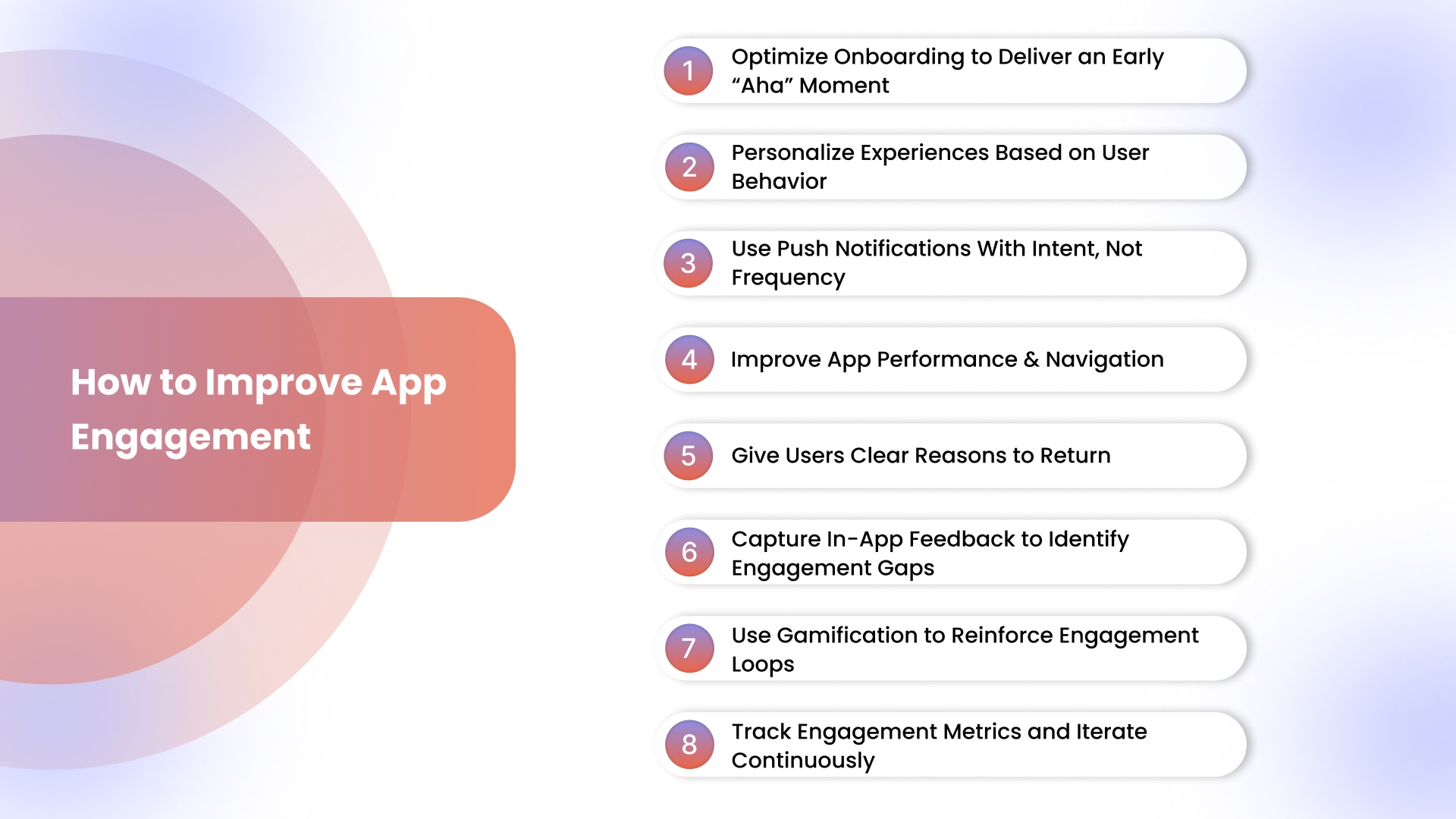
Improving app engagement requires intentional design, relevant communication, and continuous optimization across the user lifecycle. The steps below focus on actions that directly influence retention, session frequency, and long-term app usage.
1. Optimize Onboarding to Deliver an Early “Aha” Moment
Users decide whether an app is worth keeping during their first session. The strongest onboarding flows guide users toward one meaningful action that shows immediate value, not a tour of every feature.
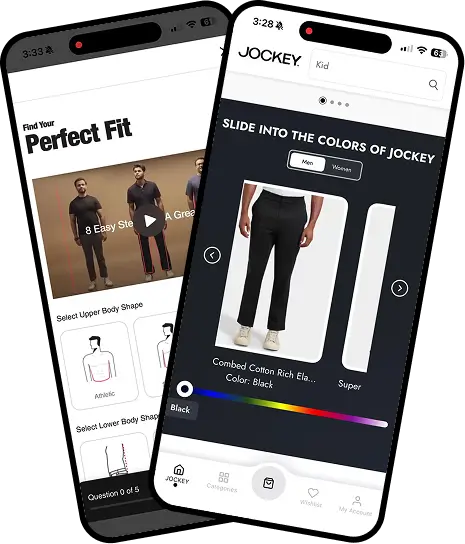
For example, a retail app might skip feature explanations entirely and instead take new users straight to a personalized product collection or a one-tap reorder screen.
This results in faster activation and stronger first-week retention.
2. Personalize Experiences Based on User Behavior
Personalization increases app engagement by aligning content and features with user intent. Experiences tailored to past actions or preferences feel more relevant and encourage repeat usage.
If a user frequently browses a specific category or checks order status often, the home screen and shortcuts should reflect that behavior rather than showing generic promotions.
Example: Apps like Spotify or Netflix excel at this by recommending music or movies based on previous behavior. They increase engagement by providing personalized suggestions that feel more tailored to individual needs.
3. Use Push Notifications With Intent, Not Frequency
Push notifications are most effective when triggered by user behavior or context. Timely, relevant messages help bring users back without creating notification fatigue.
Example: “Amazon” often sends push notifications when items in the cart are about to go out of stock or when there's a sale on frequently viewed items, which are more contextually relevant than generic notifications.
Appmaker offers push notifications, which allow businesses to send timely updates based on user behavior or product trends, like abandoned carts or personalized sales events. These notifications can be customized based on past user actions, optimizing re-engagement.
4. Improve App Performance and Navigation
Slow load times and confusing navigation reduce engagement quickly. Prioritizing speed and usability removes friction during high-intent actions.
Impact: Longer session duration and lower churn.
5. Give Users Clear Reasons to Return
Ongoing engagement depends on continuous value. Fresh content, updates, or time-based triggers help turn occasional usage into habitual behavior.
Example: Apps like Duolingo keep users engaged by introducing a streak feature, motivating users to come back every day to continue their progress and avoid losing their streak.
6. Capture In-App Feedback to Identify Engagement Gaps
Direct feedback uncovers friction points that analytics alone may miss. Simple in-app prompts help identify why users disengage and what improvements matter most.
Example: "Airbnb" uses short in-app surveys after a stay, asking users to rate their experience and offering them a chance to leave feedback on areas for improvement.
This results in faster optimization and better user satisfaction.
7. Use Gamification to Reinforce Engagement Loops
Gamification elements like progress indicators or milestones encourage repeat interaction when tied to real value.
Example: "Fitbit" integrates progress bars and badges for reaching fitness milestones, turning the experience into a rewarding game that keeps users coming back.
Impact: Stronger habit formation and session consistency.
8. Track Engagement Metrics and Iterate Continuously
Monitoring metrics such as retention rate, session frequency, and active users helps refine engagement strategies. Iteration ensures engagement keeps pace with changing user behavior.
Platforms like Appmaker make this iteration cycle easier by giving teams real-time analytics, built-in engagement tracking, and the ability to update layouts, content, and push campaigns without developer dependency, so insights can be acted on immediately, not weeks later.
4 App Engagement Strategies That Increase App Users
Improving app engagement doesn’t just retain existing users; it also plays a direct role in helping you increase app users organically. Here are 4 app engagement strategies to increase the number of app users.
Turn Engaged Users Into Advocates
Highly engaged users are more likely to recommend your app to others. Features like easy sharing, referral incentives, or social proof prompts encourage satisfied users to bring in new users without relying solely on paid acquisition.
Impact: Lower user acquisition costs and higher-quality installs.
Optimize Re-Engagement to Reduce User Drop-Off
Re-engaging inactive users is often more efficient than acquiring new ones. Timely reminders, updates, or personalized prompts can bring users back before they churn completely.
Impact: Increased app usage and stronger user lifecycle value.
Use Engagement Data to Guide Growth Decisions
Understanding which features drive the most engagement helps you focus on what attracts and retains users. Apps that double down on high-engagement features tend to grow faster and retain users longer.
With tools like John AI, engagement data becomes easier to act on. Teams can ask simple questions such as “Which features are driving repeat usage?” or “Where do users drop off after onboarding?” and get clear, actionable insights pulled directly from the app and Shopify analytics.
Impact: Smarter product decisions and sustainable user growth.
Align Engagement With User Intent
Apps that match content, messaging, and features to user intent create better experiences. When users find what they need quickly, they’re more likely to stay engaged and continue using the app.
Impact: Higher satisfaction and increased repeat usage.
4 Ways to Increase App Usage Without Hurting User Experience
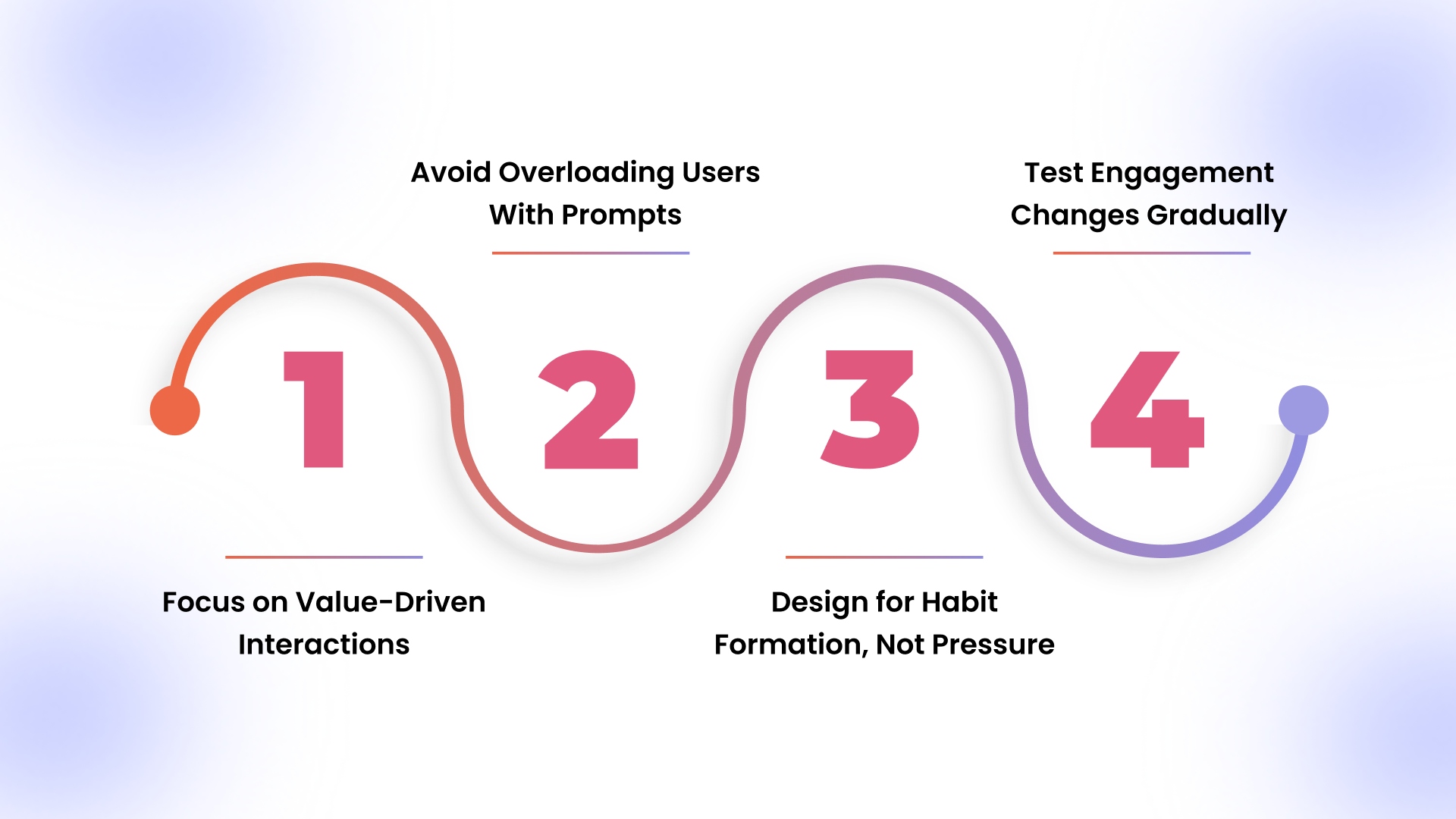
Increasing app usage should never come at the cost of usability or trust. Apps that push users too aggressively often see short-term activity spikes followed by higher churn and uninstalls.
1. Focus on Value-Driven Interactions
Users are more likely to engage when interactions feel helpful, not forced. Features, prompts, or reminders should clearly solve a problem or save time instead of interrupting the experience.
Impact: Higher-quality sessions and sustained app usage.
2. Avoid Overloading Users With Prompts
Too many pop-ups, messages, or requests can overwhelm users. Limiting interruptions and spacing out engagement triggers helps maintain a positive experience.
Impact: Reduced friction and lower disengagement rates.
3. Design for Habit Formation, Not Pressure
Apps that integrate naturally into a user’s routine see higher usage over time. Subtle cues like reminders tied to behavior or timing work better than constant nudges.
Impact: More consistent engagement without fatigue.
4. Test Engagement Changes Gradually
Rolling out engagement features in small iterations helps you measure impact without disrupting users. This approach allows you to refine what works before scaling.
Impact: Improved app usage with minimal UX risk.
While these strategies are effective, many apps fail to see results due to common implementation mistakes.
8 Common App Engagement Mistakes and How to Fix Them
The table below highlights where things often go wrong and how to fix them.
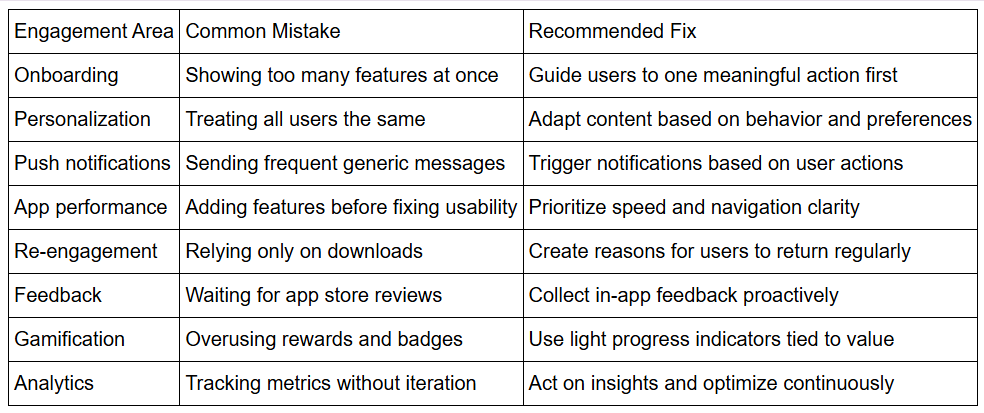
To understand whether these engagement efforts are working, it’s essential to track the right metrics consistently.
5 Metrics to Track When Improving App Engagement
To improve app engagement effectively, you need to measure the right metrics. Tracking engagement data helps you understand what’s working, where users drop off, and how changes impact app usage over time.
Daily Active Users (DAU) and Monthly Active Users (MAU)
DAU and MAU show how often users return to your app. A healthy ratio between these metrics indicates consistent engagement rather than one-time usage.
Why it matters: Higher activity frequency signals stronger user habits.
Retention Rate
Retention measures how many users continue using the app after installation. It’s one of the clearest indicators of whether your engagement strategies are working.
Why it matters: Improved retention directly supports long-term growth and revenue.
Session Frequency and Duration
Session frequency shows how often users open the app, while session duration reflects how engaged they are during each visit.
Why it matters: More frequent, meaningful sessions indicate higher app usage quality.
Feature Engagement
Tracking which features users interact with most helps you understand what delivers value. Low-engagement features often signal usability or relevance issues.
Why it matters: Focus development and optimization on features users actually use.
Churn Rate
Churn measures how many users stop using your app over time. Monitoring churn alongside engagement metrics helps identify early warning signs.
Why it matters: Reducing churn is often more cost-effective than acquiring new users.
Also Read: Appmaker Integration With Zevi to Enhance Mobile App Search and Discovery Experience
How Appmaker Helps Improve App Engagement for Growing Shopify Brands
Improving app engagement often requires native app performance, real-time updates, and the ability to personalize experiences quickly. For Shopify brands, managing these capabilities without heavy development resources can be challenging.
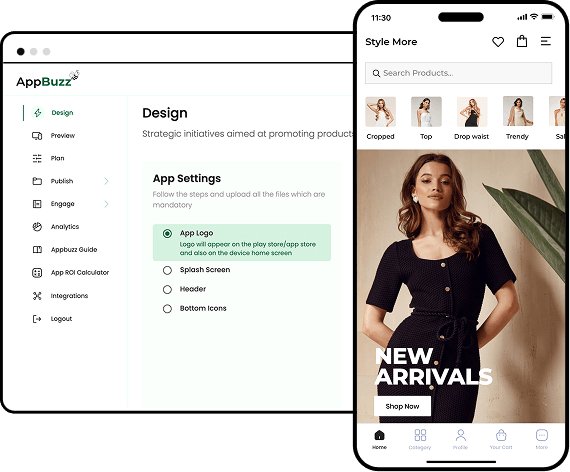
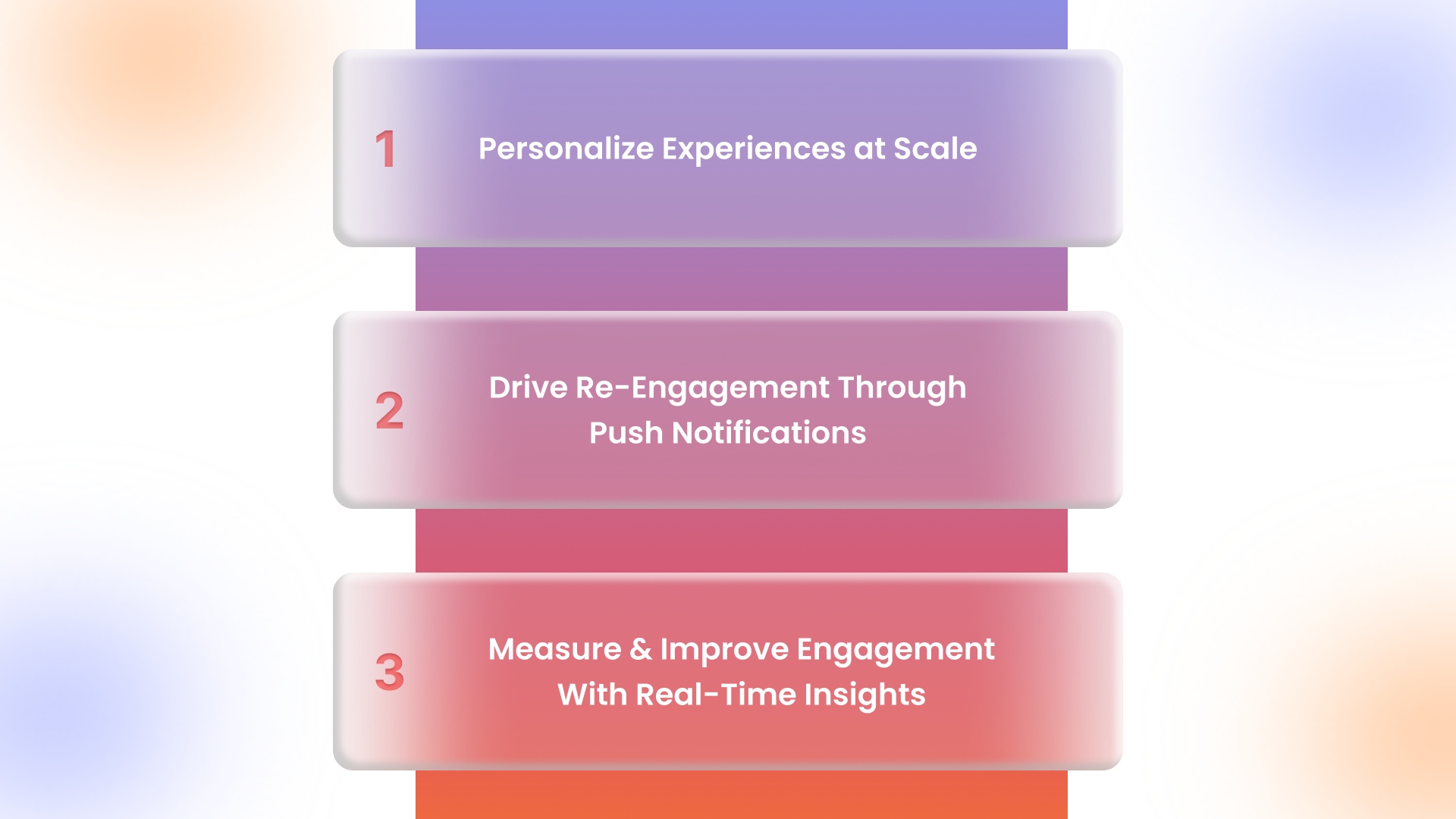
Appmaker’s no-code app builder allows teams to update layouts, banners, and content without developer support. Here is how Appmaker helps teams improve engagement:
Personalize Experiences at Scale
With built-in personalization and conditional logic, Appmaker supports tailored experiences based on user behavior. Relevant content and offers help increase engagement and encourage repeat app usage.
Drive Re-Engagement Through Push Notifications
Appmaker enables targeted push notifications tied to promotions, cart reminders, and product updates. Timely, behavior-based messages help bring users back without overwhelming them.
Impact: Stronger re-engagement and reduced drop-off.
Measure and Improve Engagement With Real-Time Insights
Engagement metrics and analytics help teams understand what drives usage and retention. Data-driven insights support informed decisions when refining app engagement strategies.
Built into Appmaker, John AI takes care of analytics, campaigns, and optimization so you can focus on running your brand, not running after tasks.
Conclusion
Improving mobile app engagement to drive sustainable growth. As user expectations rise and competition intensifies, engagement is the key factor determining whether users stay active, return frequently, and derive ongoing value from an app.
By focusing on onboarding clarity, personalization, performance, and data-driven iteration, businesses can improve app engagement in ways that also increase app users and long-term usage. The most effective strategies prioritize relevance and user experience over aggressive tactics.
For Shopify brands looking to strengthen mobile engagement, tools like Appmaker make it easier to deliver native app experiences, test engagement improvements quickly, and personalize interactions without heavy development overhead.
FAQs
What is a good app engagement rate for mobile apps?
A good app engagement rate varies by app category and audience; generally, consistent return usage and steady session frequency indicate success. Tracking trends in retention, active users, and session behavior over time provides a clearer picture than a single metric.
How long does it take to improve app engagement?
Some improvements, such as better onboarding or performance fixes, can show results within weeks. Sustainable engagement growth usually requires continuous testing, iteration, and personalization based on user behavior.
Can improving app engagement help reduce user acquisition costs?
Yes. Higher engagement leads to better retention and more referrals, which reduces reliance on paid acquisition. Engaged users are more likely to return, recommend the app, and convert repeatedly.
Is app engagement more important than app downloads?
In most cases, yes. Downloads indicate interest, but engagement reflects actual value. Apps with high downloads but low engagement often struggle to grow or monetize effectively.
How often should engagement strategies be updated?
Engagement strategies should be reviewed regularly, especially when user behavior changes or new features are introduced. Ongoing optimization helps prevent engagement decline and keeps the app aligned with user needs.