


























Many ecommerce brands invest heavily in mobile apps, yet conversion often lags behind expectations. Users install the app, browse products, and leave without completing a purchase, turning what should be a revenue channel into a missed opportunity.
This gap matters because mobile now drives the majority of ecommerce demand. Ecommerce mobile traffic accounts for 57% of global ecommerce sales, emphasizing how critical mobile optimization is for revenue. When conversion inside a mobile app underperforms, brands don’t just lose one transaction; they lose repeat purchases and long-term customer value.
The challenge isn’t getting users into the app. It’s creating an experience that reduces friction, responds to intent, and makes it easy for users to convert when they’re ready.
In this article, we’ll break down what actually influences mobile app conversion rate, how it differs from mobile web conversion, and the practical strategies ecommerce brands use to turn app traffic into consistent revenue.
Before we dive into
- Mobile app conversion rate depends more on speed, relevance, and experience quality than on traffic volume alone.
- Native apps convert differently from mobile web by reducing friction through faster performance, saved preferences, and easier re-engagement.
- Personalization, behavior-based triggers, and push notifications play a direct role in turning app sessions into completed purchases.
- Returning app users consistently convert at higher rates because intent is clearer and checkout friction is lower.
- Continuous testing and iteration are essential, as small, frequent optimizations outperform one-time redesigns.
- Platforms that connect real-time store data, user behavior, and no-code iteration make conversion optimization easier to scale.
What Is Mobile App Conversion Rate?
Mobile app conversion rate measures the percentage of app sessions or users that complete a desired action. In ecommerce apps, this action is usually a purchase, but it can also include add-to-cart events, account creation, or checkout completion, depending on how the funnel is defined.
The basic formula is:
Mobile App Conversion Rate = (Conversions ÷ App Sessions or Users) × 100
What makes app conversion unique is context. Unlike mobile web, app users are logged in, recognized, and interacting in a persistent environment. That means conversion is influenced not just by product pricing, but by saved preferences, app performance, navigation flow, and how well the app responds to real user behavior.
For this reason, app conversion rate should always be measured and optimized separately from mobile web metrics.
Why Mobile App Conversion Rates Differ From Mobile Web?
Mobile app conversion rates differ from mobile web because apps operate in a persistent, high-intent environment rather than a one-time browsing session. Native apps reduce friction across navigation, checkout, and re-engagement, making it easier for users to move from interest to purchase, especially on repeat visits.
Key differences that impact conversion include:
.jpg)
- Native performance: Apps load faster and handle complex navigation more smoothly than mobile web, reducing drop-offs during browsing and checkout.
- Persistent user sessions: App users stay logged in with saved preferences, addresses, and payment methods, shortening the path to purchase.
- Lower checkout friction: Native checkout flows eliminate repeated form fills and support faster payment options, improving completion rates.
- Behavior-based re-engagement: Apps can bring users back instantly with push notifications triggered by real actions like cart abandonment or price drops.
- Deeper personalization: App experiences can adapt layouts, content, and product visibility based on browsing and purchase history.
- Repeat-purchase mindset: App users tend to return with intent, while mobile web visits are often exploratory or one-off sessions.
This combination of speed, context, and continuity is why mobile apps consistently convert differently, and often better than mobile web experiences.
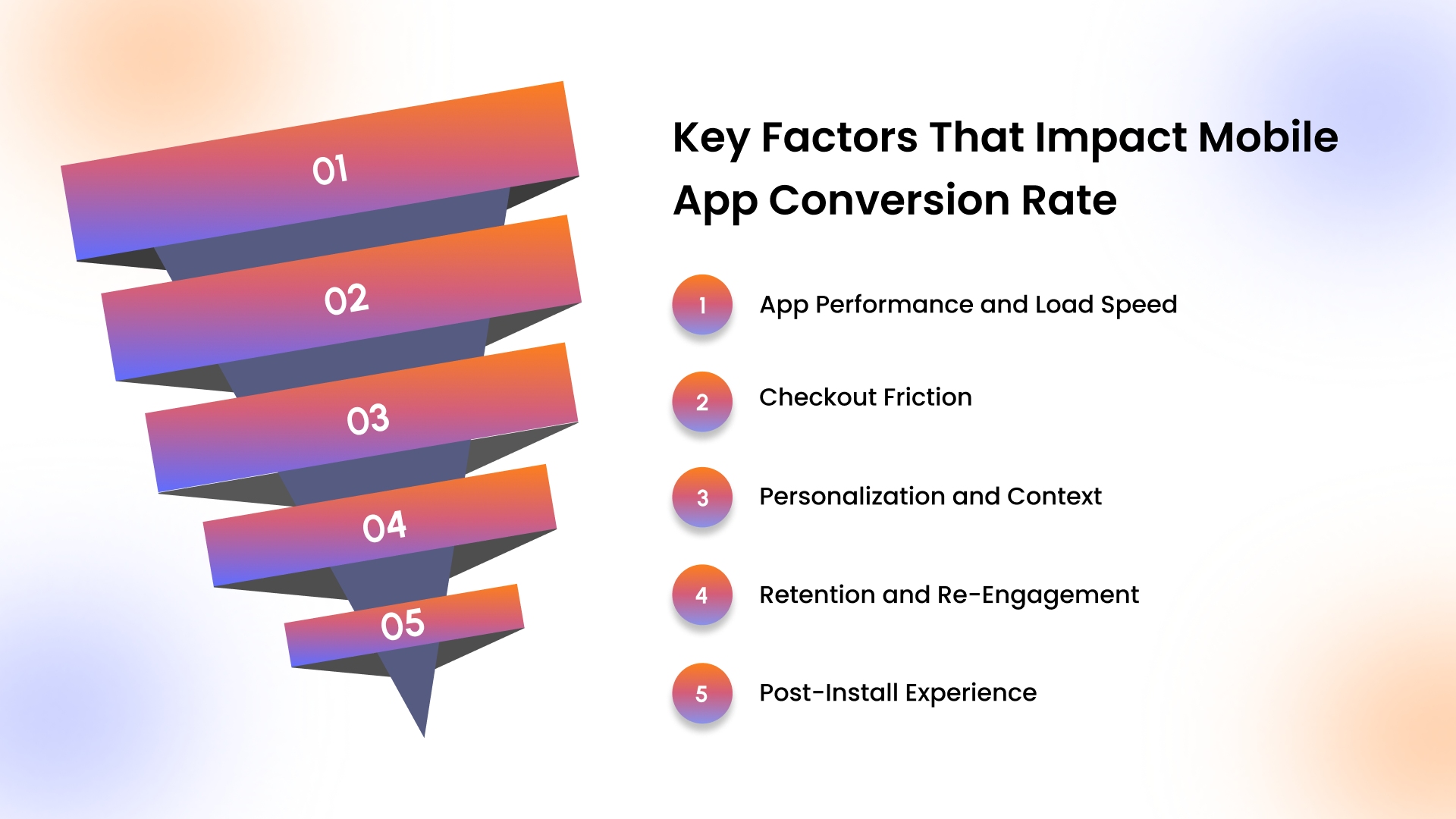
Key Factors That Impact Mobile App Conversion Rate
Mobile app conversion rate is shaped by how efficiently users can move from intent to action inside the app. Unlike mobile web, conversion in apps depends on speed, relevance, and how well the experience responds to real user behavior across sessions.
Below are the most important factors that influence whether app visits turn into completed purchases, with practical examples for each.
1. App Performance and Load Speed
App performance directly affects buying momentum. Slow loading screens or lag during navigation interrupt intent and increase drop-offs, especially during high-traffic sales.
Example: If a user taps a product from the home screen and the product page loads instantly with smooth image rendering, they are more likely to continue browsing. When the same page takes several seconds to load or freezes during scroll, users often exit before reaching checkout.
2. Checkout Friction
Checkout friction is one of the biggest barriers to conversion. The more steps or repeated inputs required, the higher the abandonment rate.
Example: An app that remembers a user’s address and preferred payment method allows repeat customers to complete checkout in a few taps. In contrast, an app that forces users to re-enter shipping and payment details on every purchase increases drop-offs, even when intent is high.
3. Personalization and Context
Personalization helps users find what they want faster by reflecting their interests and behavior directly in the app experience.
Example: A returning user who previously browsed skincare products sees those categories featured on the home screen instead of generic collections. This reduces search time and increases the likelihood of adding items to the cart.
4. Retention and Re-Engagement
Many conversions happen after users leave the app. Timely re-engagement helps bring them back when intent still exists.
Example: A user abandons a cart and receives a push notification highlighting the exact product they left behind. When they tap the notification, the app opens directly to their cart, making it easier to complete the purchase.
5. Post-Install Experience
The first app session sets expectations for future behavior. Confusion or friction early on reduces the chance of repeat visits and conversions.
Example: A new user opens the app and immediately sees clear navigation, a few featured collections, and a prompt to explore popular products. This guided experience feels manageable, compared to an overcrowded home screen that leaves users unsure where to start.
These factors work together rather than in isolation. When performance, personalization, and re-engagement align, mobile apps create a smoother buying journey that consistently lifts conversion rates over time.
Mobile App Conversion Rate Benchmarks: What “Good” Looks Like?
There’s no single “good” mobile app conversion rate that applies to every ecommerce brand. Conversion performance varies based on product category, audience intent, traffic source, and how mature the app experience is. Benchmarks are best used as directional reference points rather than hard targets.
What matters most is relative improvement over time, especially alongside gains in retention, repeat purchases, and average order value.
Typical Mobile App Conversion Rate Benchmarks:
How to Interpret These Benchmarks
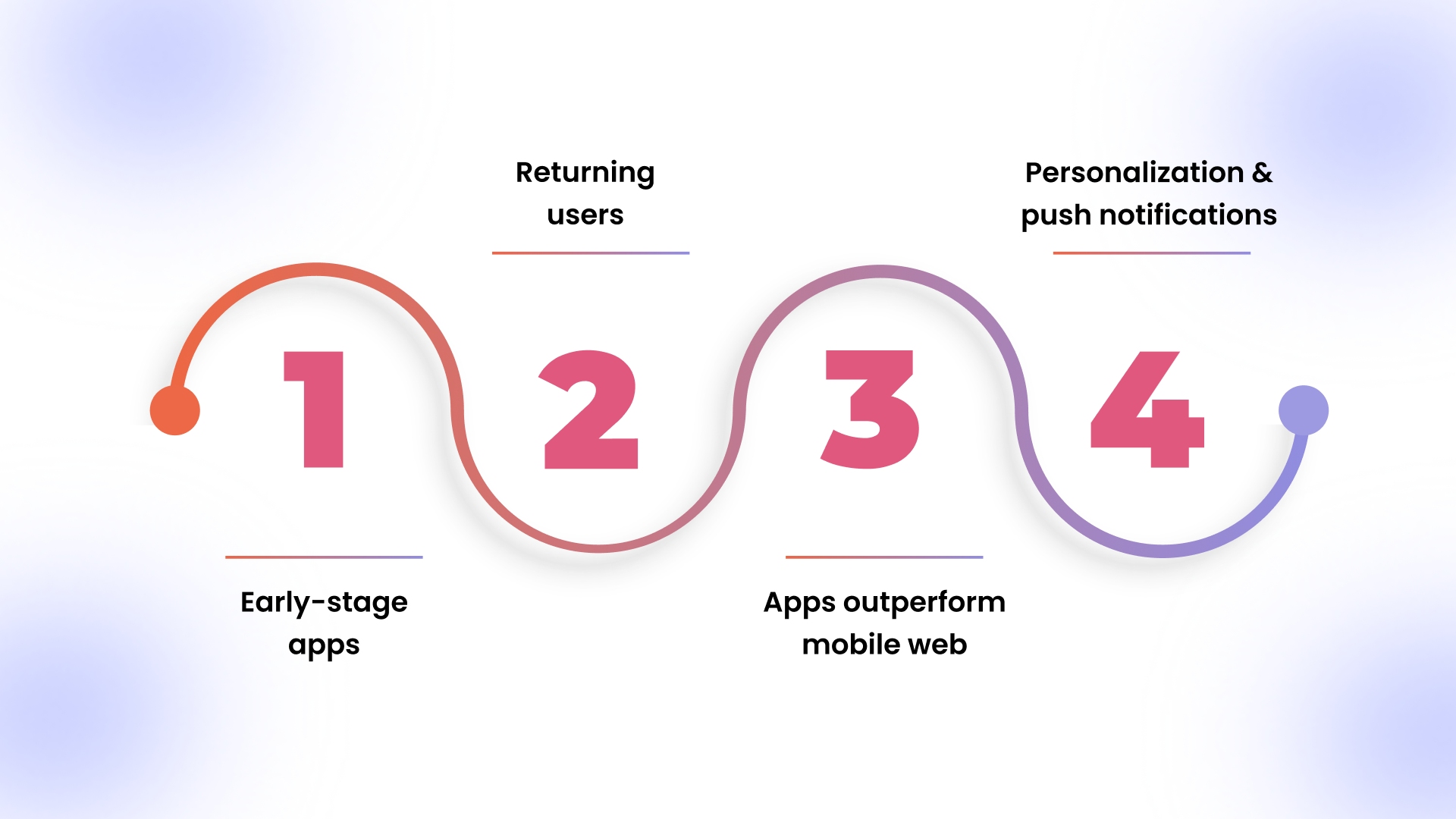
- Early-stage apps often start below the average range and improve as performance, personalization, and re-engagement mature.
- Returning users consistently convert at higher rates because friction is lower and intent is clearer.
- Apps outperform mobile web primarily due to saved preferences, faster checkout, and behavior-driven re-entry.
- Personalization and push notifications don’t just increase clicks; they improve conversion quality by bringing users back at high-intent moments.
Real-World Examples of Conversion Gains
To bring these benchmarks to life, here are a few real-world scenarios where conversion improved after deploying a mobile app or optimizing engagement:
1. Luxury Fashion BrandRare Rabbit a premium fashion brand saw its mobile app deliver a 2.5× higher conversion rate than before, driven by a smoother shopping experience and better engagement tools in the app interface.
2. Two Brothers Organic FarmsThis ecommerce app case showed that focusing on smoother navigation and personalized journeys resulted in a 3× higher conversion rate compared to its mobile web experience. Users explored more products and converted at a much higher rate.
Rather than chasing a single benchmark number, the most successful brands track how conversion rate improves as the app experience becomes faster, more personalized, and easier to act on.
Strategies to Improve Mobile App Conversion Rate
Improving mobile app conversion rate is less about driving more traffic and more about removing friction, increasing relevance, and acting on user intent at the right moment. Small, consistent optimizations across the app experience often deliver better results than large, infrequent redesigns.
The following strategies focus on practical changes that help turn app sessions into completed purchases.
- Optimize the app home experience: Reduce choice overload and guide users toward high-intent paths using clear categories, personalized recommendations, and recently viewed sections.
- Reduce checkout friction: Minimize steps, save user details, and support fast payment options so repeat buyers can complete purchases with fewer taps.
- Use behavior-based push notifications: Trigger notifications from real actions like cart abandonment, price drops, restocks, or replenishment cycles to bring users back when intent is highest.
- Personalize content and product visibility: Adapt layouts, banners, and featured products based on browsing history and purchase behavior to shorten decision time.
- Improve app performance and stability: Faster load times, smooth navigation, and reliable checkout flows prevent drop-offs during browsing and high-traffic events.
- Guide users during early sessions: Use clear navigation, featured collections, and simple prompts to help new users understand where to start and why the app is valuable.
- Test and iterate frequently: Make small changes to layouts, messaging, and flows on a regular basis to identify what improves conversion without disrupting the experience.
These strategies work best together. When speed, personalization, and re-engagement are aligned, mobile apps consistently convert more effectively than mobile web experiences.
Mobile App Conversion Optimization Checklist
Before scaling traffic or launching new campaigns, use this checklist to confirm whether your mobile app is actually set up to convert consistently.
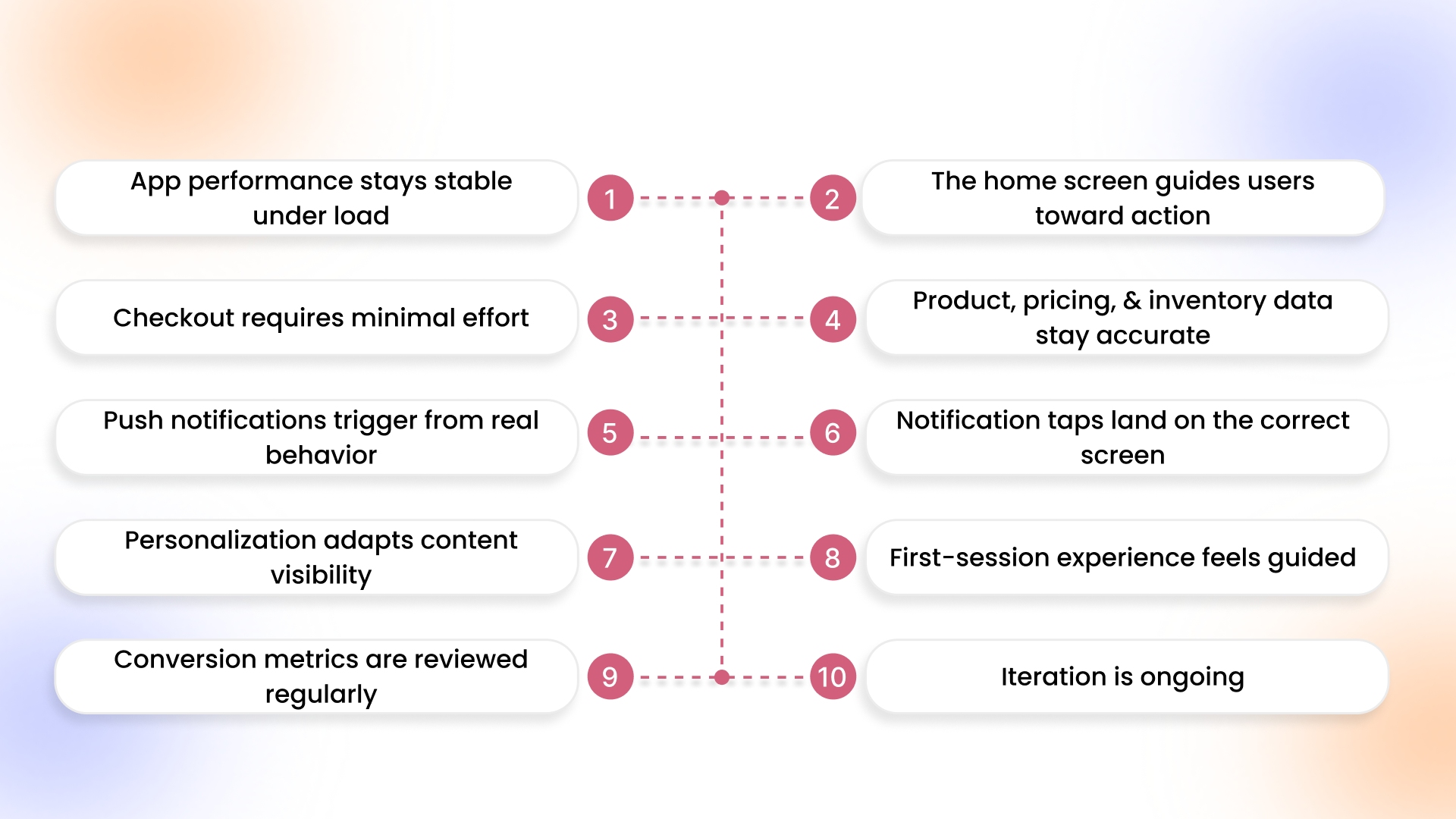
- App performance stays stable under load: Product pages, navigation, and checkout remain fast during high-traffic periods.
- The home screen guides users toward action: Clear categories, featured collections, or personalized sections reduce choice overload.
- Checkout requires minimal effort: Saved addresses, payment methods, and persistent carts shorten the path to purchase.
- Product, pricing, and inventory data stay accurate: Users never encounter mismatched prices or out-of-stock items at checkout.
- Push notifications trigger from real behavior: Cart abandonment, restocks, and price drops activate messages automatically, not on fixed schedules.
- Notification taps land on the correct screen: Users open directly into the referenced product, category, or cart state.
- Personalization adapts content visibility: Returning users see relevant products instead of generic storefront layouts.
- First-session experience feels guided: New users immediately understand where to start and why the app is valuable.
- Conversion metrics are reviewed regularly: Conversion rate, revenue per session, AOV, and repeat purchases are tracked consistently.
- Iteration is ongoing: Layouts, flows, and messaging are tested and refined continuously instead of being treated as one-time fixes.
If several of these boxes aren’t checked, conversion issues are likely structural, not traffic-related.
If you want to improve mobile app conversion rate without adding friction or developer dependency, AppMaker helps Shopify brands connect real-time store data, behavior-driven engagement, and no-code iteration in one mobile app platform.
How AppMaker Helps Improve Mobile App Conversion Rate?
Improving mobile app conversion rate depends on how well user behavior, store data, and in-app experiences stay connected. When Shopify brands use a no-code platform like AppMaker, conversion improvements can happen in real time instead of through delayed, manual updates.
This setup keeps app experiences relevant, accurate, and optimized as engagement and order volume grow.
- Behavior-driven triggers replace fixed schedules: Actions like cart abandonment, product views, and restocks trigger messages and in-app flows instantly, helping brands act while intent is still high.
- Real-time Shopify sync protects conversion accuracy: Live syncing keeps pricing, inventory, and product details up to date, preventing friction that leads to abandoned checkouts.
- AppMaker Studio aligns messages with the app journey: Users land directly on the product, category, or cart referenced in a notification, reducing drop-offs after the tap.
- AI-assisted personalization reduces decision time: Eidolon AI speeds up layout creation, while Rubik’s AI adapts content and recommendations based on browsing and purchase behavior.
- John AI speeds up optimization: Plain-language insights help teams spot conversion drops and adjust flows without digging through dashboards.
- Built-in analytics support continuous improvement: Conversion rate, AOV, retention, and revenue per session stay visible so teams can refine the experience over time.
By keeping behavior, data, and execution connected, AppMaker helps brands improve mobile app conversion rate as an ongoing process, not a one-time fix.
Conclusion
Mobile app conversion rate improves when experiences respect intent, speed, and relevance rather than relying on traffic volume alone. When performance, personalization, and re-engagement work together, apps shift from being passive storefronts to active revenue channels that convert consistently.
By keeping store data, user behavior, and app experiences in sync, AppMaker makes it easier to optimize conversion as an ongoing process instead of a one-time effort.
If you want to turn mobile app sessions into repeat purchases and measurable revenue growth, book a demo to see how AppMaker helps ecommerce brands improve conversion at scale.
FAQs
1. What is a good mobile app conversion rate for ecommerce brands?
A good mobile app conversion rate varies by industry, audience, and product type. Rather than chasing a single benchmark, brands should focus on improving conversion over time while also tracking retention, repeat purchases, and average order value.
2. How is mobile app conversion rate different from mobile web conversion rate?
Mobile app conversion rate reflects behavior inside a native app, where users are logged in, recognized, and easier to re-engage. Mobile web conversion is often lower because sessions are shorter, checkout friction is higher, and re-engagement relies on slower channels like email.
3. What factors most commonly lower mobile app conversion rates?
Slow app performance, complex checkout flows, generic experiences, outdated product data, and lack of behavior-based re-engagement are common causes. Conversion often drops when apps are treated like mobile websites instead of persistent, personalized experiences.
4. How long does it take to improve mobile app conversion rate?
Initial improvements can appear within weeks after optimizing checkout, performance, or push notifications. Sustainable gains usually come from ongoing iteration, testing, and personalization as more user behavior data becomes available.
5. Do push notifications really help improve mobile app conversion rate?
Yes, when they’re behavior-driven. Push notifications tied to actions like cart abandonment, restocks, or price drops bring users back at high-intent moments, which often leads to higher conversion compared to first-time sessions.