





















Beauty shopping has moved far beyond the store shelf or website. Today’s customers want experiences that are fast, visual, and personal, whether they’re discovering a new serum, checking a shade match, or following a skincare routine.
People now spend over 3.5 hours on their phones daily, and 88% of that time is spent in apps rather than websites. This shows how central mobile experiences have become. For beauty brands, mobile apps are a way to guide discovery, drive repeat purchases, and build lasting relationships with customers.
In this blog, we will discuss the 9 best Shopify mobile app builders for beauty brands, highlighting which platforms work best for different brand needs and growth stages.
Overview
- Beauty brands increasingly prefer mobile apps over websites for faster browsing, seamless repeat purchases, and personalized product discovery, with builders like AppMaker, Shopney, and Tapcart supporting these workflows.
- Mobile apps must handle shade variants, routine-based shopping, tutorials, influencer-driven launches, and live commerce, with platforms like Vajro and Plobal Apps excelling in interactive or data-driven experiences.
- Customizable builders enable modular layouts, AI personalization, and flexible campaign experimentation, while template-based options like NAPPS and Taptool are suited for smaller or early-stage brands.
- Selecting the right builder depends on brand stage and goals, from fast-launch content-focused apps to enterprise-grade platforms managing complex catalogs and global campaigns.
- The right Shopify mobile app builder enhances discovery, engagement, and retention while supporting scalable, beauty-specific mobile commerce strategies.
Why Are Beauty Brands Prioritizing Mobile Apps Over Mobile Websites?
Beauty brands are moving toward mobile apps because shoppers want quicker browsing, better visuals, and smoother repeat purchases. Apps help brands control how products appear, simplify navigation across large catalogs, and stay connected with customers between purchases in ways mobile websites often cannot.
Here are the key reasons mobile apps are becoming essential for beauty brands:
- Frequent mobile browsing: Many beauty shoppers open their phones several times a week to check new launches, influencer drops, or restocks, making apps a reliable channel for regular browsing behavior.
- Higher repeat purchases: Apps reduce checkout friction with saved addresses, faster payments, and cart persistence. Meanwhile, push notifications remind customers to repurchase everyday essentials like skincare and haircare products. Push notifications are proven to bring 5–10X higher CTRs than email/paid marketing
- Personalized product discovery: Personalization inside apps helps shoppers discover products suited to their skin type, hair concerns, or routine preferences, improving confidence and reducing decision fatigue during product selection.
- Stronger visual trust: Rich visuals, tutorial videos, ingredient breakdowns, and before-and-after imagery inside apps help customers understand product benefits better.
Now that we understand why mobile apps are becoming essential for beauty commerce, let’s explore the category-specific mobile experience requirements shaping builder selection.
Also Read: 10 Smart Ways to Promote Your Shopify Store in 2026
What are the Unique Mobile Commerce Needs of Beauty Brands?
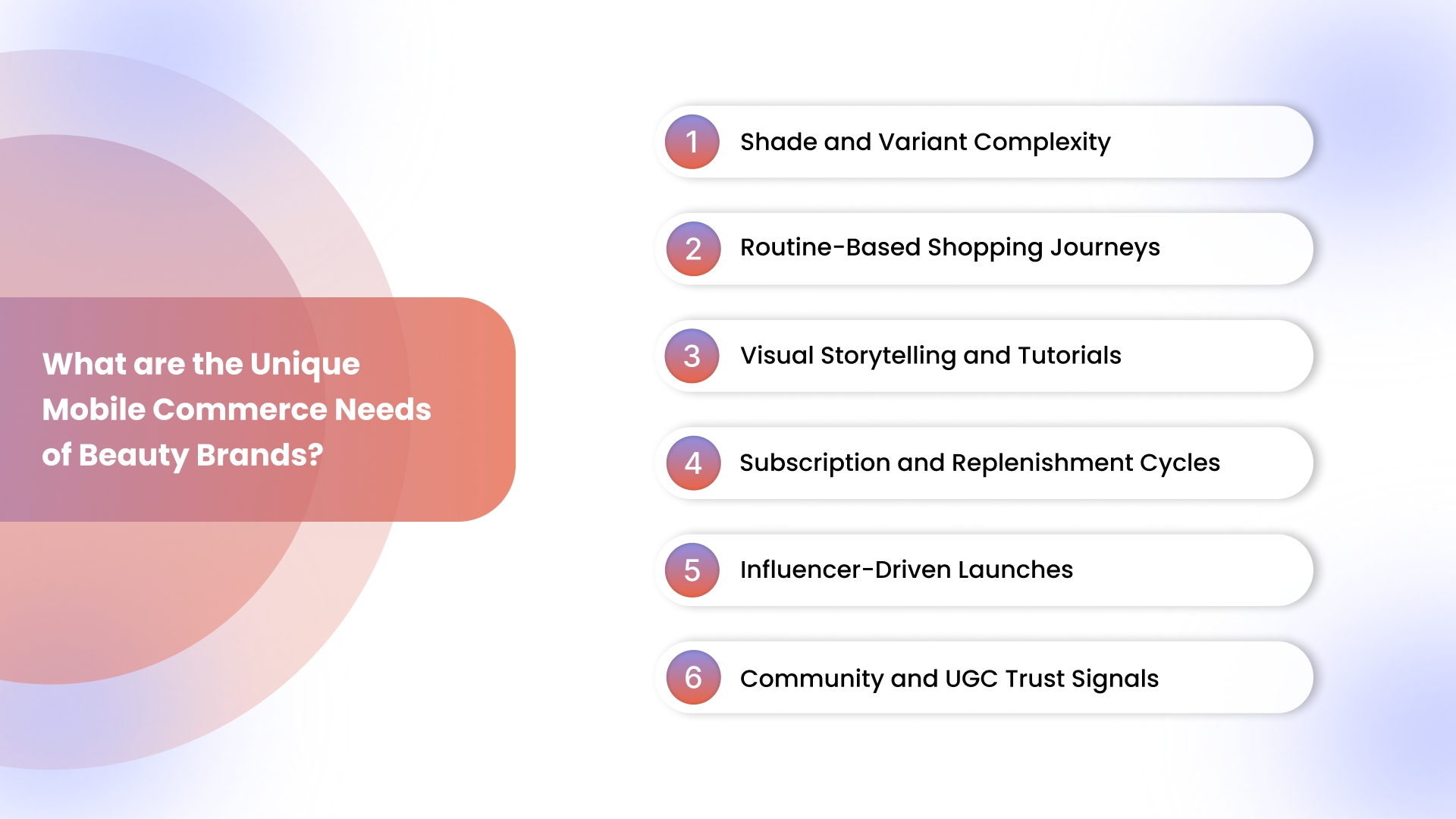
Beauty commerce is visually driven, routine-based, and heavily influenced by trust and personalization. Unlike other retail categories, beauty brands must design mobile experiences that support exploration, education, and repeat purchasing while handling complex product variations and discovery journeys.
1. Shade and Variant Complexity
Beauty products often include multiple shades, undertones, sizes, and formulations. Mobile apps must support rich swatches, comparison views, and quick variant switching so shoppers can confidently choose products without confusion or repetitive browsing.
2. Routine-Based Shopping Journeys
Skincare and haircare purchases are rarely single-product decisions. Apps need structured navigation that helps shoppers build routines, bundle complementary products, and follow step-by-step regimens that mirror real usage patterns across morning, evening, or weekly care cycles.
3. Visual Storytelling and Tutorials
Beauty shoppers rely heavily on tutorials, before-and-after visuals, and ingredient education. Mobile apps must integrate videos, short guides, and interactive content directly into product pages to improve understanding and reduce hesitation during purchase decisions.
4. Subscription and Replenishment Cycles
Many beauty products require regular replenishment, including serums, moisturizers, and hair treatments. Apps should support subscription flows, smart reminders, and easy reorder options to capture predictable repeat purchases without forcing customers to restart discovery.
5. Influencer-Driven Launches
Influencer collaborations and limited drops drive urgency in beauty commerce. Mobile apps need launch banners, early access sections, and notification workflows that help brands manage high-intent traffic and convert excitement into immediate purchases.
6. Community and UGC Trust Signals
Beauty shoppers trust peer experiences more than brand claims. Apps should highlight user reviews, routine sharing, before-and-after photos, and community content that builds credibility while helping customers visualize results across diverse skin types and concerns.
Once these beauty-specific mobile needs are clear, the next step is identifying app builders capable of supporting these workflows without compromising performance or flexibility.
9 Best Shopify Mobile App Builders for Beauty Brands
Beauty brands use mobile app builders for different priorities, from visual storytelling and personalization to campaign launches and scalability. The platforms below highlight varied strengths, helping brands compare options based on their experience needs and growth stage.
Now that we’ve compared the top builders at a glance, let’s dive deeper into each platform’s features, strengths, and suitability for different beauty brand needs.
1. AppMaker
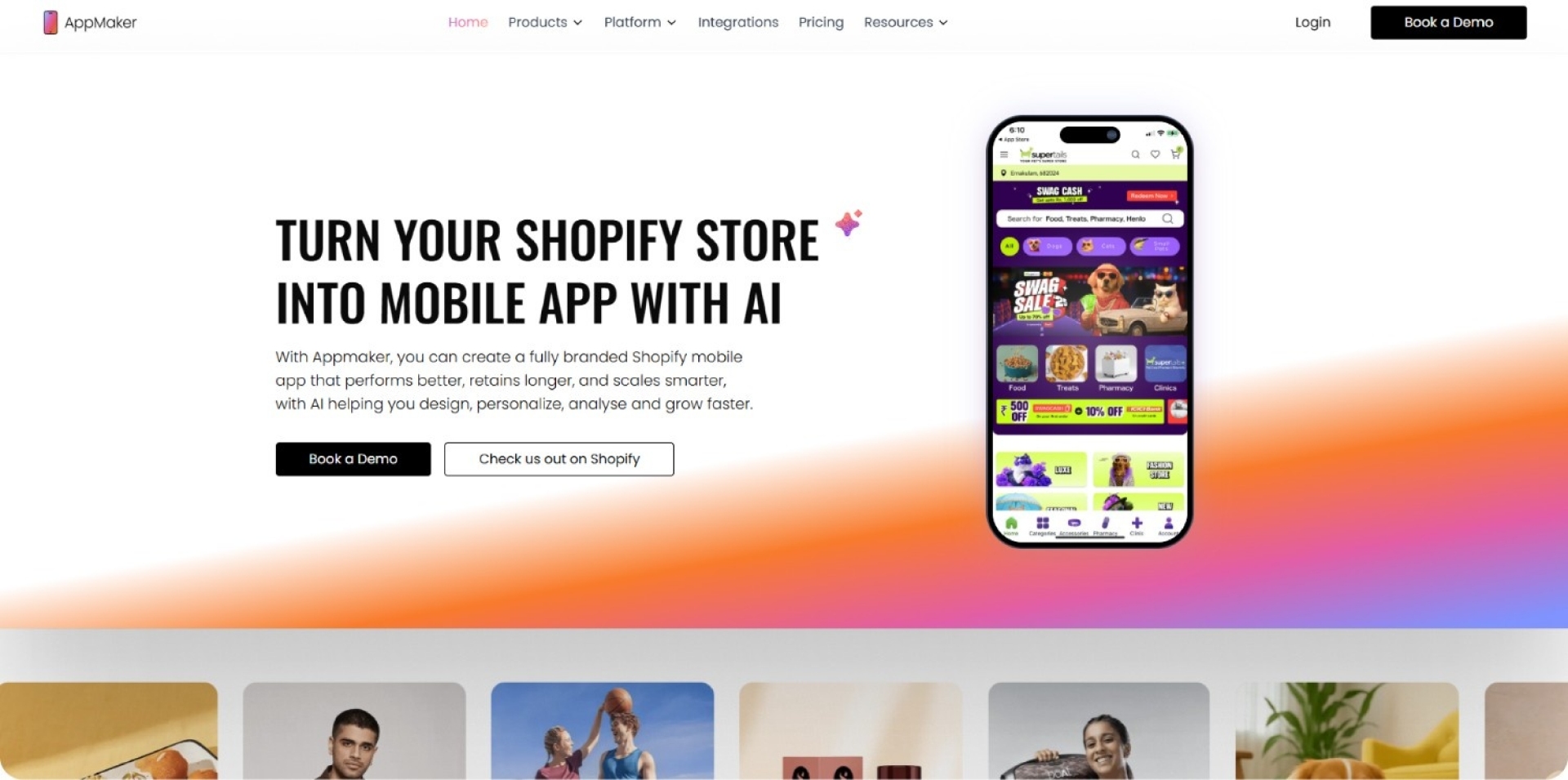
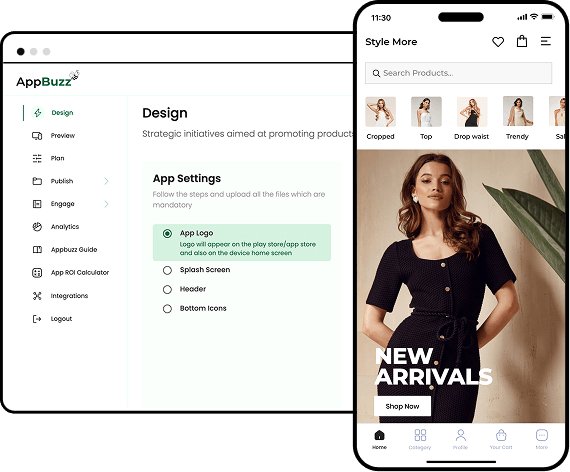
AppMaker is a no-code Shopify mobile app builder that helps brands convert their stores into native mobile apps with flexible design control. For beauty brands managing shade variants, tutorials, and routine-based discovery, it supports customizable layouts, real-time Shopify sync, personalization capabilities, and push-driven engagement to improve product discovery and repeat purchase journeys.
Key Features of AppMaker:
- AI-assisted design and insights: Eidolon AI converts design assets into reusable layouts, John AI provides analytics guidance, and Rubik AI supports behavior-based personalization across app experiences.
- Custom UI/UX flexibility: Modular layouts and code blocks allow brands to create tutorial sections, shade navigation, and storytelling workflows without rigid template restrictions.
- Content-led commerce support: Enables integration of videos, guides, banners, and curated collections to blend education with product discovery inside the app.
- Retention and loyalty integrations: Supports push notifications and integration with loyalty or retention tools to strengthen repeat purchase journeys.
- Campaign merchandising flexibility: Custom pages and promotional workflows allow exclusive product drops, curated shop experiences, shop-the-look journeys, and gift-based campaign execution.
Pros:
- Flexible for growing beauty catalogs and campaign launches
- Faster execution without constant developer dependency
- Supports experimentation across discovery and merchandising journeys
Cons:
- Setup needs planning compared to template-first builders
Pricing: Starts at $599 per month + 2% of in-app sales.
2. Shopney
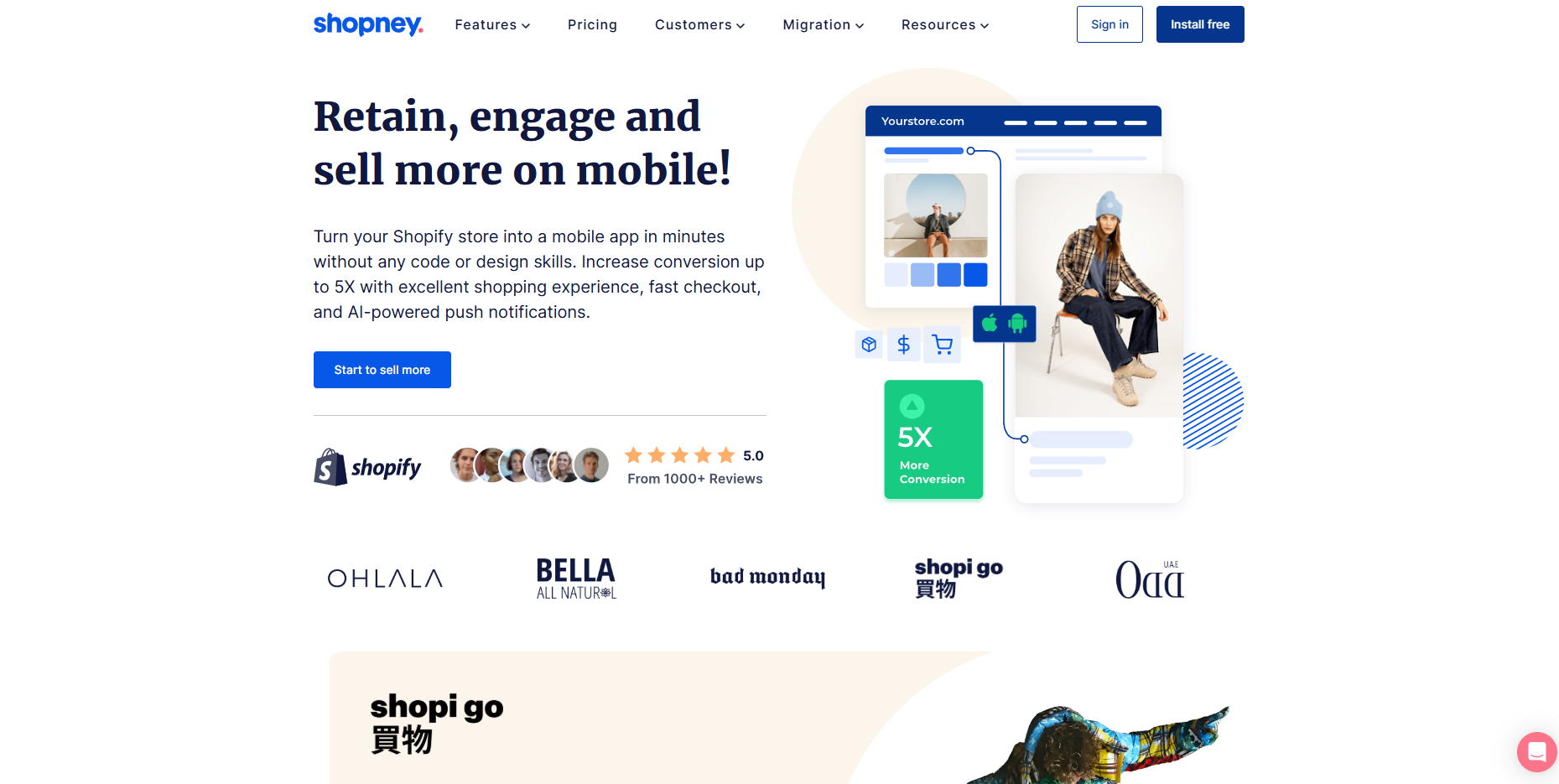
sourcelinkShopney is a no-code Shopify mobile app builder focused on fast, polished app experiences. For beauty brands, it enables visually engaging layouts, real-time Shopify sync, push notifications, and content-driven discovery. It helps brands showcase shade options, tutorials, and curated collections while keeping customers coming back.
Key Features of Shopney:
- Drag-and-drop builder: Design app pages, banners, and product showcases quickly, ideal for tutorial sections and shade selection without needing technical skills.
- Real-time Shopify sync: Keeps products, collections, and customer data automatically updated across the app.
- Push notifications and campaigns: Send restock alerts, exclusive drops, and promotional reminders to drive repeat purchases.
- Content commerce integration: Embed videos, guides, and curated collections to inform and inspire shoppers.
- Flexible storytelling layouts: Customizable homepage and product pages highlight routines, influencer-led drops, and exclusive launches.
Pros:
- Fast setup with minimal technical effort
- Visually rich, content-first app experiences
- Push notifications drive engagement and repeat purchases
Cons:
- Less customization compared to fully modular builders
- Advanced personalization features are limited
Pricing: Starts at $ 149 /month.
3. Tapcart
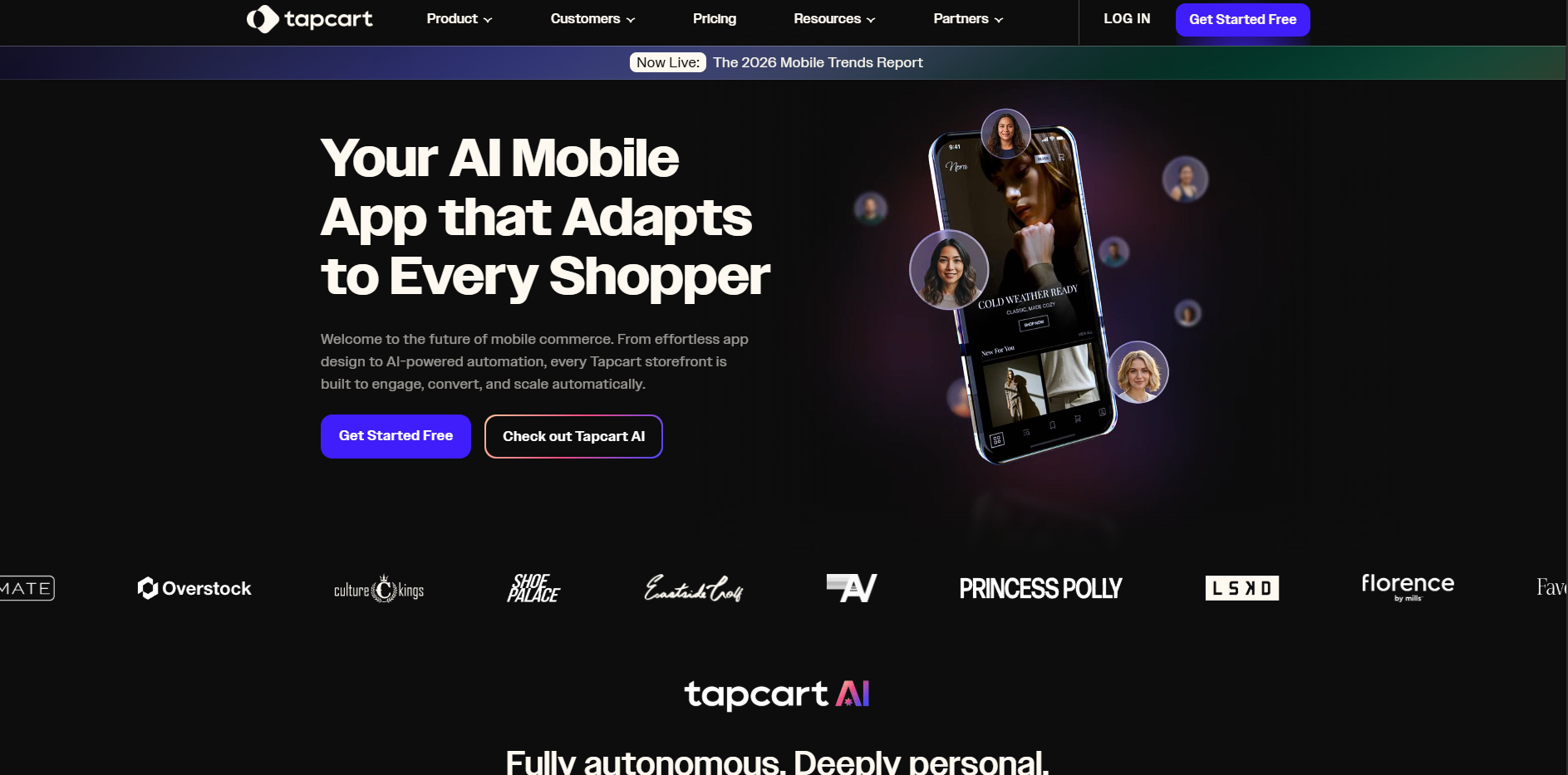
sourcelinkTapcart is built for beauty brands that need fast, high-volume mobile app experiences without sacrificing design control. It excels at handling large catalogs, influencer-led product drops, and complex routine-based journeys. It helps brands deliver seamless discovery, personalized campaigns, and timely notifications while scaling efficiently.
Key Features of Tapcart:
- Drag-and-drop app builder: Quickly design pages, banners, and product showcases without coding, ideal for tutorial flows, shade navigation, and curated collections.
- Real-time Shopify integration: Automatically syncs products, collections, and customer data across the app.
- Push notifications and campaigns: Drive engagement with restock alerts, limited-time launches, and promotional reminders.
- Content-driven commerce: Integrates videos, tutorials, guides, and curated collections to educate and inspire shoppers.
- Flexible layouts and merchandising: Supports customizable homepages, campaign modules, shop-the-look pages, and influencer-driven launches for storytelling.
Pros:
- Handles large catalogs and high-traffic campaigns efficiently
- Enables quick setup and rapid promotional launches
- Push notifications enhance retention and repeat purchases
Cons:
- Advanced personalization requires additional setup
- Limited flexibility compared to fully modular builders
Pricing: Starts at $250/month.
4. Vajro
Vajro is a mobile app builder highly optimized for beauty brands that rely on interactive, live-commerce experiences. It enables influencer-led product drops, tutorial-driven discovery, and shade variant showcases. This helps brands engage customers, drive repeat purchases, and strengthen loyalty, while supporting real-time Shopify sync and push notifications.
Key Features of Vajro:
- Live commerce integration: Host live selling sessions directly in-app to engage customers and create urgency for influencer drops or limited edition launches.
- Drag-and-drop app builder: Quickly design pages, banners, and product showcases without coding, supporting tutorials, shade navigation, and curated collections.
- Real-time Shopify sync: Automatically updates products, collections, and customer data to reflect changes instantly across the app.
- Push notifications and campaigns: Send restock alerts, live session reminders, and promotional messages to drive repeat purchases and campaign engagement.
- Content-led discovery: Integrate videos, guides, banners, and curated collections to educate, inspire, and assist shoppers in routine-based journeys.
Pros:
- Excels at interactive live-commerce and influencer-driven campaigns
- Fast setup with minimal technical effort
- Supports tutorial-led and content-first engagement journeys
Cons:
- Limited deep customization compared to fully modular builders
- Advanced personalization options are less extensive
Pricing: Starts at $150 / month.
5. Plobal Apps
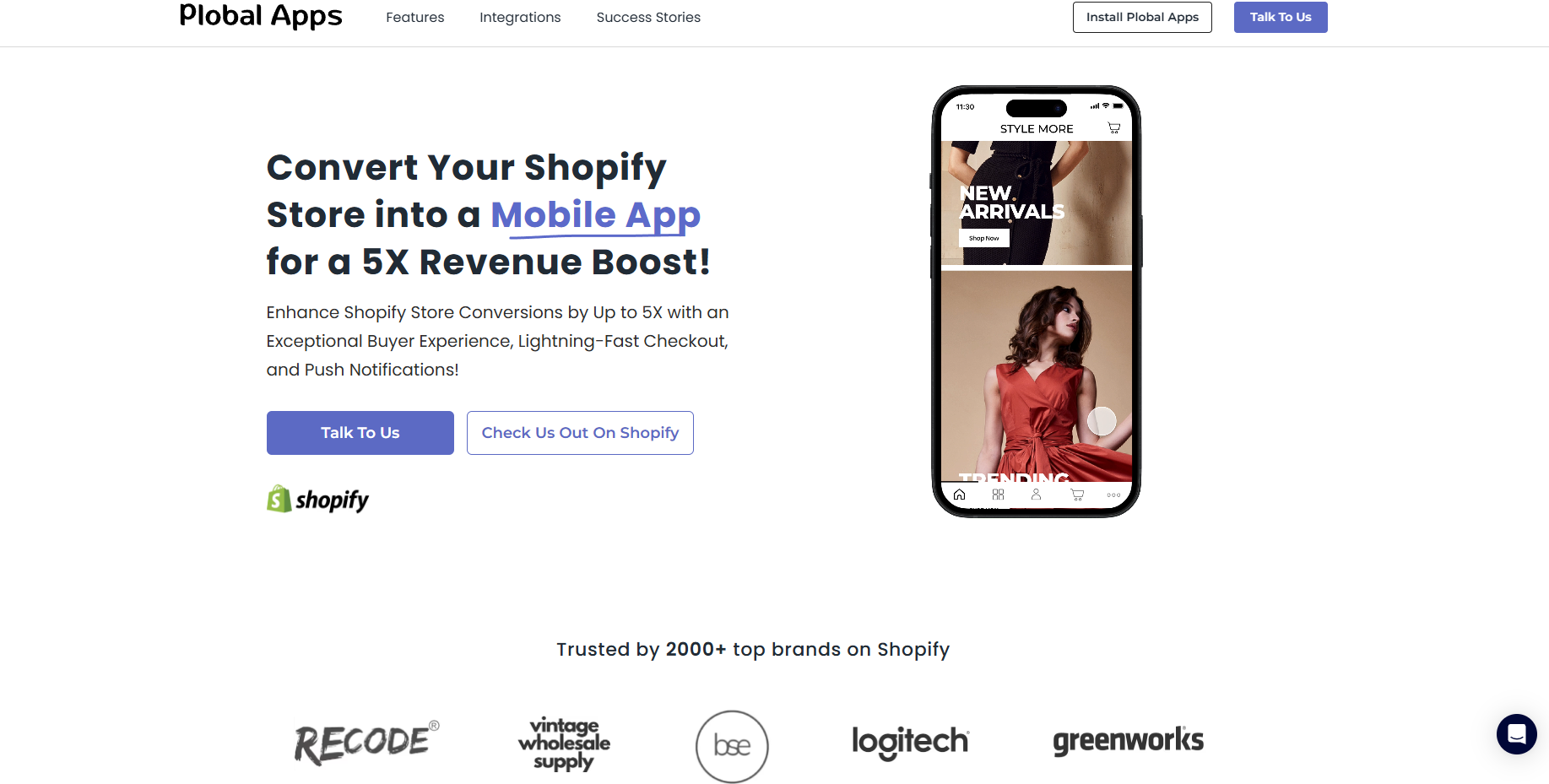
sourcelinkPlobal Apps is a no-code Shopify mobile app builder built for beauty brands that want data-driven, conversion-focused mobile commerce. It excels at supporting personalized product discovery, influencer campaigns, and repeat purchase journeys, while offering analytics-driven insights to optimize retention and campaign performance across large catalogs.
Key Features of Plobal Apps:
- Drag-and-drop app builder: Create app pages, banners, and product showcases without coding, supporting tutorial flows, shade variants, and curated collections.
- Real-time Shopify sync: Automatically updates products, collections, and customer data to ensure accuracy across the app.
- Push notifications and campaigns: Engage users with restock alerts, influencer-led launches, and promotions to encourage repeat purchases.
- Analytics-driven insights: Track conversions, retention, and user behavior to optimize campaigns, loyalty programs, and merchandising workflows.
- Content-led commerce support: Embed videos, tutorials, guides, and curated collections to educate and inspire shoppers while blending content with product discovery.
Pros:
- Strong analytics for performance optimization and retention
- Quick setup with minimal technical effort
- Supports tutorial, content, and influencer-driven discovery
Cons:
- Customization depth is limited compared to fully modular builders
- Advanced personalization requires additional setup
Pricing: Starts at $199 / month.
Also Read: 13 Best MobiLoud Alternatives for Shopify Mobile Apps in 2026
6. Appbrew
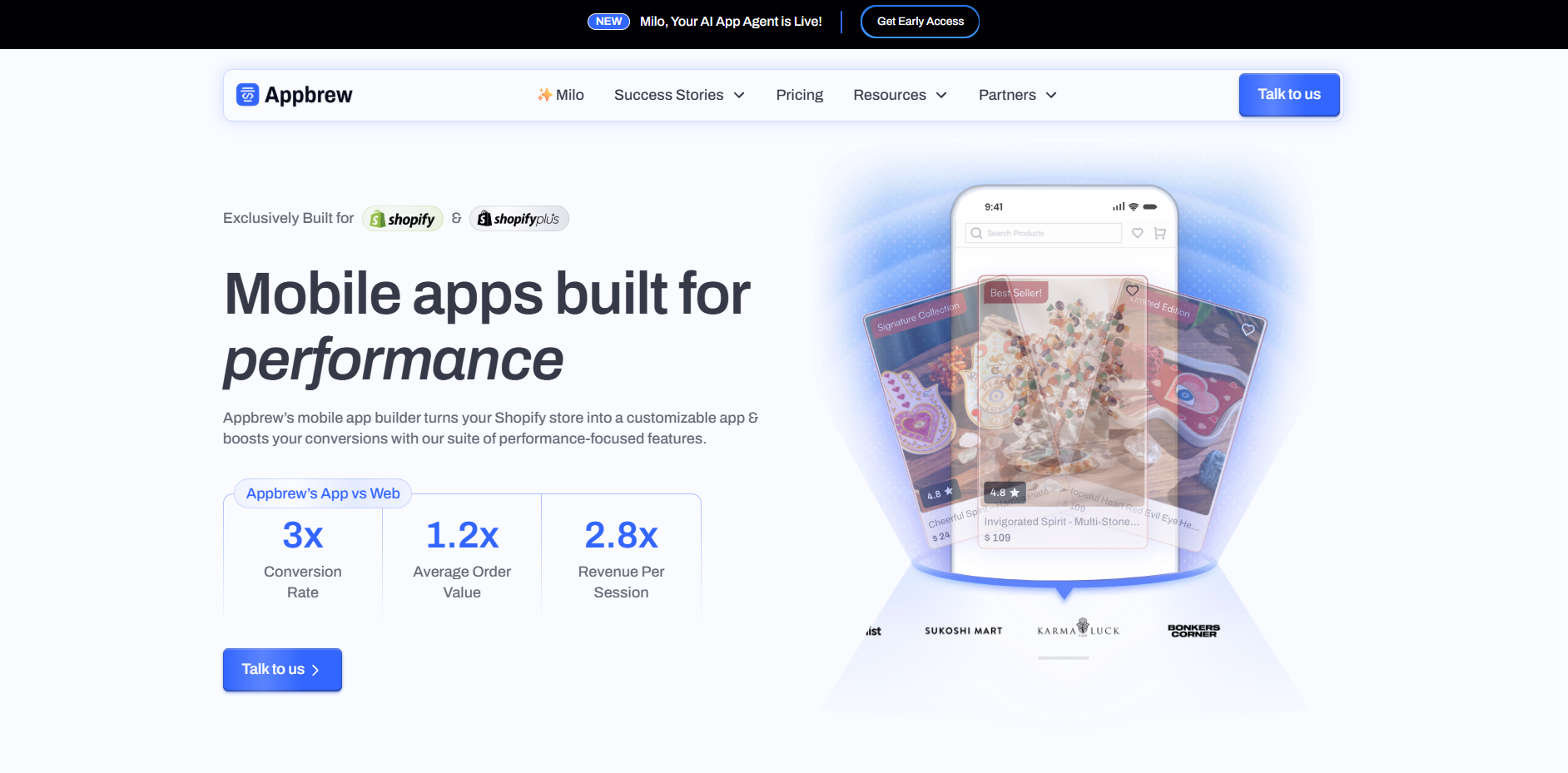
sourcelinkAppbrew is a no-code Shopify mobile app builder tailored for beauty brands that prioritize AI-driven personalization and content-rich shopping experiences. It helps brands showcase tutorials, shade variants, curated collections, and influencer drops while enabling behavior-driven product recommendations and repeat purchase journeys.
Key Features of Appbrew:
- AI-powered personalization: Uses smart algorithms to suggest products based on user behavior, purchase history, and browsing patterns, enhancing discovery and conversion.
- Drag-and-drop app builder: Quickly design pages, banners, and product showcases without coding, supporting tutorial sections and shade navigation.
- Real-time Shopify sync: Automatically updates products, collections, and customer data across the app.
- Push notifications and campaigns: Engage customers with restock alerts, limited edition drops, and promotional reminders to drive repeat purchases.
- Content-led commerce integration: Embed videos, tutorials, guides, and curated collections to educate and inspire shoppers while blending content with product discovery.
Pros:
- AI-driven personalization improves product discovery and conversion
- Fast, no-code setup with flexible app design
- Supports tutorial-led and influencer-driven campaigns
Cons:
- Advanced modular customization is limited compared to fully flexible builders
- Some AI features require careful setup to maximize impact
Pricing: Starts at $499/month.
7. MobiLoud
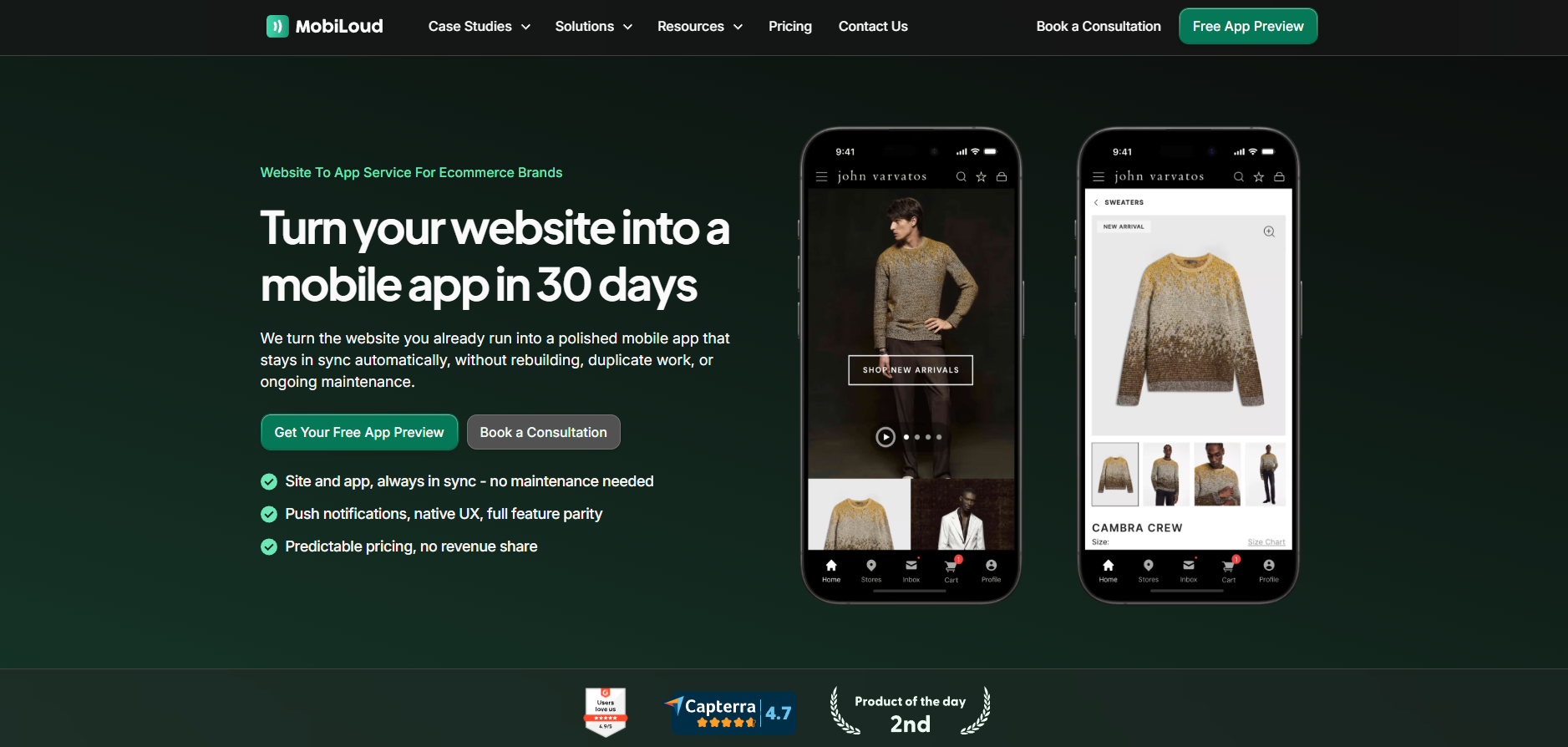
sourcelinkMobiLoud helps Shopify beauty brands bring rich, content‑driven experiences to mobile users by converting existing storefronts into native iOS and Android apps. It’s especially suited for brands that already have engaging content, tutorials, blogs, and community resources, allowing them to extend that same depth to mobile shoppers while maintaining consistency with their web experience.
Key Features of MobiLoud:
- Web‑to‑app conversion: Turns your existing Shopify store and content into native mobile apps without rebuilding from scratch.
- Real-time Shopify sync: Ensures products, collections, and customer data stay up to date in the app.
- Push notifications and alerts: Drive engagement with restock notices, content updates, and promotional messaging.
- Content‑rich experience: Supports blog posts, tutorial libraries, and community content alongside product discovery to deepen shopper engagement.
- Custom branding options: Allows brands to reflect their unique identity in app icons, colors, and navigation patterns.
Pros:
- Preserves existing content and extends it to mobile users
- Quick transition from web to mobile without redevelopment
- Push notifications support engagement and repeat visits
Cons:
- Less tailored UX for beauty‑specific discovery (e.g., shade flows, routine builders)
- Customization depth is lower compared to fully modular app builders
Pricing: Starts at $799/month.
8. NAPPS
sourcelinkNAPPS is a Shopify app builder that helps beauty brands launch mobile apps quickly by providing prebuilt templates and essential ecommerce features. It’s suited for smaller beauty stores and early D2C brands looking for a simple mobile presence without complex setup, supporting product discovery, basic push engagement, and core shopping workflows.
Key Features of NAPPS:
- Template‑based app builder: Offers ready‑to‑use templates that simplify page creation and navigation, suited for beauty product catalogs.
- Real-time Shopify sync: Automatically updates products, collections, and customer data to keep the app current.
- Push notifications: Enable basic alerts for restocks, promotions, and updates to engage customers.
- Essential commerce flows: Supports browsing, cart, checkout, and account management within the app.
- Custom branding options: Let brands customize colors, icons, and key visual elements to reflect brand identity.
Pros:
- Fast and straightforward setup for early beauty brands
- Template approach keeps costs predictable
- Core commerce and push engagement supported
Cons:
- Limited advanced customization compared to modular builders
- Personalization and rich content features are basic
Pricing: Starts at $99/month.
9. Taptool
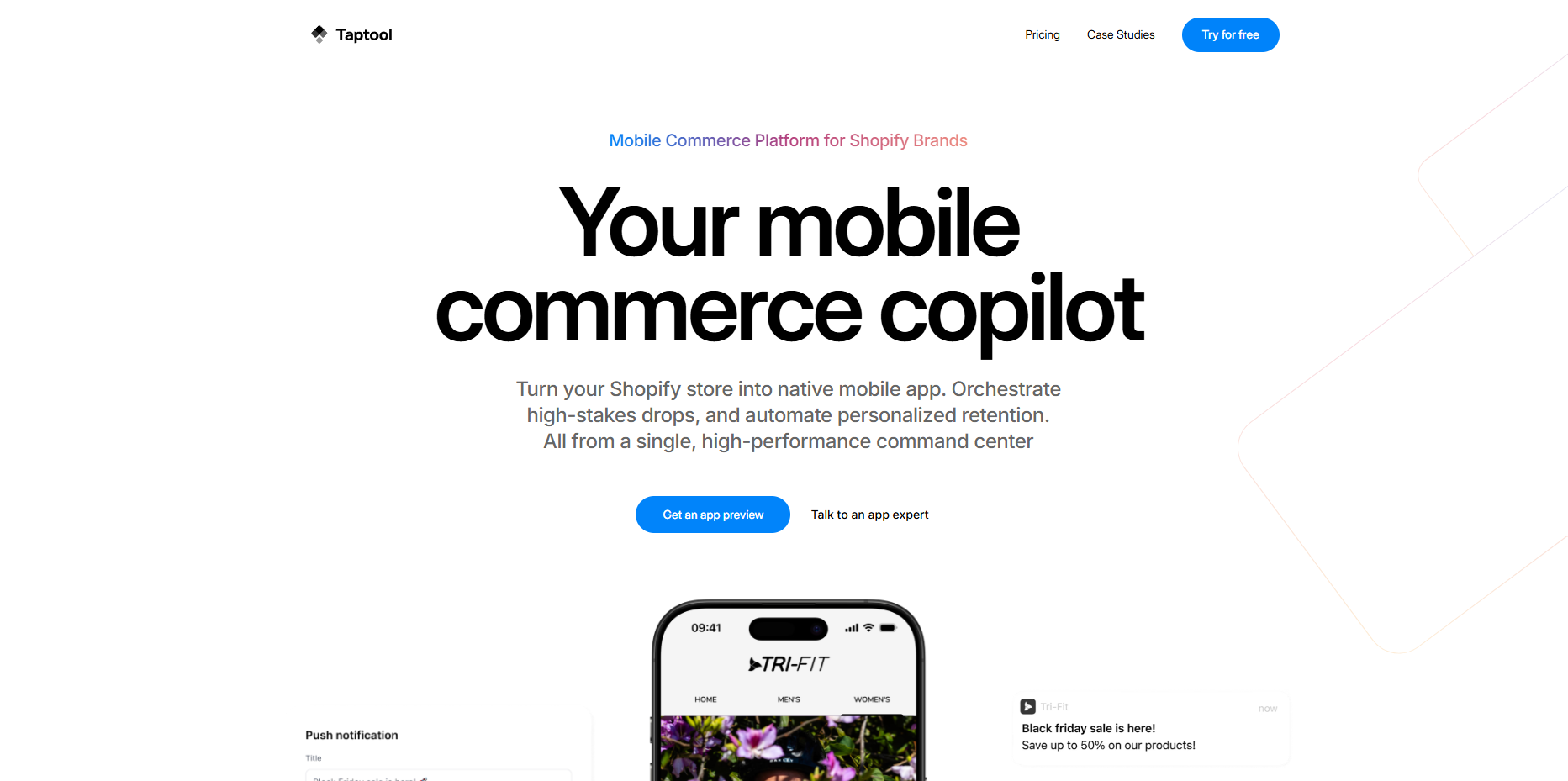
source;linkFor beauty brands that need a straightforward mobile presence without heavy customization, Taptool delivers a lightweight, reliable app experience. It helps showcase products, manage catalogs, and engage customers through push notifications, making it ideal for smaller stores or early-stage D2C beauty brands.
Key Features of Taptool:
- Template‑based app creation: Let brands launch apps using ready‑made layouts that simplify setup and navigation for beauty product catalogs.
- Real-time Shopify sync: Ensures products, collections, and customer data stay updated across the app.
- Push notifications: Enable alerts for restocks, promotions, and updates to keep customers engaged.
- Core shopping flows: Supports product browsing, cart, checkout, and account management within the app.
- Basic customization options: Allows brands to adjust colors, logos, and layout sections to reflect visual identity.
Pros:
- Fast launch with minimal technical setup
- Predictable and lightweight configuration
- Push notifications support basic engagement
Cons:
- Limited advanced customization compared to modular builders
- Personalization and rich content features are basic at best
Pricing: Starts at $149/month.
Having reviewed leading builder options, it becomes important to understand the difference between template and custom builders.
Template vs Custom Builders: What Beauty Brands Should Choose
The template versus customizable builder decision goes beyond design preference. Template builders offer speed, but customizable builders provide control. To understand the real impact on beauty commerce, let’s break down the key experience areas where this difference becomes clearly visible.
1. UX Flexibility
Template builders restrict homepage restructuring and product page layouts, making it harder to highlight shade swatches, before-and-after galleries, or routine bundles. Customizable builders, on the other hand, enable modular layouts supporting tutorials, ingredient highlights, and campaign storytelling.
2. Personalization Depth
Beauty personalization extends beyond “recommended products.” Customizable builders like AppMaker bring customers back with personalized alerts and drive more revenue. It also allows conditional sections showing shade matches, routine suggestions, and concern-based collections, while templates often rely on static recommendation blocks with limited segmentation control.
3. Experimentation Ability
Beauty brands frequently run influencer drops, flash launches, and seasonal campaigns requiring layout adjustments. Customizable builders support rapid banner swaps, section testing, and content experiments without rebuilding screens or waiting for developer deployment.
4. Beauty Discovery Workflows
Discovery often involves quizzes, routine planners, tutorial feeds, and ingredient education. Customizable builders integrate these workflows directly within navigation and product journeys, whereas template apps typically isolate them as standalone pages.
5. Long-term scalability
As beauty catalogs expand with bundles, subscriptions, and exclusive launches, app complexity increases. Customizable builders support growing merchandising strategies, advanced integrations, and new workflows without structural redesigns or platform limitations.
With builder architecture clarified, the final selection depends on your brand’s growth stage, operational complexity, and the experience sophistication required for future expansion.
Also Read: How Much Does It Cost to Build an App in 2026?
How to Choose the Right Builder Based on Your Beauty Brand Stage?
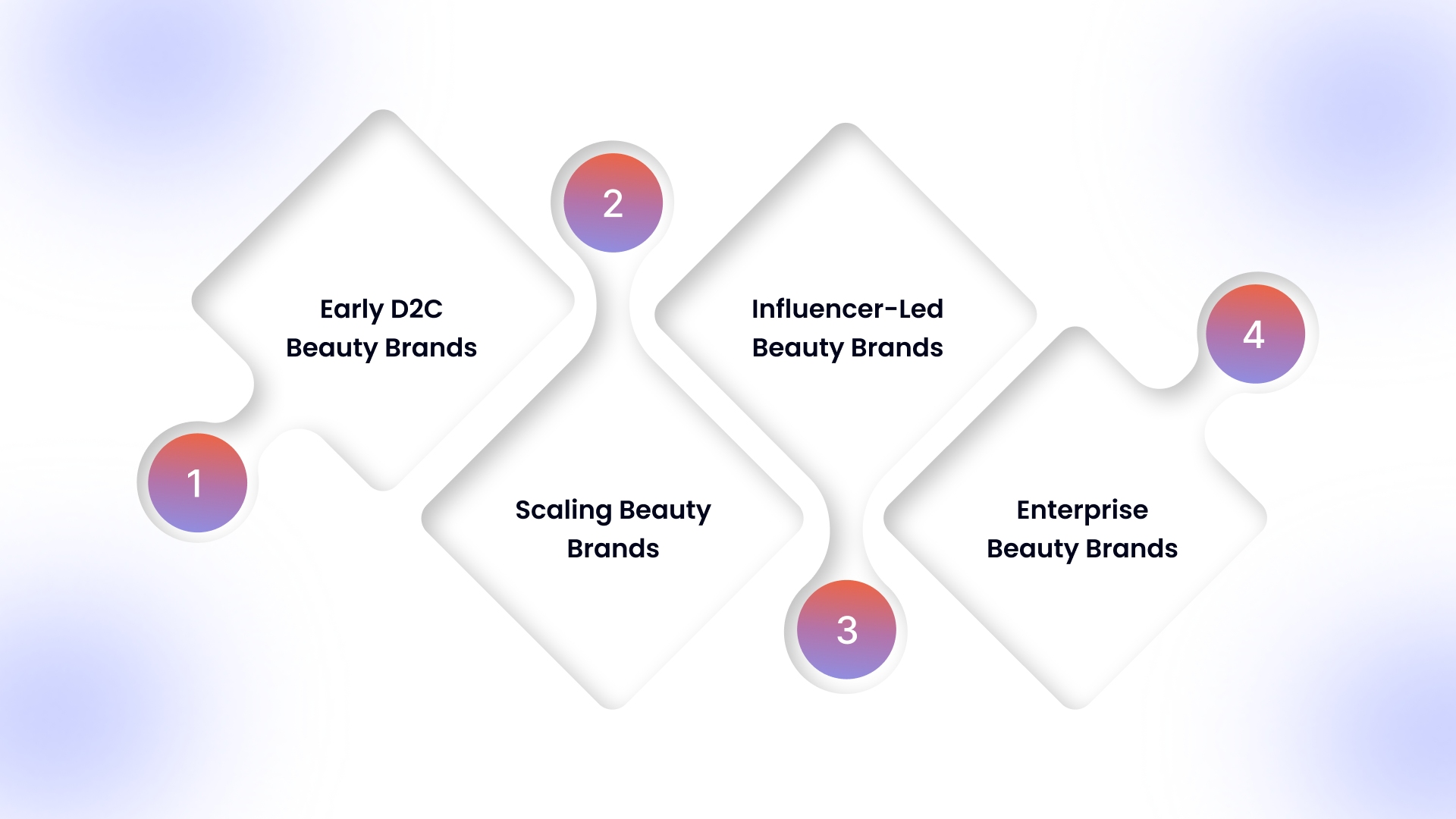
Choosing an app builder is a growth decision. What works for an early beauty brand may slow down a scaling or enterprise brand. The right builder should match your resources, growth pace, and experience strategy. Here’s how to decide:
1. Early D2C Beauty Brands
If you are an early D2C beauty brand, choose a builder that supports quick launch while handling shade variants, tutorial-led discovery, and routine bundles.
Prioritize drag-and-drop layouts, Shopify sync, affordable pricing, push reminders, and analytics to validate demand without operational complexity.
2. Scaling Beauty Brands
If your beauty brand is scaling, select a builder that supports segmentation based on skin concerns, routine stages, and shade preferences.
Ensure flexible campaign modules, loyalty integrations, automated replenishment reminders, and performance analytics so you can optimize conversions while managing influencer launches and seasonal promotions.
3. Influencer-Led Beauty Brands
For influencer-led beauty brands, choose a builder built for storytelling, video tutorials, and rapid product drops. Look for UGC galleries, limited collection launches, flexible homepage merchandising, and push alerts.
This makes it easier for shoppers to discover products, compare shades, and respond to launch excitement, ultimately driving quicker conversions and stronger sales.
4. Enterprise Beauty Brands
Enterprise beauty brands should choose builders that manage complex shade catalogs, localization, and multi-region merchandising while supporting advanced integrations.
Prioritize modular layouts, CRM and CDP connectivity, personalization workflows, and high-performance infrastructure so global launches, subscriptions, and routine-based journeys scale without operational bottlenecks.
Ultimately, the right Shopify mobile app builder is the one that aligns with your beauty workflows, customer discovery patterns, and growth ambitions rather than offering one-size-fits-all functionality.
Conclusion
Choosing the right Shopify mobile app builder can shape how customers experience your beauty brand. A well-built app helps attract shoppers with smooth browsing, strong visuals, and faster checkout while keeping them engaged through reminders, launches, and routine-based repeat purchases.
AppMaker helps beauty brands create apps that support these needs without heavy technical effort. With flexible layouts, real-time Shopify sync, push notifications, and personalization features, brands can manage product discovery, campaign drops, and retention journeys from one place.
If you’re planning to launch a beauty app or improve your existing one, reach out to us. We can help you design and build an app tailored to your brand, customers, and growth goals.
FAQs
1. Is a Shopify beauty mobile app better than using a mobile-optimized website?
A mobile app usually offers faster browsing, smoother checkout, push notifications, and stronger personalization. It helps beauty brands improve retention, repeat purchases, and campaign engagement compared to mobile websites.
2. Can Shopify beauty apps support large shade and variant catalogs without slowing performance?
Yes. Most modern builders are designed to handle complex variant structures, visual swatches, and filtering while maintaining speed through real-time sync with Shopify.
3. Do Shopify mobile app builders allow beauty brands to run limited drops and product launches?
Many builders support homepage campaign modules, push notifications, countdown timers, and exclusive collections, making them suitable for influencer launches and hype-driven beauty drops.
4. How do Shopify mobile apps help beauty brands improve customer lifetime value?
Features like routine-based recommendations, loyalty integrations, subscriptions, and targeted push messaging help brands nurture repeat buying behavior and deepen customer relationships over time.