






















Mobile commerce now drives well over half of all ecommerce sales, and brands with native apps consistently see higher repeat purchases and better conversion than mobile web alone. As a result, many Shopify merchants who first look at solutions like MobiLoud quickly start comparing options to find a setup that fits their exact needs.
Some want more design and feature control than a simple site-to-app wrapper. Others are looking for faster iteration, lower ongoing costs, or deeper integration with their marketing and retention stack.
In this blog, we’ll break down what MobiLoud offers, explore the strongest MobiLoud alternatives for Shopify mobile apps, and outline how to evaluate each option based on your growth plans.
Key Takeaways
- Many Shopify merchants look for a MobiLoud alternative when they need deeper customization, faster in-house changes, and a truly native app.
- The best mobile app builders give you deep customization, strong integrations, and the freedom to change and grow your app without being locked into fixed templates.
- AppMaker is best for full control and advanced customization, Tapcart is strong for polished, ready-made designs, and Shopney works well for quick, affordable launches with built-in marketing, too.
- Features like AI-driven personalization, advanced push notifications, and real-time Shopify sync play a major role in turning a mobile app into a repeat-purchase and retention engine.
- Pricing varies from $30 to $1500; from low-cost starter tools for simple apps to premium platforms that charge more but offer greater control, scalability, and long-term growth potential.
- Choosing the right Mobiloud alternative depends on your roadmap, team capacity, and how much you expect your mobile experience to change over time, not just on which tool is cheapest or fastest to launch.
Why Shopify Merchants Search for MobiLoud Alternatives?
For many Shopify brands, MobiLoud is a solid way to get a native app live without building one from scratch. But once the app becomes a serious growth channel, expectations change. Reviews across platforms like G2, Capterra, and Software Advice show a common pattern:
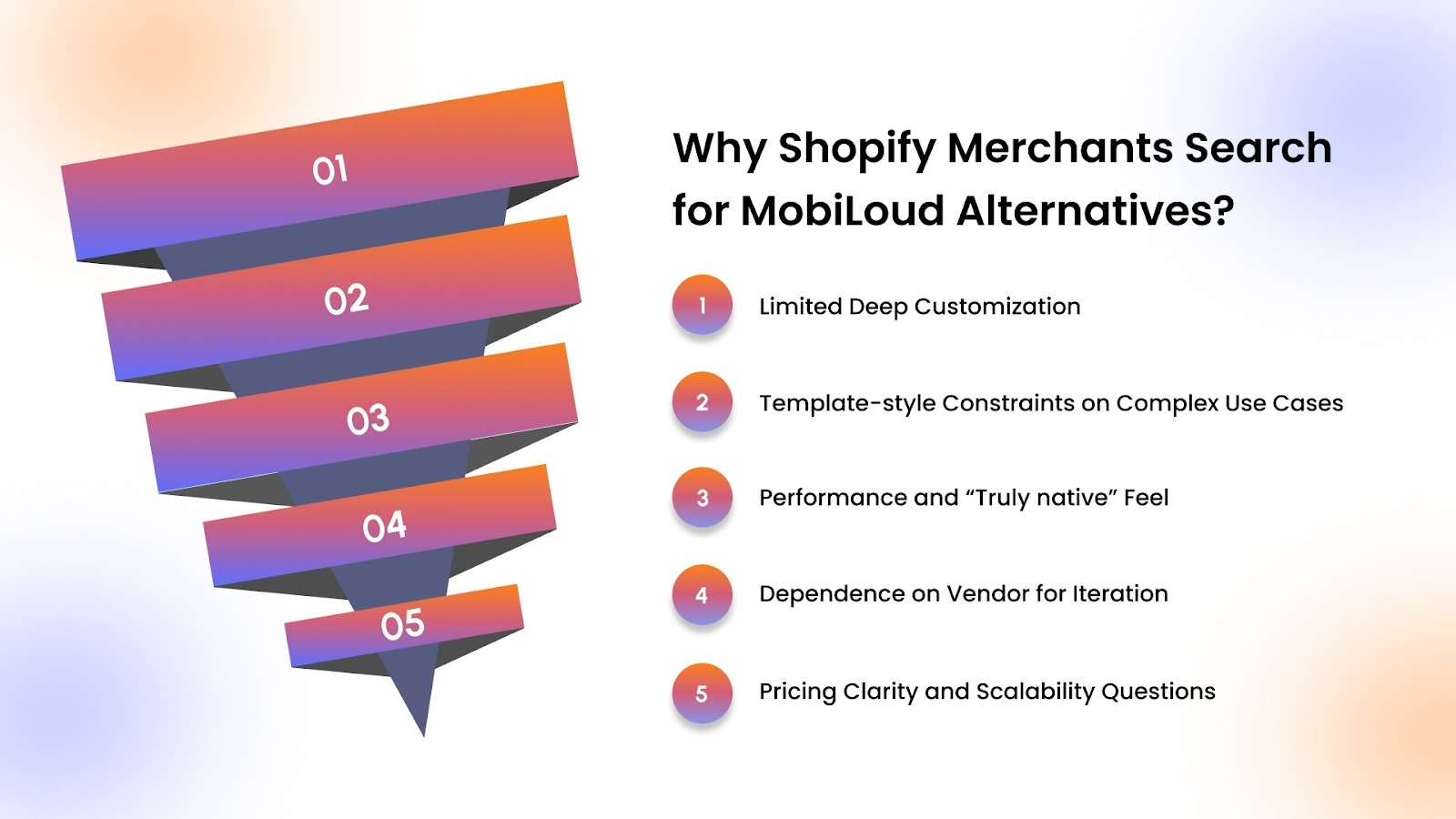
1. Limited Deep Customization
Several users note that while branding and basic layouts are straightforward, pushing beyond standard screens can be difficult. When brands want custom navigation, advanced checkout steps, or app-specific UX patterns, they often run into limits because the app largely mirrors the website’s structure.
Users on G2 repeatedly request greater direct control over how screens and flows behave, rather than relying on preset structures and vendor-side changes.
2. Template-style Constraints on Complex Use Cases
MobiLoud’s approach works well for standard storefronts, but merchants with more complex merchandising needs report friction. Users report hitting a ceiling when trying to build multi-step experiences, unique bundles, or highly customized product pages that don’t neatly fit the web layout.
This isn’t a bug; it’s a trade-off inherent in the wrap-your-site model, but it’s a common reason teams begin comparing alternatives built on modular or component-based layouts.
3. Performance and “Truly native” Feel
Some Software Advice and G2 reviewers note that, because the app renders site content, performance can vary based on the underlying store and device. Larger catalogues or heavier themes can result in slower load times or less fluid scrolling on older phones compared to apps built with fully native components.
For brands where speed is tightly linked to conversion, this becomes a deciding factor.
4. Dependence on Vendor for Iteration
The managed service is a plus for launch, but several reviews note that ongoing tweaks often require support involvement rather than in-house changes. Teams that want to experiment quickly with layouts or features describe this as slowing down their release cycle.
5. Pricing Clarity and Scalability Questions
A recurring theme in review summaries is that final costs depend on scope and traffic, and can rise as needs grow. For some merchants, this feels less predictable than builder-style tools with fixed tiers, especially when adding integrations or higher volumes.
These points explain the search for alternatives. It isn’t that MobiLoud fails at its promise of a fast, managed launch. It’s that as mobile becomes a core revenue channel, many teams want greater customization, tighter performance control, and the ability to iterate on their own schedule.
13 Best MobiLoud Alternatives for Shopify Mobile Apps in 2026
The Mobiloud alternatives below cover a wide range of needs, from quick and affordable launches to deeply customizable, high-performance native apps built for long-term scale. Each one takes a different approach to customization, automation, and ownership. The right choice depends on how hands-on you want to be and how far you plan to push your mobile experience.
Here's a roundup of the best MobiLoud alternatives for creating Shopify mobile apps in 2026:
1. AppMaker
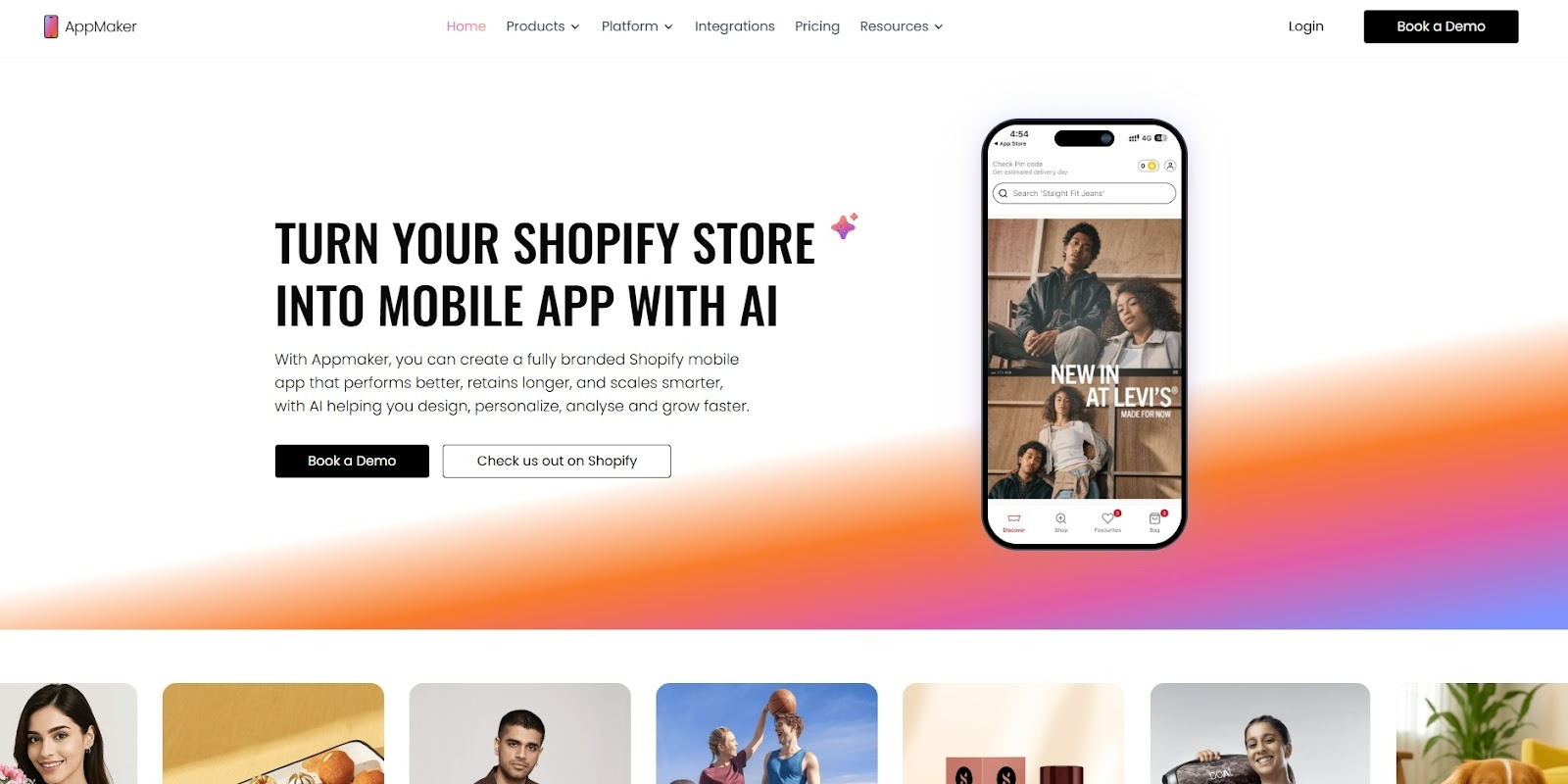
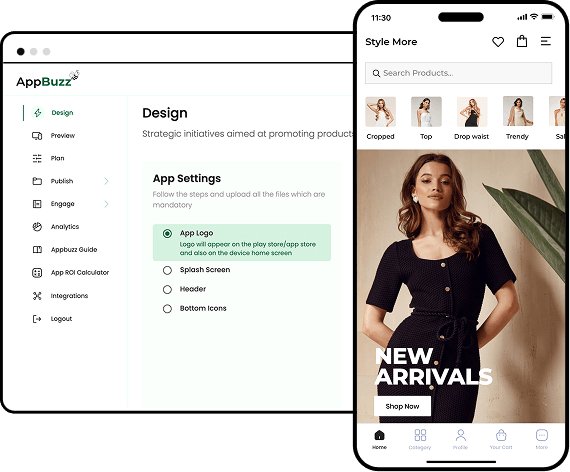
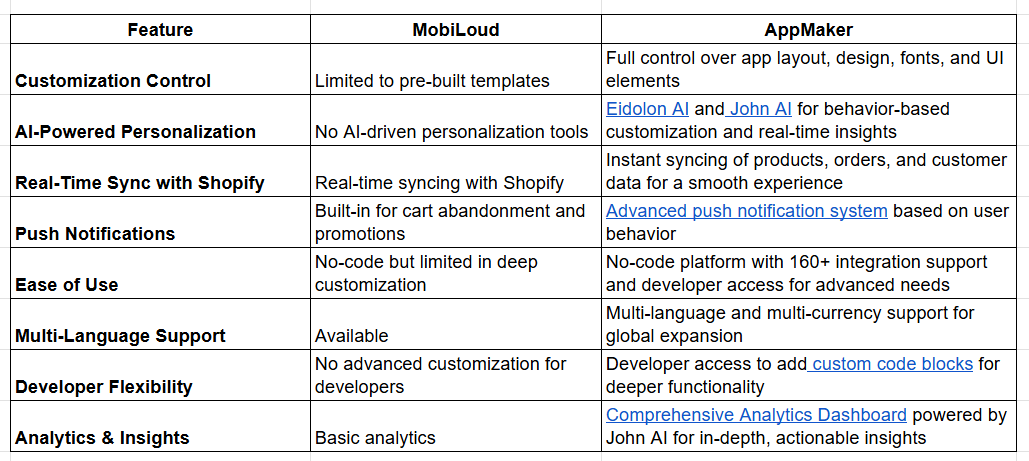
While MobiLoud is a popular option for converting Shopify stores into mobile apps, it has limitations in deep customization and AI-driven personalization. For businesses seeking a truly unique mobile app that aligns with their brand identity, AppMaker offers a more flexible solution.
AppMaker encourages merchants to not only create a native mobile app but also design every aspect of it, from layout to UI elements, giving brands complete control over the user experience.
Pricing:
Offers tiered plans designed for serious mobile revenue growth:
- Growth: $599/mo + 2% in-app sales
- Essential: $999/mo + 1%
- Enterprise: Custom (no public price; includes John AI & full studio access)
All plans include 14-day free trials and real-time updates, alignment between cost and growth outcomes.
Why Choose AppMaker?
If you’re looking for complete control over your mobile app’s design and a solution that integrates seamlessly with Shopify, AppMaker offers the best alternative to MobiLoud. With AI-powered personalization, real-time syncing, and advanced customization options, AppMaker is perfect for businesses looking to create a unique and scalable mobile app without compromising on functionality.
2. Shopney
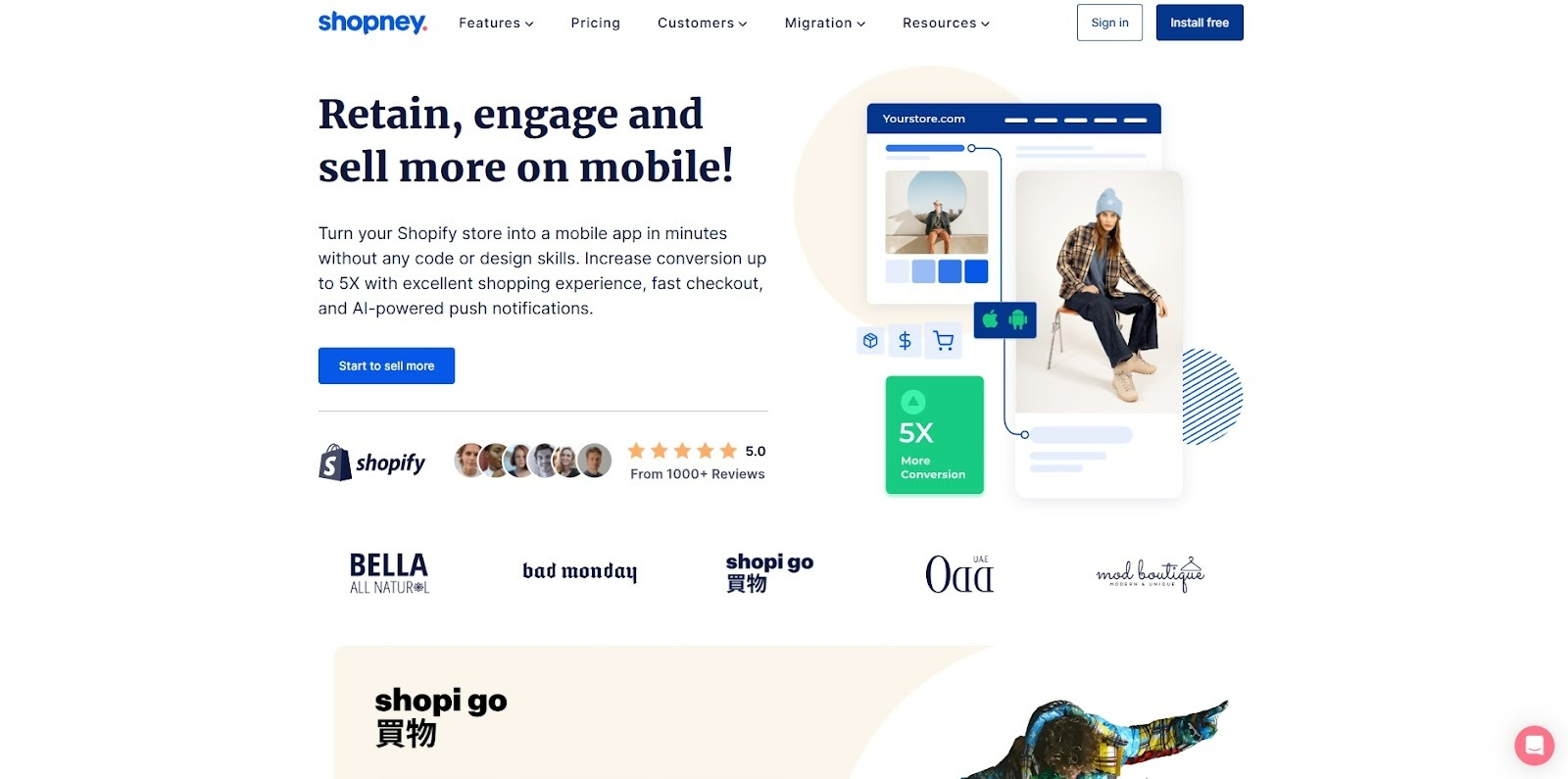
Shopney is a no‑code mobile app builder for Shopify stores that allows merchants to quickly convert their online shops into native iOS and Android apps. Shopney focuses on delivering an easy-to-use, drag-and-drop interface while integrating well with Shopify’s native features.
Key Highlights:
- User-Friendly Interface: Shopney's drag-and-drop builder makes it accessible even to merchants with no coding skills.
- Real-Time Sync: Syncs all product information, inventory, and orders automatically with your Shopify store, so you never need to update your app manually.
- Push Notifications & Cart Abandonment: Integrated tools to send targeted push notifications, cart abandonment reminders, and personalized product recommendations.
- Customizable Design Templates: While the platform offers pre‑built templates, it also allows for design flexibility to match your branding.
- Multi-Language & Multi-Currency Support: Essential for merchants with a global customer base.
Pricing:
- Free trial available.
- Core plans generally start around $149/month and can scale up based on features, app store publishing, and usage limits
Why Choose Shopney?
Shopney is perfect for Shopify merchants who want a quick, cost-effective mobile app with easy-to-implement features like push notifications and real-time syncing, but don’t need deep design customization.
3. Tapcart
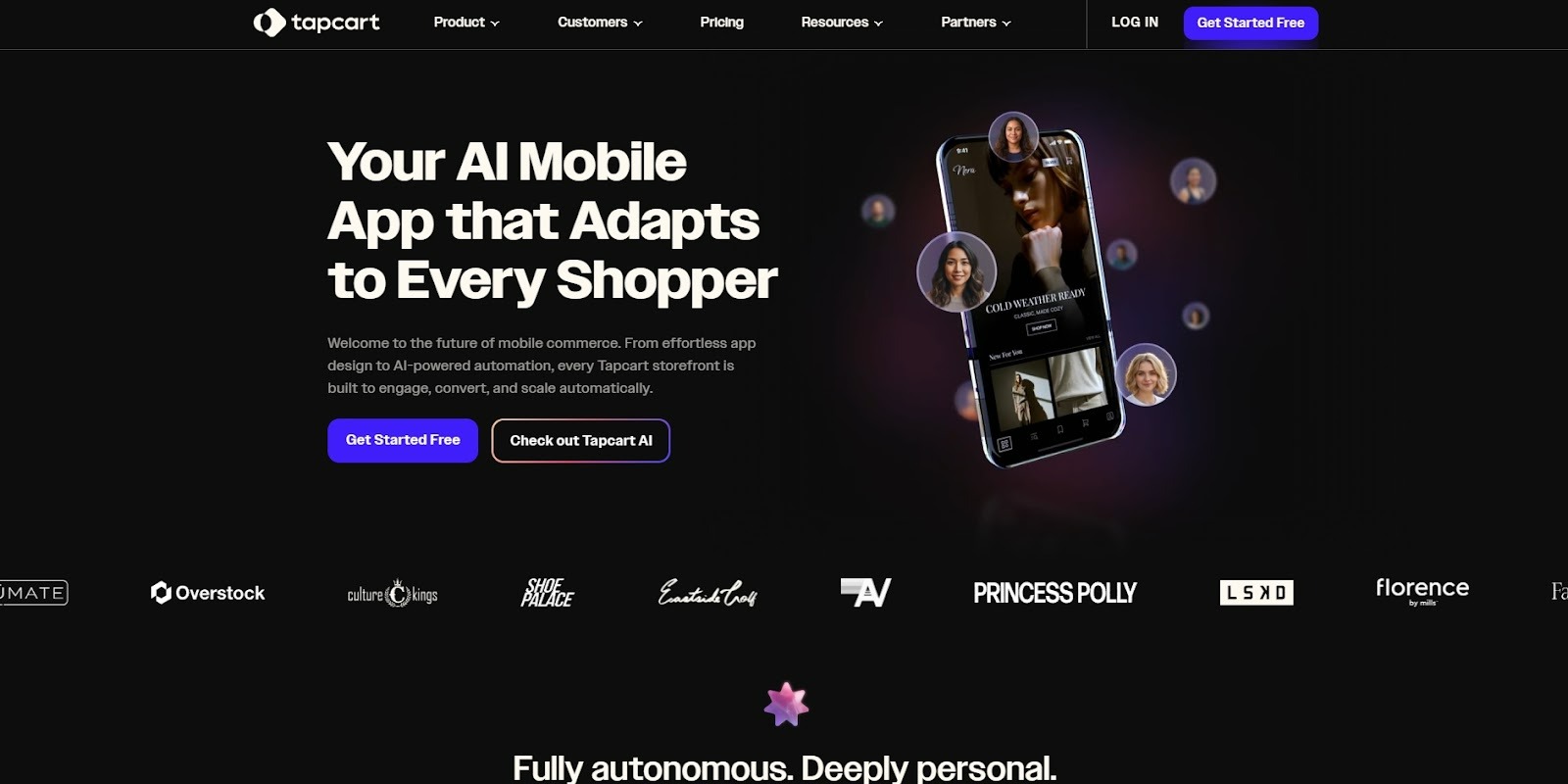
Tapcart is a premium Shopify app builder that provides a seamless solution for businesses looking to launch native mobile apps with a focus on design aesthetics and performance. Tapcart is well-known for its sleek templates and high-quality user experience.
Key Highlights:
- Easy-to-Use Builder: Tapcart’s drag-and-drop interface makes app creation accessible for businesses without tech teams.
- Beautiful Design Templates: Offers highly customizable, design-forward templates that align with brand aesthetics.
- Seamless Shopify Integration: Automatically syncs inventory, orders, and products from Shopify.
- Real-Time Push Notifications: Send personalized notifications to boost engagement and increase conversions.
- Analytics Dashboard: Detailed insights into app performance, allowing businesses to optimize marketing and sales strategies.
Pricing:
- Starts at $250/month and goes up depending on feature set and support needs (e.g., push campaigns, analytics, design tools).
Why Choose Tapcart?
If you're looking for a high-quality, polished mobile app that prioritizes design and user experience, Tapcart is a premium choice with seamless Shopify integration, perfect for businesses that want a top-tier app with minimal setup.
4. GoodBarber
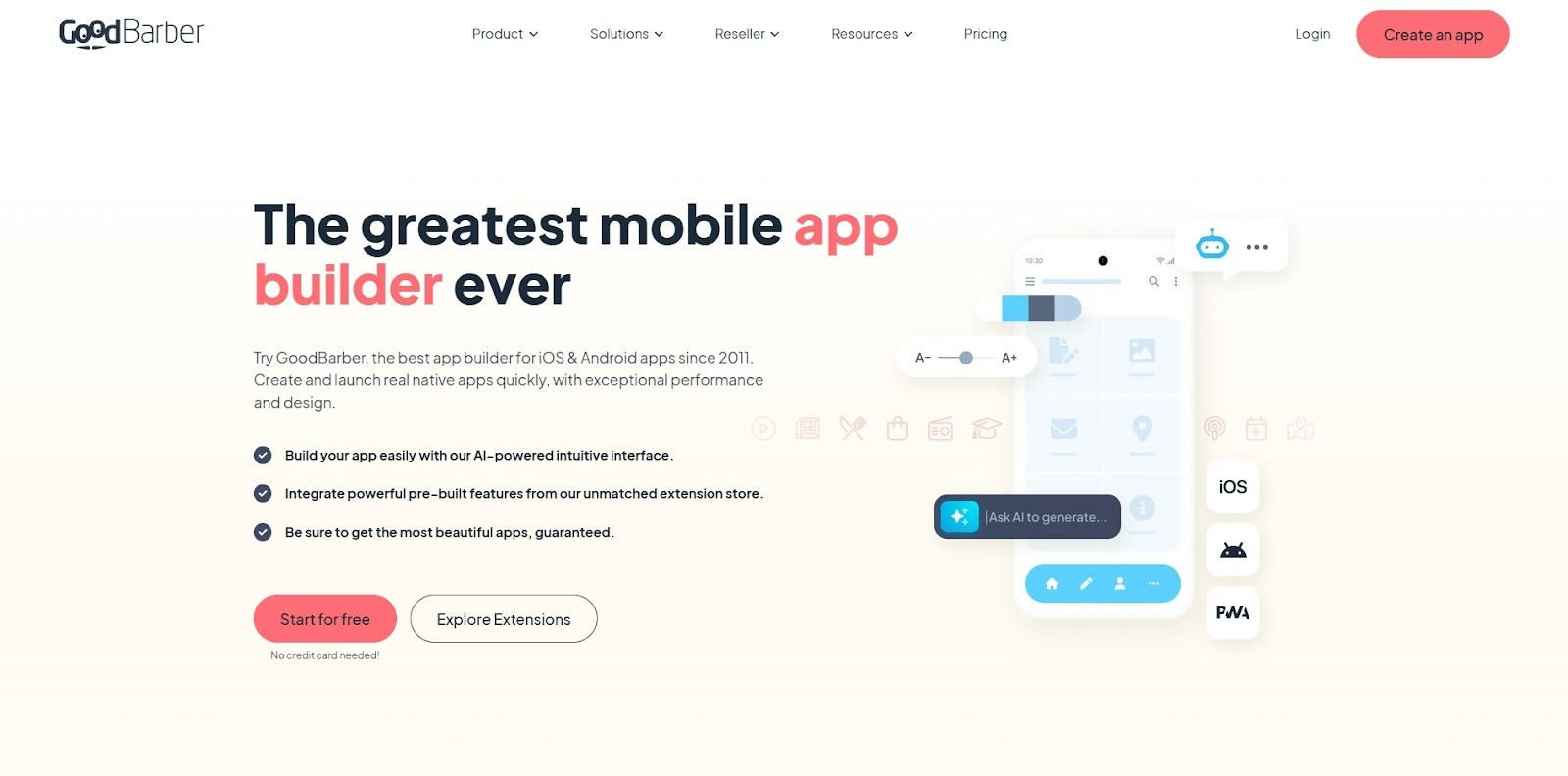
GoodBarber is a no-code platform that goes beyond Shopify apps to offer mobile app building for multiple platforms, including native apps and Progressive Web Apps (PWAs). It’s great for businesses looking to expand their mobile presence beyond just Shopify.
Key Highlights:
- Multi-Platform Support: Build both native apps for iOS and Android, as well as PWAs for cross-platform engagement.
- Customizable Design: Offers highly customizable templates and drag-and-drop design tools.
- Social and User-Generated Content: Enables businesses to build a community within their app with integrated features like UGC, social sharing, and ratings.
- Rich Analytics: Provides detailed insights into user behavior, helping businesses improve conversion and engagement.
Pricing:
- Tiered subscriptions, often from ~$30/month for basic builder plans, plus separate app publishing costs.
Why Choose GoodBarber?
GoodBarber is ideal for brands looking for a versatile, customizable platform that supports both native apps and PWAs. It’s a great fit for businesses that want to engage customers across multiple devices and platforms.
5. Fuego.io
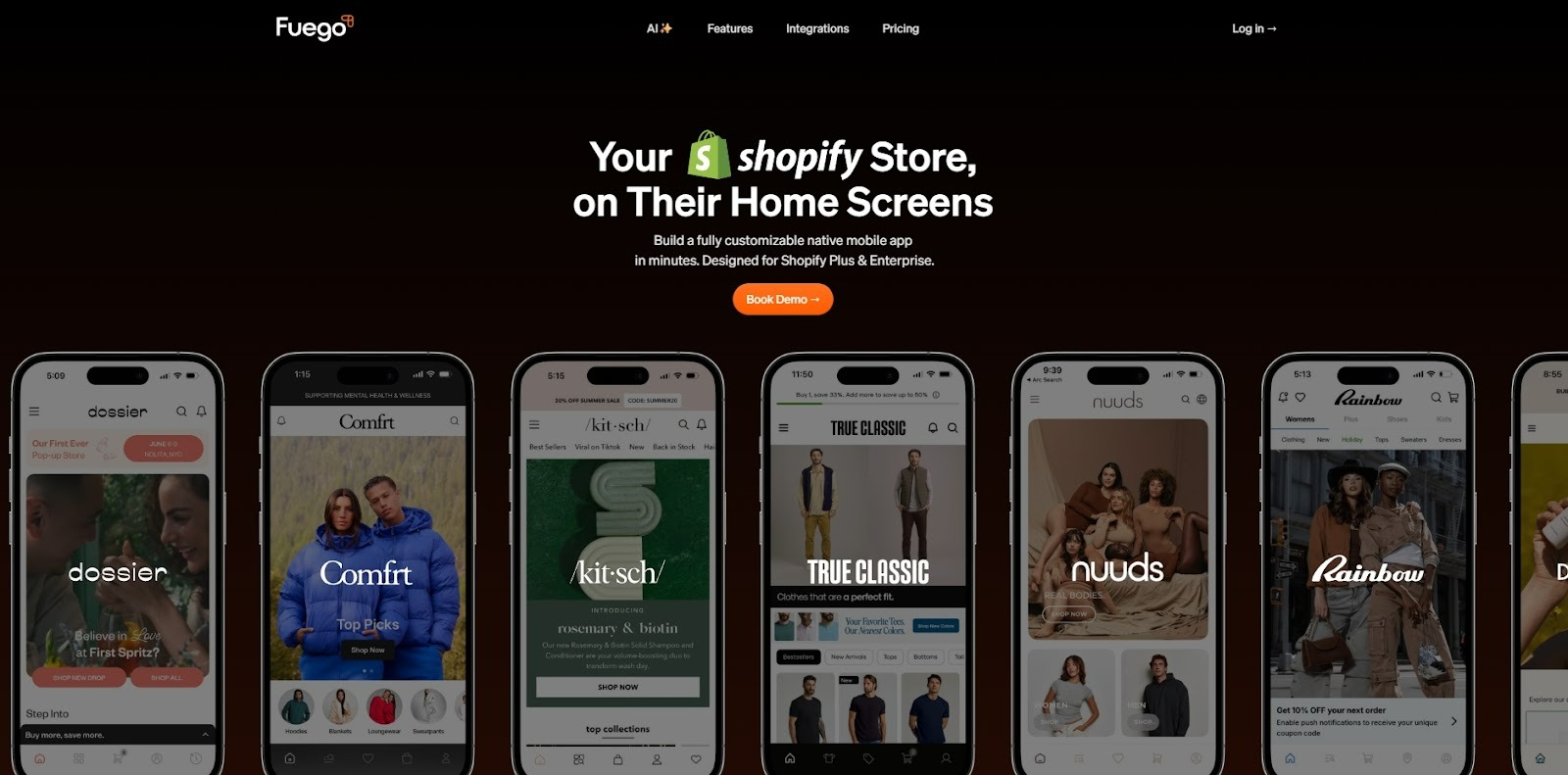
Fuego.io is a no‑code Shopify mobile app builder that helps merchants turn their Shopify stores into fully native mobile apps capable of social commerce features and engagement tools without coding.
Key Highlights of Fuego.io:
- Native app creation: Build iOS and Android apps using a drag‑and‑drop, no‑code builder.
- AI Assistants & Templates: Uses Generative AI to generate app elements, layouts, and marketing elements for social shopping experiences.
- Unlimited Personalized Push Notifications: Helps engage users directly via segmented and scheduled campaigns.
- Community Engagement Features: Includes a “Community Corner” where customers can interact and shop within the app.
- Real‑Time Analytics & Integrations: Offers dashboards and integrations with many Shopify apps for reviews, loyalty, and social elements.
Pricing:
- Fuego.io plans its starting prices at $999/month, with a 30-minute demo.
6. Plobal Apps
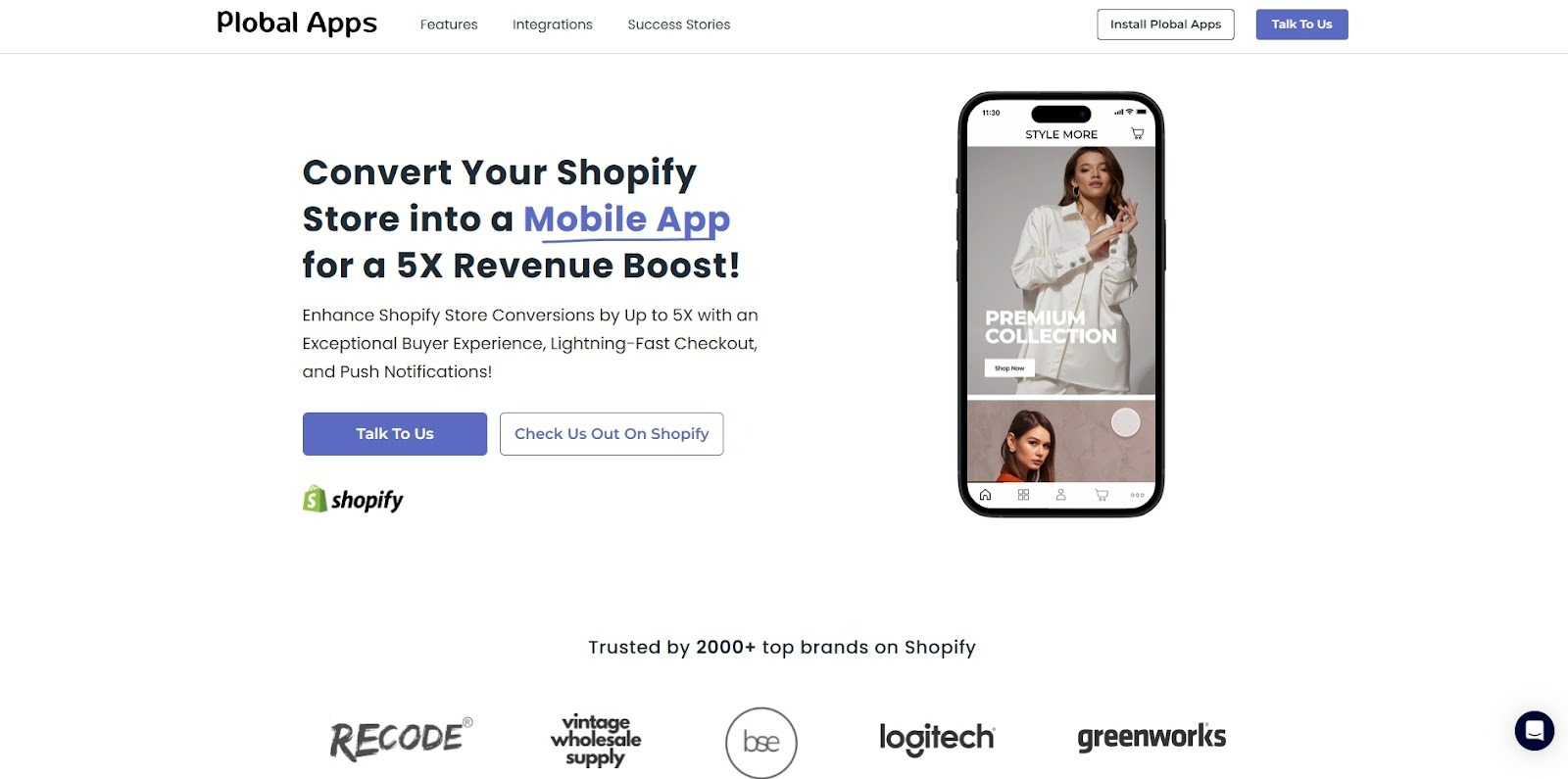
Plobal Apps offers a feature-rich mobile app builder for Shopify merchants, focused on customer engagement, real-time analytics, and AI-powered product recommendations. It’s designed for businesses that want an advanced suite of tools to drive conversion optimization and retention.
Key Highlights:
- AI-Driven Product Recommendations: Leverages machine learning to suggest products based on user behavior, boosting conversion rates.
- Push Notification Automation: Targeted campaigns for promotions, abandoned cart recovery, and personalized offers.
- Real-Time Analytics: Provides insights into app performance and customer behavior, helping businesses optimize their marketing and sales strategies.
- Advanced Customization: Offers more advanced design control compared to simpler platforms, making it suitable for businesses looking for bespoke solutions.
- Global Reach: Multi-language and multi-currency features for businesses with international customers.
Pricing: NA
Why Choose Plobal Apps?
Plobal Apps is an ideal choice for businesses that want a comprehensive mobile app solution with advanced AI-powered features, real-time analytics, and personalization tools to scale engagement and optimize conversions.
7. Superfans
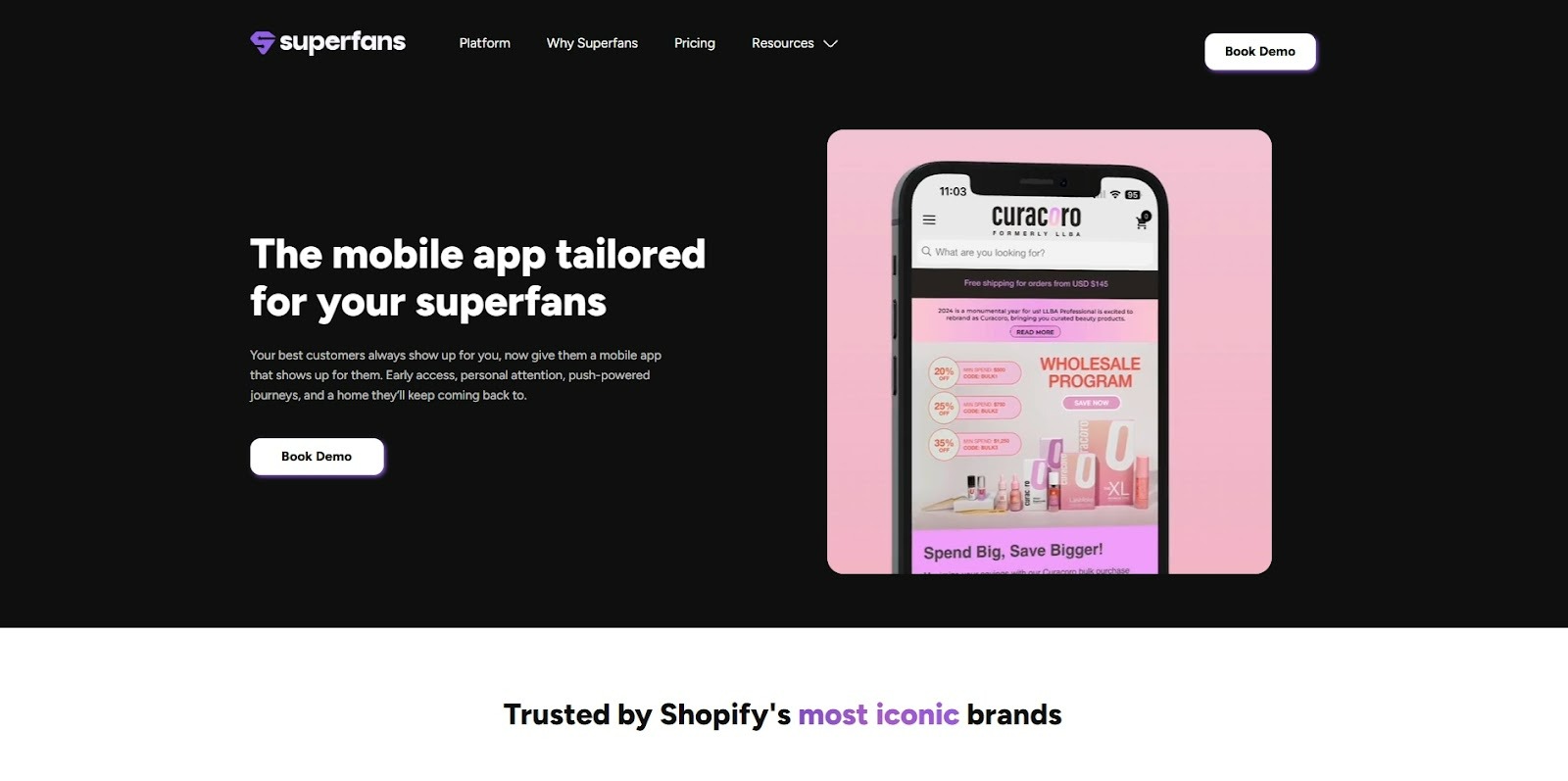
Superfans is a retention-first Shopify mobile app builder known for strong push capabilities and high merchant satisfaction. It is built to help brands stay top of mind through frequent, well-timed communication.
Key Highlights:
- High-volume push messaging without tight caps: Many plans allow unlimited or very high notification volumes. This lets brands run daily or weekly campaigns without worrying about hitting limits.
- Prebuilt campaign types for common scenarios: Abandoned cart, flash sale, and launch notifications can be configured quickly. These ready-made flows shorten the path from idea to live campaign.
- Drag-and-drop layout editing: Screens can be rearranged and restyled visually to match seasonal or promotional needs. This supports rapid creative refreshes without rebuilds.
- Always-on Shopify data synchronization: The app reflects new products, price changes, and stock levels instantly. Users never encounter outdated information when switching between the web and the app.
Pricing:
- Unlimited or premium plans can go up to $1,000/month+ for multi-language, integrations, and advanced features
Why Choose Superfans?
Superfans is ideal for brands that rely heavily on recurring promotional communication to drive sales. It prioritizes reach and consistency in customer touchpoints over deep structural customization.
8. MageNative
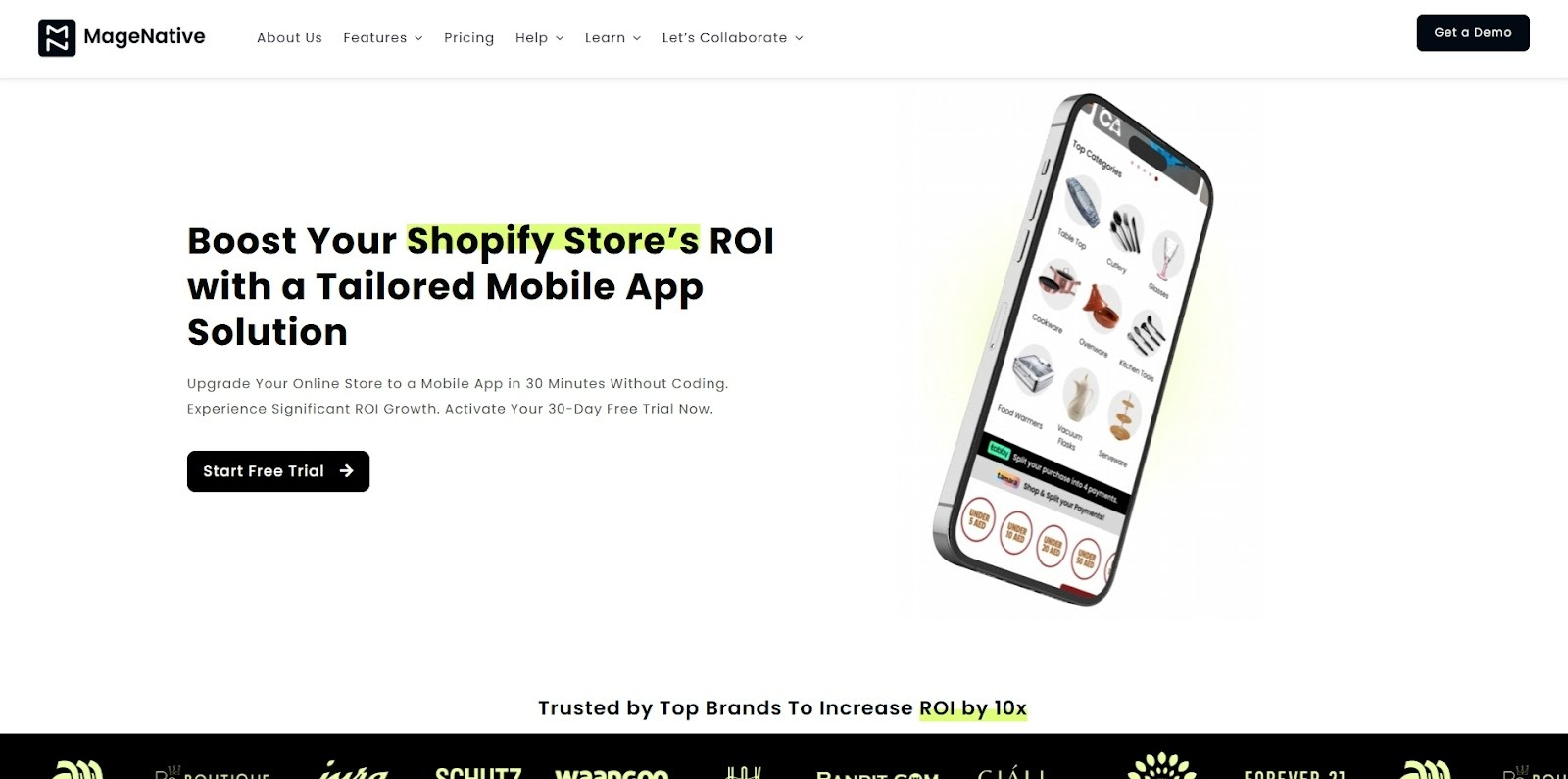
MageNative is a cost-effective Shopify app builder that focuses on providing native mobile apps with real-time syncing and customizable features. It’s a great option for small to medium-sized brands looking for simplicity and affordability.
Key Highlights:
- Affordable Pricing: MageNative offers budget-friendly plans, making it ideal for small businesses looking to create an app without a huge upfront cost.
- Real-Time Sync: Automatically syncs products, orders, and inventory with Shopify.
- Multi-Language Support: Enables businesses to cater to international customers with multi-language and multi-currency features.
- Customization Options: Basic design customization tools to align the app with your brand’s look and feel.
Pricing:
- Entry plans often start around $49/month with options to scale to higher tiers for advanced features.
- Exact pricing tiers vary by needs like push, analytics, and support levels.
Why Choose MageNative?
MageNative is a budget-friendly, user-friendly option for smaller businesses or those just getting started with mobile apps. It offers core Shopify integration and real-time syncing, but may not be suitable for businesses that need advanced features and customization.
9. OneMobile
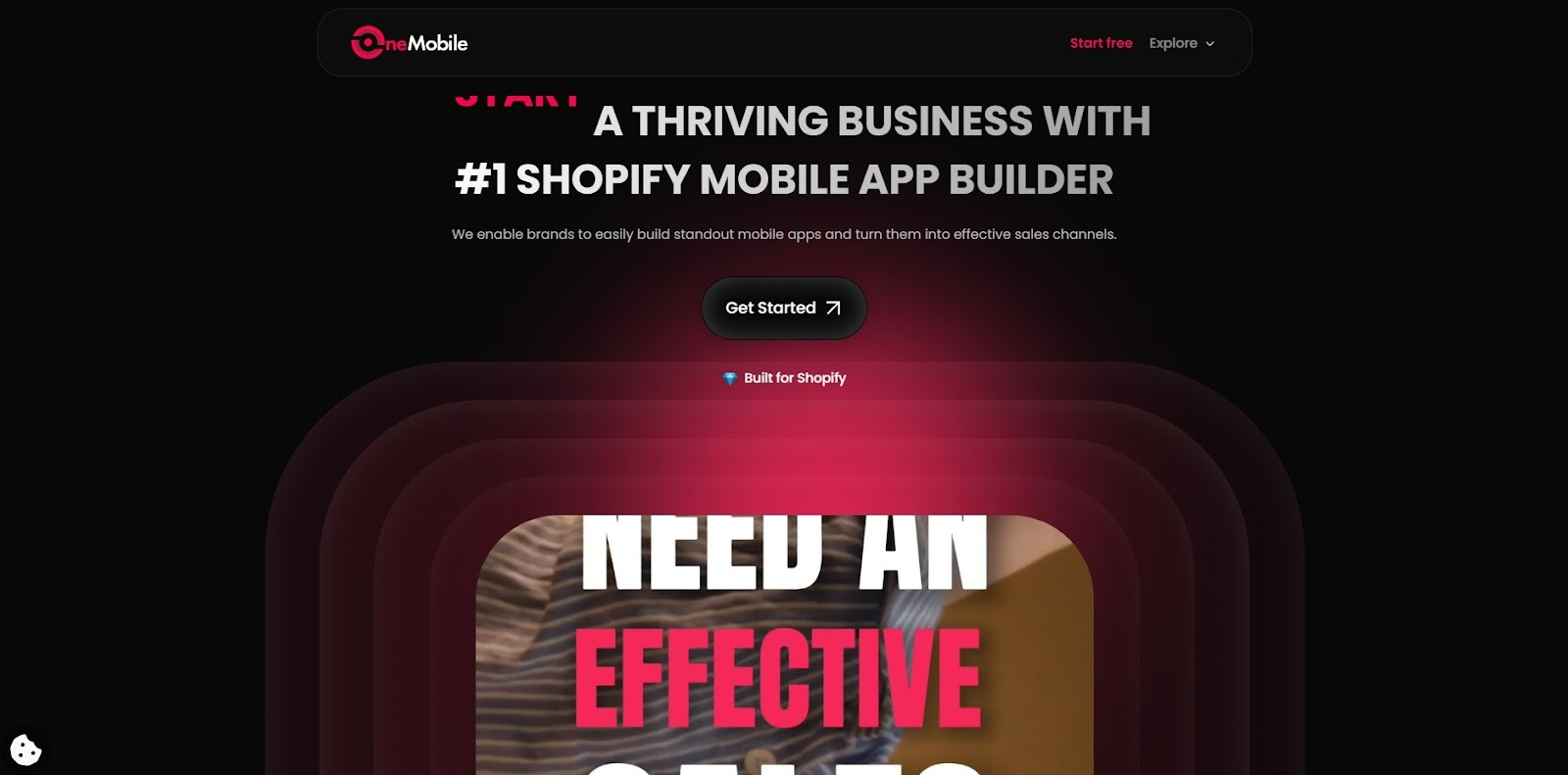
OneMobile is a no-code, drag-and-drop Shopify mobile app builder aimed at merchants who want to get an app live quickly without a large upfront investment. It focuses on simplicity and speed, offering ready-made themes that can be customized visually while staying synced with your Shopify catalog.
Key Highlights:
- Visual drag-and-drop app builder: You can assemble your home screen, product grids, and promotional sections by moving blocks around instead of writing code. This makes everyday changes like swapping banners or reordering collections fast enough to do without technical help.
- Push notifications for ongoing engagement: Merchants can send announcements, sale alerts, and reminders directly to users’ phones in a few clicks. Regular push campaigns help bring customers back without paying again for ads or external traffic.
- Theme library with extendable plugins: Prebuilt themes give you a structured starting point while optional add-ons unlock extra features as you grow. You can start simple and layer on functionality instead of rebuilding the app from scratch later.
- Flexible entry with upgrade paths: Lower-cost plans make it easy to test whether an app drives results for your store. As usage and needs increase, higher tiers add automation and more advanced capabilities.
Pricing:
- Free/entry plan available.
- Paid plans reportedly scale up to ~$990/month if your needs require more advanced retention features.
Why Choose OneMobile?
OneMobile works well for merchants who want a dependable, low-friction entry into mobile apps without committing to heavy custom work upfront. It keeps the focus on speed to market and practical retention tools, while still leaving room to expand features once the app proves its value.
10. Apptile
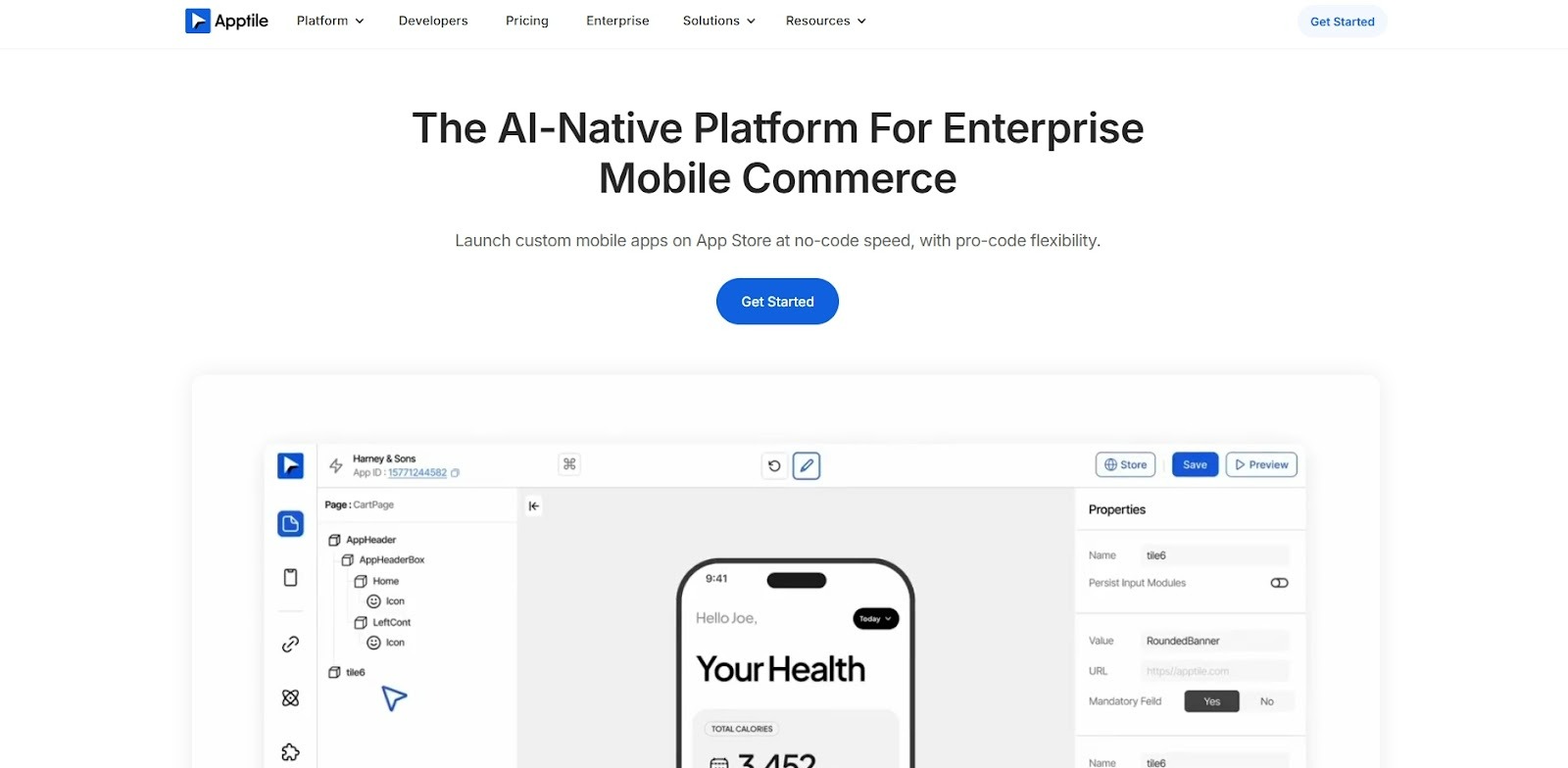
Apptile is a modern drag-and-drop Shopify app builder that combines visual design tools with AI-assisted merchandising. It is built for brands that want their app to feel curated and responsive to user behavior rather than static.
Key Highlights:
- Block-based visual layout editor: Every section of the app homepage can be rearranged and restyled through a visual interface. This makes it easy to run frequent merchandising experiments without developer involvement.
- AI-assisted product discovery: The platform can surface relevant products based on what each user browses and buys. This turns the app into a personalized storefront instead of a fixed catalogue.
- Real-time catalog and order sync: Any change made in Shopify, from price edits to new launches, appears instantly inside the app. Campaigns can go live across the web and app at the same time without manual coordination.
- Segmented and scheduled push campaigns: Notifications can be timed and targeted to specific user groups instead of blasting the same message to everyone. Better targeting usually translates into higher click and conversion rates.
Pricing:
- Offers a free trial on the Shopify App Store.
- Many merchants report entry tiers around $99/month, scaling upward based on AI, push automation, and analytics.
Why Choose Apptile?
Apptile suits brands that care about how products are discovered inside the app and want that experience to adapt over time. It gives marketing teams more control over merchandising and personalization without turning the project into a developer-led rebuild.
11. Hulk Mobile App Builder
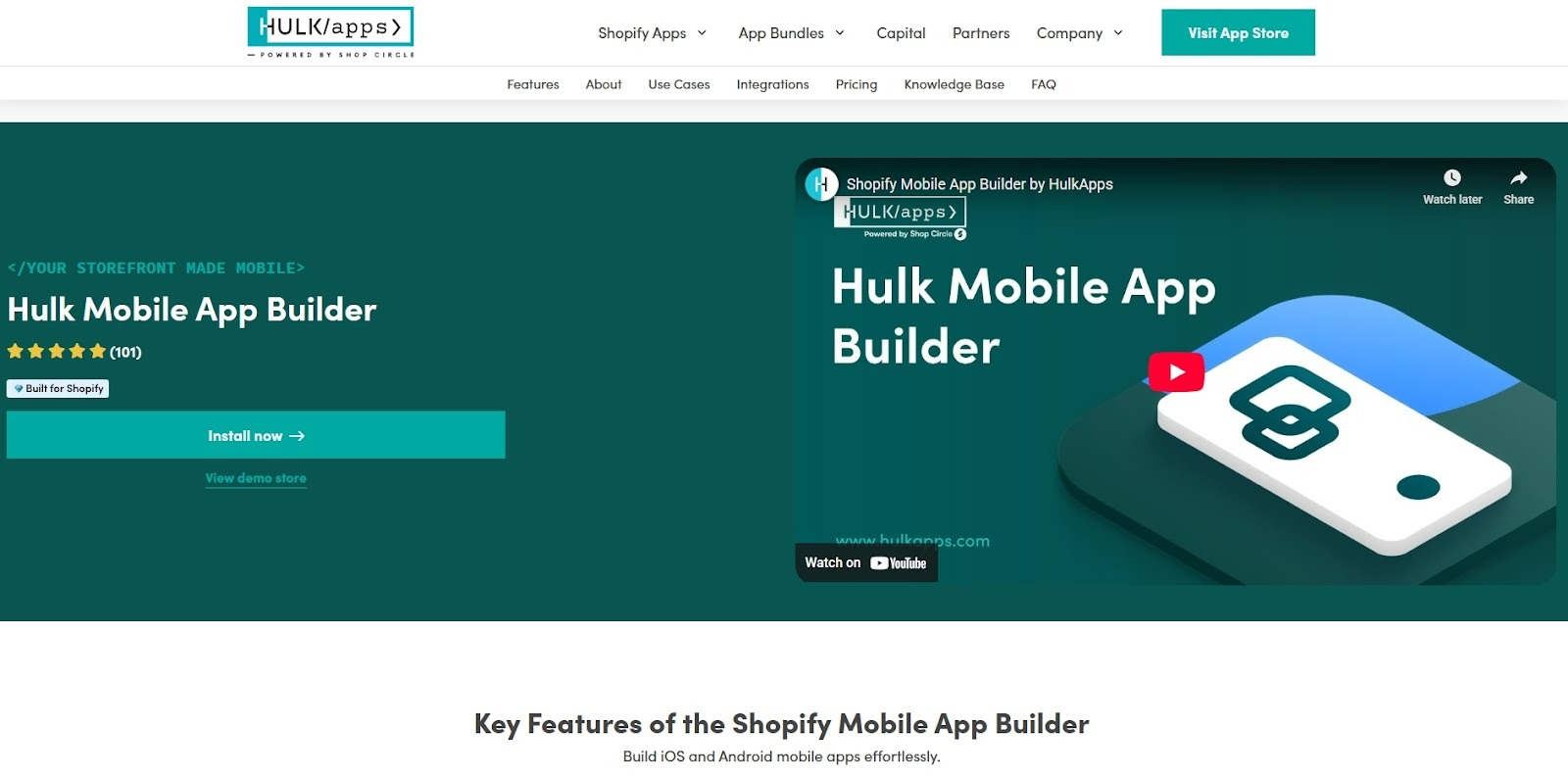
Hulk Mobile App Builder is designed around conversion and retention, with tight connections to the broader HulkApps ecosystem. It focuses on turning the app into a high-performing sales and re-engagement channel.
Key Highlights:
- Behavior-triggered push automation: Messages can fire automatically when a user abandons a cart or a product comes back in stock. This keeps revenue opportunities from slipping through the cracks when shoppers leave mid-journey.
- Built-in promotional and upsell blocks: In-app banners and product recommendations can be placed exactly where they influence decisions. These elements support cross-sell and bundle strategies without external plugins.
- Performance and campaign analytics: Dashboards show installs, sessions, and notification results in one place. Clear feedback loops make it easier to refine campaigns instead of guessing what works.
- Connections to HulkApps marketing tools: If you already use HulkApps for reviews, upsells, or automation, those features extend into the app. That reduces setup work and keeps your growth stack unified.
Pricing:
- Free installation with optional paid tiers for advanced features.
- Typically includes push, analytics, and theme controls with paid upgrades based on volume.
Why Choose Hulk Mobile App Builder?
This option fits merchants who run frequent promotional cycles and want their mobile app tightly wired into existing conversion tactics. It turns the app into an active sales engine rather than a passive browsing surface.
12. LEO
LEO is a lightweight, beginner-friendly builder focused on getting smaller Shopify stores into the app stores with minimal effort. It covers the essentials without adding operational complexity.
Key Highlights:
- Rapid native app publishing flow: Guided setup helps merchants submit iOS and Android apps without deep technical steps. This shortens the time between idea and a live, downloadable app.
- Continuous real-time store updates: Products, collections, and pricing stay synced automatically with Shopify. Day-to-day catalogue management continues to happen in one place.
- Simple brand customization controls: Colours, icons, and banners can be adjusted to match your storefront branding. Even basic visual alignment helps customers recognize the brand instantly.
- Manual push notification campaigns: Merchants can send straightforward announcements for sales or drops. These messages provide an easy first layer of customer re-engagement.
- Accessible pricing for early-stage brands: Low or free entry tiers lower the risk of trying mobile commerce. Stores can validate demand before investing in heavier tooling.
Pricing:
- Free or very low-cost entry plans are available.
- Premium tiers with push and design features may apply.
Why Choose LEO?
LEO is best for merchants testing the waters of mobile apps who need speed and affordability over advanced experimentation. It provides a clean, native presence that supports basic repeat purchase behavior without extra overhead.
13. Shop2App
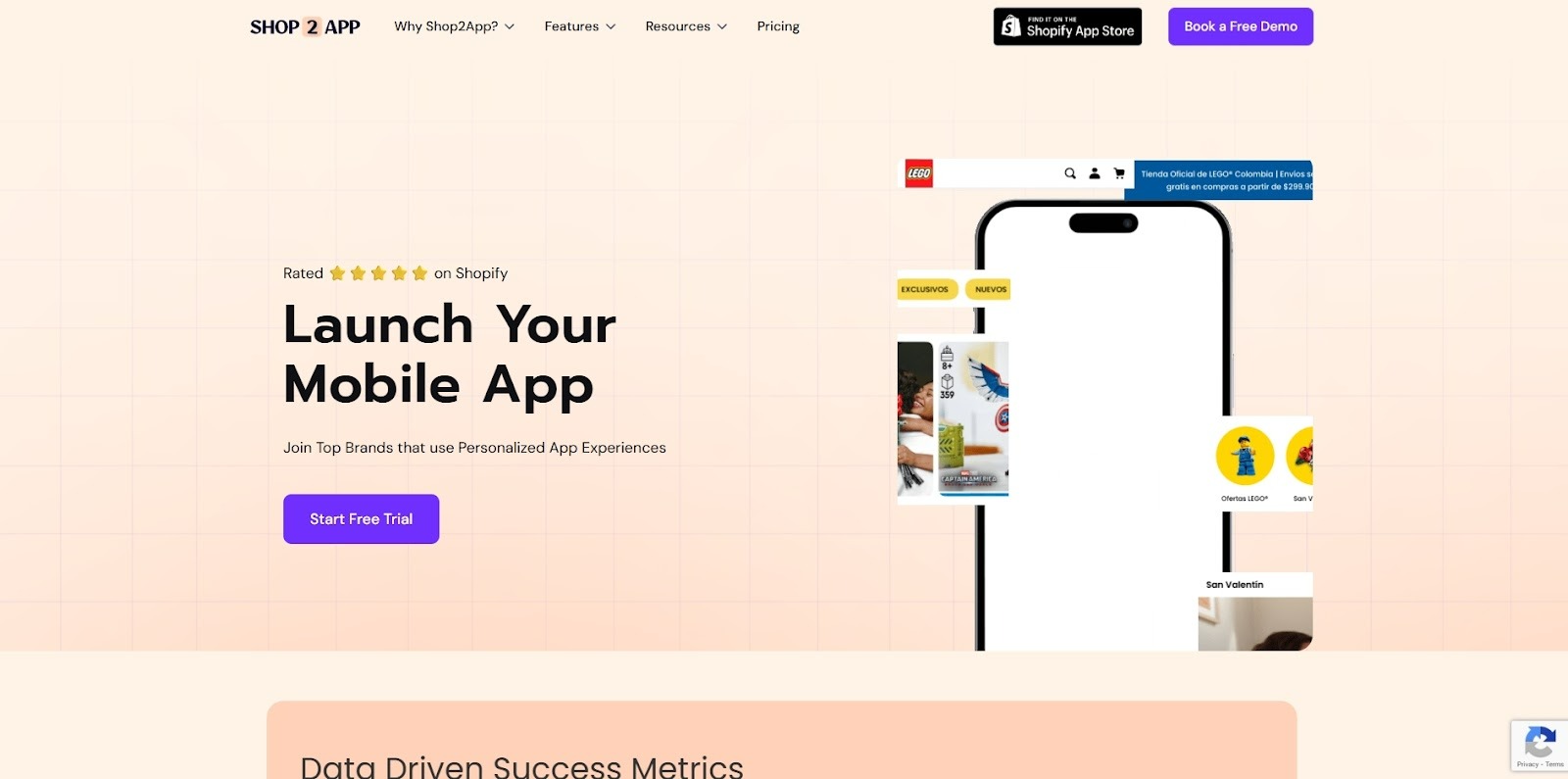
Shop2App focuses on creating segmented, app-first experiences that go beyond a simple mobile storefront. It is aimed at brands that want different journeys for different types of customers.
Key Highlights:
- Advanced screen and navigation control: Merchants can design unique flows instead of relying on a fixed catalogue layout. This enables guided journeys for launches, memberships, or campaigns.
- Login-based areas and gated content: Parts of the app can be reserved for specific user groups. This supports VIP programmes, subscriptions, or wholesale-style access.
- Behavior and segment-driven content targeting: Different customers can see different banners, products, or offers. Personalized surfaces increase relevance without sending everyone through the same path.
- Continuous Shopify data alignment: Orders, products, and customer records stay in sync with the main store. Complex experiences still run on accurate, centralized data.
- Targeted in-app messaging and notifications: Communication can be limited to the exact segment it applies to. Focused messaging avoids fatigue and improves response rates.
Pricing:
- Growth Plan: $500/month
- Premium Plan: $1,500/month
- Enterprise Plan: Custom (higher)
Why Choose Shop2App?
Shop2App suits brands that treat their mobile app as a personalized hub rather than a generic sales channel. It enables structured, member-like experiences that encourage long-term loyalty and differentiated journeys for high-value customers.
How To Choose the Best Alternative to MobiLoud?
Instead of starting with names, start with your own constraints and ambitions. The right choice depends less on feature lists and more on how you plan to run and evolve your mobile channel over the next few years.
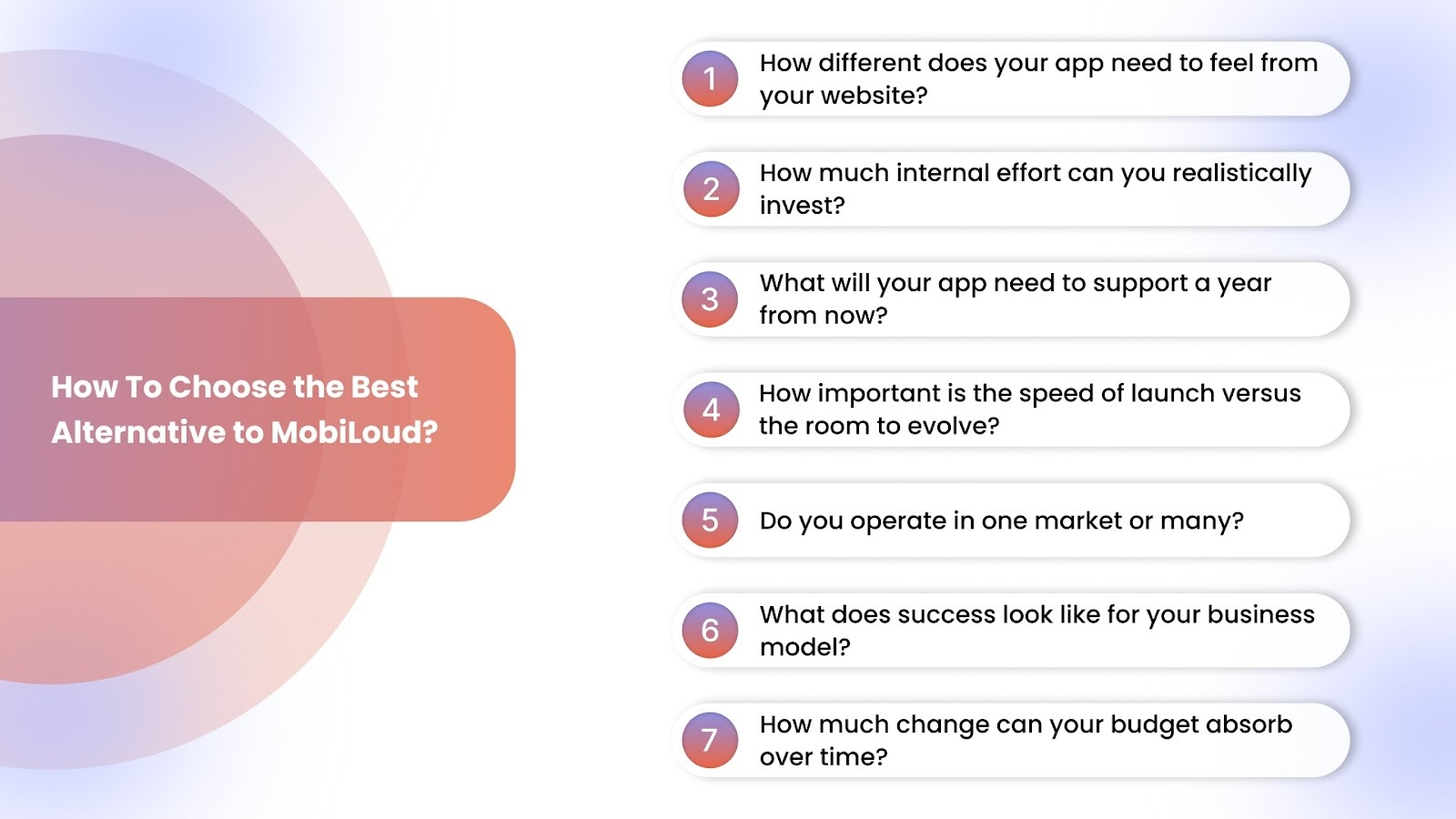
Ask yourself a few practical questions.
1. How different does your app need to feel from your website?
If your goal is to replicate your existing store in an app with minimal changes, a template-style approach may be enough. If you expect your app to have its own layouts, flows, and experiments that go beyond the web experience, you’ll need a platform that allows deeper control and modification over time.
2. How much internal effort can you realistically invest?
Some solutions are closer to a service, where most of the building and upkeep happens outside your team. Others give you more control but assume you will actively manage, test, and iterate inside the platform. Think about whether you want convenience and delegation, or flexibility and ownership.
3. What will your app need to support a year from now?
Today, you might just want push notifications and a smooth checkout. Tomorrow you might want subscriptions, bundles, gated collections, or entirely new navigation patterns. Consider whether your choice lets you grow into those ideas without starting over.
4. How important is the speed of launch versus the room to evolve?
A faster, simpler launch can be valuable, especially if mobile is new for your team. At the same time, some quick-start options are intentionally opinionated, which can make later changes harder. Decide whether your priority is getting live quickly or having more creative and technical freedom later.
5. Do you operate in one market or many?
If you plan to add languages, regions, currencies, or even in-store and POS integrations, check how comfortably a platform handles those scenarios. Even if you don’t need them today, your roadmap might.
6. What does success look like for your business model?
A content-heavy brand, a high-frequency replenishment store, and a low-volume luxury retailer will all use their apps differently. Clarify whether your app is mainly for retention, discovery, loyalty, subscriptions, or omnichannel experiences, then evaluate which platforms align with that use case.
7. How much change can your budget absorb over time?
Lower entry costs can make it easy to start, but may come with limits on how far you can customize or optimize later. Higher investment options can open more possibilities, but only make sense if you plan to actively use that flexibility to drive more lifetime value.
When you step back and look at these questions, most growing brands want two things at the same time: an easy launch today and the freedom to change things tomorrow.
In practice, the most future-proof setups are the ones that don’t force you to choose between speed and control, but let you start simple and expand capabilities as your mobile strategy matures.
If you want that balance of quick launch, full control, and room to grow without rebuilding later, AppMaker gives you the tools to shape your app exactly the way your business evolves.
Conclusion
While MobiLoud is a solid choice, platforms like AppMaker offer additional benefits: real customization, flexibility, and powerful features such as AI-driven personalization and seamless Shopify integration.
If you're looking for a solution that not only fits your business today but also adapts as you grow, AppMaker gives you the control and scalability you need without the limitations of template-based solutions. With its no-code platform and tailored features, it’s a smart choice for any Shopify merchant looking to build a unique, customer-first mobile experience.
Ready to create a mobile app that truly represents your brand? AppMaker might be the solution you’ve been looking for.
FAQs
1. Do I need a separate marketing strategy for my mobile app once it’s launched?
Yes. An app needs its own acquisition and re-engagement plan using channels like email, SMS, in-store prompts, and on-site banners to drive installs and repeat usage.
2. Can a Shopify mobile app work offline or with poor internet connectivity?
Most native apps can cache parts of the interface and previously loaded data, making browsing smoother on slow networks, even though checkout still requires an active connection.
3. How do app store reviews affect my ecommerce performance?
Strong ratings improve conversion on your app store listing and build trust before install, while negative reviews can slow growth even if your website performs well.
4. Is it possible to run app-only promotions without affecting my web store pricing?
Yes. Many platforms support app-exclusive collections, discounts, or early access launches that reward app users without changing your main storefront.
5. What happens to my app if I redesign my Shopify website later?
That depends on the platform. Some apps mirror your site automatically, while others let your app design evolve independently, so a web redesign doesn’t force an app rebuild.