





















Running a Shopify store is one thing, but making it stand out is another. Stores that plan their promotions strategically see real growth, and Shopify has already had the incredible fortune to be profiled as one of the top 10 eCommerce companies in the world, proof that smart strategies work.
Successful stores optimize product pages, simplify checkout, use social campaigns, and engage mobile users effectively.
In this blog, we will discuss 10 actionable ways to promote your Shopify store in 2026, helping you attract the right audience, convert them efficiently, and avoid common pitfalls that silently reduce revenue.
Overview
- Promotion-ready Shopify stores convert traffic by optimizing product pages, checkout, trust signals, and analytics before driving paid or organic campaigns.
- High-intent buyers respond best to behavior-based messaging, persona-driven social ads, intent-focused search, and coordinated paid campaigns.
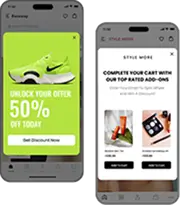
- Owned channels, on-site engagement, affiliates, and performance-based influencers amplify conversions when structured, timed, and tracked precisely.
- Micro-event promotions and community-driven engagement turn first-time buyers into repeat advocates without relying on blanket discounts.
- Avoid common mistakes like unprepared stores, message overload, micro-UX friction, chasing vanity metrics, or depending on a single channel to maximize ROI.
How to Build a Promotion-Ready Shopify Store?
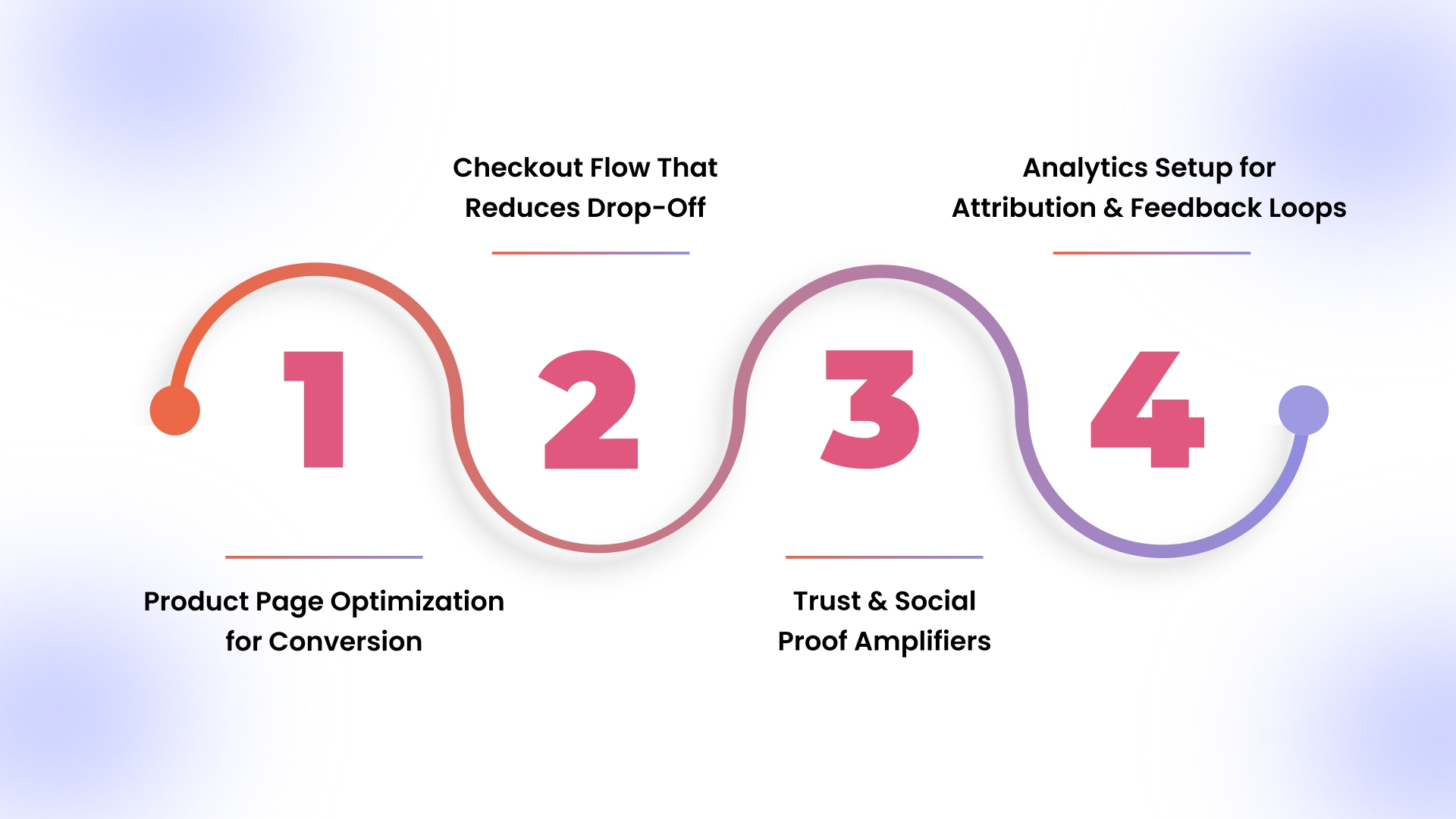
A promotion-ready Shopify store is engineered for cold traffic. Before scaling ads or campaigns, your product pages, checkout, trust signals, and analytics must convert first-time visitors. In fact, fashion apps show 3.2x higher conversion rates than mobile web, highlighting the need for optimization.
1. Product Page Optimization for Conversion
Start by designing product pages for fast decisions, then anchor verified reviews beside the price. You must replace lifestyle images with real-use visuals, surface delivery timelines above the fold, and use inventory-based scarcity tied to actual stock.
2. Checkout Flow That Reduces Drop-Off
High-intent traffic abandons when checkout feels long or uncertain. Add visible progress indicators, surface Shop Pay and Apple Pay before form fields, remove header navigation entirely, and reinforce shipping speed and returns directly inside the payment step.
3. Trust & Social Proof Amplifiers
Trust must be earned instantly, not after scrolling. Place verified reviews, total customers served, refund guarantees, and security badges adjacent to primary CTAs so promotional traffic doesn’t need external validation to complete a purchase.
4. Analytics Setup for Attribution & Feedback Loops
Track product-level conversions, checkout exits, payment method usage, and campaign-specific revenue so underperforming channels are identified quickly and winning promotion strategies can be scaled with confidence.
Having optimized your store for conversion, it’s time to attract and engage high-intent buyers. Let’s dive into ten smart, actionable strategies to promote your Shopify store effectively in 2026.
Also Read: Tips to Improve Customer Loyalty with A Shopify Mobile App
10 High-Impact Ways to Promote Your Shopify Store
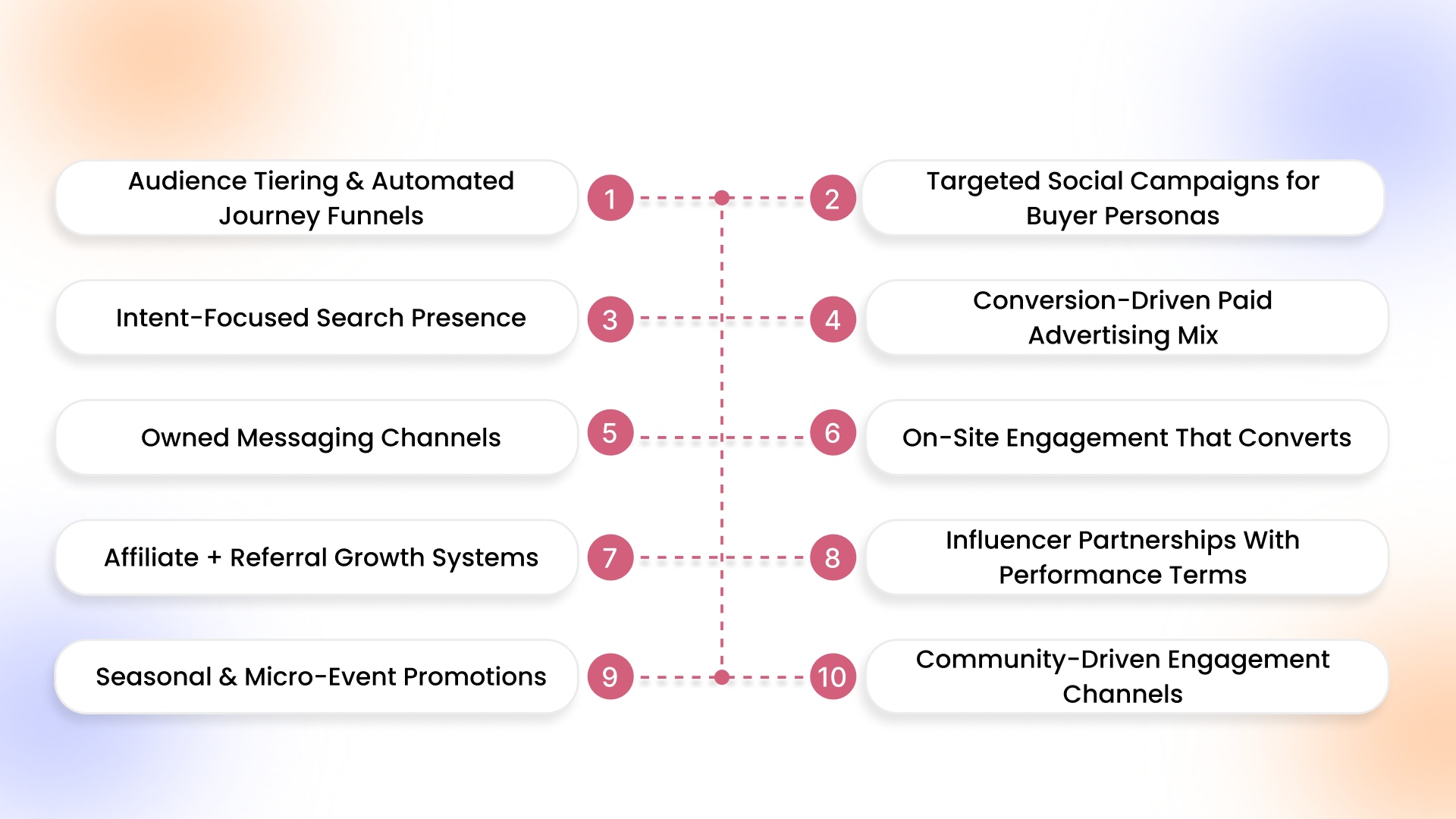
Effective Shopify promotion means routing high-intent shoppers through the right channels, messages, and moments. These ten strategies explain exactly how to attract buyers and convert them profitably.
1. Audience Tiering & Automated Journey Funnels
Top-performing Shopify stores don’t treat email or SMS lists as one audience. They map customers by live shopping behavior, first product viewed, cart value, repeat visits, and purchase frequency, then trigger messages that match buying momentum instead of blasting offers randomly.
Here’s what you should do:
- Create behavior tiers: product viewers (no cart), cart starters, high-value cart abandoners, first-time buyers, repeat buyers
- Build separate flows with increasing urgency and proof (education → reassurance → incentive)
- Auto-move users between flows the moment they take a new action to avoid message overlap
2. Targeted Social Campaigns for Buyer Personas
Social ads convert when they speak to why someone wants the product, not just what it is. Strong campaigns separate buyers by motivation, problem-solvers, deal-seekers, and premium buyers. It shows each group a different story, offer, and proof sequence.
Here’s what you should do:
- Define personas using purchase triggers (price sensitivity, use case, urgency)
- Create dedicated ad sets with visuals and copy tied to one persona only
- Sequence ads: problem awareness → social proof → limited incentive instead of running discounts first
3. Intent-Focused Search Presence
Search traffic should capture buyers already close to purchasing, not people casually researching. The goal is to show up when users are comparing options, validating trust, or ready to add to cart.
Here’s what you should do:
- Target keywords with purchase signals like comparisons, alternatives, and reviews
- Optimize product and collection pages for these queries, not blog articles
- Answer buying objections directly on pages: pricing clarity, delivery time, returns, and use cases
4. Conversion-Driven Paid Advertising Mix
Paid growth breaks when channels are run in silos. High-ROI Shopify brands treat ads like a funnel: search captures demand that already exists, retargeting resolves objections, and lookalikes scale only proven buyers.
Here’s what you should do:
- Run Google Search + Shopping only for product-level and comparison queries (SKU, brand + product, “buy,” “price,” “alternative”)
- Retarget product viewers and cart abandoners with creatives that answer why they didn’t buy (UGC clips, reviews, delivery timelines, return clarity)
- Build lookalike audiences exclusively from purchasers or high-LTV customers, never from site visitors or email subscribers
5. Owned Messaging Channels
Owned channels outperform ads because they learn and improve with every interaction. The advantage is timing. When messages trigger from real intent signals, they feel helpful instead of promotional. Push notifications, in particular, deliver 5–10x higher click-through rates (CTR) than email or paid marketing, making them an invaluable tool for driving engagement and conversions.
Here’s what you should do:
- Trigger SMS/email based on behavior thresholds (multiple product views, cart value crossing AOV, repeat visits within 48 hours)
- Dynamically insert last viewed product, size, color, or category into messages; no generic “still thinking?” copy
- Reduce broadcast campaigns; focus on lifecycle flows that fire automatically when intent peaks
6. On-Site Engagement That Converts
On-site engagement should remove friction. Every interruption must be earned by intent; otherwise, it hurts conversion. The goal is to assist decisions at the exact moment of hesitation.
Here’s what you should do:
- Trigger popovers only after signals like deep scroll, exit intent, or prolonged inactivity on product pages
- Serve recommendations based on current session behavior (category viewed, price range browsed), not generic “best sellers.”
- Deploy chat only on PDPs and checkout, focused on delivery, returns, sizing, or payment
7. Affiliate + Referral Growth Systems
Affiliates and referrals only scale when they’re engineered like a paid channel. You have to generate predictable and attributable revenue from individuals who already have trust in the product.
Here’s what you should do:
- Issue unique referral links or codes with order-level revenue attribution
- Structure tiered rewards based on confirmed conversions or revenue thresholds
- Proactively invite high-LTV customers and repeat buyers into referral programs; they convert better than creators with cold audiences
8. Influencer Partnerships With Performance Terms
Influencers spend leaks when payment is tied to impressions instead of impact. Performance-based partnerships flip the risk: creators earn more only when they drive real buying behavior.
Here’s what you should do:
- Assign individual UTM links or creator-specific discount codes tied directly to checkout conversions
- Pay on sales generated, CAC targets, or conversion milestones
- Shortlist creators based on audience buying signals (comment intent, past brand collabs, product usage). Do not just look for follower count.
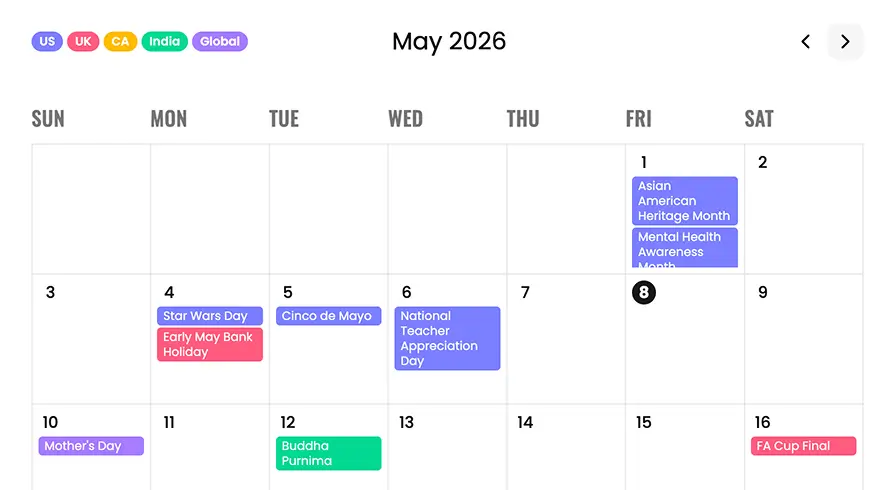
9. Seasonal & Micro-Event Promotions
Major sale days are noisy and margin-heavy. Micro-events work because they’re contextual. They are built around moments customers already care about.
Here’s what you should do:
- Map brand-specific triggers like restocks, limited drops, anniversaries, or seasonal usage spikes
- Run short-duration campaigns focused on availability, timing, or relevance
- Launch across email, paid social, and on-site banners at the same time to compress demand into a narrow window
10. Community-Driven Engagement Channels
Retention improves when customers feel invested, not remarketed. Communities shift the relationship from transactional to participatory, turning buyers into repeat advocates.
Here’s what you should do:
- Create gated VIP access for repeat customers, early buyers, or loyalty members
- Share product tutorials, advanced use cases, and behind-the-scenes decisions to deepen product value
- Incentivize engagement with early access, recognition, or exclusive drops
Once you’ve implemented these promotion strategies, it’s important to avoid hidden pitfalls. Understanding common mistakes ensures your efforts translate into real sales.
Also Read: How to Improve App Engagement in 2026: 8 Proven Strategies
5 Common Shopify Promotion Mistakes to Avoid
Even with solid promotion strategies, Shopify stores fail when subtle execution errors go unnoticed. Overlooking readiness, messaging balance, UX friction, meaningful metrics, or channel diversity silently drains conversions, revenue, and growth potential.
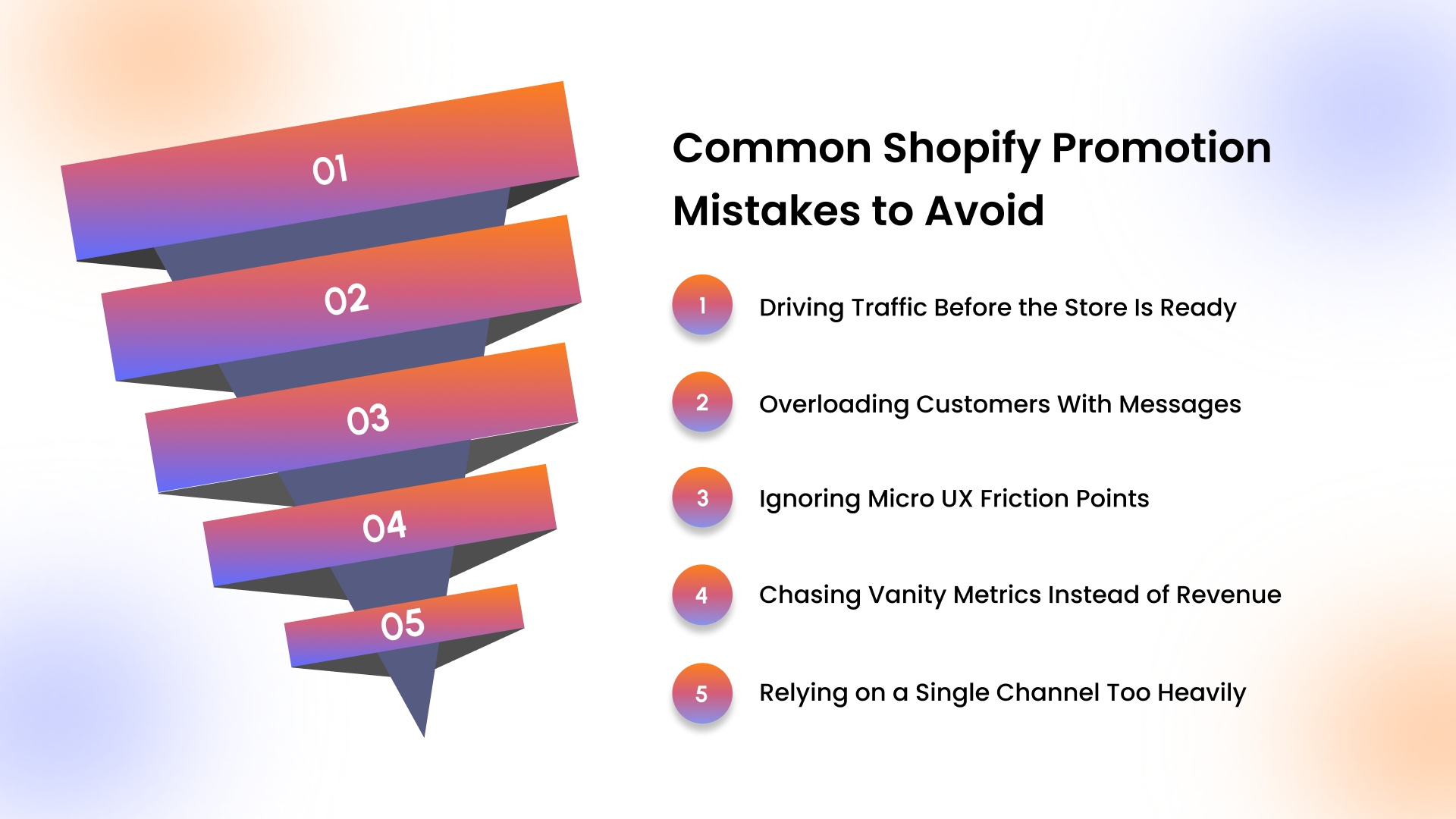
1. Driving Traffic Before the Store Is Ready
Even high-intent visitors won’t convert if product pages, checkout, or trust signals aren’t optimized. Missing reviews, unclear shipping info, or slow-loading images silently reduce sales, wasting every marketing dollar you spend.
2. Overloading Customers With Messages
Bombarding customers with too many emails, SMS, or push notifications creates fatigue and unsubscribes. Flows that overlap or ignore user behavior signals feel spammy, turning potential buyers away instead of nudging them toward purchase.
3. Ignoring Micro UX Friction Points
Small design issues can cause hesitation at critical moments. This could be hidden add-to-cart buttons, confusing navigation, slow page load, or unclear return policies. Even with traffic and intent, these micro-friction points silently kill conversions.
4. Chasing Vanity Metrics Instead of Revenue
Clicks, likes, and impressions may look impressive, but they rarely correlate to sales. Focusing on these signals instead of AOV, purchase frequency, and attributed conversions misguides campaigns and wastes ad spend.
5. Relying on a Single Channel Too Heavily
Putting all effort into one promotion channel, whether social, search, or email, creates blind spots and plateaus growth. Without a diversified, multi-channel approach, even high-performing campaigns stop scaling, and costs rise unnecessarily.
Having explored common Shopify promotion mistakes and what to avoid, the next step is using mobile-first tools. Let's see how AppMaker drives revenue and growth for your store.
How AppMaker Drives Mobile Revenue for Shopify Stores?
At AppMaker, we help you turn your Shopify store into a high-performance mobile sales channel. Our platform supports you in creating an app that not only aligns with your brand but is also optimized to convert visitors into loyal customers. By using AppMaker, you can seamlessly integrate mobile-first strategies that drive conversions, repeat purchases, and long-term revenue growth.
With AppMaker, you get:
- Deep Customization: Tailor your app’s UI/UX and integrations to match your brand’s specific needs, ensuring a personalized customer experience.
- Growth Partnership: We don’t just launch your app. We work with you to develop strategies that maximize sales and customer retention post-launch.
- Open Model Architecture: Encourage your in-house team to innovate and extend the app directly on the platform, giving you control over your store’s future.
- AI-Powered Personalization: Tools like Eidolon AI, John AI, and Rubik’s AI enhance your app by dynamically adjusting layouts, product recommendations, and content based on real-time user behavior, helping to drive engagement and sales.
Overall, AppMaker works as a core part of your promotion strategy, turning your Shopify store into a mobile revenue powerhouse.
Also Read: 10 Mobile App Engagement Metrics That You Should Track in 2026
Conclusion
Promoting a Shopify store successfully means aligning your store readiness, audience behavior, and campaign strategies. By structuring flows, using intent-based channels, and avoiding common pitfalls, every marketing dollar drives measurable conversions without fail.
For brands looking to boost mobile revenue, AppMaker provides a platform to execute these strategies in real time. From behavior-triggered push notifications to dynamic product recommendations, it allows Shopify stores to convert high-intent mobile visitors, personalize interactions, and scale without relying on manual processes.
If you're looking to turn mobile traffic into repeat buyers, reach out to our team today and explore how AppMaker can make your Shopify store a high-converting, revenue-focused mobile experience.
FAQs
1. How long does it take to see results from a Shopify store promotion?
Initial traffic and engagement can appear within days, but measurable sales, ROI, and repeat customer behavior typically take 6–12 weeks. It also depends on ad spend, targeting accuracy, and store readiness.
2. What are the best-paid channels for Shopify in 2026?
Top-performing channels include Google Search & Shopping for high-intent buyers, Meta Ads for social proof and retargeting, TikTok for discovery, and programmatic retargeting to recapture cart abandoners across devices.
3. How often should I update my promotion strategy?
Promotion strategies should be reviewed every 4–6 weeks, with smaller optimizations weekly. Adjust based on performance data, seasonal trends, product launches, and shifts in customer behavior or ad costs.
4. Can small Shopify stores compete with big brands?
Yes. Small stores win by targeting niche audiences, hyper-personalized messaging, micro-events, influencer partnerships, and agile experimentation. These strategies help in outperforming larger brands that rely on broad, slower-to-adapt campaigns.