

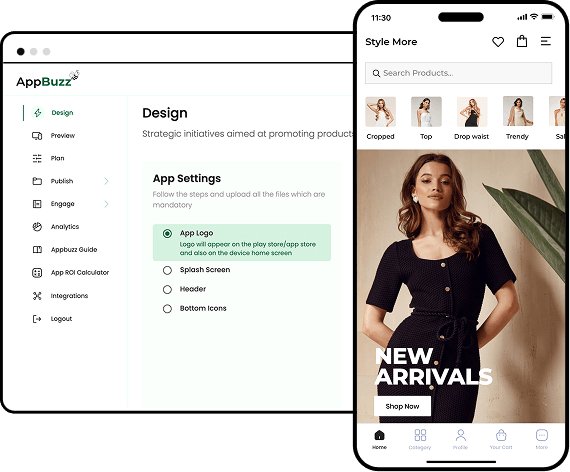
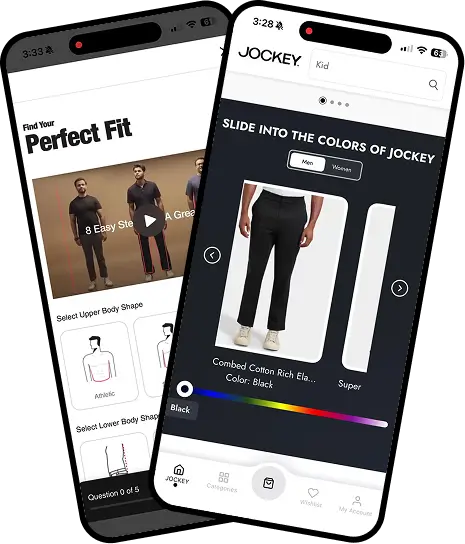






















Your customers are already shopping on their phones. The question is whether your app experience is strong enough to keep them buying. 60% of American adults say mobile shopping is essential for online shopping convenience. That means your mobile app is not just a supporting channel. It directly affects conversions, retention, and repeat revenue.
Many brands choose Tapcart to launch quickly, and at first, it works. You get a native iOS and Android app, real-time product sync, and push notifications that help you activate customers fast.
But growth changes expectations. You start wanting more control over layouts. Deeper personalization. Stronger integrations with your marketing stack. More granular analytics. Better segmentation. And suddenly, what once felt like a complete solution starts feeling restrictive.
That’s usually when brands begin searching for Tapcart competitors. This guide breaks down the top Tapcart alternatives in 2026, comparing what they offer, where they outperform, and which type of Shopify brand they’re best suited for. If you’re evaluating whether to upgrade, switch, or future-proof your mobile app strategy, this will help you decide with clarity.
Overview
- Tapcart is a popular Shopify app platform, but it has limitations in template flexibility, integrations, personalization, and advanced analytics.
- AppMaker emerges as the leading Tapcart alternative with deep customization, AI-driven personalization, real-time Shopify sync, and developer extensibility.
- Alternatives like Shopney, Plobal Apps, and Mobiloud offer drag-and-drop builders, push notifications, real-time sync, and multi-language support for faster launches.
- Other tools like MageNative, OneMobile, Apptile, GoodBarber, VennApps, and Vajro offer advanced app builders, live selling, PWA support, and multi-currency, multi-language capabilities.
- Brands should evaluate alternatives based on design flexibility, scalability, engagement tools, integrations, and long-term growth potential.
What is Tapcart?
Tapcart is a Shopify-native mobile app platform that converts ecommerce storefronts into iOS and Android apps. It offers real-time product sync, push notification automation, and drag-and-drop merchandising. The platform helps DTC brands drive repeat purchases, improve retention, and monetize mobile traffic beyond web checkout limitations.
Why Brands Look Out for Tapcart Alternatives?
While many Shopify merchants appreciate Tapcart for enabling quick mobile app launches, user feedback indicates that some brands evaluate alternatives as their needs evolve. Based on real G2 reviews, these considerations often shape the search for other platforms:
- Collection display limitations: Some users mention that collection pages may show only a subset of products (e.g., 6–12 items), requiring shoppers to navigate to another page to view the full assortment.
- Limited integrations ecosystem: A few reviewers highlight that the number of available integrations is limited, which can affect marketing or operational workflows.
- Template flexibility concerns: Users also note that design templates do not offer greater adaptability, especially for niche storefronts that require unique layouts or merchandising formats.
- Package constraints and occasional lag: Certain reviewers mention that pricing tiers feel restrictive and that the platform may experience minor lag in rare cases.
- Analytics and segmentation gaps: Some merchants express interest in more advanced analytics views, along with deeper segmentation capabilities such as location-based push notification targeting.
Having seen the limitations and feedback from users, it’s important to know which competitors address these gaps and offer tailored Shopify mobile app solutions.
Also Read: 10 Smart Ways to Promote Your Shopify Store in 2026
11 Leading Tapcart Competitors in 2026
Not every Shopify brand needs the same mobile app stack. Some prioritize design flexibility, others focus on faster launch, advanced personalization, or pricing transparency. This list highlights 11 Tapcart competitors that address these distinct merchant priorities in 2026.
Once you’ve seen the overview, we’ll break down each app builder in detail, highlighting features, pricing, and unique capabilities for Shopify brands.
1. AppMaker
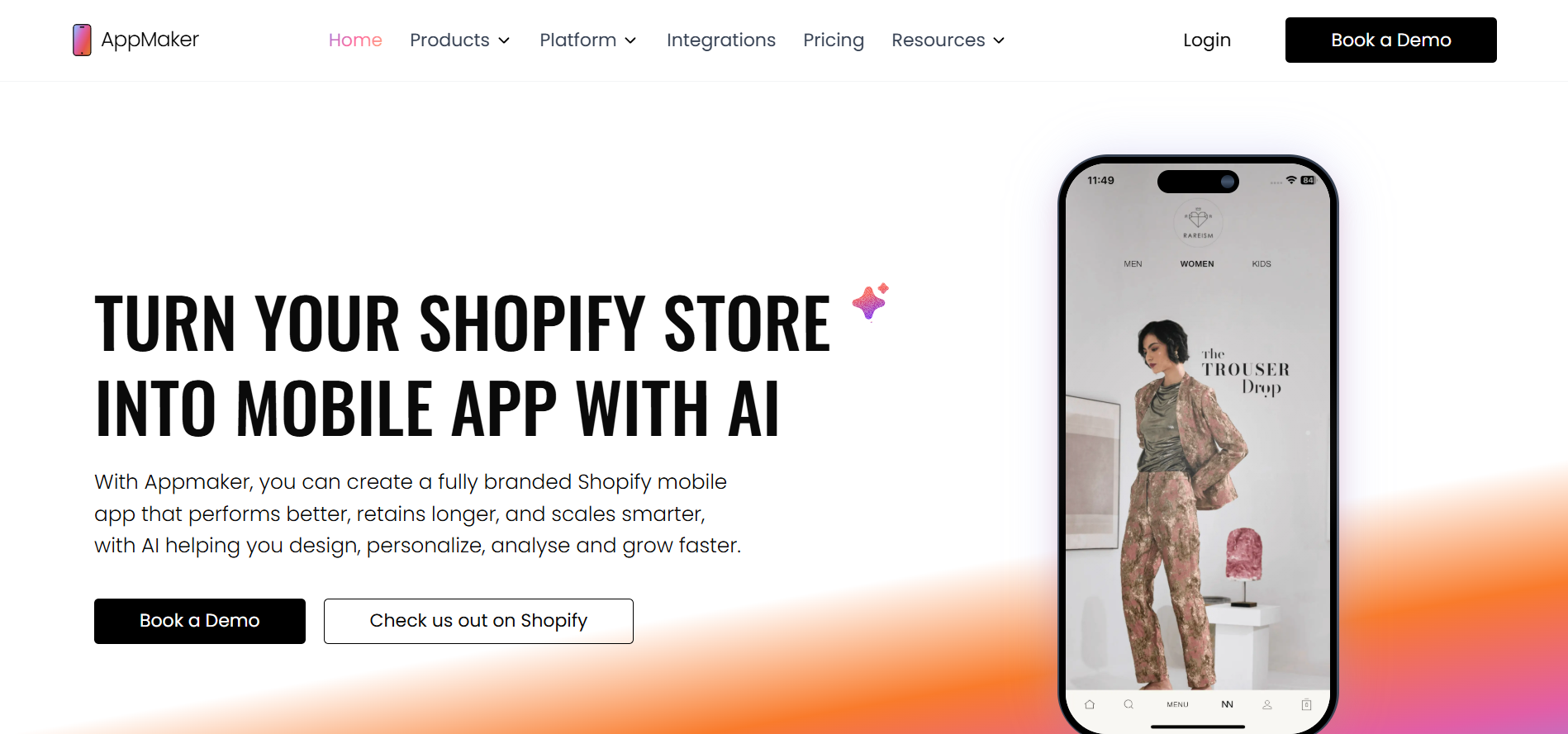
When looking for a Tapcart alternative, the number one choice for many Shopify brands is AppMaker. Both AppMaker and Tapcart turn your store into native iOS and Android apps, but the two platforms differ significantly in customization, extensibility, AI support, and how they scale with your brand.
To clearly see how AppMaker stands apart from Tapcart, let’s break down their key features and capabilities in the table below:
AppMaker provides better long-term growth potential with deep customization, AI-driven personalization via Eidolon and John AI, real-time Shopify sync, advanced push notifications, and full developer access. It enables brands to create truly unique, scalable, and high-performing mobile apps.
Key Features of AppMaker
- Deep customization: AppMaker Studio lets brands go beyond blocks with full control over UI/UX, code-level customization, custom workflows, and developer extensions, something Tapcart cannot fully unlock.
- True custom logic & extensibility: Build unique app capabilities using API integrations, plugins, and code blocks for specialized funnels, checkout flows, and loyalty modules, giving brands unmatched flexibility.
- Eidolon AI: Upload Figma designs or screenshots and instantly generate ready-to-edit app components, accelerating branding and maintaining visual fidelity far beyond standard template limitations.
- John AI: Automate segmented push campaigns, answer strategic business questions, and receive actionable recommendations to optimize engagement, retention, and in-app conversions.
- Personalized UX that scales: With Rubik’s AI, AppMaker dynamically adapts homepages, banners, and content based on user behavior and predicted purchase patterns, offering deeper personalization than Tapcart’s primarily campaign-focused AI.
Pricing: Starting at $599 per month + 2% of in-app sales, with a 14-day free trial option.
2. MobiLoud
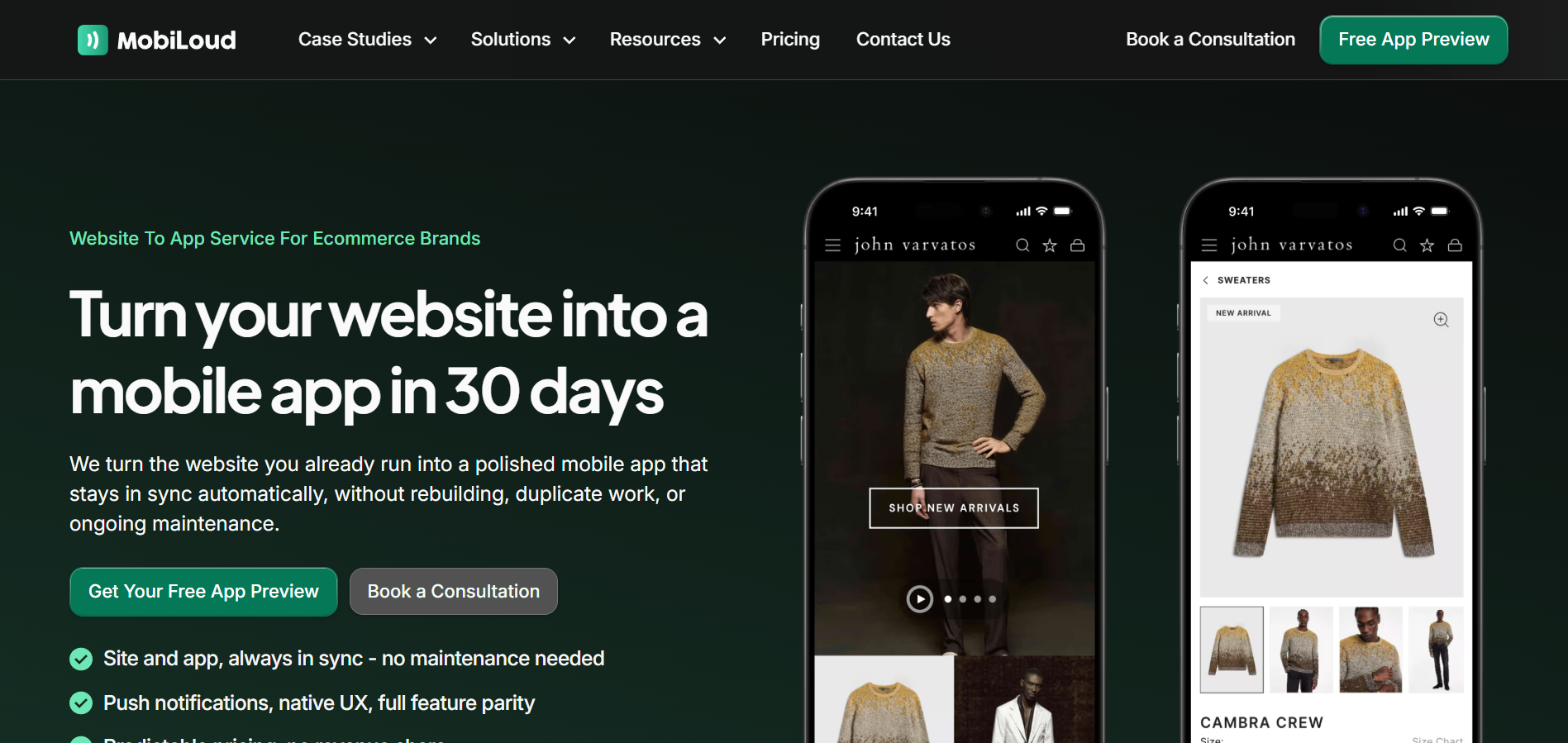
MobiLoud is a Shopify mobile app builder focused on converting an existing store into native iOS and Android apps without rebuilding the storefront. It mirrors your mobile website inside an app environment while preserving theme customizations, integrations, and workflows already running on Shopify.
Key Features of MobiLoud
- Website-to-App conversion: Transform your existing Shopify mobile storefront into native apps without redesigning layouts or rebuilding product pages, ensuring consistency with your live store experience.
- Full Shopify compatibility: Existing apps, custom themes, and integrations continue functioning inside the mobile app, making it suitable for stores with complex tech stacks or heavy customization.
- Real-Time store sync: Any updates made to your Shopify store automatically reflect in the mobile app, eliminating manual syncing and reducing maintenance overhead.
- Unlimited push notifications: Send push notifications for promotions, abandoned carts, and product launches to improve engagement and retention directly through the mobile channel.
- App store launch support: Includes testing, optimization, and publishing assistance to help merchants successfully submit and maintain apps on Apple App Store and Google Play.
Pricing: Starts at $799/month.
Also Read: 13 Best MobiLoud Alternatives for Shopify Mobile Apps in 2026
3. Appbrew
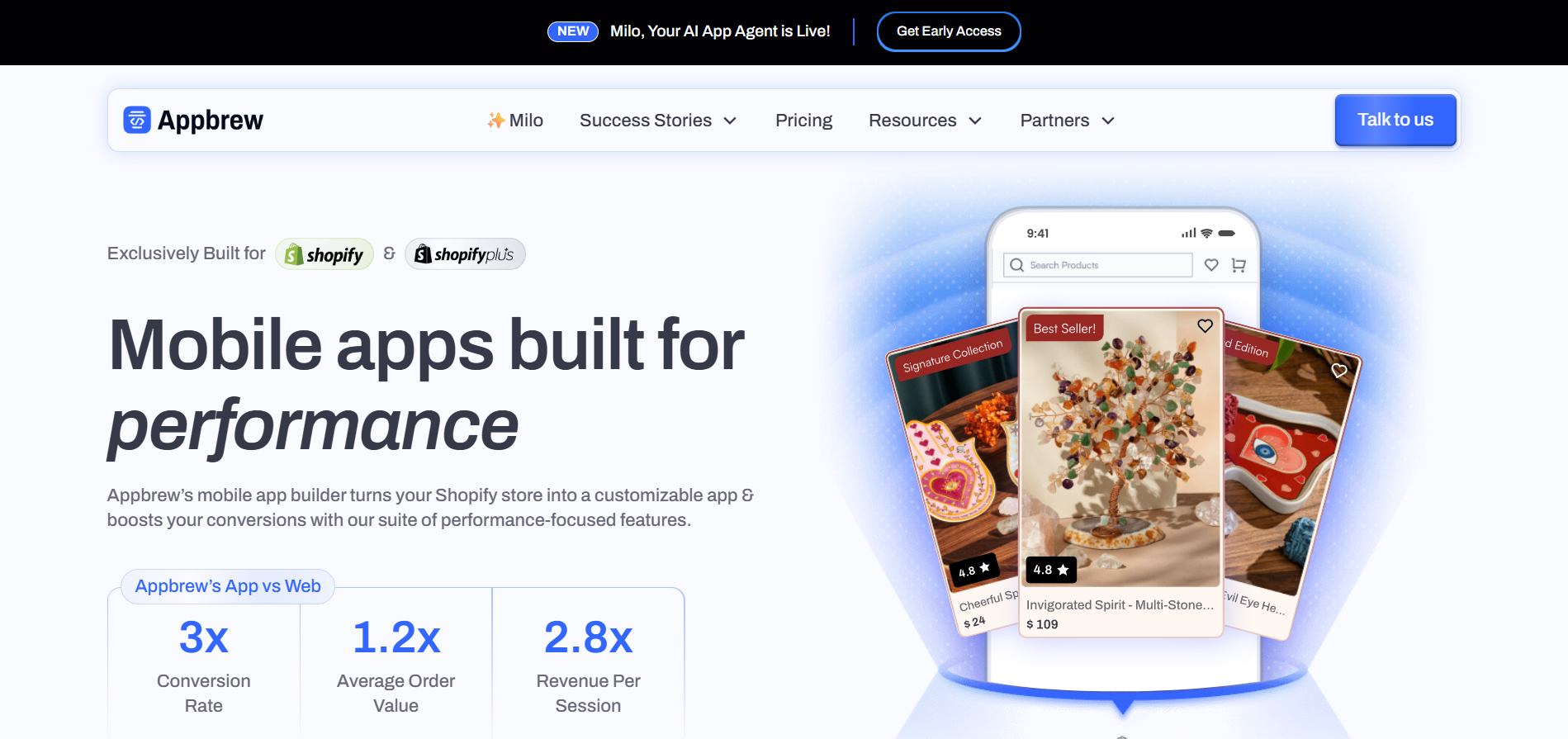
Appbrew is a Shopify‑native mobile app builder that helps DTC and ecommerce brands convert their Shopify stores into fully branded iOS and Android applications. Users avail deep platform integrations and performance‑focused features. Unlike template‑limited builders, Appbrew emphasizes flexible customization, built‑in analytics, and campaign tools tailored for mobile commerce growth.
Key features of Appbrew
- Native iOS & Android apps: Builds fully native mobile applications that support Shopify checkout, customer accounts, and real‑time store sync.
- Unlimited push notifications & campaigns: Enables segmented and promotional push messaging to improve engagement and retention.
- Advanced integrations: Supports 100+ Shopify and third‑party integrations, including analytics, CRM, reviews, and personalization workflows.
- AI‑assisted growth tools: Includes an AI growth assistant (“Milo”) and built‑in personalization features to tailor product discovery and messaging.
- App analytics & data: Tracks campaign performance, user behavior, and conversion metrics in‑app with integration support for analytics providers.
Pricing: Pricing starts around $499/month for standard plans, with a free trial available.
4. GoodBarber
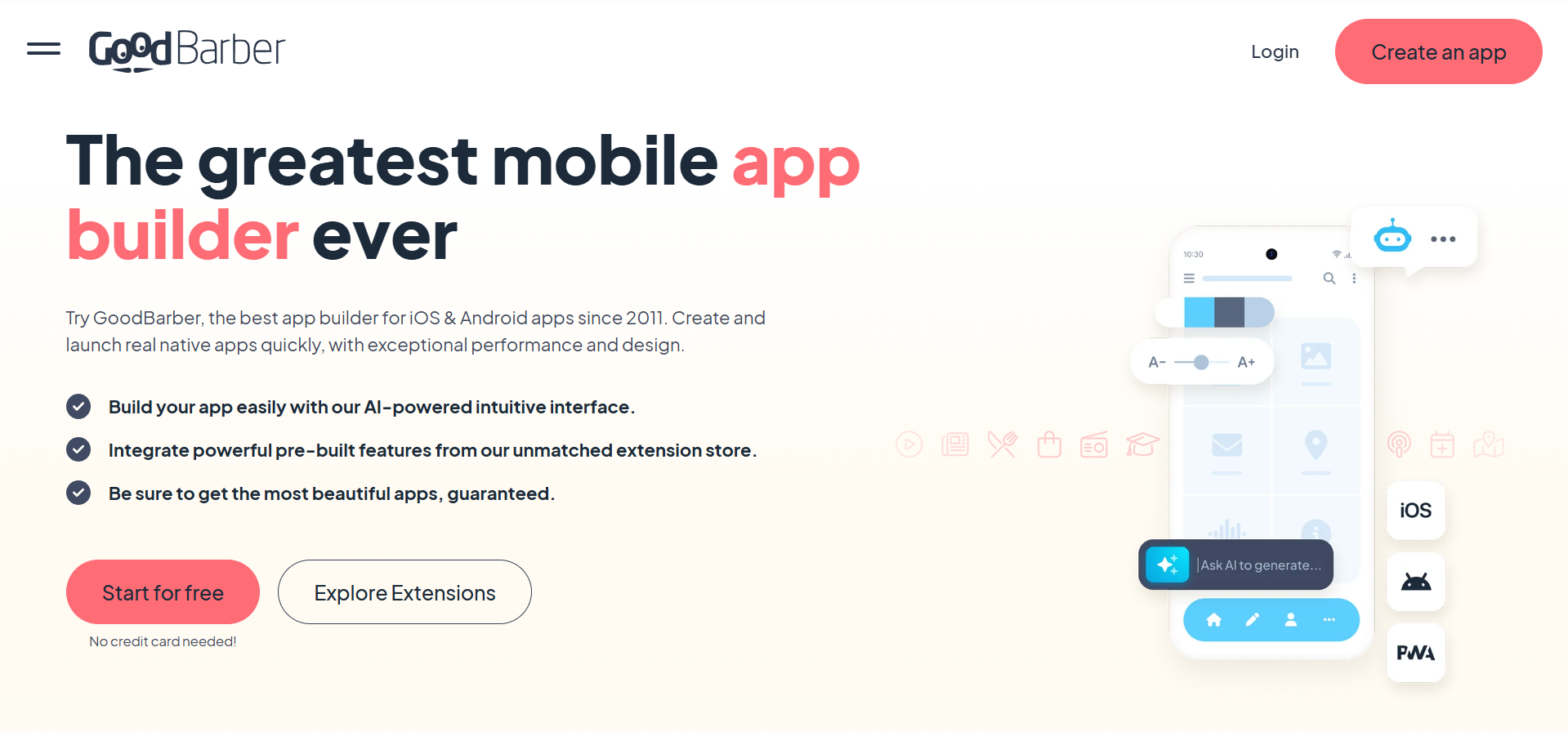
GoodBarber is a no-code mobile app builder that enables businesses to create native iOS, Android, and Progressive Web Apps (PWAs) through a visual editor. It is suitable for Shopify merchants seeking broader design control and multi-platform app deployment beyond store-exclusive ecosystems.
Key features of GoodBarber
- Native iOS & Android support: Builds fully native mobile apps optimized for device performance, push notifications, and hardware integrations.
- PWA builder: Creates installable web apps that function across browsers with offline access, improving reach without requiring app store downloads.
- Visual drag-and-drop interface: Offers structured templates and design customization tools suited for non-technical teams managing layout and content.
- Extensions and integrations: Provides an add-on marketplace and workflow automation integrations, such as Zapier and Make, for connecting external services.
- Preview and publishing tools: Enable real-time app testing and centralized publishing workflows for Apple App Store and Google Play deployments.
Pricing: Starts at approximately $35/month with a 30-day free trial.
5. VennApps
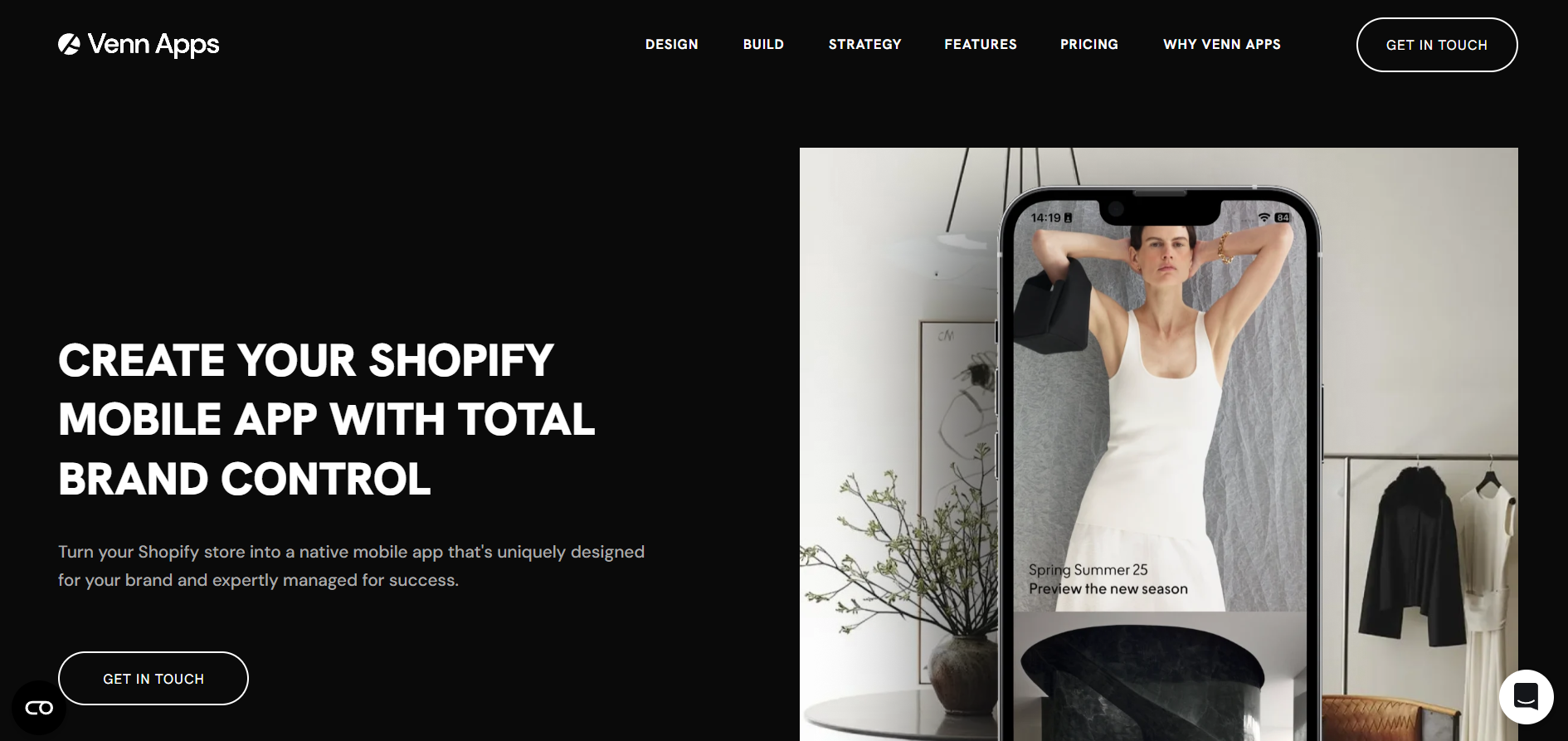
VennApps is a Shopify‑focused mobile app solution that builds fully native iOS and Android applications tailored to a brand’s identity rather than relying on generic templates. It combines real‑time Shopify data sync, extensive integration support, and strategic design collaboration for brands that want deeper customization, global market support, and engagement tools beyond basic app builders.
Key features of VennApps
- Bespoke native apps: Works with merchants to create custom‑designed Shopify mobile apps with brand‑specific user experiences rather than template limitations.
- Real‑time Shopify sync: Uses Shopify metafields and objects to mirror your live store’s layout, products, and backend data in the native app.
- Segmented push notifications: Let merchants schedule and target push campaigns (including automated welcome, abandoned cart, and back‑in‑stock flows).
- Global markets & localization: Supports multi‑language and multi‑currency experiences tailored for Shopify Markets and international audiences.
- Custom engagement tools: Includes loyalty programs, shoppable lookbooks, app‑exclusive drops, and app‑specific discounting designed to boost retention and conversions.
Pricing: Starts around $1,999/month with a free trial available.
6. Vajro
Vajro enables ecommerce brands to turn their Shopify store into fully native iOS and Android apps with a visual editor, real-time product sync, and built-in engagement tools like live selling and push notifications. It’s designed to help merchants boost conversions and apply retention strategies without coding.
Key features of Vajro
- Native iOS & Android apps: Fully native mobile applications that mirror your store’s catalog, collections, and pricing.
- Real-time Shopify sync: Automatic updates for products, inventory, and pricing in the mobile app.
- Push notifications: Targeted campaigns for promotions, back-in-stock alerts, and abandoned carts.
- Live selling: Host interactive live video shopping sessions directly in the app.
- Drag-and-drop editor: Customizable themes and layouts for branding and product display without coding.
Pricing: Plans start at $150/month.
7. Plobal Apps
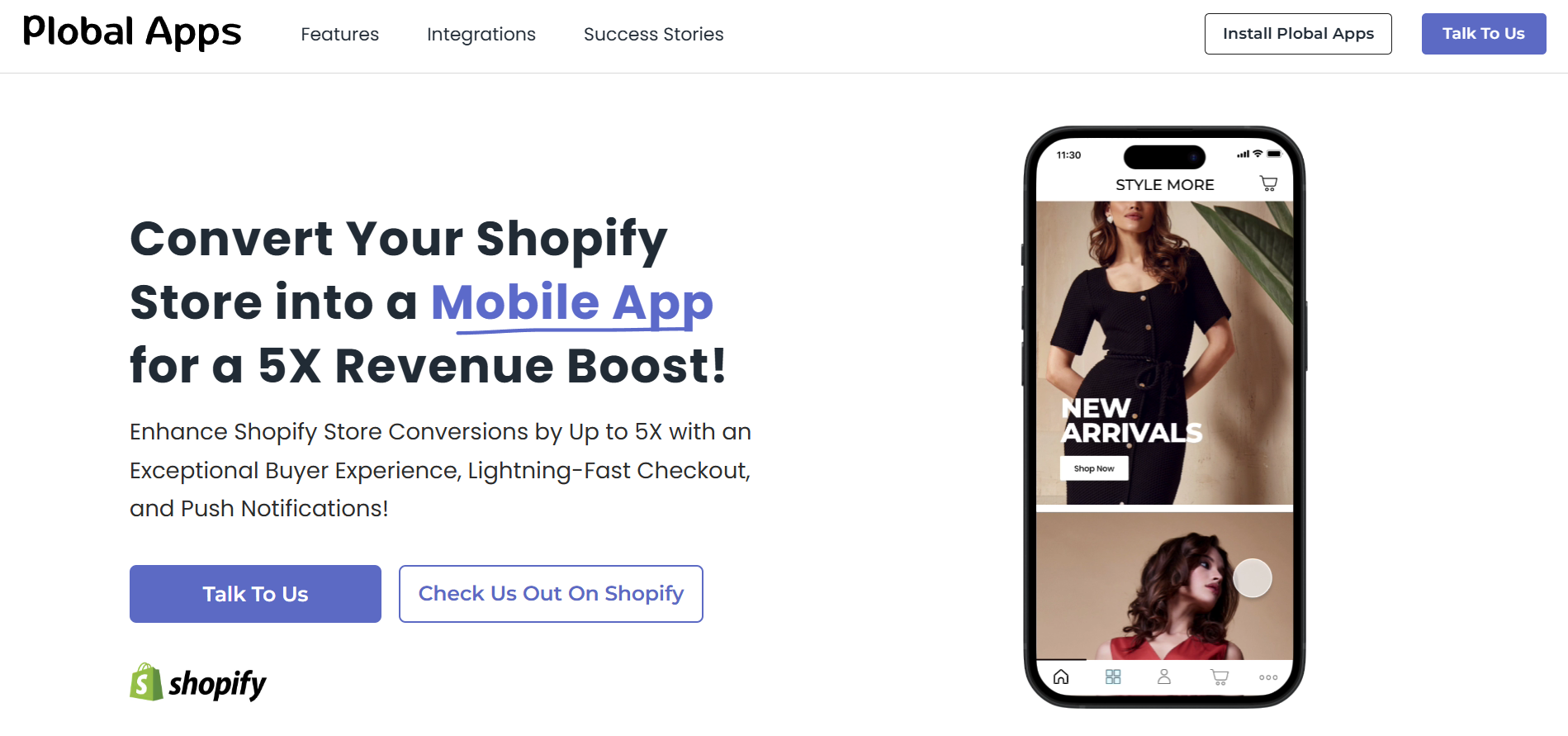
Plobal Apps helps brands convert their Shopify stores into fully native iOS and Android apps with tools for engagement, conversion, and retention. Its platform emphasizes drag-and-drop customization, real-time product sync, and automated push campaigns to accelerate mobile sales.
Key features of Plobal Apps
- Native iOS & Android apps: Build apps that mirror your Shopify store’s catalog, collections, and checkout for a seamless mobile shopping experience.
- Real-time Shopify sync: Automatic updates for products, inventory, and pricing in the app, eliminating manual updates.
- Push notifications & automation: Schedule targeted campaigns for promotions, back-in-stock alerts, and abandoned carts to drive repeat purchases.
- Drag-and-drop editor: Customize layouts, banners, and product displays with a visual editor; no coding needed.
- Analytics & insights: Monitor app performance, track user engagement, and optimize campaigns directly from the dashboard.
Pricing: Plans start at $199/month.
8. Shopney
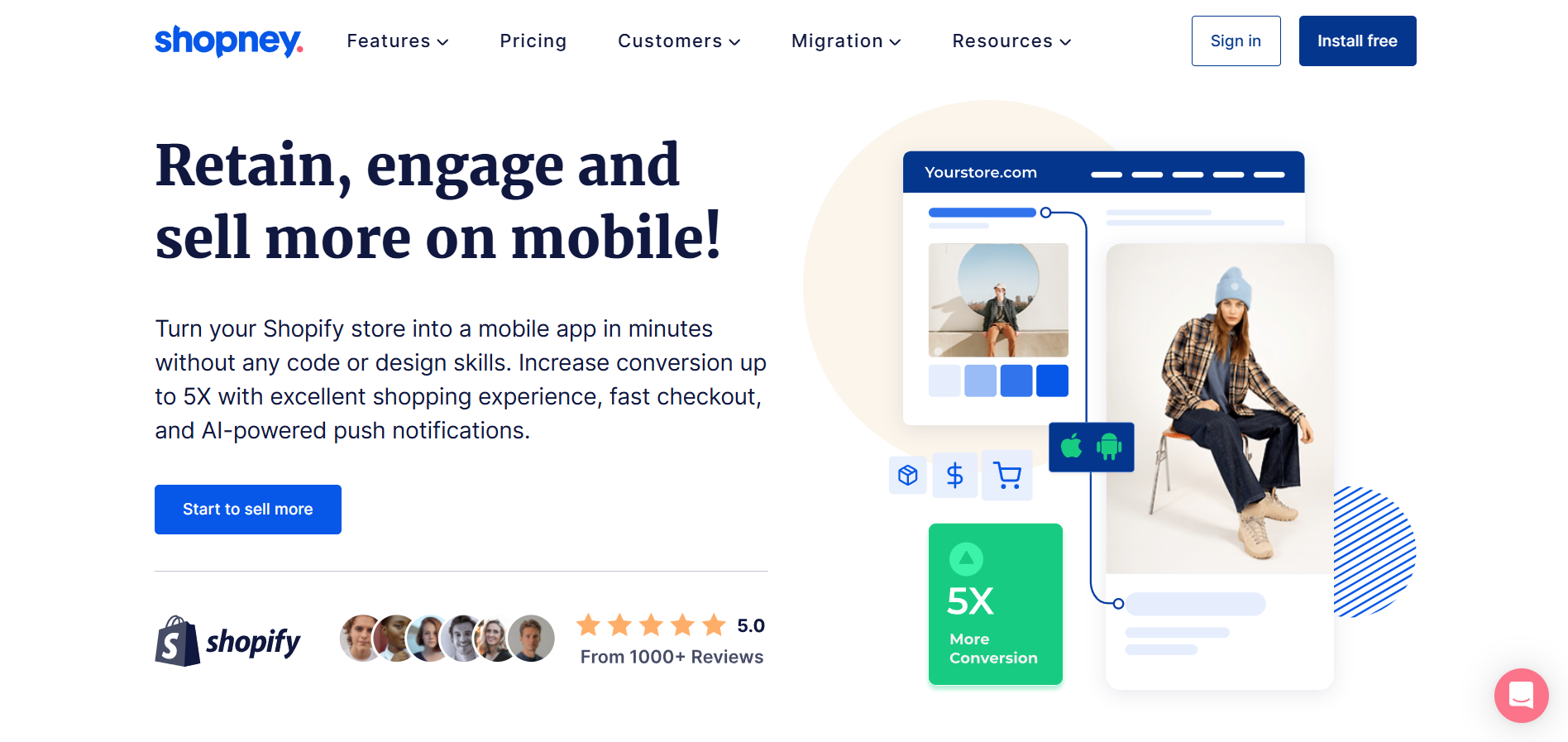
Shopney is a Shopify-focused, no-code mobile app builder that enables merchants to convert their Shopify stores into native iOS and Android applications. It connects directly with Shopify to sync catalog and customer data, while offering built-in engagement features tailored for ecommerce brands.
Key features of Shopney
- Real-time Shopify sync: Automatically syncs products, collections, inventory, orders, and customer data with the connected Shopify store.
- Drag-and-drop design editor: Provides pre-built themes and layout blocks to customize branding and storefront presentation without coding.
- Push notifications: Enable merchants to send campaign-based notifications, including promotions and back-in-stock alerts.
- In-app chat support: Offers built-in customer communication tools to assist shoppers directly within the app.
- Multi-language support: Supports localization features compatible with Shopify Markets for international storefronts.
Pricing: Starts at approximately $149/month. Plans and trial availability may vary by tier.
9. MageNative
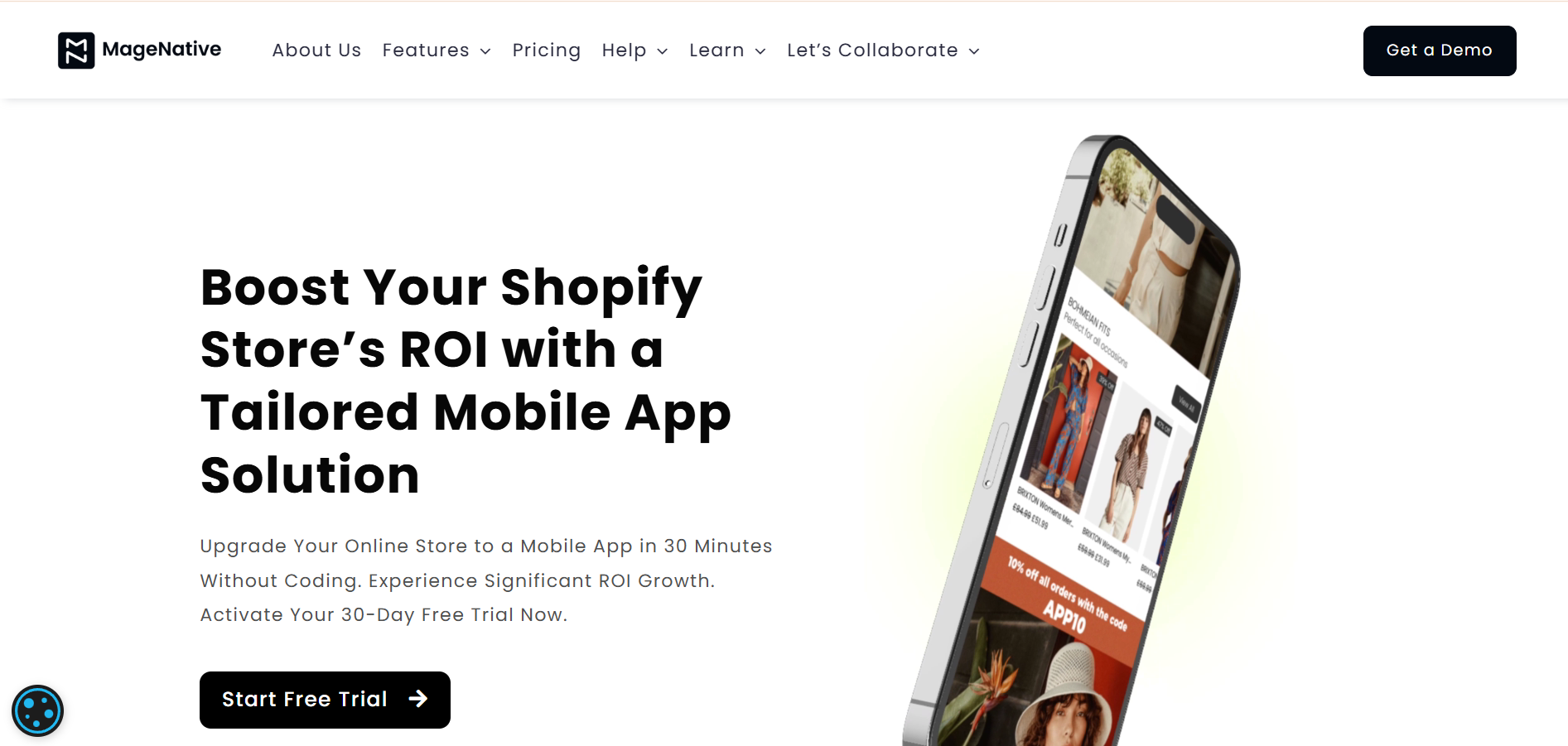
MageNative enables Shopify merchants to turn their online store into native iOS and Android mobile apps using visual tools and automated sync without requiring coding. It focuses on ease of deployment, real‑time product updates, and common mobile commerce features suited for brands that want a straightforward app presence.
Key features of MageNative
- Visual app builder: Use a visual editor to configure menus, home screens, banners, and product layouts without coding.
- Real‑time sync: Keeps products, collections, inventory, and pricing up to date between your Shopify store and mobile app automatically.
- Push notifications: Send messaging for promotions, offers, back‑in‑stock alerts, and abandoned cart reminders to re‑engage users.
- In‑app features: Includes support for wishlist, social login, multi‑currency, and filtering to improve the mobile shopping experience.
- Third‑party integrations: Works with most Shopify apps and services to extend functionality within the app.
Pricing: Starts at $99/month.
10. OneMobile
OneMobile helps merchants turn their Shopify store into native iOS and Android shopping apps through an easy‑to‑use builder and automated Shopify sync. It focuses on delivering core ecommerce functionality quickly while supporting common engagement and purchase flows that mobile buyers expect.
Key features of OneMobile
- Native iOS & Android apps: Generates fully native mobile applications that reflect your store’s products, collections, and checkout for a consistent mobile shopping experience.
- Real‑time Shopify sync: Products, inventory, prices, and customer data sync automatically from your Shopify store to the mobile app.
- App customization tools: Offers a visual configuration interface with layout settings, themes, and branding options to tailor the app's look without code.
- Push notifications: Enable merchants to send campaign‑driven notifications for promotions, offers, and reminders to re‑engage users.
- Third‑party integrations: Works with Shopify apps and extensions to bring features like reviews, analytics, and marketing tools into the mobile experience.
Pricing: Starts at $99/month.
11. Apptile
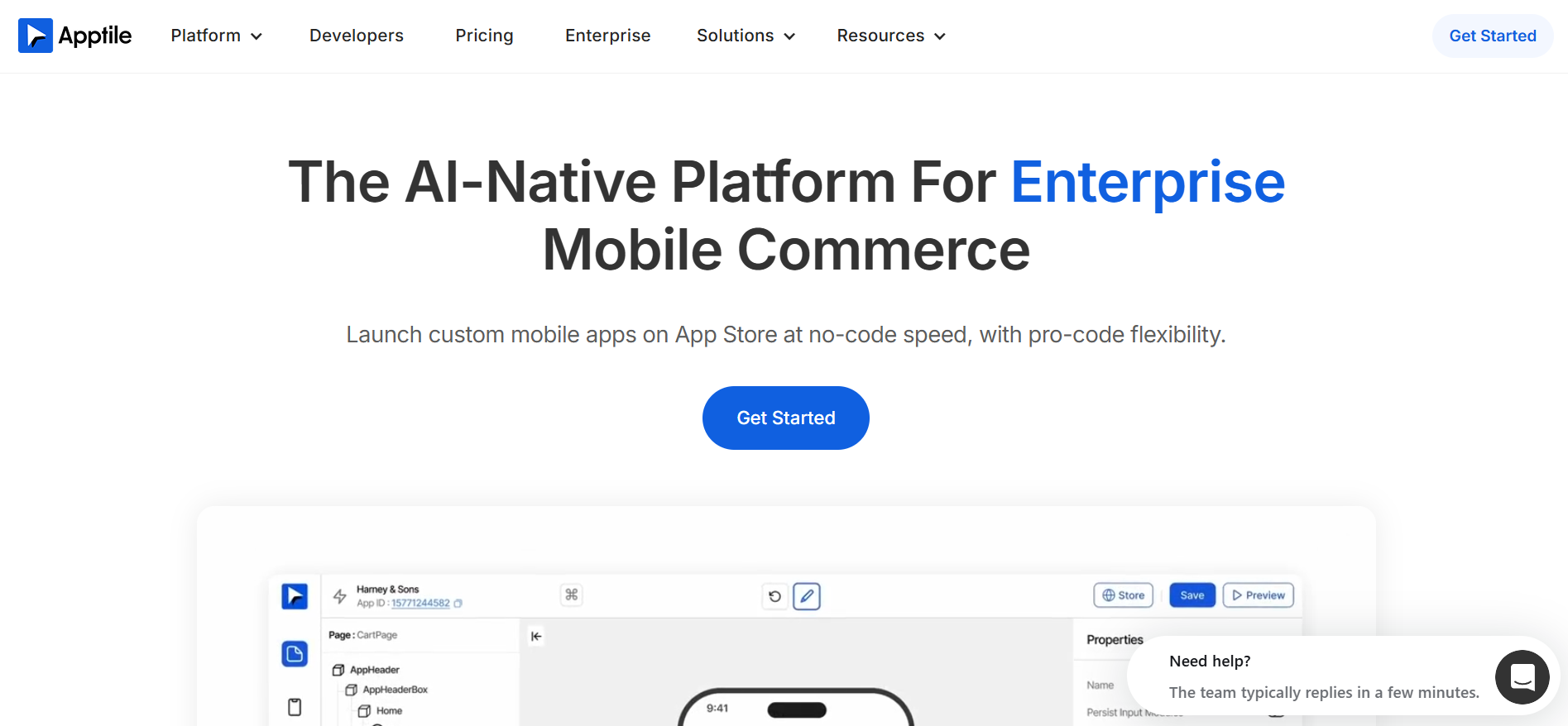
Apptile builds native iOS and Android mobile apps for Shopify stores with automatic store sync and a visual configuration interface. It focuses on delivering the core mobile ecommerce experience merchants expect, including product discovery, checkout parity, and engagement tools.
Key features of Apptile
- Native iOS & Android apps: Fully native applications that reflect the Shopify storefront, catalog, and checkout flow.
- Visual configuration interface: Layouts, branding, and product displays are set through a visual UI without code.
- Push notifications: Messaging for promotions, back‑in‑stock alerts, and cart reminders to increase repeat activity.
- Shopping experience features: Search, filters, wishlist features, and customer account access inside the mobile app.
- Shopify integrations: Works with common Shopify extensions such as analytics, reviews, and marketing tools.
Pricing: Starts at $99/month.
With a clear understanding of what each Tapcart’s competitor offers, the next step is learning how to evaluate these tools effectively for your Shopify store’s unique goals.
Also Read: Best Mobile App Builder for Shopify: Top Picks for 2026
How to Choose the Right Alternatives to Tapcart?
Selecting a Tapcart alternative requires more than picking the first Shopify app builder you find. Each platform comes with unique strengths, and choosing the right one depends on your store’s size, goals, and technical needs.
Here are key factors to guide your decision:
- Customization & Design Flexibility: Evaluate whether the platform offers drag-and-drop editors, custom themes, or code blocks to create an app that reflects your brand identity.
- Real-Time Store Sync: Ensure products, inventory, and pricing update automatically, keeping your mobile app aligned with Shopify without manual intervention.
- Push Notifications & Engagement Tools: Look for platforms that support targeted campaigns, abandoned cart messages, and customer re-engagement to drive conversions.
- Scalability & Integrations: Check if the app can grow with your business, integrating with Shopify plugins, analytics tools, and marketing platforms.
- Pricing vs Value: Compare subscription tiers against included features, support, and potential ROI to select a plan that fits your budget without compromising essential functionality.
Once you’ve weighed these factors, you’ll be ready to choose a Tapcart alternative that aligns perfectly with your brand’s growth, user experience, and long-term mobile strategy.
Conclusion
Mobile apps for Shopify are essential for engagement, conversions, and brand loyalty. The leading alternatives to Tapcart each bring something different to the table: real-time Shopify sync, drag-and-drop design, push notifications, analytics, and multi-language support. Some excel at fast launches, others at advanced personalization or integrations, giving merchants flexibility depending on their priorities.
AppMaker stands out as the smartest Tapcart alternative in 2026. With Eidolon AI, John AI, and Rubik’s AI, users have access to various customization choices and advanced analytics. Combined with custom logic, API integrations, and code blocks, AppMaker scales exactly with your business.
If you’re looking for a Tapcart alternative that feels personal, grows with your brand, and drives real engagement, reach out to us today.
FAQs
1. Do Tapcart alternatives allow me to personalize the app homepage for individual users?
Many alternatives offer basic campaign-based notifications, but AppMaker with Rubik’s AI dynamically adapts homepages, banners, and content blocks based on real-time user behavior and predicted purchases.
2. How quickly can I launch a fully branded app using these alternatives?
Launch speed varies. Drag-and-drop builders like AppMaker or Shopney can get apps live in days. Meanwhile, platforms with deeper customization may require additional setup for code or integrations.
3. How do AI-powered tools enhance mobile app engagement?
AppMaker’s John AI and Rubik’s AI do more than content suggestions. They recommend push campaigns, predict purchase patterns, and adapt layouts dynamically, increasing retention and conversion rates.
4. Are analytics and reporting dashboards included in most Tapcart alternatives?
Most alternatives provide basic insights, but AppMaker’s John AI goes further, answering business questions in plain language and helping you optimize campaigns, retention, and personalization strategies.
5. Can I integrate third-party tools and plugins with these app builders?
Yes, but flexibility differs. AppMaker and platforms like Mobiloud support APIs, plugins, and custom code. They allow integrations with Shopify apps, marketing tools, and loyalty programs to create a fully connected ecosystem.