


























Running a Shopify Plus store in 2026 feels exciting, but also demanding. More shoppers are online every day, expectations are higher, and one slow checkout or messy workflow can cost real money. Shopify now sees 5.88 million people using the platform daily, which means your store is competing in a huge, fast-moving space where every second matters.
As brands grow, they quickly realize Shopify Plus alone isn’t enough. You need the right apps to keep operations clean, manage heavy traffic, fix tracking gaps, personalize fast, and make sure nothing breaks during big sales. The challenge is knowing which tools actually help and which ones slow you down.
In this blog, we’ll compare Shopify Plus apps using five criteria: primary use case, Plus-specific fit, implementation effort, pricing model, and customization depth.
Overview
- Running a Shopify Plus store means handling high-volume operations while keeping customers happy, especially when Shopify sees 5.88 million daily users, meaning even minor delays or errors can cost real revenue.
- Shopify Plus brands rely on apps like AppMaker, MobiLoud, Klaviyo, Omnisend, and Gorgias to automate high-volume operations, personalize journeys, and strengthen retention.
- Tools such as Skubana, ShipX, and Chargeflow solve core scaling problems: inventory accuracy, complex shipping logic, fraud control, and chargeback prevention.
- Review and loyalty platforms like Yotpo, Judge.me, and Smile.io boost credibility and repeat purchases through UGC, rewards, and behavior-driven engagement.
- The right Shopify Plus apps eliminate redundant workflows, improve checkout speed, tighten attribution, and maintain performance during flash sales or peak traffic.
What Are Shopify Plus Apps?
Shopify Plus apps are specialized, enterprise-level extensions built for high-growth brands handling complex operations. They add capabilities Shopify doesn’t offer natively, including advanced automation, scalable checkout control, deeper integrations, and multi-store management. They ensure your store performs reliably even during flash sales, global launches, and peak-traffic pressure.
Now that we understand what Shopify Plus apps are, let’s explore the specific benefits and value they bring to your store.
Benefits & Value of Using Shopify Plus Apps
Scaling a Shopify Plus store means keeping operations smooth, customers happy, and conversions high. The right apps fix critical bottlenecks and let your team focus on growth, not firefighting.
Here’s exactly what the top apps do for fast-growing Plus stores:
- Automate High-Volume Operations: Orders, multi-warehouse inventory, subscription management, and ERP updates run automatically, even during flash sales or product drops. No missed stock, no manual errors.
- Deliver Smart Personalization: Show targeted bundles, push campaigns, and dynamic recommendations based on real-time cart behavior, purchase history, and loyalty status. Push notifications alone achieve 85% higher engagement than email, driving faster conversions and repeat purchases
- Close Marketing & Tracking Gaps: Send precise data to Meta, Google, TikTok, and email/SMS. Attribute revenue accurately, optimize ad spend, and see exactly which campaigns drive profit.
- Scale Across Channels Without Chaos: Sync Shopify, marketplaces, mobile apps, and POS instantly. Avoid overselling, stock mismatches, and inconsistent pricing; perfect for global expansions.
- Keep Speed & Stability During Peaks: Reduce checkout friction, streamline search, and remove slow scripts. Apps built for Plus keep your store fast and reliable, even under massive traffic surges.
Having seen how these apps improve efficiency and customer experience, up next, we dive into the top Shopify Plus apps for 2026.
Also Read: 12 Best No-Code App Builders for Creating Mobile Apps in 2026
Top 12 Shopify Plus Apps in 2026 to Check Out
Shopify Plus brands rely on apps for different high-volume needs: faster checkout, cleaner backend operations, stronger personalization, accurate inventory, and global scalability. The tools below cover distinct strengths across marketing, operations, and customer experience, helping enterprise teams choose the right stack based on their current growth stage, traffic demands, and revenue priorities.
With this overview in mind, let’s explore each Shopify Plus app in detail to see what makes them stand out.
1. AppMaker
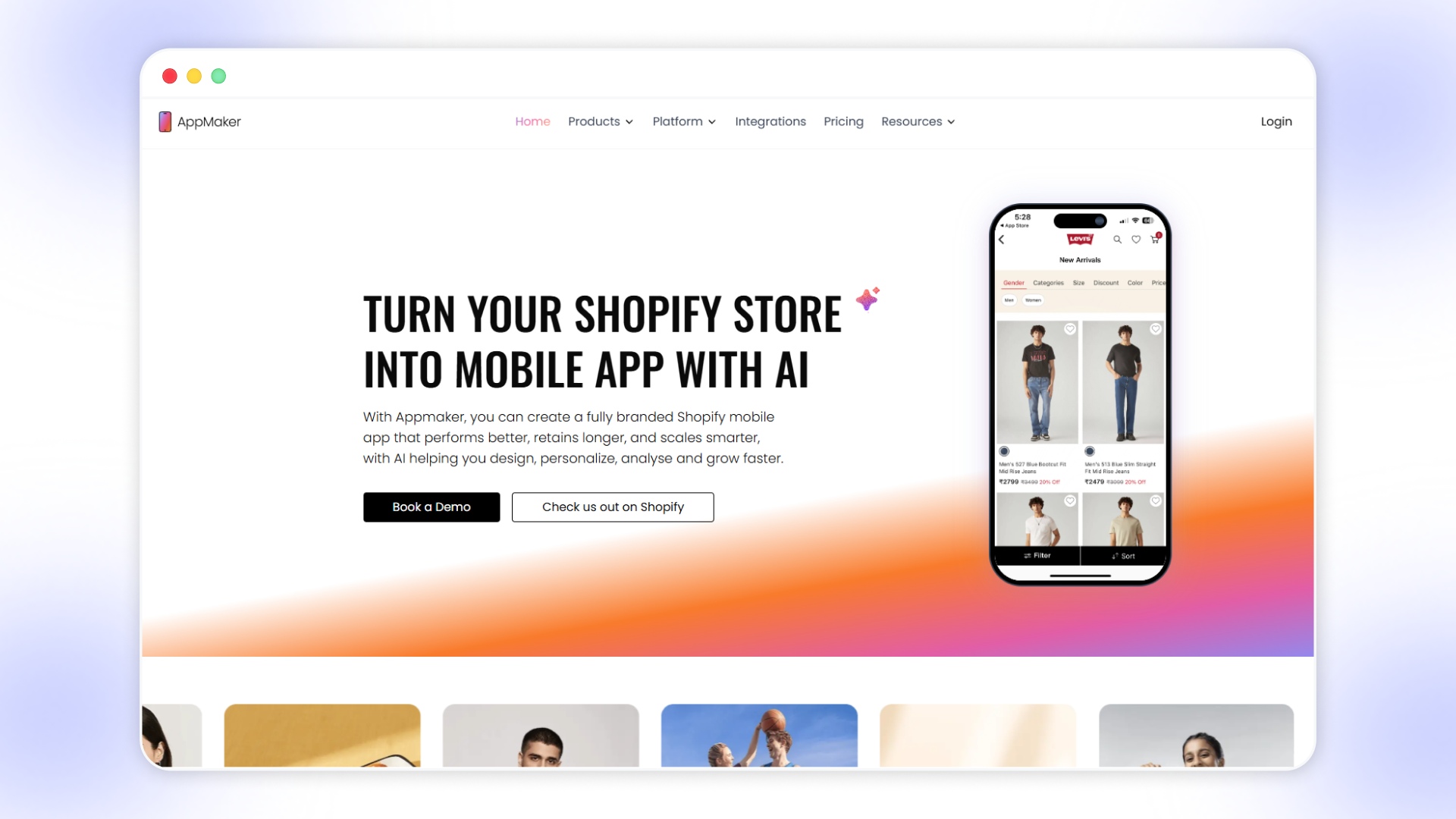
AppMaker is a no‑code Shopify mobile app builder that helps Plus and high‑growth brands turn their Shopify stores into fully branded native iOS and Android apps with deep customization and real‑time integration. Unlike template‑only builders, AppMaker gives Shopify merchants flexible design control, AI‑assisted app creation, advanced personalization, and performance‑driven engagement tools.
Key Features of AppMaker:
- AI‑assisted design and insights: Eidolon AI converts Figma frames or screenshots into editable native app layouts instantly, eliminating template limits and speeding up custom branding workflows.
- AppMaker Studio (no‑code UI builder): A block‑based drag‑and‑drop builder lets teams create and preview banners, scrollers, product pages, and timed content without developers, while Conditional Blocks adapt content using Shopify Tags & Metafields.
- Deep personalization: Personalized content, dynamic banners, and segmented push notifications based on customer behavior and Shopify data help increase conversions and retention.
- Push notifications & engagement: Unlimited scheduled, automations, segmented, and behavior‑triggered push campaigns keep users engaged with restocks, cart reminders, and promotions.
- Extensibility & developer access: John AI (in‑app analytics and decision assistant), custom API integrations, multi‑language support, and full developer access for bespoke add‑ons.
Pros:
- Highly customizable app experience with strong design control and AI support
- Real‑time sync of products, orders, customers, and inventory with Shopify
- Behavior‑driven personalization and segmented engagement tools
Cons:
- Setup requires planning and strategic configuration compared to simple template builders
- Pricing tiers can be high for entry growth brands with custom needs
Pricing: Starts at $599/month + 2% of in‑app sales for Growth, $999/month + 1%
2. MobiLoud
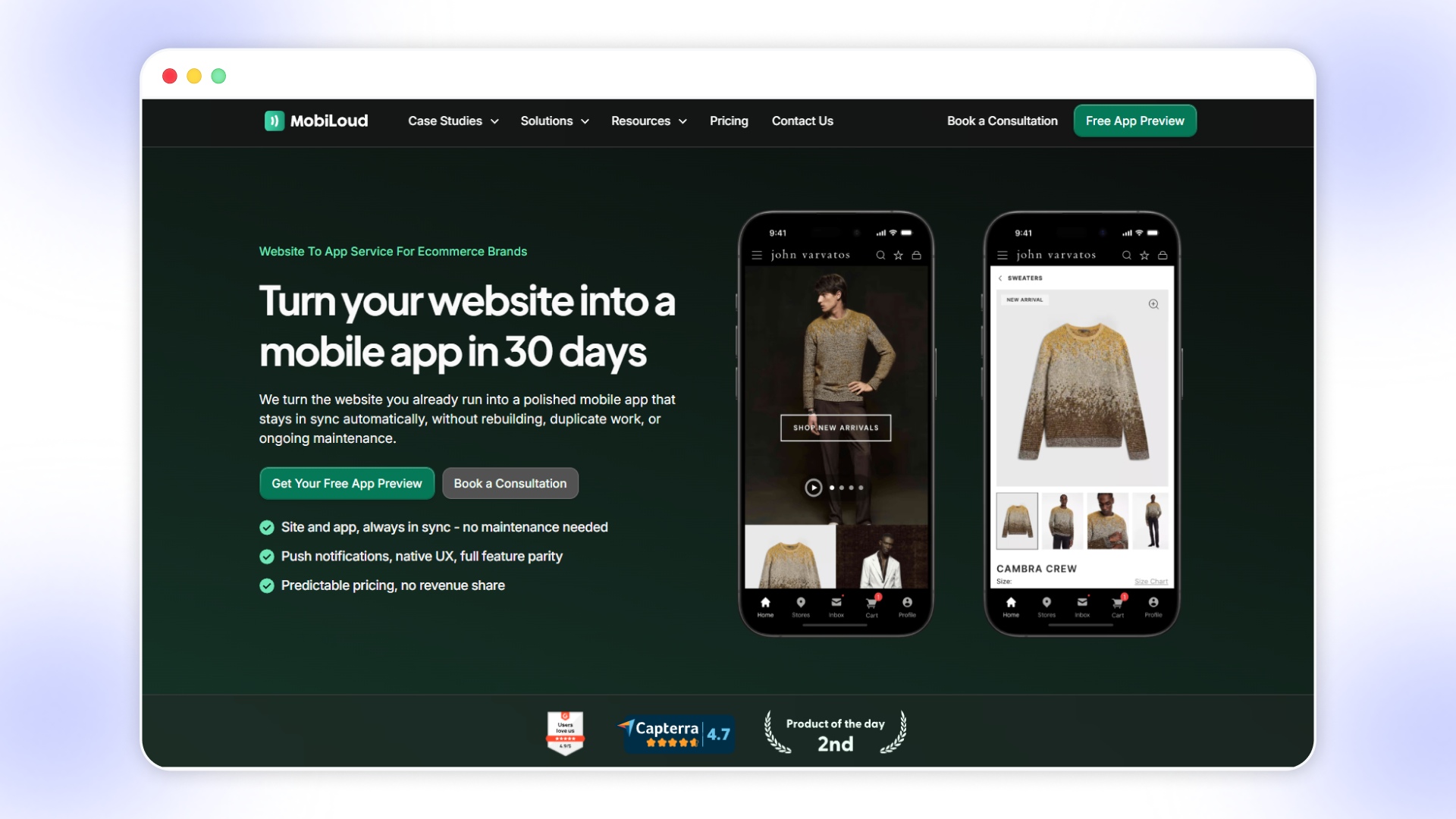
MobiLoud is a fully managed mobile app solution that converts your existing Shopify Plus store into native iOS and Android apps without rebuilding screens or duplicating work. Rather than a drag‑and‑drop builder, it automatically uses your live Shopify site as the foundation and adds native app features, live sync, push notifications, and ongoing maintenance handled by a dedicated team.
Key Features of MobiLoud:
- Turn existing Shopify into an app: MobiLoud transforms your Shopify Plus store into a native app that reflects your exact branding, features, and integrations without rebuilding it from scratch.
- Real‑time sync with Shopify: Updates you make on the website, products, collections, content and pricing automatically appear in the app, eliminating duplicate updates.
- Push notifications & automation: Supports native push notifications for order updates, abandoned carts, promotions, and customer engagement without additional scripts or tools.
- White‑glove managed service: MobiLoud’s team handles setup, app store submission, ongoing updates, and maintenance so your internal team stays focused on core commerce.
- Full feature parity & compatibility: Works with your existing apps and customizations, loyalty, subscriptions, reviews and analytics, ensuring the mobile app retains all web functionality.
Pros:
- No need to redesign or rebuild your store for mobile; your site becomes the app.
- Fully managed setup reduces internal workload and technical risk.
- Maintains integrations with existing Shopify mobile apps and tools out of the box.
Cons:
- Less control over app UI customization compared to DIY builders with drag‑and‑drop editors.
- Pricing tends to be higher due to white‑glove service and managed support.
Pricing: Starts at $799/month.
3. Klaviyo
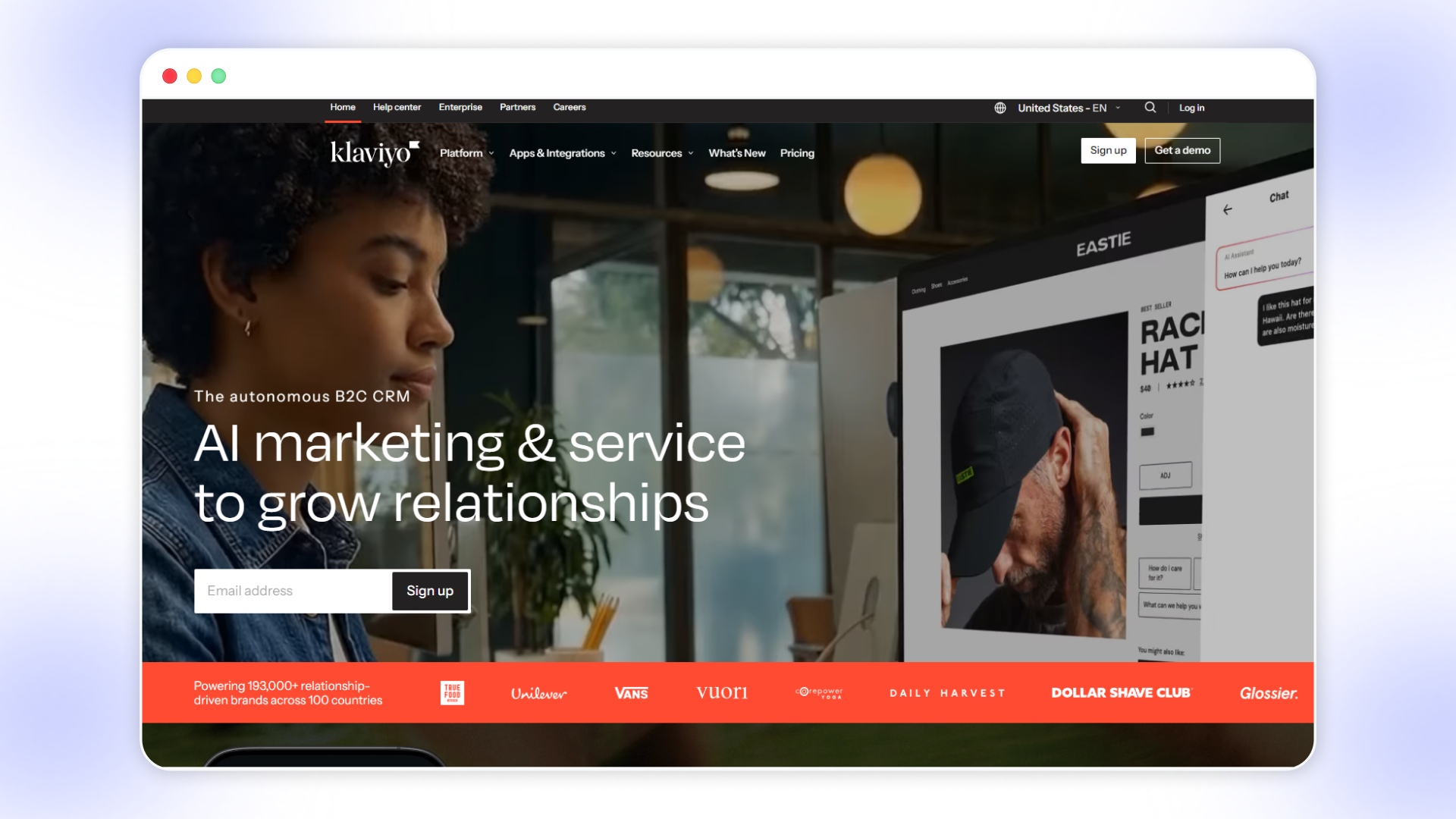
Klaviyo is a data-driven email and SMS marketing platform built for Shopify Plus merchants. It enables high-growth stores to send personalized campaigns based on real customer behavior, segment audiences dynamically, and track revenue attribution directly from your Shopify store.
Key Features of Klaviyo:
- Advanced Segmentation & Personalization: Create behavioral segments like repeat purchasers, high-value customers, or lapsed subscribers to deliver highly targeted messages that convert.
- Multi-Channel Marketing: Combine email, SMS, and push notifications for cohesive campaigns, automating sequences such as welcome flows, abandoned cart reminders, and post-purchase upsells.
- Revenue Attribution & Analytics: Track exactly which campaigns generate revenue, calculate LTV, and optimize workflows using real-time Shopify data.
- Pre-Built Shopify Integrations: Connect with Shopify Plus to sync products, collections, and order history automatically, ensuring all marketing is data-driven and actionable.
- Customizable Campaigns & Flows: Flexible templates and drag-and-drop workflow builder allow quick creation of campaigns without coding, while still supporting deep customization for advanced users.
Pros:
- Hyper-targeted campaigns that drive measurable revenue
- Deep Shopify Plus integration for accurate data-driven insights
- Automation reduces manual marketing effort and errors
Cons:
- Can be overwhelming for teams without marketing automation experience
- Advanced reporting may require setup and training
Pricing: Starts at US$60 per month for Email+Text Messages
4. Omnisend

Omnisend is a Shopify Plus-ready marketing automation platform designed for high-volume merchants who need multi-channel email, SMS, and push campaigns. It helps stores segment audiences, automate lifecycle messages, and personalize offers to increase revenue without slowing down the store.
Key Features of Omnisend:
- Multi-channel automation: Email, SMS, push notifications, and in-app messages all orchestrated from one platform for coordinated campaigns.
- Segmentation & personalization: Dynamic segmentation based on customer behavior, purchase history, and engagement patterns to deliver highly targeted campaigns.
- Pre-built automation workflows: Abandoned cart, welcome series, order follow-ups, and VIP campaigns ready to deploy for immediate revenue impact.
- Analytics & reporting: Detailed campaign performance dashboards, revenue tracking, and attribution insights to optimize ROI.
- Integrations: Seamlessly connects with Shopify Plus, CRMs, loyalty tools, and other apps without additional coding.
Pros:
- Increases customer lifetime value with targeted automation
- Supports omnichannel campaigns from a single dashboard
- Pre-built workflows reduce setup time and manual effort
Cons:
- Advanced segmentation may require some learning for new users
- SMS and push notifications are paid add-ons
Pricing: Starts at $11.20 per month
5. Gorgias
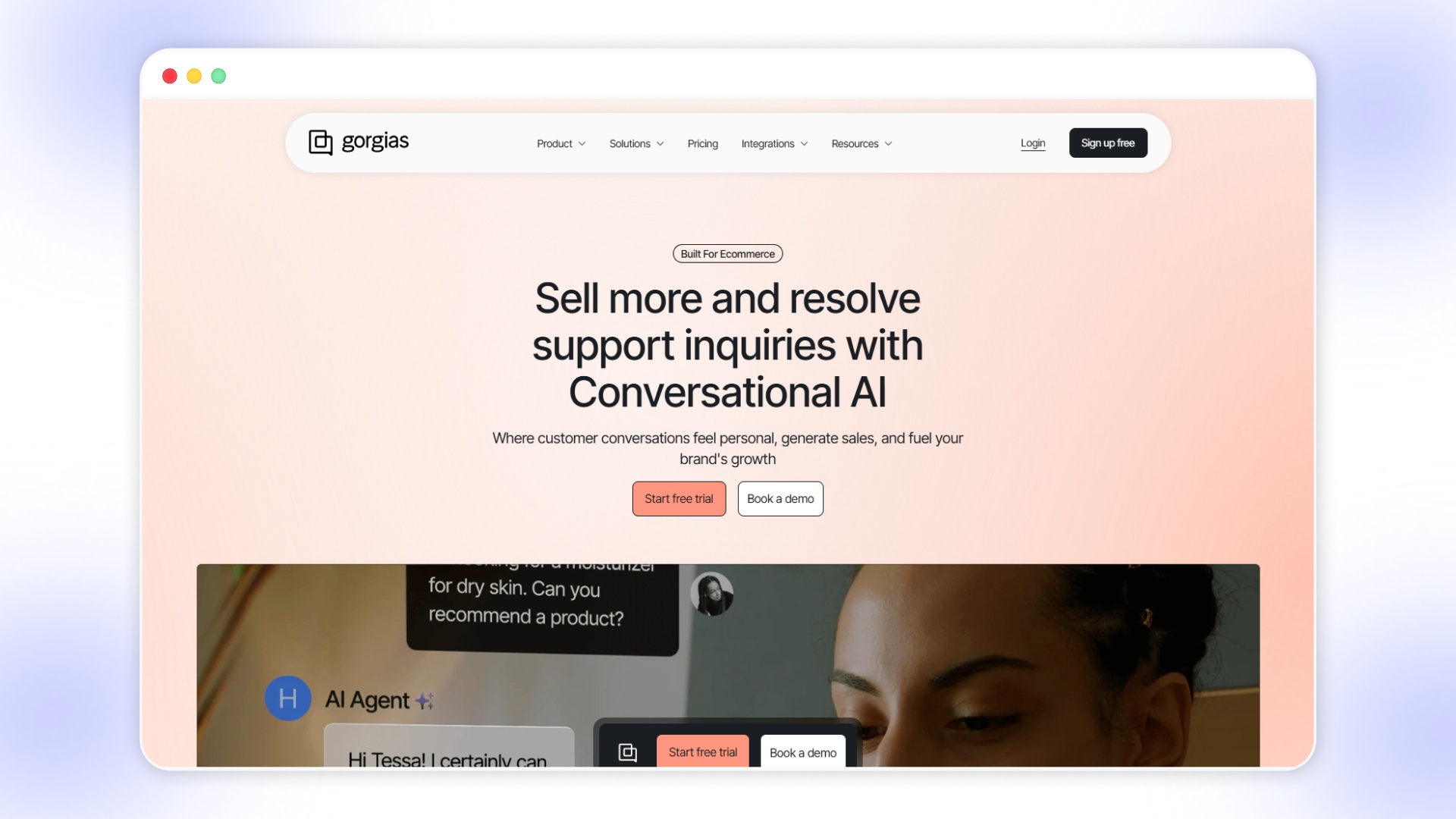
Gorgias is a Shopify Plus-focused customer support helpdesk that centralizes all customer interactions, email, live chat, social media, and phone into a single platform. It helps high-volume stores resolve issues faster, automate responses, and provide personalized support without slowing down operations.
Key Features of Gorgias:
- Unified inbox: Combines emails, live chat, Facebook Messenger, Instagram DMs, and phone support in one dashboard.
- Automated responses & macros: Trigger rules and macros to answer common questions, process refunds, or update orders automatically.
- Deep Shopify Plus integration: Access orders, subscriptions, and customer data directly in the helpdesk for faster resolutions.
- Analytics & reporting: Track response times, resolution rates, customer satisfaction, and agent performance.
- Multi-store support: Manage multiple Shopify Plus stores from a single account without losing context.
Pros:
- Reduces support workload with automation
- Enhances response speed and accuracy for high-volume operations
- Provides detailed analytics for team optimization
Cons:
- Pricing can be steep for very large teams
- Some advanced automation features require setup effort
Pricing: Starts at $10 /month
6. Judge.me
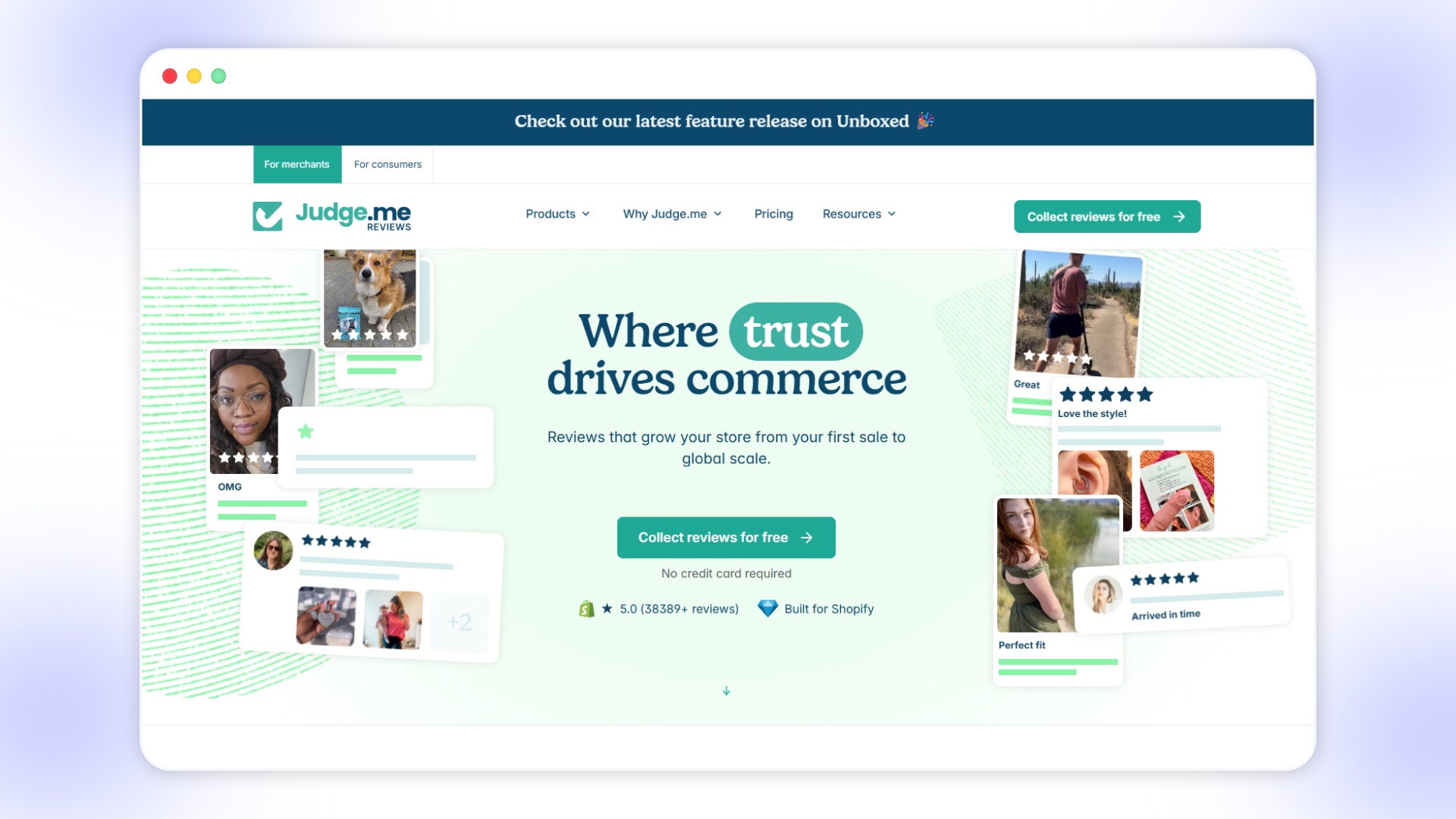
Judge.me is a Shopify Plus-ready product review app that helps stores collect, display, and use customer reviews to boost trust and conversions. It supports high-volume operations, automates review requests, and integrates seamlessly with Shopify Plus checkout and product pages.
Key Features of Judge.me:
- Automated review requests: Send emails or SMS to verified buyers to request reviews after purchase.
- Customizable review display: Showcase reviews with star ratings, photos, videos, and Q&A sections directly on product pages.
- Rich snippets & SEO benefits: Integrates structured data for Google rich snippets, improving search visibility and click-through rates.
- Multi-language and multi-currency support: Perfect for global Shopify Plus stores managing multiple regions.
- Integration with marketing & loyalty tools: Works with email marketing, referral programs, and loyalty platforms to amplify review-driven campaigns.
Pros:
- Increases trust and conversion through verified reviews
- Highly customizable for branding and display
- Supports global and multi-store Shopify Plus setups
Cons:
- Some advanced customization may need developer input
- Email timing and triggers require careful setup for best results
Pricing: Starts at $15 per month; free plan available
7. Smile.io
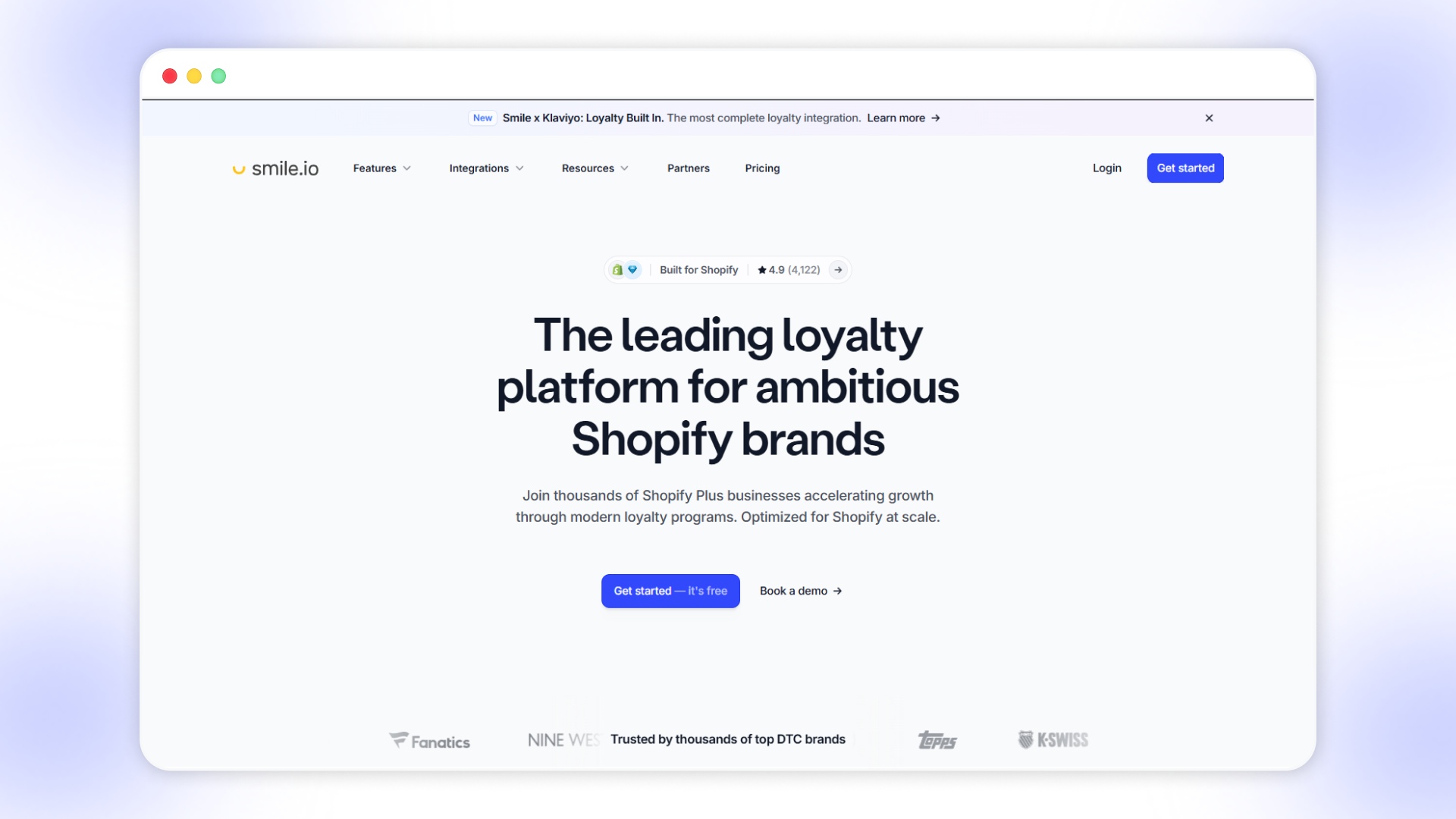
Smile.io is a loyalty and rewards platform designed for Shopify Plus stores, helping brands retain customers and drive repeat purchases. It allows merchants to launch points programs, referral rewards, VIP tiers, and engagement campaigns, all integrated seamlessly with Shopify Plus workflows.
Key Features of Smile.io:
- Points-based loyalty programs: Create customizable points for purchases, social shares, referrals, or engagement actions to incentivize repeat buying.
- Referral & VIP programs: Set up referral rewards and tiered VIP perks to encourage advocacy and higher spend among loyal customers.
- Omnichannel integration: Works across online store, POS, and email campaigns to maintain a consistent loyalty experience across touchpoints.
- Behavior-driven automation: Tailor reward triggers based on customer behavior and purchase history to maximize lifetime value.
- Analytics & reporting: Provides insights into engagement, redemption rates, and revenue impact to optimize program performance.
Pros:
- Easy to implement without heavy development work
- Highly customizable reward rules and VIP tiers
- Integrates with marketing platforms and Shopify Plus features
Cons:
- Advanced features may require higher-tier plans
- Limited design flexibility for unique storefront branding
Pricing: Starts at $79 per month
8. Skubana (Extensiv Order Manager)
Skubana (Extensiv Order Manager) is an enterprise-grade operations platform for Shopify Plus, designed to manage inventory, orders, and fulfillment management across multiple sales channels. It helps high-volume merchants automate workflows, prevent stockouts, and gain a unified view of operations.
Key Features of Skubana:
- Centralized order management: Consolidates orders from Shopify Plus, marketplaces, and offline channels to simplify fulfillment and tracking.
- Inventory optimization: Tracks stock in real time, automates reorder triggers, and supports multi-warehouse allocation to prevent overselling.
- Automation of operational workflows: Handles shipping rules, batch processing, and vendor management to reduce manual work.
- Analytics & reporting: Provides insights on sales performance, product profitability, and supply chain efficiency.
- Integrations: Connects seamlessly with ERPs, shipping carriers, accounting tools, and other Shopify Plus apps for end-to-end operations.
Pros:
- Robust automation for high-volume stores
- Multi-channel and multi-warehouse support
- Centralized operations reduce errors and manual effort
Cons:
- Learning curve for complex setups
- Pricing scales significantly with order volume
Pricing: Price per request
9. Criteo
Criteo is a performance marketing platform for Shopify Plus that specializes in personalized retargeting and programmatic ads. It helps merchants recover abandoned carts, re-engage past customers, and drive conversions by delivering highly relevant product ads across web, social, and mobile channels.
Key Features of Criteo:
- Dynamic retargeting: Shows personalized product ads based on browsing behavior and cart activity to increase conversion rates.
- AI-driven ad optimization: Uses machine learning to automatically adjust bids, creatives, and audience targeting for maximum ROI.
- Cross-channel campaigns: Deliver campaigns across display, social, and mobile, ensuring consistent engagement across platforms.
- Advanced analytics & attribution: Tracks performance metrics such as ROAS, conversions, and revenue per visitor to refine campaigns.
- Seamless Shopify Plus integration: Syncs product catalogs, pricing, and inventory in real time to prevent ad errors.
Pros:
- Increases conversion with precise retargeting
- Optimizes campaigns automatically with AI
- Multi-channel reach without complex setup
Cons:
- Requires initial setup and audience configuration
- Pricing can be high for smaller merchants
Pricing: Price per request
Also Read: 17 Shopify Store Marketing Strategies for Scaling DTC Brands in 2026
10. Yotpo
Yotpo is a Shopify Plus app focused on product reviews, ratings, and user-generated content to build trust and drive sales. It helps merchants collect, display, and use customer feedback across websites, email, and social media to improve conversion and retention.
Key Features of Yotpo:
- Review collection automation: Automatically requests reviews post-purchase to boost feedback volume without manual effort.
- Visual and video reviews: Let customers upload images and videos with their reviews to increase authenticity and engagement.
- Moderation & compliance tools: Ensures content meets brand standards and regulatory requirements before publishing.
- AI-powered insights: Uses machine learning to analyze reviews for sentiment, trends, and actionable product feedback.
- Seamless Shopify Plus integration: Syncs product catalogs, order history, and customer data in real time for accurate review display.
Pros:
- Builds credibility and social proof for products
- Supports rich media reviews to increase trust
- Integrates reviews into marketing campaigns easily
Cons:
- Full feature set requires higher-tier plans
- The setup of review widgets may need minor customization
Pricing: Starts at $79/month
11. Chargeflow
Chargeflow helps Shopify Plus merchants tackle chargebacks proactively, protecting revenue without manual effort. By analyzing transactions in real-time, it flags high-risk orders, automates dispute management, and provides actionable insights into recurring fraud trends, reducing losses and improving overall payment approval rates.
Key Features of Chargeflow:
- Real-time chargeback alerts: Get instant notifications on risky transactions, enabling merchants to act before disputes escalate.
- Automated dispute management: Simplifies filing and tracking chargeback disputes, saving operational time and reducing manual errors.
- Fraud insights and analytics: Identifies patterns of fraudulent activity, helping merchants optimize order approval rules and prevent recurring chargebacks.
- Integration with Shopify Plus checkout: Works seamlessly with Shopify Plus stores, ensuring smooth transaction monitoring without affecting page speed.
- Revenue protection strategies: Provides recommended actions to safeguard high-value orders and minimize revenue leakage from disputes.
Pros:
- Reduces time and effort spent on chargeback management
- Protects revenue on high-volume Shopify Plus stores
- Provides actionable insights to improve fraud prevention
Cons:
- Requires initial setup and rule configuration to optimize protection
- Advanced analytics may require some training to fully utilize
Pricing: $0.2 Per Scanned Transaction
12. ShipX
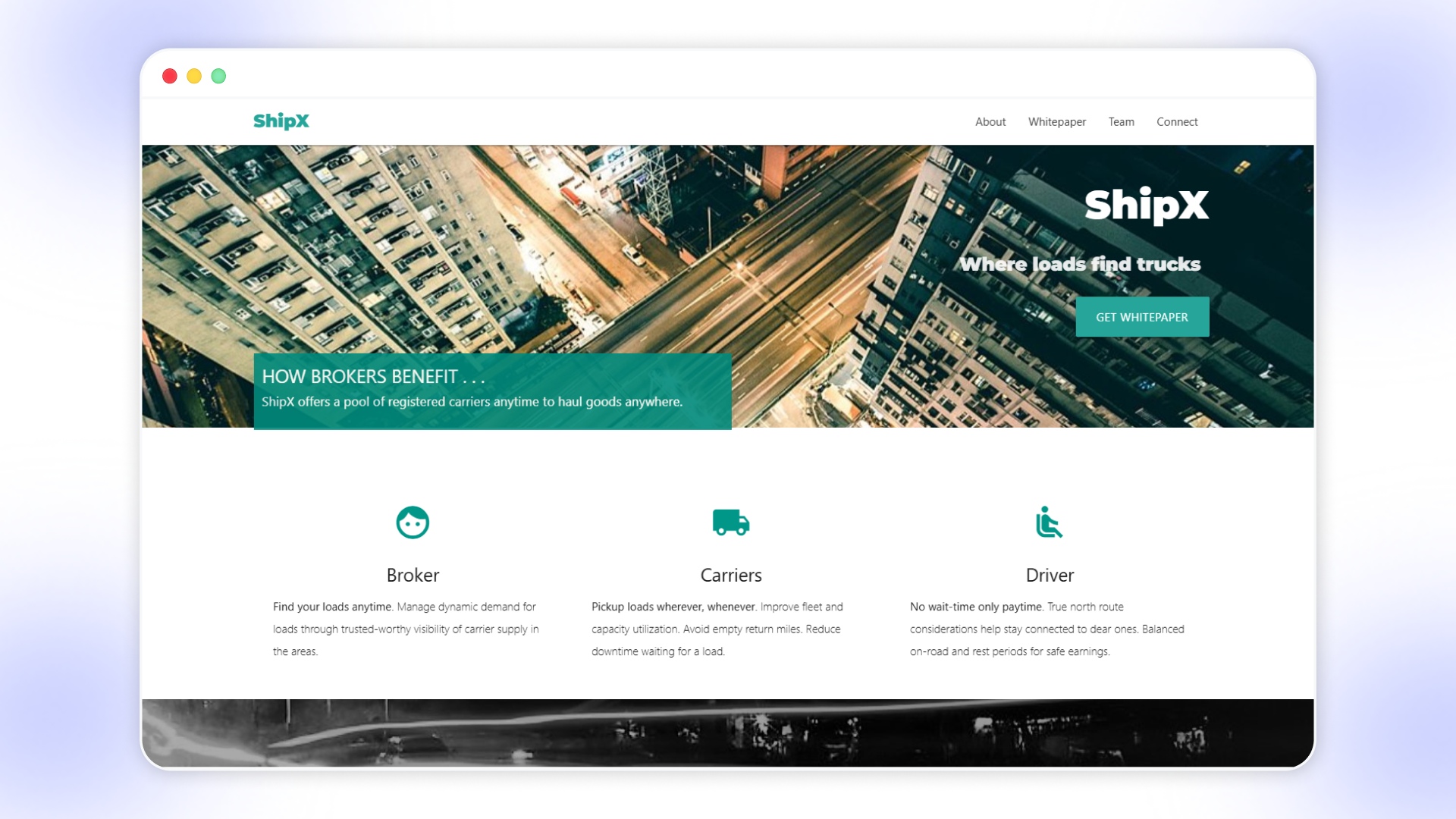
ShipX is a powerful shipping rules engine that gives Shopify Plus merchants precise control over shipping cost calculation and fulfillment logic at checkout. It lets high‑volume stores tailor shipping rates based on complex conditions like product dimensions, location, weight, and distance, something native Shopify shipping can’t handle easily.
Key Features of ShipX:
- Advanced conditional shipping rules: Set rates based on cart total, product weight, dimensions, quantity, ZIP/postcode, or geographic distance to ensure accurate, fair shipping pricing.
- Rate blending & tiered logic: Combine multiple rate types (flat, weight, volume, carrier) into blended shipping rates that adapt to diverse product mixes and multiple warehouses.
- AI‑based packaging algorithm: Uses product dimensions and volume to calculate optimal packaging and shipping cost, helping brands avoid over‑charging or under‑charging customers.
- Carrier integrations: Works with major carriers like USPS, FedEx, UPS, and Australia Post, letting stores align rate logic with real‑world services.
- Custom rate rules: Create customer‑specific or supplier‑specific shipping conditions (e.g., prioritize cheaper rates for local customers and premium carriers for express).
Pros:
- Supports complex, real‑world shipping scenarios beyond Shopify’s native rate system.
- Blended and conditional shipping rules reduce customer confusion and chargeback risk.
- Provides users with deep flexibility and responsive support.
Cons:
- Requires careful setup to match rules with fulfillment logic and carrier APIs.
- Some advanced features may take time to configure for diverse catalogs.
Pricing: Starts at $9.99 / month
Now that we’ve covered the top third-party apps, it’s important to highlight Shopify-native tools every Plus merchant should know for smoother workflows and high-volume operations.
Shopify-Native Tools That Matter for Plus Merchants
In addition to third-party apps, Shopify Plus offers native tools built specifically for enterprise-level operations. These are essential for stores handling thousands of orders, multi-channel sales, and high-traffic campaigns:
- Shopify Flow: Automates repetitive workflows across orders, customers, and discounts. For example, you can auto-tag high-risk orders, trigger VIP-specific discounts, or move valuable customers into loyalty campaigns, saving teams hours each week and preventing manual errors during peak periods.
- Launchpad: Enables precise scheduling for product launches, flash sales, and pre-orders, handling price changes, inventory locks, and automated notifications. Perfect for Plus merchants running multi-day campaigns or high-volume drops, ensuring smooth execution without downtime.
- Shopify Markets + Marketplace Connect: Centralizes multi-region pricing, taxes, and currencies, while syncing Shopify catalogs to marketplaces like Amazon or eBay. This prevents overselling, ensures consistent pricing globally, and simplifies multi-channel operations.
Why it matters: These Shopify-native tools are fully integrated, tested for high-volume Plus operations, and reduce the risk of conflicts that sometimes occur with third-party apps. Using them alongside your pick from the top 12 third-party apps gives a comprehensive, enterprise-ready Shopify Plus tech stack.
Understanding the apps available is only the first step; the real challenge is picking the right ones to support your store’s growth, traffic, and operations.
How to Choose the Right Shopify Plus Apps?
Picking Shopify Plus apps in 2026 is mainly about choosing tools that actually support high-volume tasks: faster checkout, cleaner operations, accurate inventory, and personalization that doesn’t slow your store. The goal is to add apps that improve your busiest revenue paths, not just add features.
1. Map Apps to Your Current Growth Stage
If you’re newly upgraded to Plus, you’ll benefit most from checkout extensions, upsell tools, and fraud control. Mid-size Plus stores should look at advanced search, smarter merchandising, and automated order routing. Large-scale brands need apps that support multi-store management, global catalogs, and deeper customer targeting.
2. Evaluate ROI vs Subscription Cost
Plus, merchants should only keep apps that move a measurable number: higher AOV, better conversion at checkout, fewer fulfillment mistakes, or reduced manual work. If an app doesn’t show improvement in a specific metric within a few weeks, it’s not worth the subscription.
3. Check Integration Compatibility Across Your Tech Stack
Before adding anything, check whether it works smoothly with your existing checkout extensions, subscription platform, ERP/OMS, and your theme or headless setup. Many issues on Plus come from apps that duplicate data, add conflicting scripts, or block custom Functions.
4. Prioritize Speed, Performance, and Load Impact
Choose apps that keep your site fast. In 2026, the safest options are apps using Shopify Functions or server-side logic. Avoid tools that add large scripts, slow product pages, or create layout shifts: these issues hit the hardest during the peak shopping periods.
5. Use Free Trials to Validate Real In-Store Performance
During trials, test how the app behaves with real traffic. Check if your checkout slows down, if inventory updates lag, or if any styling breaks on mobile. If it causes even small issues during testing, it will likely create larger problems during high-volume periods.
Once you understand how to choose apps wisely, it’s important to anticipate challenges and explore solutions for smooth Shopify Plus operations.
Also Read: Top 12 GoodBarber Alternatives in 2026 for E-commerce Brands
Challenges & Solutions When Using Shopify Plus Apps
Shopify Plus stores often face issues that appear only when traffic, orders, and integrations scale. Most problems come from conflicting features, theme breakage, heavy scripts, migration friction, or rising subscription costs. They are all fixable with the right checks early on.
1. Overlapping or Redundant App Functionalities
It’s common to stack multiple apps that handle similar jobs, like upsells, automation, or analytics, which leads to duplicate scripts and inconsistent data. Regular app audits and consolidating to one tool per core function help keep your stack clean and predictable.
2. Theme and Storefront Compatibility Issues
Some apps override theme elements, break mobile layouts, or clash with custom checkout extensions, especially for headless or heavily modified storefronts. Testing on a duplicate theme and checking compatibility with your Functions setup avoids most deployment surprises.
3. Performance Slowdown Due to Heavy App Scripts
Older apps often rely on large client-side scripts that slow product pages and checkout, which directly affects conversion at Plus scale. Choosing apps built on Shopify Functions or server-side logic and running a quick speed test after installation keeps performance steady.
4. Complex Migrations or Onboarding Barriers
Switching platforms, search, subscriptions, reviews, or OMS, can require large data transfers and setup adjustments that slow teams down. Prioritizing apps with clear onboarding flows, bulk import tools, and strong migration support reduces friction and launch delays.
5. Difficulty Managing High Subscription Costs
Enterprise app pricing can stack up quickly across multiple storefronts. Tracking which KPIs each app actually improves and consolidating tools where possible makes subscription spending more sustainable as your store grows.
With these challenges mapped and manageable solutions in place, your Shopify Plus tech stack becomes far more predictable, scalable, and ready for high-volume growth.
Conclusion
Choosing the right Shopify Plus apps shapes how smoothly your store scales in 2026. A strong app stack keeps checkout fast, operations predictable, and customer journeys more personalized, especially during high-volume campaigns, multi-store launches, and global fulfillment cycles.
AppMaker fits naturally into this setup by giving Shopify Plus brands a mobile app that mirrors their storefront without extra engineering. With real-time Shopify sync, customizable layouts, faster mobile checkout, push notifications, and support for large product catalogs, it helps Plus merchants improve retention, boost repeat orders, and drive higher lifetime value through a channel they fully control.
If you're building your first mobile app or want to upgrade your mobile experience for Shopify Plus, reach out to us. We’ll help you design and launch an app tailored to your brand, customers, and long-term growth goals.
FAQs
1. What's the difference between Shopify and Shopify Plus?
Shopify Plus is built for high-volume, enterprise-level merchants. It offers advanced automation, multi-channel selling, customizable checkout, dedicated support, and higher API limits compared to standard Shopify plans, making it ideal for scaling global operations.
2. Is it worth upgrading to Shopify Plus?
Yes, if your store handles thousands of orders daily, requires custom workflows, multi-store management, or deeper integrations. Plus simplifies operations, boosts performance, and offers advanced apps unavailable on regular Shopify, providing measurable ROI for growing brands.
3. How do I know what Shopify Plus apps are right for my store?
Choose apps that directly improve your highest-impact revenue paths: checkout, personalization, inventory, or marketing. Test performance with free trials, check compatibility with your tech stack, and evaluate ROI versus subscription cost before committing.
4. Are Shopify Plus apps more expensive than regular Shopify apps?
Often yes, because Plus apps offer enterprise-grade features, higher limits, and priority support. Pricing aligns with business impact; most apps are subscription-based, but costs are justified by efficiency gains, automation, and revenue growth they enable.
5. Can too many apps slow down my Shopify Plus store?
Absolutely. Each app adds scripts and API calls, which can impact load times, checkout speed, and mobile performance. Focus on essential apps, test their effect under high traffic, and remove redundant or overlapping tools.