
























Shopping on mobile is dominating e‑commerce. By 2025, mobile commerce was set to make up 63 percent of all retail online sales, and brands that lag on mobile risk losing customers before they even browse.
For Shopify stores, the right mobile app is a revenue driver. The challenge is that not all builders handle fast-growing stores, large catalogs, or advanced engagement tools the same way. Some freeze under traffic, others limit push campaigns or customization, slowing growth and adding extra work.
That’s why many stores are exploring alternatives. In this blog, we will discuss 10 Shopify mobile app builder alternatives in 2026, highlighting their features, strengths, and which setups they serve best.
Overview
- App builders differ widely in how well they handle real Shopify setups, especially large catalogs, variant-heavy products, and fast merchandising changes.
- AppMaker, Tapcart, and Shopney are ideal for high-growth Shopify stores, offering real-time sync, flexible layouts, and advanced push notifications for retention.
- MobiLoud, StoreLab, and Plobal Apps fit mid-market or support-driven stores, providing reliable Shopify integration, guided setup, and automated engagement tools.
- Vajro, VennApps, MageNative, and GoodBarber serve global, influencer, or PWA-focused stores, supporting multi-currency, live selling, native apps, and drag-and-drop customization.
- Pricing varies sharply across platforms, from $36/month at the low end (GoodBarber) to $1,999+/month for managed native builds like VennApps.
Why Shopify Brands Look for Mobile App Builder Alternatives?
Many Shopify brands outgrow their first mobile app builder faster than expected. The early convenience is great, but once mobile revenue scales, gaps in control, flexibility, and engagement become too costly to ignore.
Common Limitations Merchants Experience
Most issues show up only after the app hits real traffic:
- Collections with 300+ SKUs slow down or lose key filters.
- Shopify bundles, tags, and metafields don’t sync cleanly, forcing manual fixes.
- Push notifications stay basic: no cart reminders, no back-in-stock triggers, no segmentation tied to Shopify data. In reality, this is important as Push notifications see 85% higher engagement than email.
- Design tweaks require tickets, so merchandising changes lag behind campaigns.
- A/B testing is missing, making UX decisions guesswork.
- Cost spikes as brands bolt on plugins to cover essential gaps.
When an Alternative Becomes the Smarter Choice
A switch becomes reasonable when the builder blocks revenue-impacting work:
- Your Shopify merchandising rules break or flatten inside the app.
- Engagement drops because push and in-app journeys can’t reflect customer behavior.
- You need faster iteration than the platform supports.
- The app feels template-locked instead of matching your real storefront flows.
- You’re spending more time patching issues than improving performance.
Once you know the mobile growth potential, the next step is evaluating platforms against real Shopify setups to choose the most fitting solution.
How to Compare Shopify Mobile App Builder Alternatives?
Choosing the right alternative is about how well the builder handles your exact Shopify setup under real conditions: large collections, complex tags, variant-heavy products, fast drops, high push volumes, and multi-country storefronts. The wrong pick creates friction the moment your store scales beyond “simple.”
Here’s how to compare them with clarity and zero guesswork:
- Performance under real catalog load: Check how the app handles 300–5,000 SKUs, variant trees, Shopify Search & Discovery rules, and live inventory updates.
- Depth of customization: Evaluate if the builder lets you recreate your actual theme logic, bundles, metafields, size guides, UGC blocks and custom PDP widgets, not a flattened template.
- Retention & engagement tools: Look for automated pushes tied to Shopify events (restocks, price drops, abandoned carts), in-app journeys, and segmentation linked to purchase history.
- Pricing vs. scaling needs: Compare what happens when you cross 10k → 50k → 200k MAUs. Some builders spike costs as fast as usage grows.
- Support & implementation readiness: Prioritize builders offering migration help, SLA-backed support, and merchant success teams familiar with DTC patterns.
- International store compatibility: Confirm multi-currency, multi-language, Shopify Markets, geolocation handling, and country-specific push compliance.
With decision factors in mind, let’s explore the top 10 mobile app platforms that meet complex Shopify requirements in 2026.
Also Read: How to Build a Shopify Mobile App with React Native
Top 10 Shopify Mobile App Builder Alternatives for 2026
Stores switch to alternative builders when they need features that Shopify’s default ecosystem can’t fully support. This could be richer product displays, faster load performance, deeper automation, or stronger retention tools. Mobile apps are extremely important, delivering 3.2x higher conversion rates vs mobile web. This list breaks down which platforms actually match those high-pressure, day-to-day requirements.
Now that we’ve reviewed the top builders at a glance, let’s explore each platform’s features, strengths, and ideal use cases for Shopify stores.
1. AppMaker
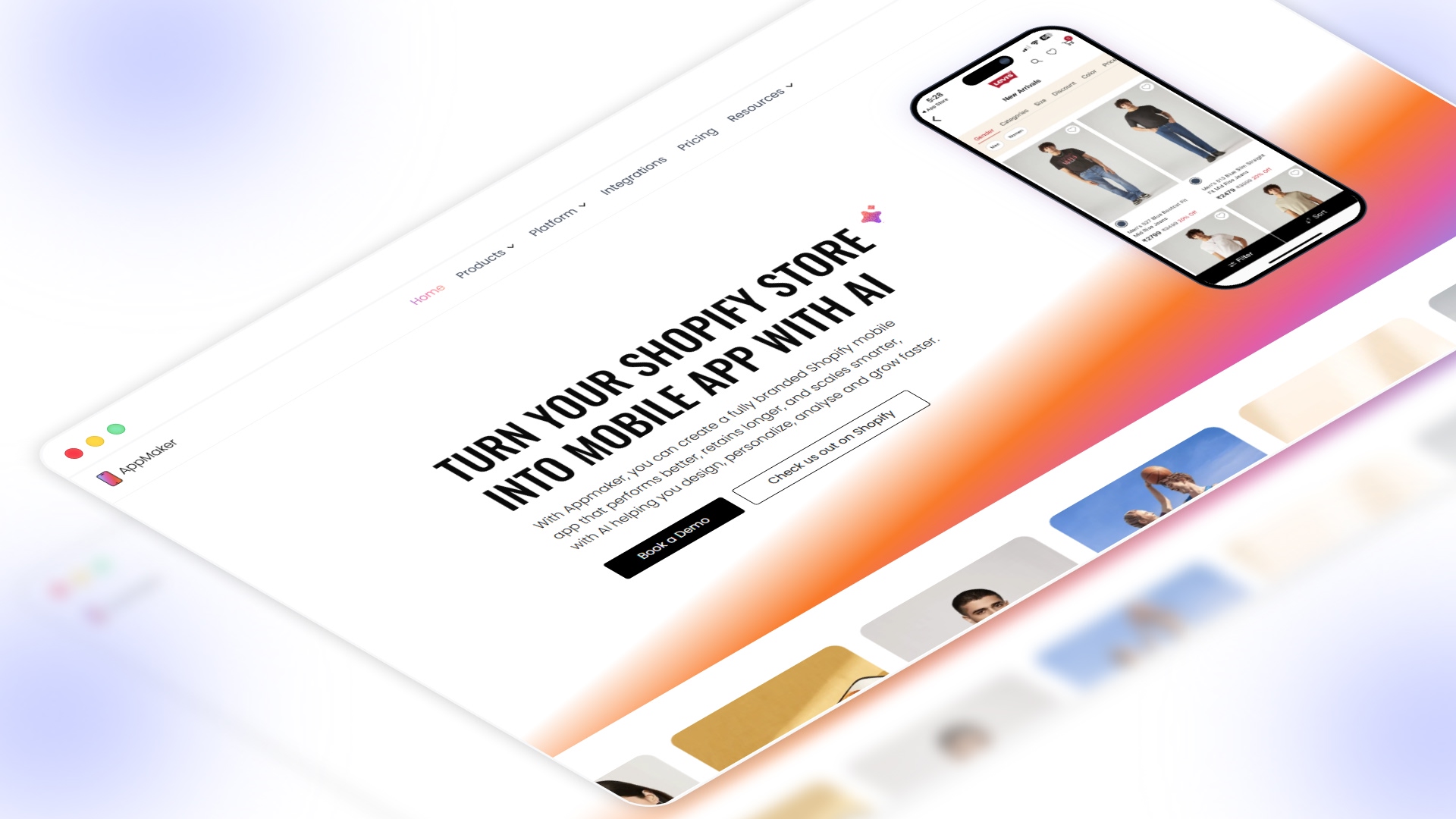
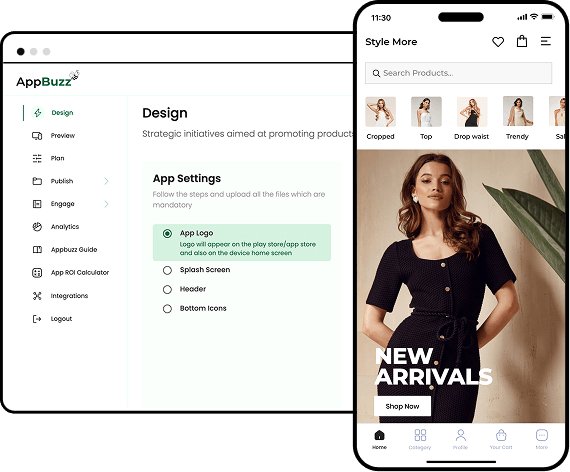
AppMaker is a Shopify‑native mobile app builder that helps high‑revenue merchants (typically $1M+ in annual sales) launch fully branded iOS and Android apps. It mirrors their store’s catalog, checkout, and customer data in real time. As an alternative to basic template‑led builders, it offers deeper customization, robust push engagement tools, flexible layouts, and real‑time store sync, making it a strong fit for scaling Shopify brands.
Key Features of AppMaker:
- Real‑Time Sync & Push Notifications: Mirrors Shopify products, orders, and customers instantly and supports scheduled, event‑triggered, and behavioral push notifications for higher retention and repeat engagement.
- Deep Customization: Full layout and component control with drag‑and‑drop, conditional blocks, custom templates, and extensions that let stores reflect brand identity without rigid templates.
- Eidolon AI: Uploads Figma frames or screenshots and converts them into editable, production‑ready app components to support branded mobile UI creation.
- John AI Executive Assistant: Built‑in AI assistant that analyzes data, plans and launches campaigns, and turns analytics into actionable growth moves without manual reporting.
Pros
- Syncs Shopify data instantly and reliably
- Strong drag‑and‑drop layout flexibility
- Built‑in push notification campaigns
Cons
- Higher cost for advanced plans
Pricing: $999 per month + 1% of in-app sales.
2. MobiLoud
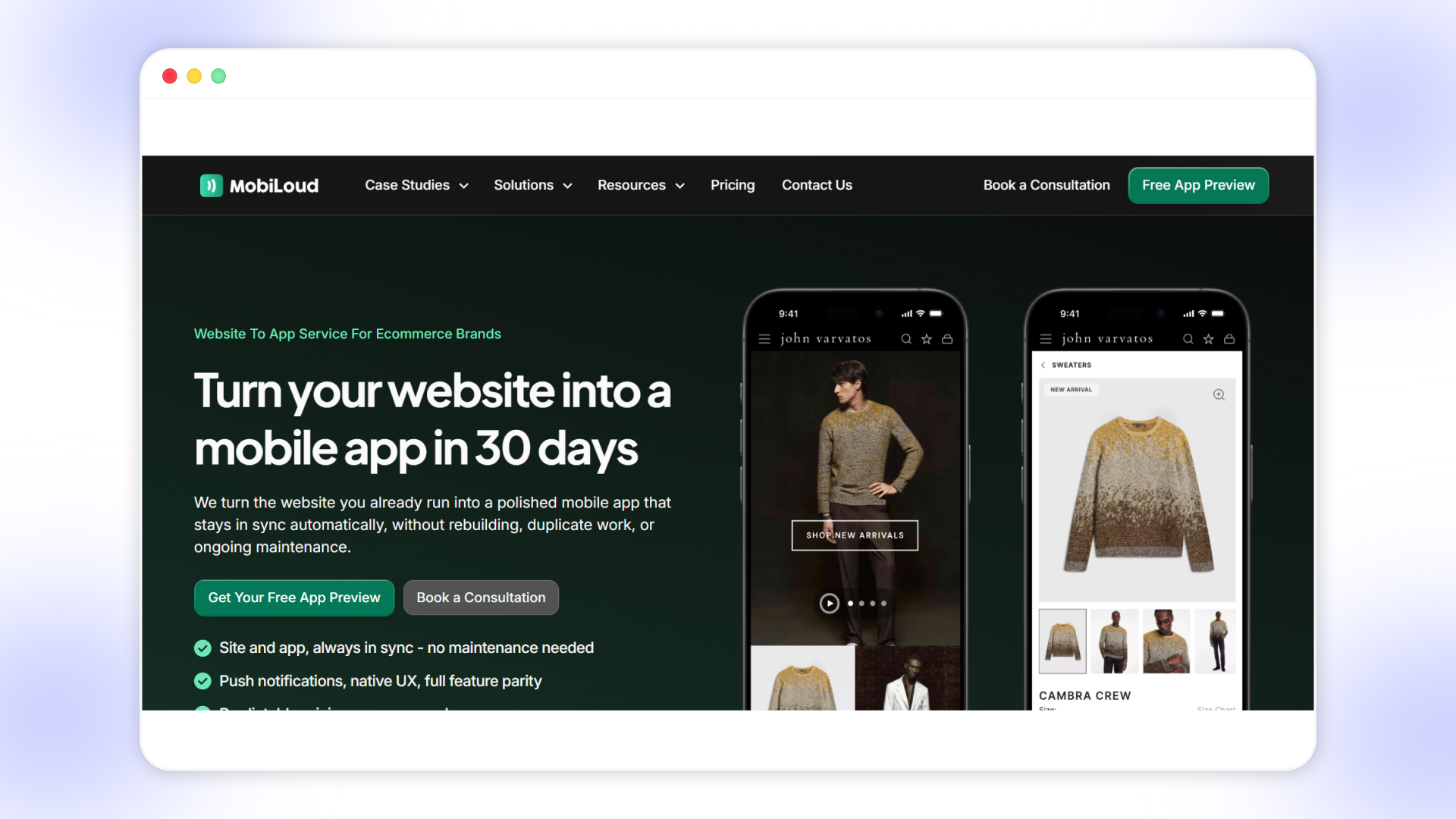
MobiLoud turns a Shopify store into fully native iOS and Android apps that stay in sync with your website without separate rebuilds or duplicated workflows. Every update you make on Shopify, products, collections, pages, or integrations automatically appears in the mobile app. It provides reliable push messaging, customizable navigation, and a managed build and launch service for merchants that need a hands‑off but powerful app solution.
Key Features of MobiLoud:
- Shopify Content & Product Sync: Your online store content and catalog update instantly in the mobile app without extra steps.
- Push Notification Support: Sends native push alerts for order updates, shipping, promotions, and abandonment reminders.
- Configurable Navigation & UI: Lets you tailor menus, category flows, and branding elements to match your store.
- Managed Build & Launch: MobiLoud’s team handles app configuration, publishing, maintenance, and updates.
Pros
- Syncs Shopify catalog and content reliably
- Push messaging tied to customer workflows
- Team manages build and updates
Cons
- Not a visual drag‑and‑drop builder
Pricing: Starts at $799/month.
3. Vajro
Vajro is a no‑code mobile app builder that helps Shopify stores launch fully branded iOS and Android apps with automatic sync of your products, collections, pricing, inventory, and orders. It combines an intuitive drag‑and‑drop editor with tools designed to boost engagement. Vajro suits merchants who want native mobile engagement, reliable Shopify sync, and campaign‑ready push features without building from scratch.
Key Features of Vajro:
- Real‑Time Shopify Sync: Syncs Shopify product catalog, pricing, inventory, and orders directly into the app.
- Drag‑and‑Drop App Builder: Customize layouts, banners, and UI elements without coding.
- Push Notifications: Send targeted push campaigns for promotions, cart recovery, and announcements.
- Live Selling: Let merchants host live video sessions on the app to engage customers and drive real‑time purchases.
Pros
- Creates native iOS and Android mobile apps
- Engaging push and live selling features
- Easy setup with drag‑and‑drop editor
Cons
- Advanced custom design can be limited without developer work
Pricing: Starts at $150 / month.
4. Shopney
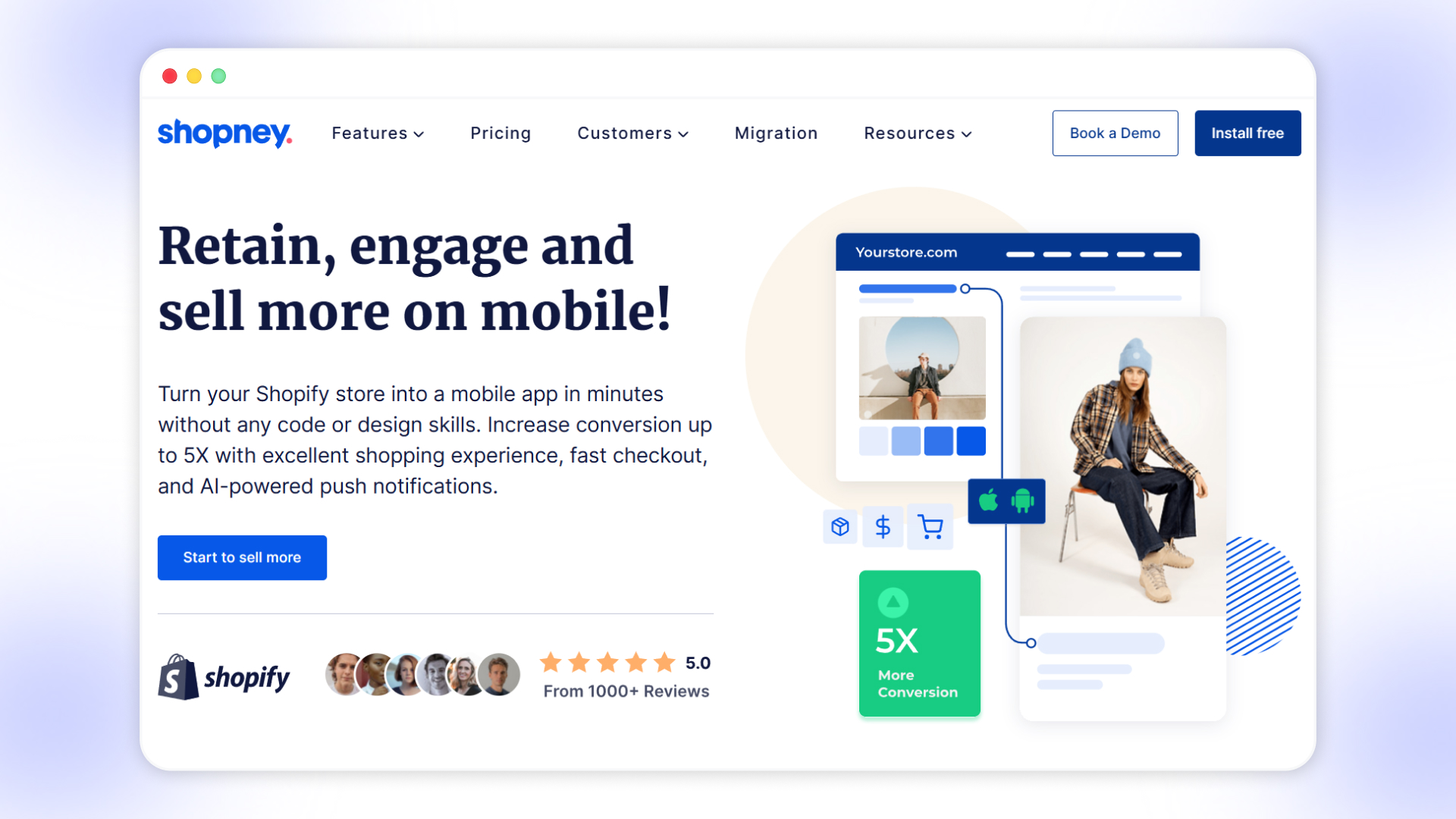
Shopney is a Shopify‑focused mobile app platform that helps merchants turn their store into native iOS and Android shopping apps with no coding needed. It’s designed to reduce reliance on paid ads by boosting retention and conversions through AI‑assisted push flows, in‑app chat, intuitive navigation, and seamless checkout. This makes Shopney a compelling alternative for brands that want a polished mobile app customer experience.
Key Features of Shopney:
- Real‑Time Shopify Sync: Syncs products, collections, pricing, and inventory directly into your mobile app.
- AI‑Powered Push Notifications: Unlimited automated push messages, including abandoned cart, segmented campaigns, and back‑in‑stock alerts.
- Drag‑and‑Drop Design Editor: Customize layouts, themes, colors, and navigation with a visual editor, no code required.
- In‑App Engagement Tools: Includes in‑app messaging, native navigation patterns, and integrations with top Shopify apps for reviews, loyalty, and commerce flows.
Pros
- No‑code native app creation for Shopify
- Unlimited push messaging capabilities
- Integrated in‑app chat and engagement tools
Cons
- Design tools may be less flexible for a fully bespoke UX
Pricing: Starts at $ 149 /month.
5. Tapcart
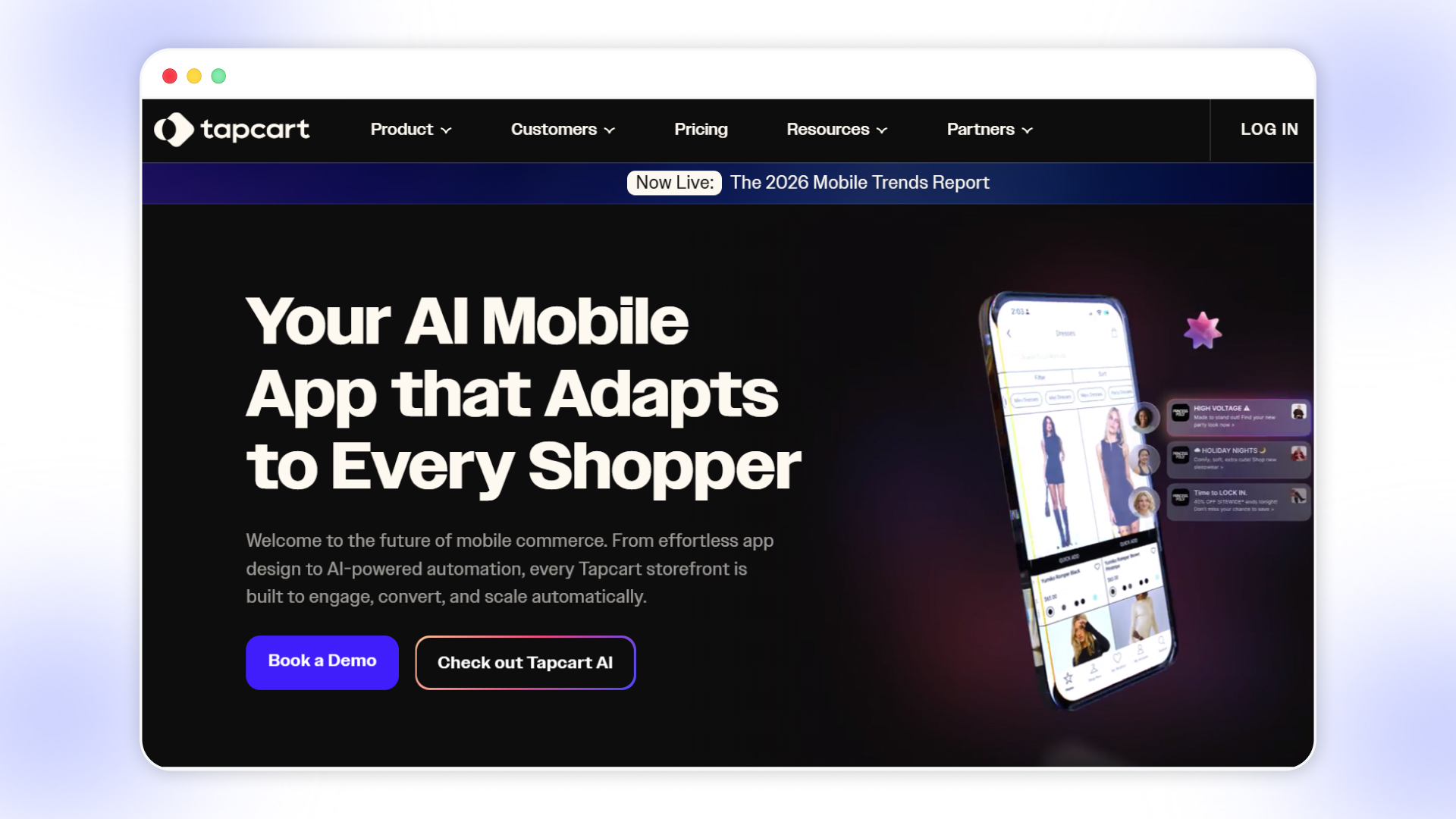
Tapcart is a mobile app platform built specifically for Shopify that helps merchants create fully branded iOS and Android shopping apps without developer work. It syncs your Shopify catalog, customer data, and checkout in real time and pairs an intuitive design studio with purpose‑built engagement tools. Tapcart is a compelling choice for brands that want strong mobile performance and personalized experiences.
Key Features of Tapcart:
- Real‑Time Shopify Sync: Seamlessly pulls product data, pricing, inventory, and customer accounts into the mobile app.
- Native iOS & Android Compatibility: Build, publish, and manage both Apple and Android apps with branded navigation and layouts.
- Drag‑and‑Drop App Studio: Design app screens, collections, and navigation visually without code.
- Push Notifications & Campaigns: Send unlimited, personalized notifications tied to user behavior, events, and promotions.
Pros
- Saves time with no‑code app building
- Robust push and engagement tools
- Built‑in analytics and personalization
Cons
- Limited layout flexibility compared to some alternatives
Pricing: Starts at $250/month.
Also Read: Top 11 Tapcart Competitors for Shopify Mobile App in 2026
6. VennApps
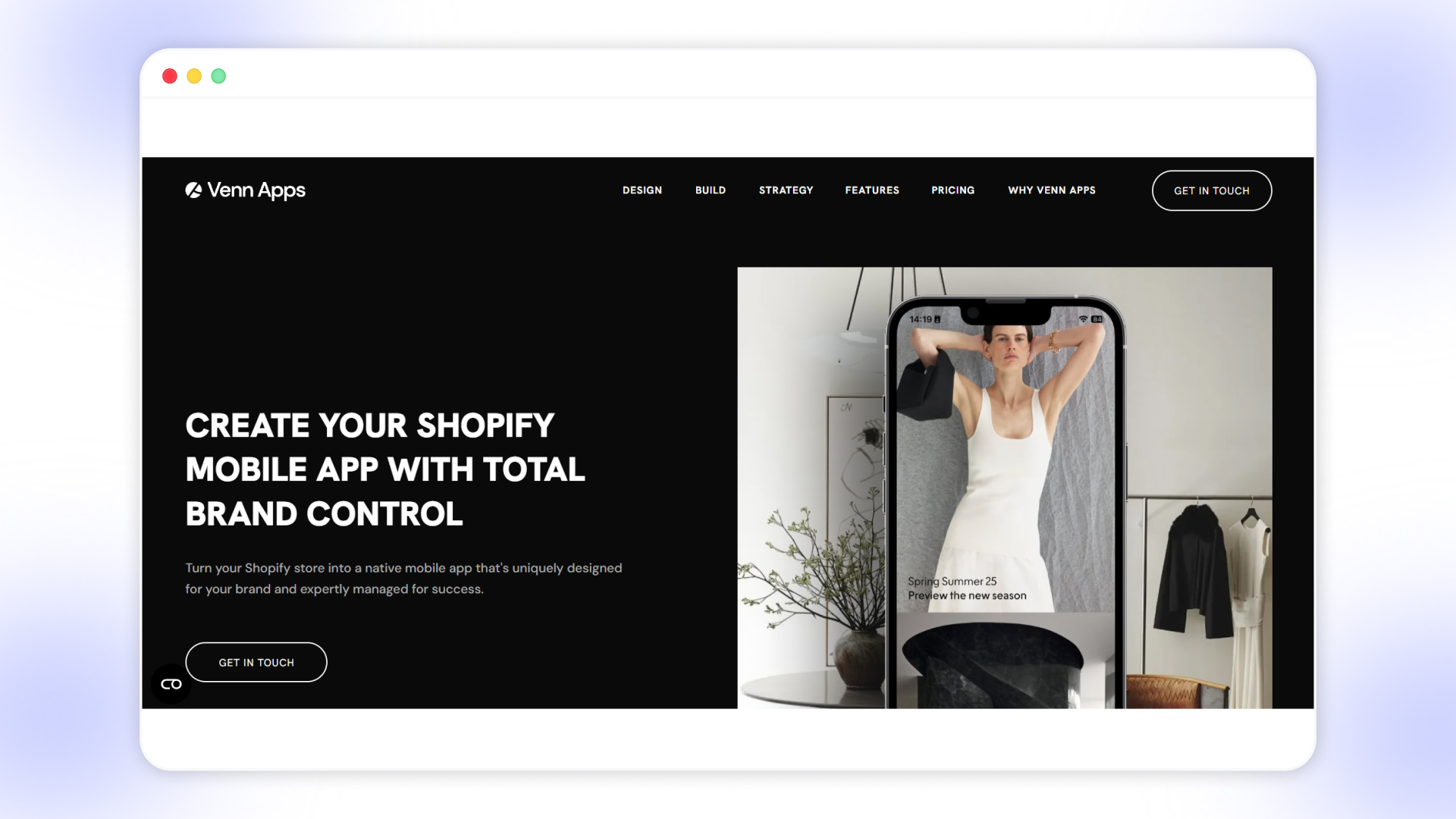
VennApps is a managed mobile app solution that builds fully native iOS and Android apps for Shopify stores with bespoke design and strategic support. Rather than a self‑serve template system, VennApps works with brands to translate their Shopify setup, including metafields and custom objects, into a smooth, native mobile experience. It is a fitting alternative for Shopify merchants who want brand‑level control with managed execution.
Key Features of VennApps:
- Native iOS & Android Apps: Builds truly native applications (no webview wrappers) tailored to brand identity and performance.
- Real‑Time Shopify Sync: Changes in Shopify metafields, products, and content are reflected in the app instantly.
- Global Localization Support: Full multi‑language and multi‑currency support, including Shopify Markets compatibility.
- Advanced Engagement Tools: Unlimited push notifications with segmentation, scheduling, and automated flows.
Pros
- Native‑grade app experience for Shopify stores
- Strong global commerce and localization support
- Dedicated design and strategic support team
Cons
- Requires managed planning and collaboration for launch
Pricing: Starts from $1999 / month.
7. MageNative
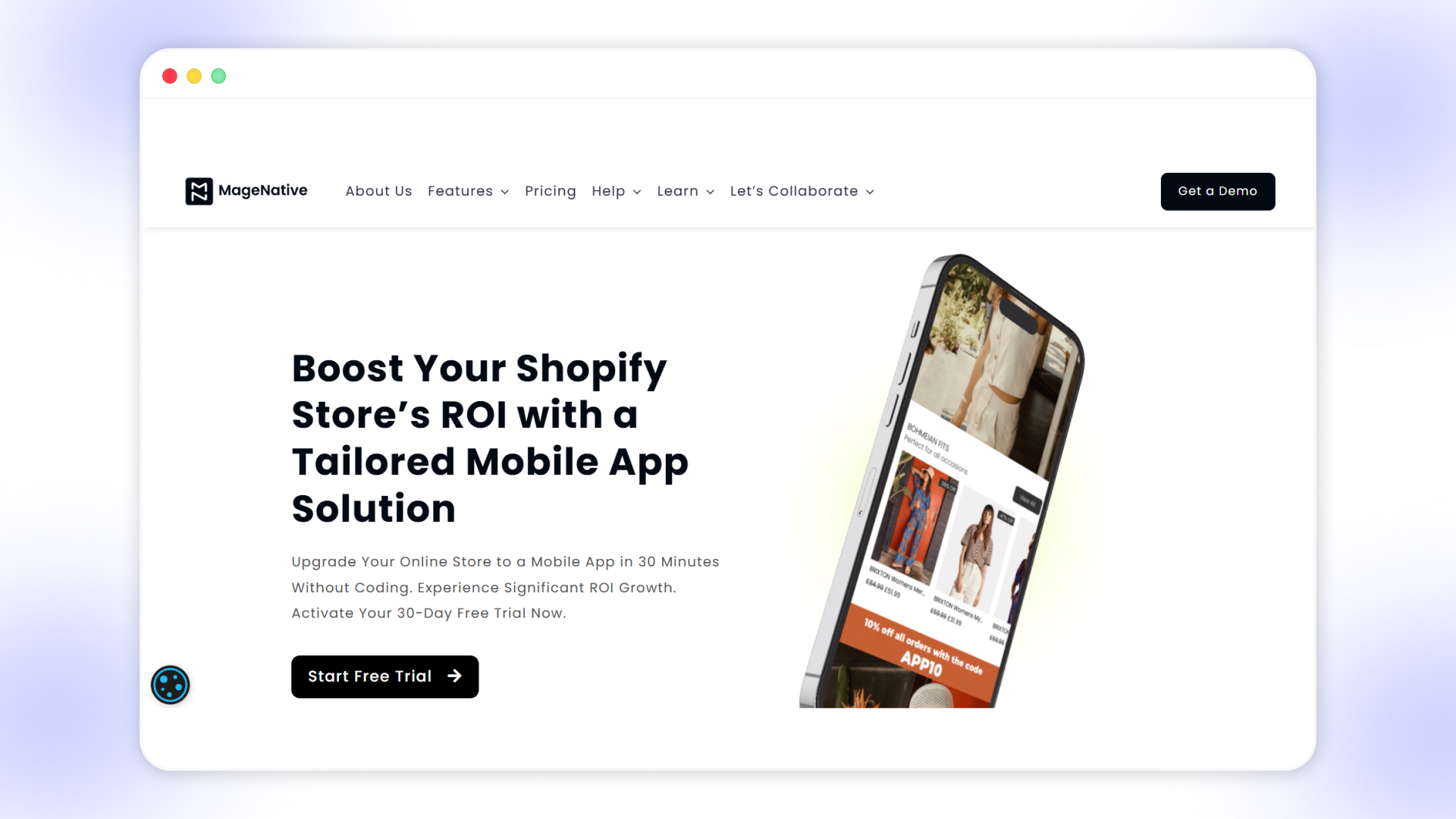
MageNative is a no‑code mobile app builder that helps Shopify merchants launch fully branded native iOS and Android shopping apps with real‑time product and store sync. It automatically reflects product catalog changes, pricing, inventory, and orders in the app without manual export/import. It is a solid alternative for brands that want strong Shopify integration, reliable engagement tools, and customizable mobile shopping experiences.
Key Features of MageNative:
- Real‑Time Shopify Sync: Automatically pulls products, collections, pricing, inventory, and customer orders into the app live.
- Segmented Push Notifications: Send abandoned cart, back‑in‑stock, promotional, and personalized push campaigns.
- Drag‑and‑Drop App Builder: Let merchants design pages, banners, and navigation without coding.
- Multi‑Language & Multi‑Currency Support: Handles global store languages and currencies.
Pros
- Strong real‑time sync with Shopify data
- Segmentation options for push campaigns
- Multi‑language and global readiness
Cons
- Layout design flexibility can be limited for highly bespoke UX
Pricing: Starts from $99 / month.
8. StoreLab
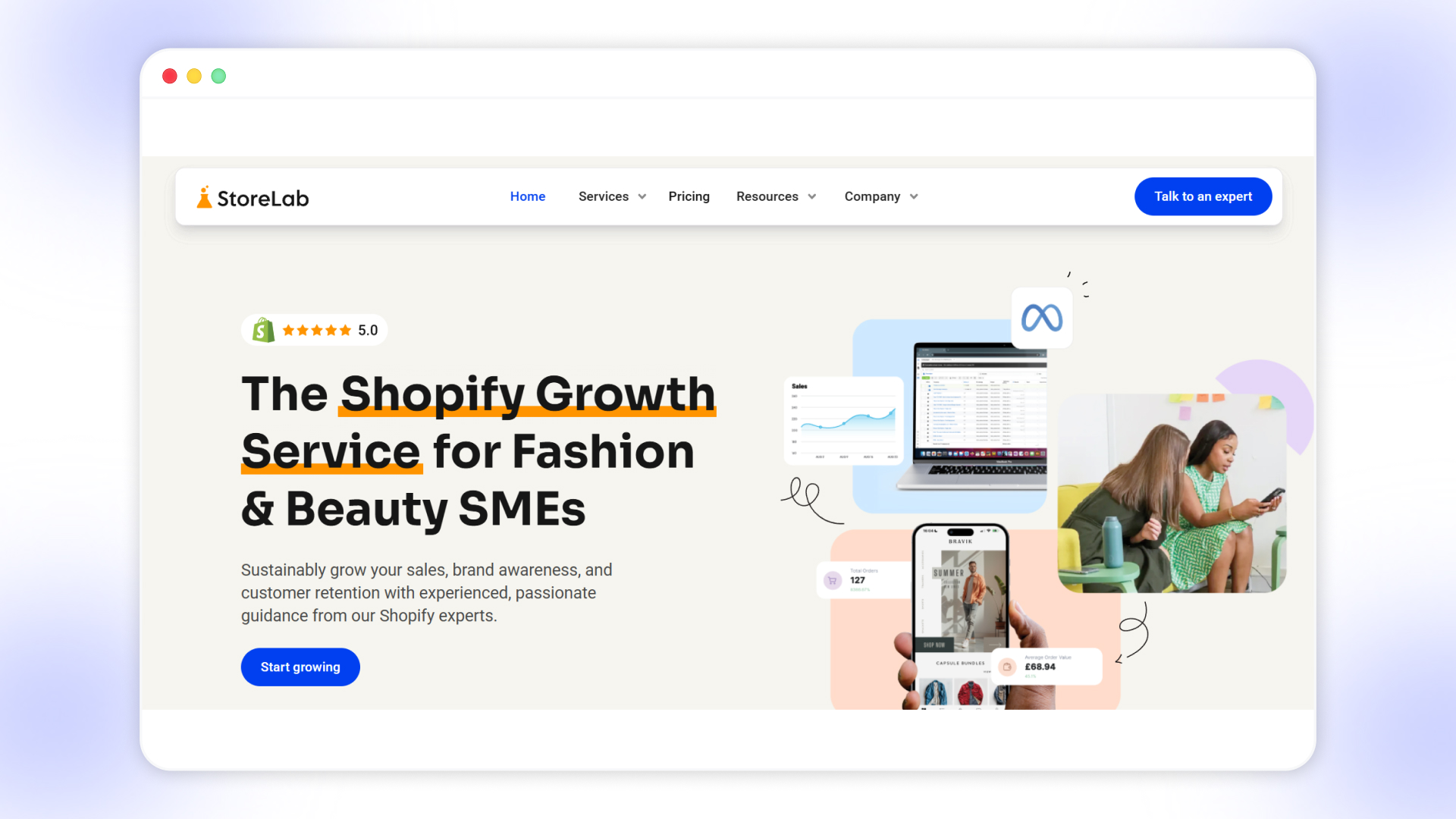
StoreLab is a no‑code mobile app platform that helps Shopify merchants launch fully branded iOS and Android shopping apps with automatic sync of products, collections, pricing, and orders. It offers unlimited push notifications, abandoned cart alerts, and app navigation customization. With guided setup and merchant support, StoreLab is a reliable alternative for brands that want strategic assistance alongside their app build.
Key Features of StoreLab:
- Real‑Time Shopify Sync: Automatically reflects product catalog, pricing, inventory, and orders in the mobile app.
- Unlimited Push Notifications: Send promotional, abandoned cart, and custom push messaging without usage caps.
- Custom Navigation & UI Options: Let brands tailor menus, category flows, and visual app structure.
- Guided Setup & Merchant Support: Includes onboarding help and ongoing support to configure app features.
Pros
- Syncs Shopify products and orders accurately
- Unlimited relevant push messaging
- Supportive onboarding and merchant assistance
Cons
- Design flexibility is limited compared with fully custom developer builds
Pricing: Starts from $499 / month.
9. Plobal App
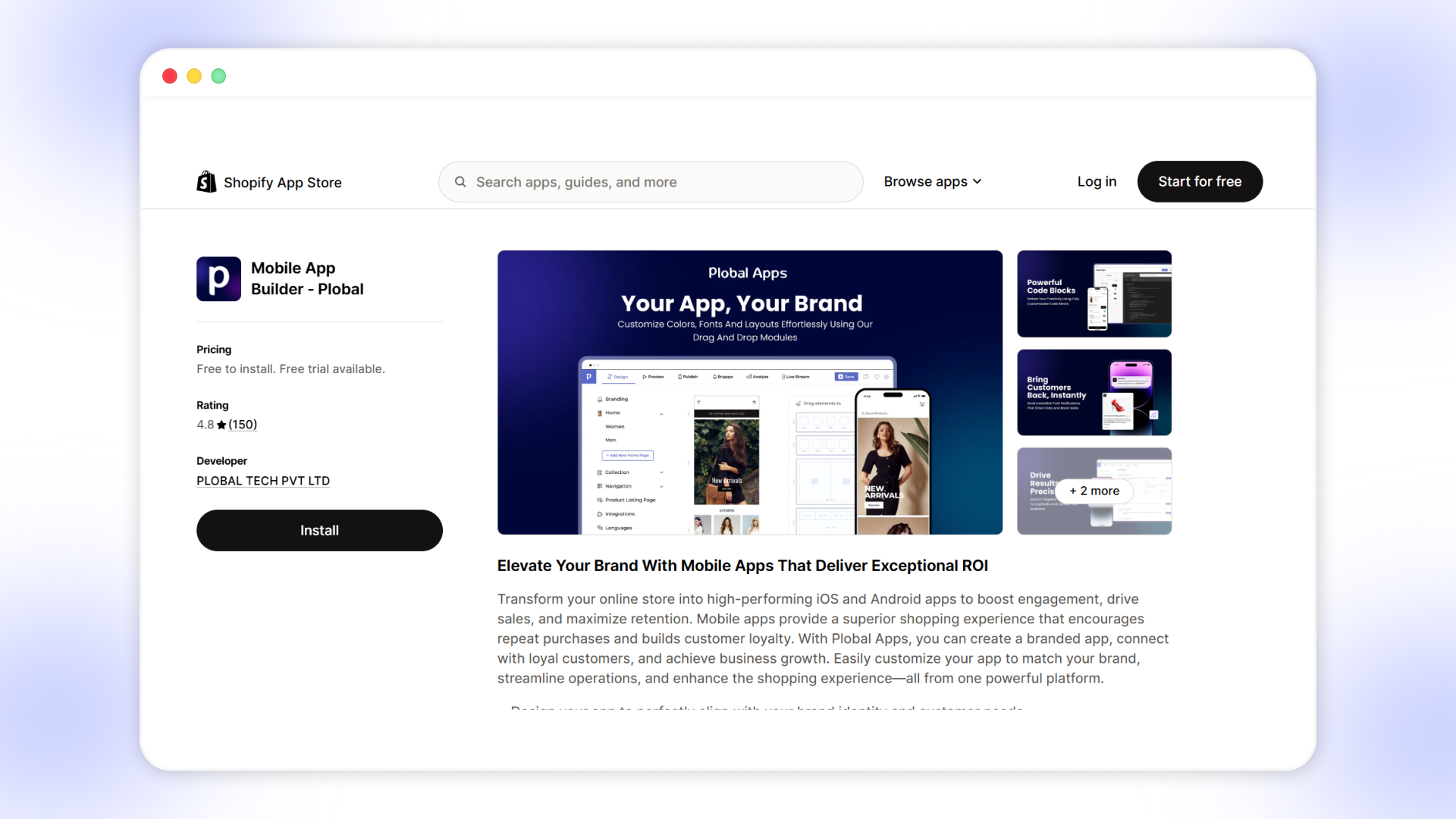
Plobal Apps helps Shopify merchants turn their stores into fully branded iOS and Android apps with real‑time product, collection, and order sync. It focuses on driving mobile engagement through powerful push notification workflows, prebuilt templates designed for conversion, and built-in analytics. Plobal Apps is a practical alternative for merchants who want strong engagement tools and ecosystem connectivity without deep coding.
Key Features of Plobal Apps:
- Real‑Time Shopify Sync: Automatically pulls products, collections, pricing, inventory, and orders into your mobile app.
- Push Notification Workflow Engine: Supports segmented and automated pushes tied to cart behavior, promotions, and lifecycle events.
- Prebuilt Converting Templates: Offers tested templates optimized for higher mobile conversion.
- Commerce Integrations: Works with popular loyalty, reviews, and analytics plugins for richer mobile experiences.
Pros
- Syncs Shopify data reliably
- Strong push automation capabilities
- Prebuilt templates optimized for mobile conversion
Cons
- Limited custom design freedom without development support
Pricing: Starts at $199 / month.
10. GoodBarber
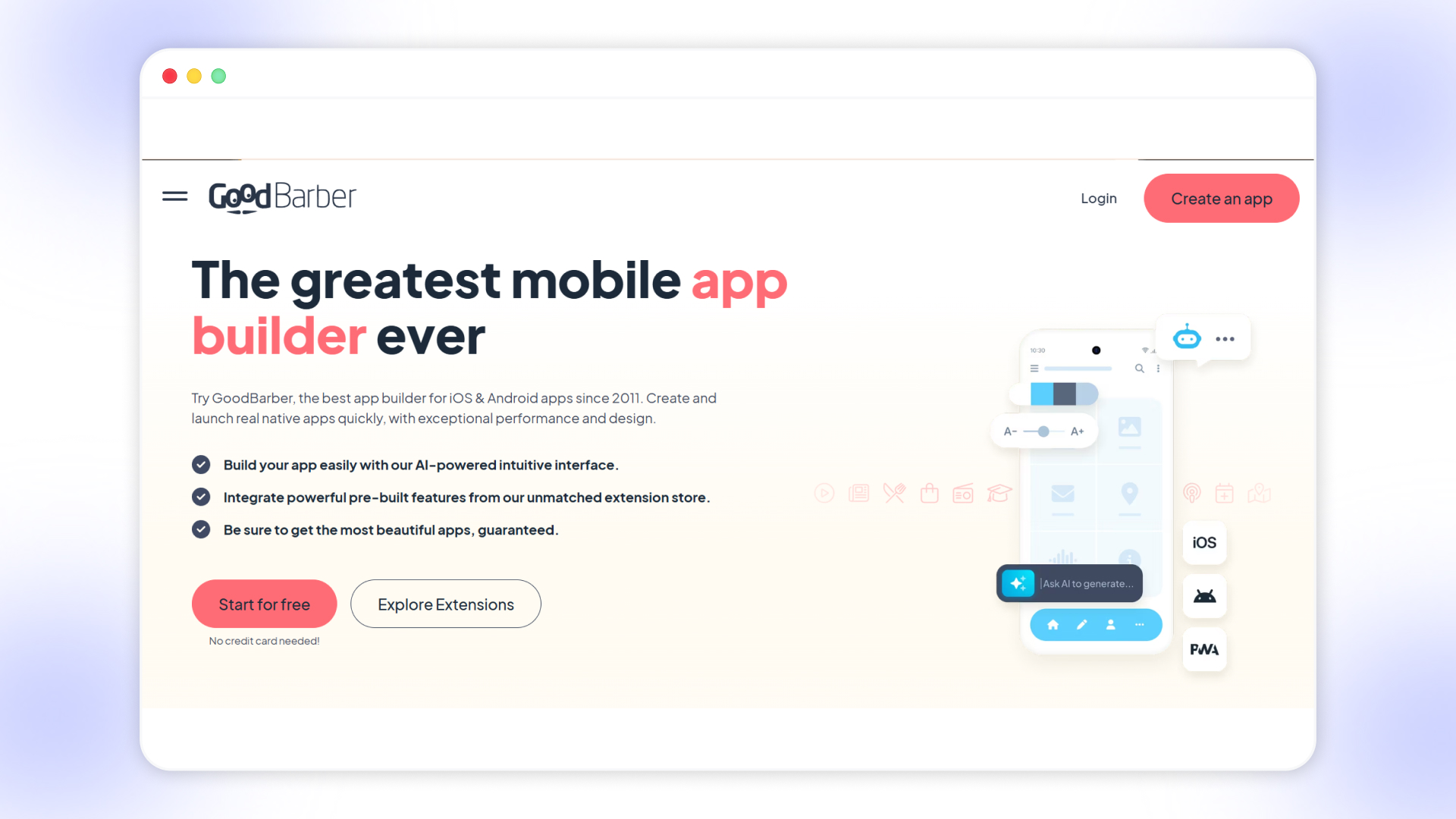
GoodBarber is a no‑code platform for building branded mobile and web apps, allowing merchants to create both native iOS/Android apps and Progressive Web Apps (PWAs). While GoodBarber doesn’t sync Shopify data natively, it can be connected to Shopify via third‑party automation tools like Zapier or Make to reflect products, orders, and customer actions.
Key Features of GoodBarber:
- Native iOS & Android Apps: Build and publish fully branded apps for both major mobile platforms.
- Progressive Web App (PWA) Support: Create SEO‑optimized PWAs that behave like mobile apps in browsers.
- Drag‑and‑Drop Visual Builder: Customize layouts, themes, and UI elements without coding.
- Extensions Marketplace: Add commerce, analytics, loyalty, and engagement tools through configurable extensions.
Pros
- Supports native mobile and web app publishing
- An extensive extension ecosystem for added features
- Strong visual customization options
Cons
- No built‑in Shopify catalog sync; requires Zapier/Make connectors
Pricing: Starts from $36 / month.
Having reviewed the features and capabilities, the next step is matching each platform to your store size, growth stage, and priorities.
Also Read: Top 12 GoodBarber Alternatives in 2026 for E-commerce Brands
Which Shopify Mobile App Builder Alternative Fits Your Store?
Not every Shopify mobile app builder suits every store. The right alternative depends on your traffic volume, catalog structure, and the outcomes you care about. This can be retention, custom flows, speed, or cross-border growth. Here’s a direct fit map so you can match your store’s reality to the right tool.
- For small stores (lean catalogs, <10K MAUs): VennApps and MageNative keep setup simple and costs predictable. Good when you need a fast launch, basic customization, and minimal operational overhead.
- For mid-market brands (scaling SKUs, steady paid traffic): Shopney works well for merchandising-heavy brands. MobiLoud fits stores with 1K–5K SKUs and complex collection logic that need stability more than flashy templates.
- For high-growth or enterprise stores: AppMaker delivers the strongest control over custom flows, Shopify data, and advanced PDP behavior. Appbrew is ideal when you’re preparing for multi-country catalogs, aggressive traffic spikes, or deep personalization.
- For retention-driven brands: Tapcart, Shopney, and AppMaker stand out with stronger push segmentation and purchase-history triggers.
Having reviewed the features and capabilities, the next step is matching each platform to your store size, growth stage, and priorities.
Conclusion
The Shopify mobile app builder market is overflowing with options, but the differences between platforms become clear when you look at how they handle real store demands. This includes catalog accuracy, speed, stability during campaigns, retention tools that actually move repeat revenue, and the level of control teams have over their app without slowing down development.
Appmaker stands out because it’s built around those operating realities. Its merchandising control mirrors Shopify’s logic, its UI flexibility supports brand-level personalization, and its push and automation stack is tuned for retention instead of vanity engagement. Stores with larger catalogs, active product drops, or multi-market traffic usually find that Appmaker handles complexity without adding overhead to their teams.
Get in touch with us to have a Shopify mobile app created that mirrors your store, supports large catalogs, and drives retention automatically.
FAQs
1. What should Shopify brands check first when comparing mobile app builder alternatives?
Start with the Shopify-native depth of each tool and not just “integration.” Look for how it handles Shopify Checkout Extensibility, multi-location inventory, variant logic, discount stacking, and real-time cart sync. This is where most alternatives break or slow down.
2. How do I know if my Shopify store has outgrown a generic mobile app builder?
Warning signs are crystal clear: theme updates break app layouts, large catalog loads stall, push notifications hit delivery caps, or international customers see inconsistent pricing/tax logic. These issues mean you’ve hit a platform ceiling.
3. What hidden costs appear when switching from one Shopify app builder to another?
Expect charges around rebuilding custom flows, re-syncing product data, migrating customer accounts, regenerating push tokens, and handling app store re-approvals. Most merchants underestimate these and compare only subscription pricing.
4. Can AppMaker handle complex Shopify setups like subscriptions, bundles, or 10k+ SKUs?
Yes. AppMaker is optimized for Recharge, Bold Bundles, advanced variants, and large catalogs with high-frequency updates. Its server-side rendering, smart caching, and Shopify-API-first build keep load times steady even at scale.
5. When does an AppMaker-style platform become a better fit than coded apps or entry-level builders?
When you need native-grade speed, custom automation, push-driven retention tools, and international storefront logic, but don’t want the overhead of a full dev team. It fills the “mid-market complexity without enterprise cost” gap.