























Every day, people spend over 3.5 hours on their phones, and most of that time is inside apps, not websites. For ecommerce brands, this means your app is often the first place a shopper experiences your products.
A slow login, cluttered search, or confusing checkout can make users leave before buying. But the right features, smart search, personalized recommendations, seamless checkout, and real-time updates, turn casual browsers into loyal customers.
Apps that adapt to users’ behavior and make shopping effortless see higher engagement, repeat purchases, and more revenue.
In this blog, we will explore the 10 essential ecommerce app features that actually increase conversions, retention, and customer lifetime value in 2026.
Overview
- Ecommerce apps succeed when features are chosen to build revenue, not just added for show, prioritizing smooth shopping, quick access, and personalized experiences.
- Frictionless login and one-tap sign-ins get users into the app instantly, speeding up first-session purchases and reducing drop-offs.
- AI-driven personalization with dynamic layouts and behavior-based recommendations increases order value and keeps users engaged across sessions.
- Push notifications tied to cart activity, restocks, or browsing behavior drive repeat purchases without being intrusive.
- Real-time order tracking and automated delivery updates build trust and improve customer satisfaction, reducing churn after purchase.
Why Do Most Ecommerce Apps Fail Even With All the Features?
Most ecommerce apps fail because they confuse feature quantity with revenue strategy. They launch with login, search, checkout, and push notifications, but those features operate in isolation. Without behavioral logic, testing, and optimization, even a “complete” app struggles to convert and retain users.
Here’s the real difference between feature stacked app and revenue optimized app:
In short, strong UX, smooth checkout, and secure payments are no longer differentiators. They are expected. If your app only delivers usability, you’re meeting the market standard and are not outperforming it.
The real shift is from transactional apps to behavioral engines. Modern ecommerce apps analyze intent, personalize in real time, and automate engagement. Growth now comes from intelligent adaptation, not from simply adding more features.
Now that we understand why feature quantity alone doesn’t guarantee success, let’s dive into the 10 essential ecommerce app features that keep users coming back.
Also Read: Top 10 Mobile Apps for E-commerce Success in 2026
10 Ecommerce Mobile App Features List
Not every feature improves revenue. This ecommerce mobile app features list focuses on the ten capabilities that directly impact conversion rates, average order value, retention, and repeat purchases. Together, they help you build an app that performs, not just exists. Let's learn about these revenue-driven features.
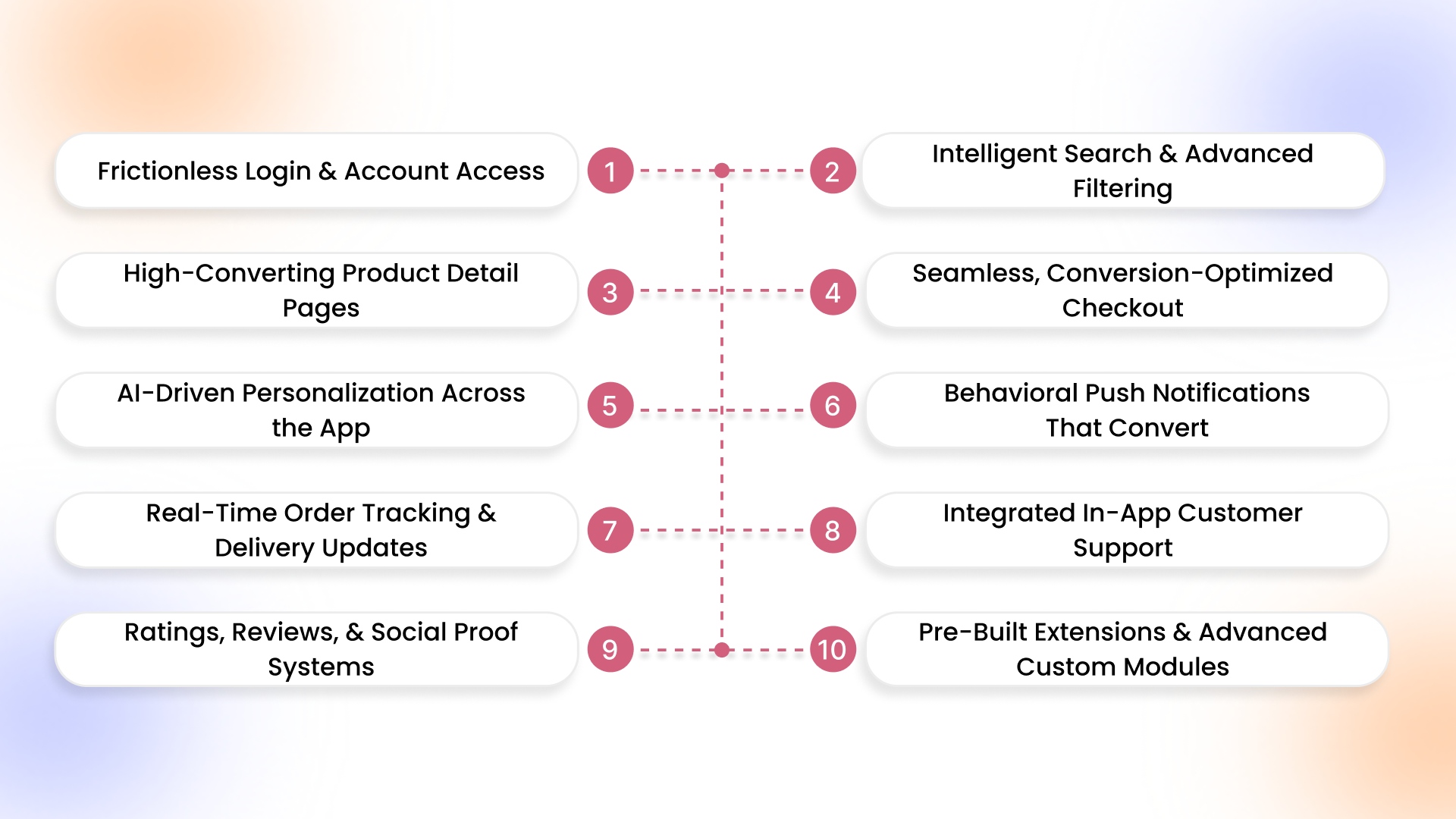
1. Frictionless Login and Account Access
Login is your first conversion checkpoint. If access feels slow or complicated, users drop before browsing. A frictionless login flow shortens time to product discovery and boosts first-session purchases.
To make login conversion-focused, implement:
- Guest Checkout with Post-Purchase Account Prompt – Allow instant purchases first, then encourage account creation after successful checkout completion.
- One-Tap Social Sign-In Options – Enable Apple, Google, or Facebook login to eliminate manual form-filling friction.
- Progressive Profile Completion Across Sessions – Collect customer information gradually instead of forcing long registration forms upfront.
- Auto-Saved Addresses and Payment Preferences – Store shipping and billing details securely to reduce checkout completion time.
2. Intelligent Search and Advanced Filtering
Next, search is your revenue accelerator. If users cannot find products within seconds, they exit. Intelligent search reduces decision fatigue, increases product discovery, and directly improves conversion rate and average order value.
To make search performance-driven, implement:
- Predictive Auto-Suggestions with Intent Mapping – Show relevant products instantly based on typing behavior and trending searches.
- Dynamic Filters That Adapt by Category – Display size, color, price, or brand filters specific to each product type.
- Behavior-Based Sorting Logic – Prioritize bestsellers or previously viewed items based on user interaction history.
- Search History and Recently Viewed Sync – Help users resume shopping without restarting their product discovery journey.
3. High-Converting Product Detail Pages
Product pages decide whether browsing turns into buying. It is where hesitation must be eliminated. Every element should answer objections, reinforce value, and shorten the path to checkout.
To increase conversion at the product level, implement:
- High-Resolution Media with Zoom and Video – Showcase product angles, texture, and usage context clearly.
- Structured, Benefit-Focused Descriptions – Highlight outcomes and specifications in scannable, mobile-friendly formats.
- Real-Time Inventory and Scarcity Indicators – Display low-stock signals to create urgency without manipulation.
- Ratings, Reviews, and User-Generated Photos – Provide authentic proof that builds trust and reduces uncertainty.
4. Seamless, Conversion-Optimized Checkout
Checkout is the final revenue gate. Even small delays here cause drop-offs. A conversion-optimized checkout removes unnecessary steps, reduces cognitive load, and makes payment feel effortless.
To protect and increase checkout completion, implement:
- Single-Page or Progressive Smart Checkout Flow – Minimize screens while keeping steps logically structured.
- Auto-Filled Shipping and Billing Information – Reduce typing effort using saved and verified customer data.
- Multiple Wallet and Express Payment Options – Enable Apple Pay, digital wallets, and saved cards.
- Transparent Pricing with Upfront Cost Breakdown – Show taxes, shipping, and discounts clearly before payment confirmation.
5. AI-Driven Personalization Across the App
In ecommerce, personalization drives engagement and repeat purchases. Generic experiences fail to convert. AI-powered personalization delivers dynamic layouts, relevant recommendations, and offers based on real-time user behavior, increasing order value and long-term retention.
To make personalization actionable:
- Behavior-Based Product Recommendations – Suggest products dynamically according to browsing, purchases, and engagement patterns across the app.
- Dynamic Home and Category Layouts – Adjust visible content in real-time to match each user’s interests and browsing history.
- Targeted Discounts and Bundles – Deliver personalized offers, flash deals, and product bundles to high-intent shoppers.
- Adaptive Search and Sorting – Reorder search results per individual preferences, past behavior, and likelihood to purchase.
6. Behavioral Push Notifications That Convert
Push notifications can be revenue-generating tools when they are behavior-drive. They help deliver 5–10X higher click-through rates (CTRs) than email or paid marketing. Generic alerts get ignored. Targeted notifications re-engage users, reduce cart abandonment, and drive repeat purchases without feeling intrusive.
To maximize push notification impact:
- Cart Abandonment Alerts with Personalized Offers – Remind users of incomplete carts with incentives tied to their browsing history.
- Browse Abandonment and Product Updates – Notify users about products they viewed but didn’t purchase to spark conversions.
- Restock and Price Drop Notifications – Alert users when favorite products return in stock or drop in price.
- Geo-Targeted, Time-Sensitive Campaigns – Send notifications based on location, optimal engagement timing, and user behavior patterns.
7. Real-Time Order Tracking and Delivery Updates
Order tracking reduces uncertainty and builds trust. Customers want transparency; delayed or unclear updates lead to churn. Real-time tracking keeps users informed, increases repeat purchases, and drives loyalty.
To optimize order visibility:
- Live Map Tracking of Shipments – Show customers where their order is in real time with accurate location updates.
- Automated Status Alerts – Notify users instantly about shipping, delays, or delivery confirmations via push or email.
- Estimated Delivery Windows – Provide precise arrival times to reduce frustration and improve customer satisfaction.
- Return and Exchange Tracking – Let users track return or replacement orders seamlessly to enhance the post-purchase experience.
Also Read: 10 Mobile App Engagement Metrics That You Should Track in 2026
8. Integrated In-App Customer Support
Customer support directly impacts retention and revenue. Apps that force users to email or call lose trust. Integrated in-app support ensures problems are resolved quickly, reducing churn and improving lifetime value.
To create effective support:
- Live Chat With Instant Responses – Provide real-time assistance to resolve queries without leaving the app interface.
- AI-Powered Virtual Assistants – Offer automated guidance for FAQs, order help, and product inquiries efficiently.
- Ticketing and Case History – Track past issues for faster resolution and personalized service on repeat interactions.
- Multi-Channel Support Integration – Connect support via chat, email, or social platforms directly inside the app.
9. Ratings, Reviews, and Social Proof Systems
Social proof drives trust and conversions. Highlighting verified ratings and user reviews reduces hesitation, increases AOV, and boosts engagement. An optimized review system turns feedback into actionable insights for business growth.
To maximize social proof impact:
- Verified Purchase Reviews – Ensure displayed ratings come from actual buyers to maintain credibility.
- Photo and Video Reviews – Encourage users to upload media to enhance trust and product understanding.
- Highlight Top Reviews and Influencers – Showcase helpful or influential feedback to guide purchase decisions.
- Incentivized Review Collection – Reward users for leaving reviews to generate consistent, fresh, and authentic content.
10. Pre-Built Extensions and Advanced Custom Modules
Most ecommerce apps are limited to templates. Platforms like AppMaker allow merchants to add advanced modules or extensions without coding, enabling faster launches, higher engagement, and unique app functionality beyond standard features.
To maximize app power:
- Drag-and-Drop Loyalty Modules – Add reward programs instantly, incentivizing repeat purchases and increasing customer lifetime value.
- Sticky Carts and Countdown Timers – Encourage faster decisions and reduce cart abandonment with attention-grabbing, pre-built modules.
- Custom Checkout and Subscription Flows – Create specialized purchase paths without coding, tailored to different user segments.
- Rapid Testing and Integration – Launch new features or connect with CRM, payment gateways, or inventory systems quickly.
After reviewing features, it’s clear that strong technology makes them effective. Let’s examine the technical foundation that keeps these capabilities running smoothly.
Technical Backbone: What Makes These Features Actually Work
Features alone don’t make an app successful; its technology determines how smooth, fast, and reliable it feels. Smart backend ensures everything, from checkout to product recommendations, runs seamlessly, keeping users happy and engaged.
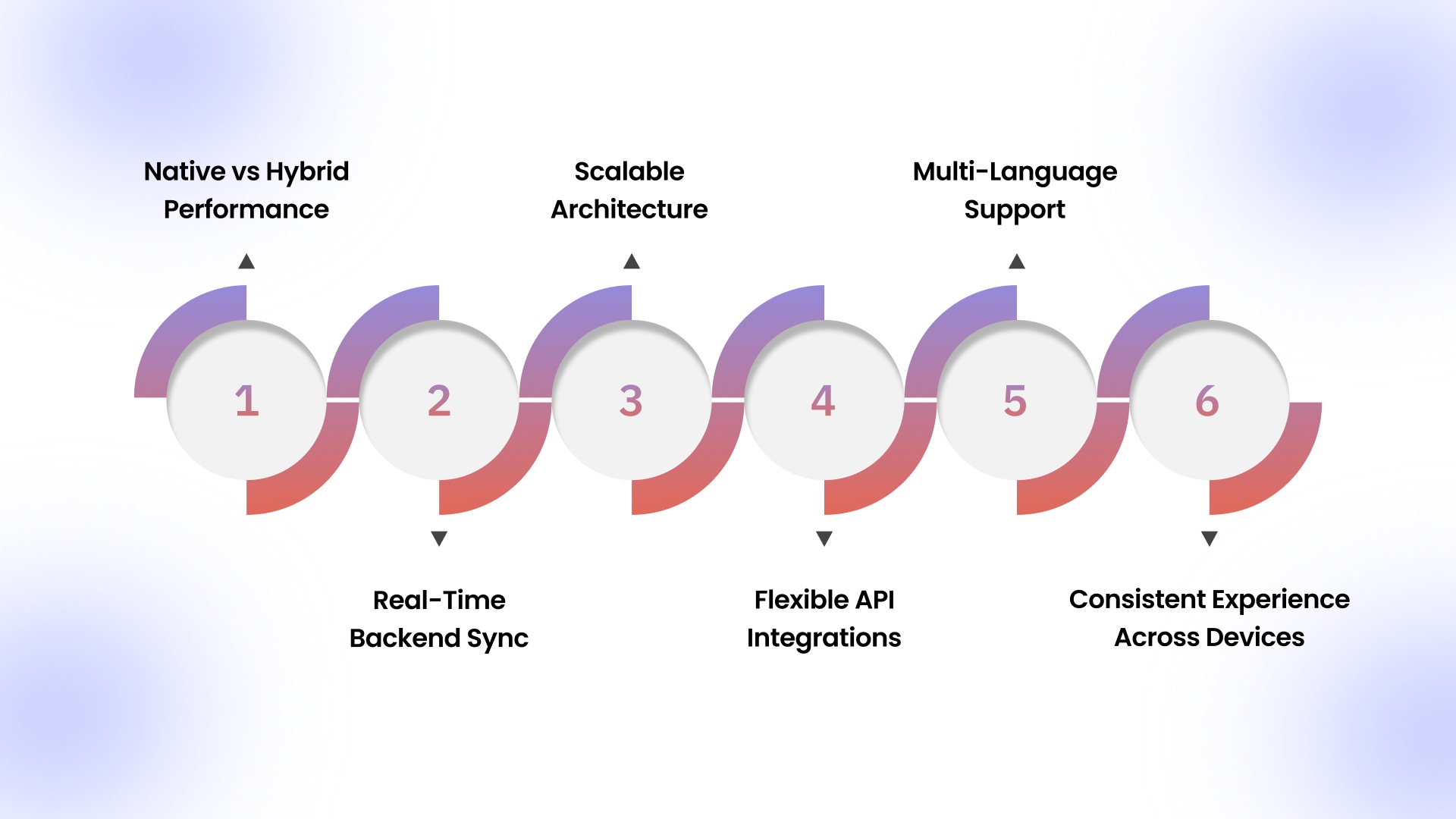
Here’s what makes it tick:
- Native vs Hybrid Performance – Native apps load faster, run smoother, and feel more responsive than hybrid alternatives.
- Real-Time Backend Sync – Inventory, orders, and user data update instantly across the app and the Shopify store.
- Scalable Architecture – Handles traffic spikes without slowing down, perfect for big sales or seasonal rushes.
- Flexible API Integrations – Connects easily with payment gateways, CRMs, and analytics tools.
- Multi-Language Support – Show content, pricing, and currency in users’ preferred language.
- Consistent Experience Across Devices – iOS and Android users enjoy the same smooth experience.
Understanding the tech is essential, but not all features matter equally. Next, we’ll see how to prioritize features according to your brand’s revenue stage.
Also Read: Complete Guide to Ecommerce App Development Cost in 2026
How to Prioritize Features Based on Your Revenue Stage?
Every growth stage demands a different approach. Early-stage brands need speed, mid-stage brands need loyalty, and later-stage brands need sophistication. Layering features strategically turns effort into measurable revenue, especially since mobile apps typically see conversion rates of 3% - 8%
Here’s how to stack for impact:
- $1M–$3M → Conversion Essentials – Nail fast login, clean product pages, and one-step checkout to turn first-time visitors into buyers.
- $3M–$7M → Retention Engine – Add push notifications, loyalty rewards, order tracking, and in-app support to keep customers returning consistently.
- $7M–$10M → Personalization + Experimentation – Introduce AI recommendations, dynamic layouts, advanced analytics, and A/B tests to increase engagement and average order value.
Once you know which features matter most, executing them effectively is key. Here’s how AppMaker helps brands bring these features to life seamlessly.
How AppMaker Brings Ecommerce App Features to Life
Having the right features is only part of the story; execution is what drives results. AppMaker’s features ensure every essential ecommerce app function, from login to order tracking, works seamlessly, helping brands see measurable improvements.
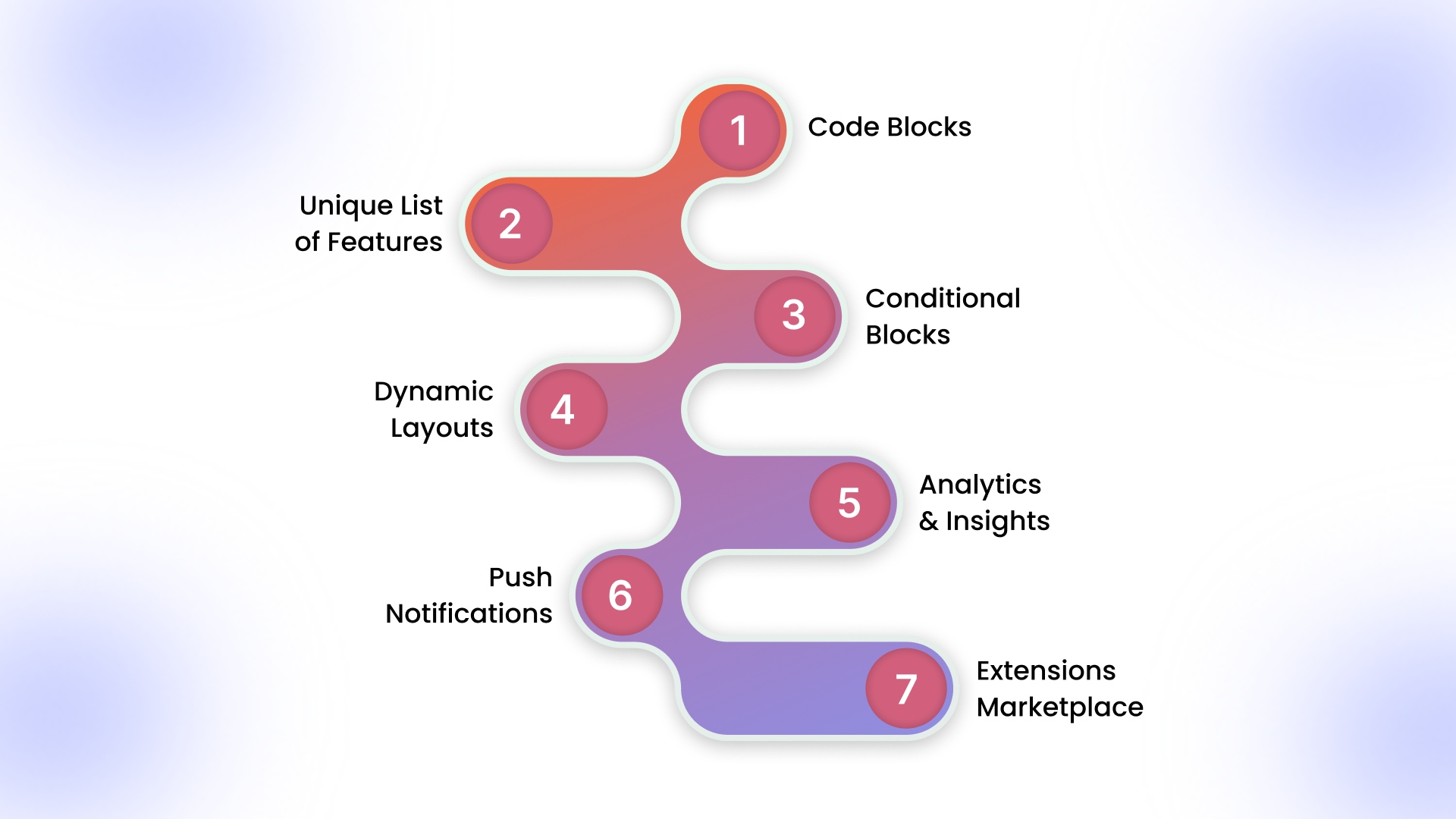
Here’s how AppMaker delivers:
- Code Blocks: Build custom product pages, checkout flows, loyalty modules, and gamified experiences without coding.
- Unique List of Features: Get Custom UI/UX, App Exclusive Product, Content Commerce Play, Omni-channel Loyalty Integration, Custom Shop the Look, and the Free Gift Flow to set your app apart.
- Conditional Blocks: Show personalized onboarding, targeted offers, and content based on user behavior.
- Dynamic Layouts: Adjust app screens in real time based on user actions and preferences for tailored experiences.
- Analytics & Insights: Track conversions, engagement, retention, and purchase frequency with actionable data.
- Push Notifications: Automate messages for abandoned carts, restocks, launches, or promotions to the right audience.
- Extensions Marketplace: Add modules like sticky carts, countdown timers, multi-currency support, and loyalty programs instantly.
With these tools in place, brands see real impact: up to 10x revenue per session, 4x higher conversions, 40% higher AOV, 7x more purchase frequency, and 11% greater stickiness, making every feature count toward growth.
Conclusion
A successful ecommerce app works when every feature helps customers shop smoothly and enjoyably. Fast logins, smart search, dynamic layouts, and AI-powered personalization all play a role in improving the shopping experience and increasing engagement.
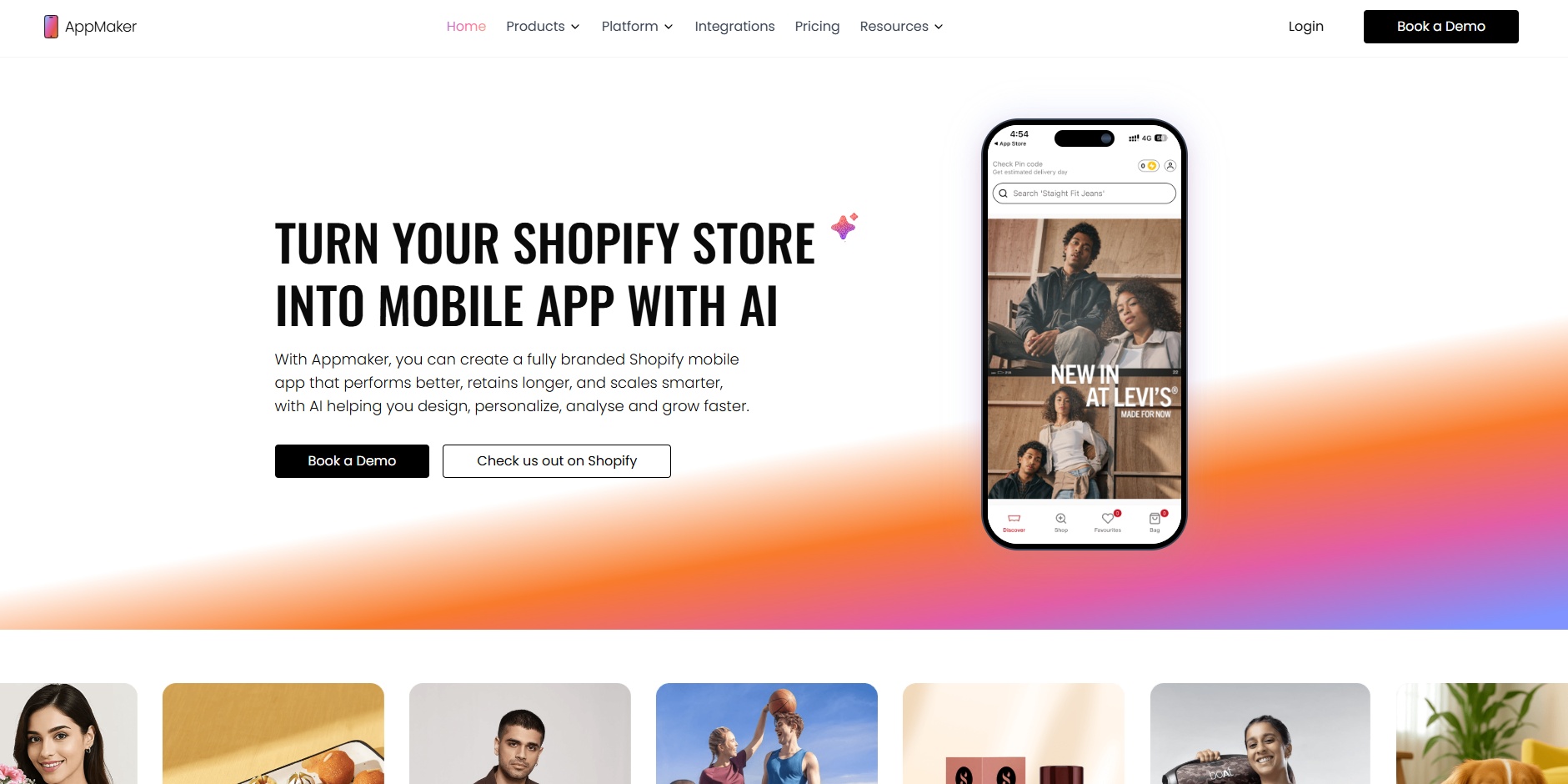
AppMaker helps turn these ideas into reality. With tools like Code Blocks, Conditional Blocks, Dynamic Layouts, AI recommendations, and real-time analytics, you can build apps that not only look good but actually drive sales, retain customers, and scale as your brand grows.
To see how AppMaker can help your brand bring these features to life, talk with our team today. We can build an app for you that engages your customers and scales your business efficiently.
FAQs
1. What are the basic ecommerce mobile app features?
Essential features include secure login, a searchable product catalog, a shopping cart and checkout, multiple payment options, order tracking, in-app customer support, and ratings or reviews to ensure smooth transactions.
2. What features increase the ecommerce app conversion rate the most?
Try features that simplify the buying process, like frictionless login, advanced search, dynamic product pages, one-tap checkout, multiple payment options, personalized recommendations, and real-time order tracking. These directly reduce friction and guide users from browsing to purchase faster.
3. Are AR features necessary for every ecommerce app?
AR is not mandatory for every app, but it adds value in categories like fashion, furniture, and home decor. It helps users visualize products, reduces purchase hesitation, and can increase conversion for visually-driven products.
4. How do push notifications impact retention?
Targeted push notifications remind users of abandoned carts, product restocks, sales, or personalized offers. Properly timed messages drive repeat visits, increase engagement, and encourage customers to return, significantly improving retention and lifetime value.
5. What’s the difference between a template app and a customizable ecommerce app?
Template apps are rigid, with limited design and feature flexibility. Customizable apps let brands create unique layouts, personalized flows, and tailored functionality. They result in higher engagement, stronger brand identity, and better conversion performance.