























Every business has customers who drift away after one purchase, and those who stick around for years. The long-term ones quietly make a huge difference to revenue. In fact, getting a new customer can cost five times more than keeping an existing one.
That’s where Customer Lifetime Value (LTV) comes in. It shows exactly how much each customer is worth over time. Focusing on LTV helps you spot loyal buyers, plan smarter campaigns, and grow revenue without wasted spend.
In this blog, we’ll cover what LTV is, how to calculate it, and eight practical strategies to increase lifetime value in 2026.
Overview
- LTV shows the exact revenue a customer can generate, helping prioritize high-value segments for targeted retention campaigns.
- Comparing LTV to acquisition cost and ROI ensures every marketing dollar focuses on profitable, long-term growth.
- Seamless onboarding, personalized recommendations, and proactive support directly increase repeat purchases and engagement.
- Strategic upsells, cross-sells, gamification, and automated workflows maximize customer spend without disrupting the experience.
- Tracking churn signals, Net Promoter Score (NPS), and feedback loops prevents revenue loss and reveals actionable ways to boost lifetime value.
What is LTV?
Customer Lifetime Value (LTV) is the total revenue a single customer generates over their relationship with your brand. This helps businesses focus on high-value segments and long-term growth.
To grow LTV, you must track how it links to Customer Acquisition Cost (CAC) and Return on Investment (ROI), ensuring smarter spend and higher long-term profits.
LTV vs CAC vs ROI
- LTV (Lifetime Value): Revenue potential per customer over time, revealing which customers drive growth and how to increase their lifetime value.
- CAC (Customer Acquisition Cost): Investment to acquire a new customer; ensures your growth campaigns don’t outpace the revenue each customer brings.
- ROI (Return on Investment): Profitability of marketing or product initiatives; higher LTV directly amplifies ROI by generating more revenue per customer than acquisition costs.
Once you see how LTV interacts with other metrics, let’s explore why tracking lifetime value is essential for sustainable profitability.
Also Read: How Much Does It Cost to Build a Shopify App in 2026?
Why LTV Matters?
According to the Master CS Strategy Draft by Plobal Apps, 85% of customers don’t make repeat purchases after their first order. Tracking LTV lets you spot the most profitable customers, reduce churn, and design strategies that measurably increase their lifetime value.
How LTV drives growth:
- Retention boosts revenue: Customers who stay longer spend more; even small retention gains multiply lifetime value.
- Focus on top segments: Identify the 20% of customers generating 80% of revenue and tailor campaigns to them.
- Drive repeat purchases: Use purchase data to plan upsells, cross-sells, and loyalty offers that increase lifetime value.
- Smart marketing spend: Compare LTV to acquisition cost to invest in campaigns that deliver real long-term returns.
With the benefits of LTV clear, the next step is understanding the key factors that directly affect how much each customer contributes over time.
6 Factors That Influence LTV
Several factors directly determine how much revenue a customer generates over time. By understanding these, you can design strategies that increase lifetime value, target high-value segments, and reduce churn in 2026. Each factor provides a clear lever for action, from improving purchase behavior to optimizing engagement.
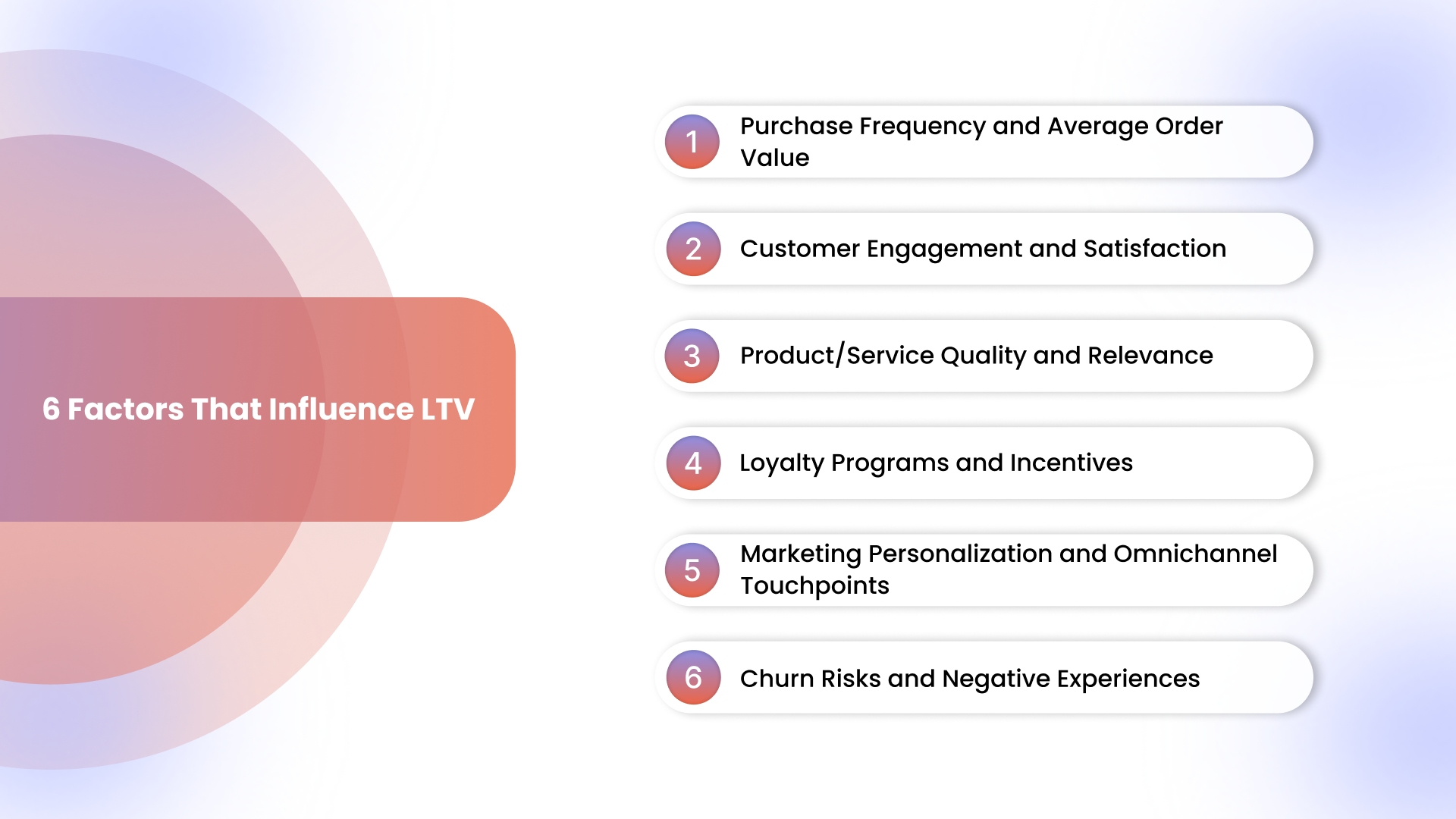
1. Purchase Frequency and Average Order Value
Customers who buy more often and spend more per order naturally contribute higher LTV. Boosting order value with upsells, cross-sells, and bundling is a direct way to increase lifetime value.
2. Customer Engagement and Satisfaction
Highly engaged customers are more likely to repeat purchases. Track email clicks, app activity, and loyalty interactions to identify disengaged users and re-engage them.
With Appmaker's analytics and insights, you can track core metrics such as revenue per Session, conversion rate, AOV, retention, and purchase frequency, segment users, and analyze their journeys for better targeting. Additionally, the Wingman AI Assistant allows you to ask questions and get instant answers, streamlining your decision-making process.
3. Product/Service Quality and Relevance
Customers stick with brands that meet their needs consistently. Ensure your products remain aligned with customer preferences and continuously test offerings to maintain high LTV.
4. Loyalty Programs and Incentives
Rewarding repeat behavior increases retention and lifetime value. Tiered rewards, exclusive offers, and milestone incentives encourage customers to spend more over time.
5. Marketing Personalization and Omnichannel Touchpoints
Targeted messaging across email, SMS, push notifications, and social keeps customers engaged and drives repeat purchases. In fact, push notifications deliver 5–10X higher CTRs than email/paid marketing. Additionally, personalization based on behavior directly increases lifetime value.
6. Churn Risks and Negative Experiences
Poor service, delayed fulfillment, or product issues reduce LTV. Monitor returns, complaints, and inactivity to intervene before customers leave.
Having identified the drivers of LTV, we can now calculate it accurately to pinpoint high-value customers.
How to Calculate LTV?
Calculating LTV starts with a simple formula:
LTV = Average Purchase Value × Purchase Frequency × Average Customer Lifespan – Acquisition & Service Costs
For example, if a customer spends $50 per order, makes 4 purchases per year, stays 3 years, and costs $100 to acquire and serve, the LTV is:
LTV = (50 × 4 × 3) – 100 = $500
This shows every similar customer can bring $500 net revenue, helping you focus marketing, retention, and upsell efforts to increase lifetime value.
Metrics That Feed LTV
To accurately calculate and grow LTV, track these key metrics:
- Repeat purchase rate: Shows which customers are most likely to return, informing targeted retention campaigns.
- Churn rate: Identifies at-risk customers so you can intervene before lifetime value drops.
- Upsell & cross-sell revenue: Measures how much additional revenue each customer generates beyond initial purchases.
- Net Promoter Score (NPS): Predicts loyalty and potential referrals that boost lifetime value.
- Average order value (AOV) trends: Helps plan bundling, discounts, or premium offers to maximize revenue per transaction.
Once the calculation is clear, it’s time to implement actionable strategies that measurably expand customer lifetime value in 2026.
Also Read: Top 10 Mobile Apps for E-commerce Success in 2026
How to Increase Lifetime Value of Customers: 8 Core Strategies
Revenue growth in 2026 depends on repeat purchases, average order value, churn rates, and engagement patterns. The following 8 strategies focus on measurable ways to expand lifetime value.
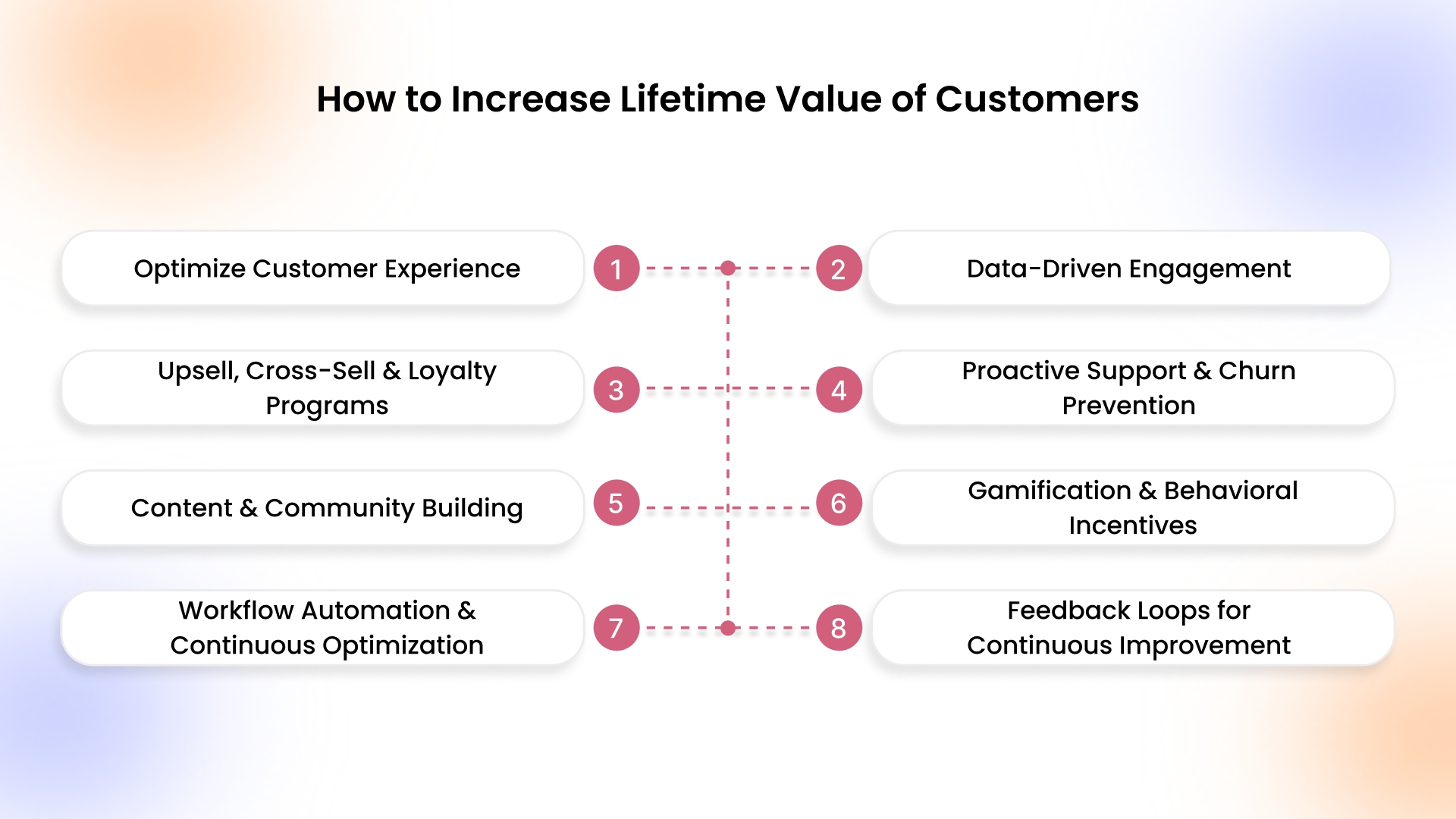
1. Optimize Customer Experience
Customer experience shapes how customers perceive your brand and whether they stay engaged long-term. Small frustrations, inconsistent layouts, or unclear product information can quietly reduce repeat visits and weaken loyalty, lowering lifetime value over time.
Key ways to enhance CX:
- Simplify onboarding: Reduce friction in signup and first purchase; use guided tours or tooltips to familiarize customers with features.
- Personalize interactions: Use browsing and purchase history to show relevant recommendations and dynamic content.
- Optimize checkout flows: Minimize steps, offer multiple payment options, and reduce cart abandonment with real-time prompts.
- Proactive support: Use chatbots, FAQs, and quick-response support to resolve issues before they impact loyalty or retention.
2. Data-Driven Engagement
Engaging customers effectively requires understanding their behavior and preferences. Without actionable data, campaigns may miss the mark, reducing repeat visits and limiting lifetime value growth. Utilizing behavioral insights ensures interactions are relevant and timely.
Key ways to enhance engagement:
- Segment customers by behavior: Group users by browsing patterns, purchase frequency, or product interests to tailor messaging and offers.
- Trigger personalized campaigns: Use past interactions to send targeted emails, push notifications, or in-app messages at the right moment. Tools like AppMaker allow merchants to automate these notifications in real time, helping retain high-value customers and boost lifetime value.
- Analyze engagement metrics: Track click-throughs, opens, and session patterns to identify what content keeps users active and returning.
- Test and iterate: Continuously experiment with messaging, timing, and formats to refine engagement strategies based on real-world results.
3. Upsell, Cross-Sell & Loyalty Programs
Maximizing revenue from existing customers depends on presenting relevant offers and rewarding loyalty. Well-designed upsell, cross-sell, and loyalty initiatives increase average order value and encourage repeat purchases, directly boosting lifetime value.
Key ways to implement upsell, cross-sell, & Loyalty Programs:
- Upsell at critical moments: Suggest higher-value or complementary products during checkout or product discovery without disrupting the experience.
- Cross-sell and bundle strategically: Offer product bundles or related items based on past purchases to naturally increase basket size. According to the BFCM 2025 report, bundles capture the 85% of shoppers making impulse buys.
- Tiered loyalty rewards: Offer escalating benefits for repeat purchases, encouraging ongoing engagement and higher spending.
- Integrate rewards with personalization: Use customer behavior data to deliver loyalty points or perks aligned with individual preferences and habits.
4. Proactive Support & Churn Prevention
Customer churn directly erodes lifetime value, often silently. Early identification of friction points and proactive support keep customers engaged, reduce dissatisfaction, and strengthen loyalty, ensuring revenue from existing users remains consistent.
Key ways to prevent churn:
- Monitor behavioral signals: Track inactivity, reduced usage, or declining engagement to spot customers at risk of leaving.
- Trigger timely interventions: Reach out with personalized support or guidance before small issues escalate into churn.
- Anticipate common pain points: Identify recurring problems in onboarding, product use, or checkout, and address them proactively.
- Close the feedback loop: Collect and act on customer feedback quickly to prevent frustration and reinforce trust.
5. Content & Community Building
Engaged communities and relevant content strengthen loyalty and repeat purchases, directly impacting lifetime value. Sharing useful resources, experiences, and conversations builds emotional connection and keeps customers returning beyond transactions.
Key ways to build community:
- Create tailored content hubs: Provide guides, tips, and product tutorials that align with customer interests and past purchases.
- Support peer interactions: Enable forums, reviews, or social groups where customers can share experiences and advice.
- Encourage user-generated content: Highlight testimonials, photos, and videos from real customers to build trust and advocacy.
- Host events and challenges: Virtual or in-person events, contests, or campaigns drive repeat engagement and strengthen brand loyalty.
6. Gamification & Behavioral Incentives
Incorporating game-like elements and behavioral incentives encourages repeat engagement and deeper product interaction, which drives higher lifetime value. Subtle rewards and progress tracking keep customers motivated without feeling forced.
Key ways to implement gamification:
- Progress tracking and milestones: Show customers their journey toward rewards or achievements to encourage ongoing engagement.
- Tiered challenges or tasks: Offer incentives for completing specific actions like purchases, reviews, or referrals.
- Dynamic badges and recognitions: Reward meaningful behaviors with visible recognition, enhancing emotional connection to the brand.
- Time-bound or seasonal incentives: Introduce limited-time rewards to prompt urgency and repeat visits.
7. Workflow Automation & Continuous Optimization
Simplifying repetitive processes and continuously refining customer interactions ensures timely engagement, reduces friction, and strengthens loyalty. Automation enables consistent experiences, while ongoing optimization uncovers opportunities to increase lifetime value.
Key ways to automate and optimize your workflow:
- Automate routine touchpoints: Schedule follow-ups, reminders, and personalized messages to maintain consistent engagement without manual effort.
- A/B test campaigns and flows: Continuously experiment with messaging, timing, and content to identify what drives repeat interactions.
- Monitor and refine triggers: Adjust automated workflows based on behavior patterns to prevent drop-offs or disengagement.
- Integrate cross-channel automation: Ensure email, app, and web interactions work together seamlessly to reinforce engagement and retention.
8. Feedback Loops for Continuous Improvement
Actively collecting and acting on customer feedback reveals hidden friction points, unmet needs, and opportunities for engagement. Structured feedback loops ensure your product, service, and communications scale in ways that strengthen loyalty and increase lifetime value.
Key ways to implement feedback:
- Segment feedback by customer type: Understand how high-value versus low-value customers perceive your product or service to tailor improvements.
- Close the loop visibly: Show customers how their feedback is acted upon to reinforce trust and retention.
- Incorporate feedback into product and marketing updates: Align new features, content, and campaigns with expressed customer needs.
- Continuous listening: Use surveys, reviews, and in-app prompts to maintain an ongoing pulse on satisfaction and engagement trends.
After exploring these strategies, using the right technology ensures you track, analyze, and automate LTV-boosting initiatives effectively.
Technology & Tools to Track and Maximize LTV
Maximizing lifetime value demands the right technology to track behavior, analyze patterns, and deliver timely engagement. Using tools that consolidate customer data, provide actionable insights, and automate personalized interactions helps brands focus on high-value customers and make data-driven decisions that boost retention and revenue.
Key tools to consider:
- CRM for LTV Tracking: Centralizes all customer interactions, purchase history, and engagement data, enabling targeted campaigns and consistent follow-ups for retention.
- AppMaker’s John AI: Provides real-time insights into customer activity, top-selling products, and repeat purchase trends, helping merchants identify high-value segments and boost LTV.
- Customer Journey Analytics: Monitors behavior across touchpoints, revealing drop-off points and engagement hotspots for precise retention strategies.
- Predictive Engagement Engine: Uses past purchase patterns and browsing behavior to forecast future purchases, sending automated prompts or offers at optimal times.
- Smart Feedback Platform: Collects surveys, reviews, and NPS scores, translating responses into actionable improvements that prevent churn and reinforce loyalty.
- Dynamic Segmentation Tool: Automatically groups customers by purchase frequency, lifetime spend, and engagement, powering personalized campaigns, offers, and rewards.
While tools help, these strategies may still lack awareness of common pitfalls that silently erode lifetime value. You must thus learn the common LTV mistakes and how to avoid them.
Common LTV Pitfalls and How to Avoid Them
Even the best LTV strategies can fail if brands fall into common traps. This includes focusing on the wrong customers, ignoring engagement signals, or relying on one-size-fits-all programs.
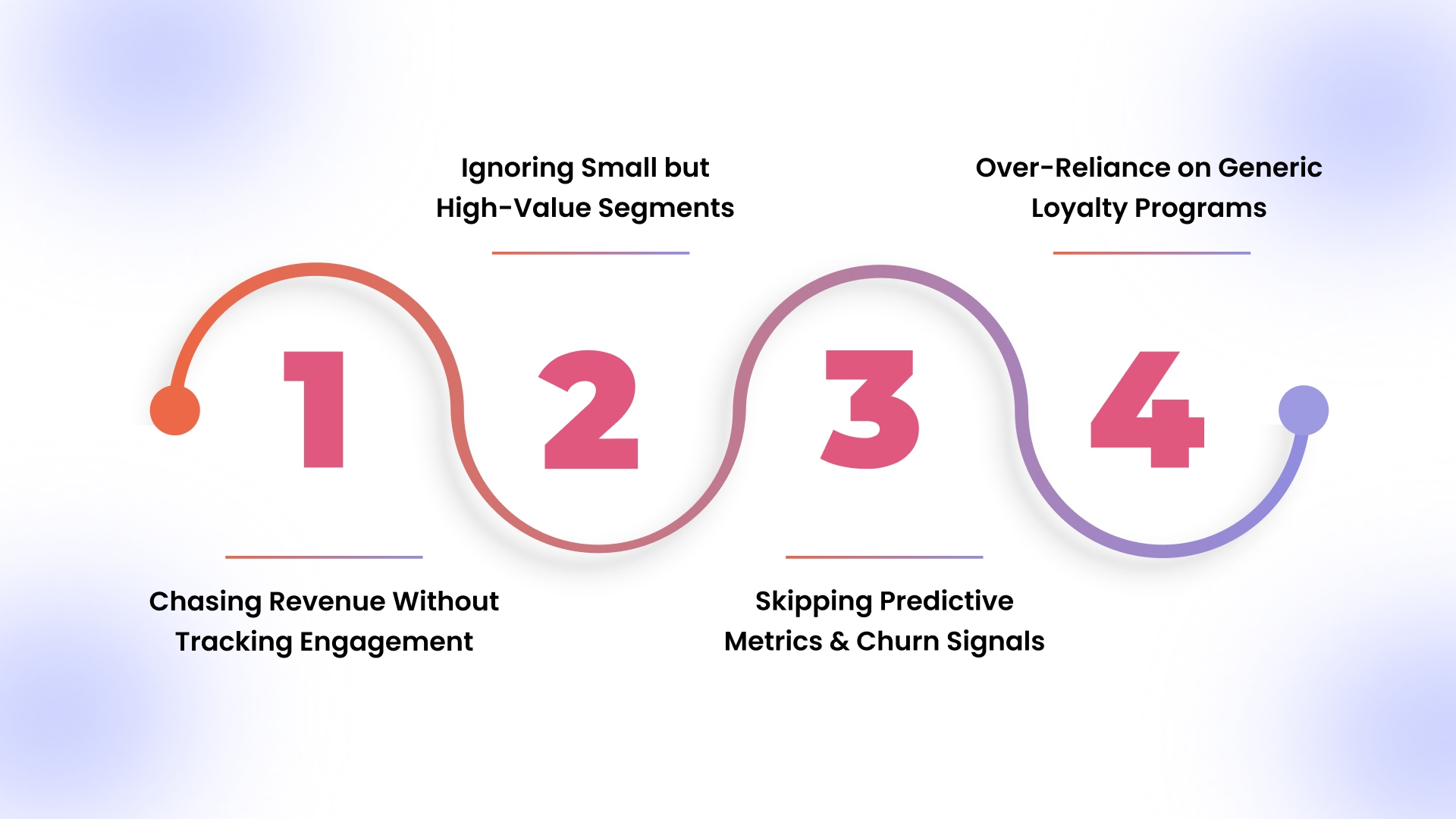
1. Chasing Revenue Without Tracking Engagement
Brands often focus on total sales while ignoring whether customers open emails, browse key product categories, or complete repeat purchases. This can create false growth signals, masking declining loyalty among high-potential buyers. Monitoring repeat visit rates, click-throughs, and in-app activity alongside revenue highlights to determine which customers truly sustain long-term value.
2. Ignoring Small but High-Value Segments
A tiny segment of power buyers or early adopters can drive outsized revenue, yet many brands overlook them because of low overall volume. This leads to missed upsell, cross-sell, and advocacy opportunities. Identifying these segments through lifetime spend, engagement patterns, and product preference allows tailored offers and high-impact retention campaigns.
3. Skipping Predictive Metrics and Churn Signals
Focusing solely on historical purchases hides early warning signs like declining purchase frequency, wishlist abandonment, or reduced app engagement. Without intervention, these behaviors translate into lost lifetime value. Tracking predictive indicators such as repeat purchase probability, NPS trends, and cart abandonment alerts enables proactive retention measures.
4. Over-Reliance on Generic Loyalty Programs
Flat-point or cashback programs often fail to move the needle for engaged, high-value customers, because rewards aren’t meaningful or timely. Low personalization leads to stagnant retention and disengagement. Tailoring loyalty perks based on purchase history, preferred categories, and engagement behaviors encourages repeat purchases and increases overall LTV.
Having covered pitfalls, it’s important to highlight how AppMaker’s solutions help brands increase engagement, reduce churn, and boost lifetime value efficiently.
Also Read: How to Create a Business Mobile App Easily in 2026
How AppMaker Helps Brands Increase Customer Lifetime Value?
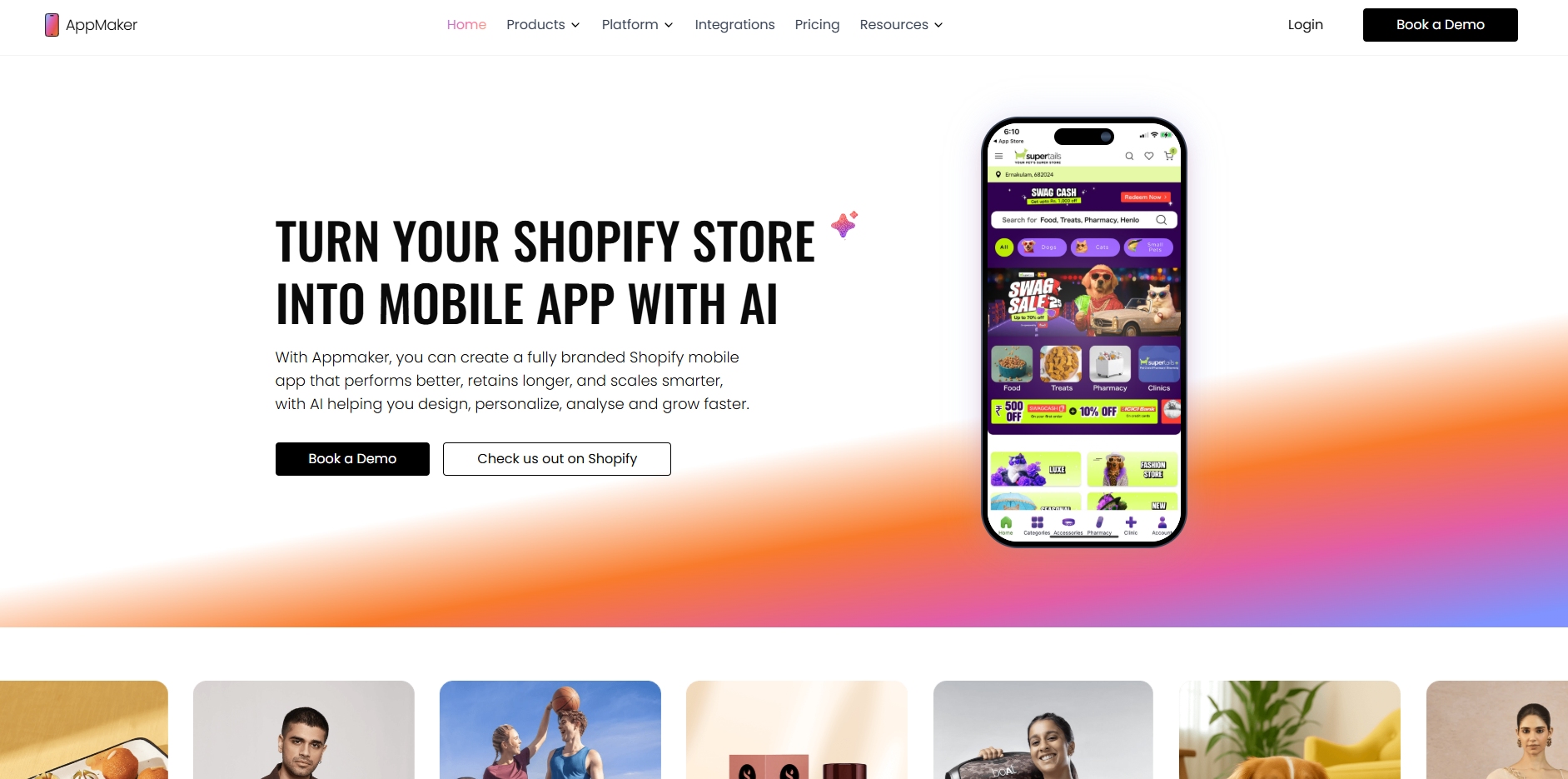
Driving repeat purchases and increasing lifetime value starts with engaging customers at the right time with the right experience. AppMaker helps brands turn casual buyers into loyal, high-value customers through a combination of fast, native apps, deep customization, and intelligent automation. From the moment you launch, we focus on creating an app that not only attracts users but keeps them coming back.
Key ways AppMaker drives LTV:
- Push Notifications & Personalized Alerts: Re-engage customers with timely messages based on their behavior to increase repeat purchases.
- Eidolon AI & Conditional Blocks: Automatically customize layouts and offers for different customer segments to maximize conversions.
- Deep Customization: AppMaker Studio gives you full creative control: design every screen, tweak UI/UX, integrate seamlessly with your systems, and even access code-level flexibility for limitless possibilities.
- John AI Insights: Identify top buyers, track engagement patterns, and predict churn to take proactive action.
- Loyalty Programs Within the App: Reward repeat behavior directly in your app with points, tiers, or milestones to increase retention and overall lifetime value.
In 2025 alone, brands using AppMaker generated over ₹1,000 Cr+ in GMV through mobile apps. By combining smart automation, personalization, and loyalty tools, AppMaker ensures every customer interaction contributes to long-term growth and higher lifetime value.
Conclusion
Increasing Customer Lifetime Value is essential for long-term growth. By tracking LTV, focusing on repeat purchases, preventing churn, and tailoring personalized experiences, brands can maximize revenue from existing customers. Additionally, applying strategies like upsells, cross-sells, gamification, and feedback loops ensures every interaction contributes to stronger loyalty and measurable business growth in 2026.
AppMaker supports this process by helping brands launch fast, fully customizable native apps. With push notifications, personalized alerts, in-app loyalty programs, John AI insights, and Eidolon AI-driven conditional blocks, brands can re-engage users, reward repeat behavior, and optimize every touchpoint to maximize lifetime value.
To see how AppMaker can help grow your customer lifetime value, contact us today.
FAQs
1. What is the 80/20 rule for customer lifetime value?
The 80/20 rule means roughly 20% of your customers generate 80% of revenue. Identifying and nurturing these high-value customers helps focus retention, upselling, and personalized engagement to maximize overall lifetime value.
2. What's a good customer lifetime value?
A “good” LTV depends on your industry, margins, and CAC. Generally, an LTV at least 3× higher than your acquisition cost signals healthy profitability and efficient retention, guiding sustainable growth strategies.
3. How does retention affect LTV?
Higher retention directly boosts LTV by extending the average customer lifespan and increasing repeat purchases. Even small improvements in retention rates can significantly increase revenue per customer over time.
4. Can email marketing boost LTV?
Yes. Targeted, behavior-based email campaigns encourage repeat purchases, upsells, and re-engagement. Personalized content, product recommendations, and timely reminders strengthen loyalty and increase long-term revenue per customer.