

























Your customers are already buying on their phones in ways most brands still fail to fully understand. Mobile commerce trends are moving so fast that it makes last year’s “best practice” feel outdated. And if you care about keeping up, you have to look at how people actually shop in short bursts during late-night scrolling or while standing in a store comparing prices.
That is exactly what this piece sets up. You will see 10 emerging mobile commerce trends that are taking the modern retail market by storm, so you know where to invest and what to adjust first. On top of that, you will get 5 focused strategies to turn those trends into real results.
Quick Overview
- Mobile-First Is Non-Negotiable: Shopping happens in micro-moments with extremely low patience for slow sites. Thumb-friendly UX, fast load speeds, and frictionless navigation directly impact conversions.
- Digital Wallets Are the Default Payment Method: With 4.5–5.2 billion digital wallet users worldwide, wallet-first checkout (Apple Pay, Google Pay, Shop Pay) significantly reduces drop-offs and increases trust.
- Social Commerce Drives Direct Purchases: 67% of online shoppers buy through social media monthly. Native in-app checkout, tagged products, and live shopping turn platforms into full revenue channels.
- AI Personalization Increases Revenue: AI-powered product recommendations can lift revenue by 5–8%. Real-time personalization improves engagement, boosts AOV, and maximizes limited mobile screen space.
- Speed Checkout Win Conversions: Stored credentials, biometric authentication, and compressed checkout flows shorten buying time, and on mobile, every second saved increases completion rates.
What Is Mobile Commerce?
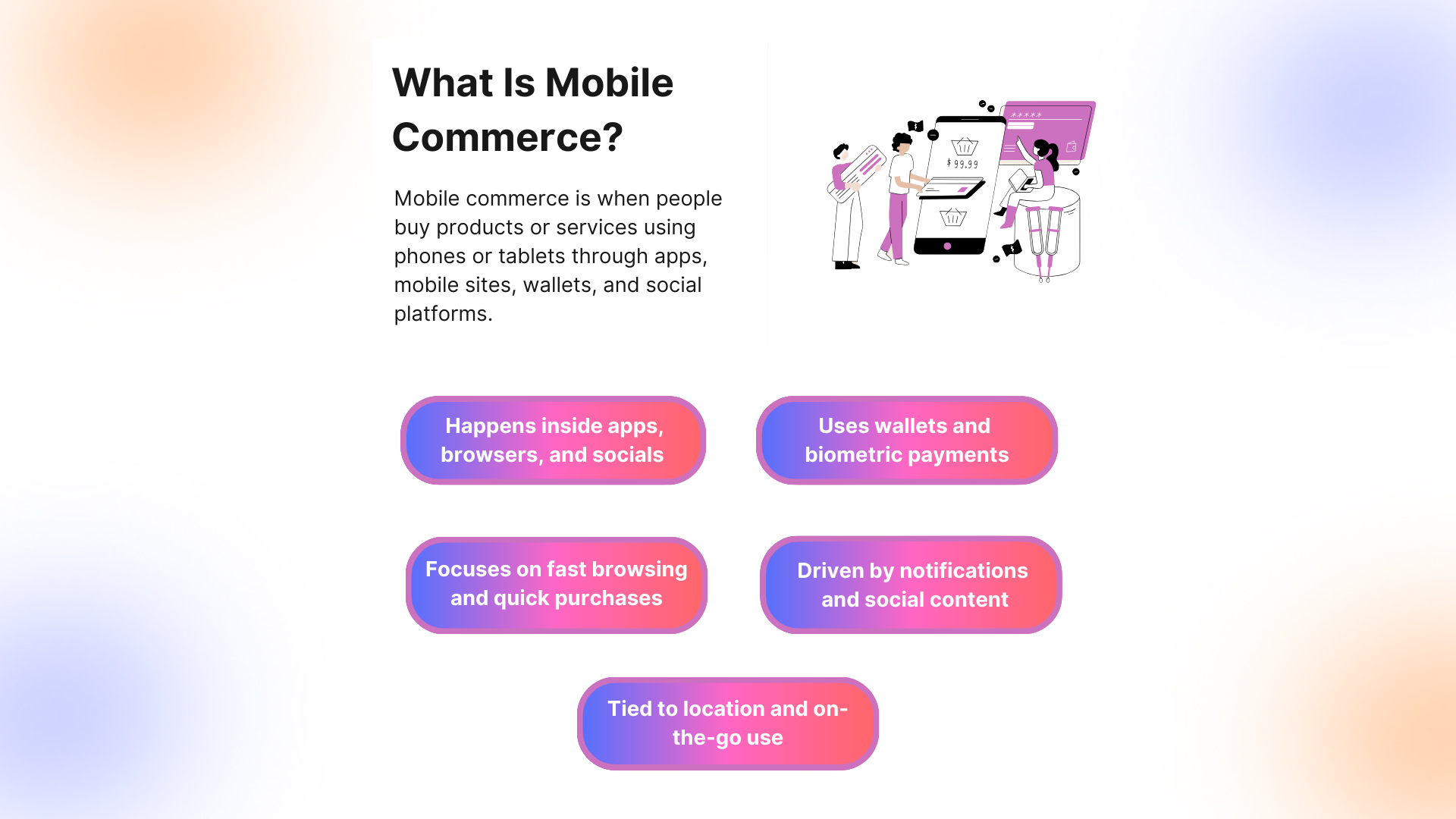
Mobile commerce (m-commerce) is when people buy products or services using their phones or tablets. This includes online shopping in apps, buying through mobile websites, paying with digital wallets, and purchasing through social media platforms.
How Mobile Commerce Behavior Differs From Desktop?
Mobile shopping is shaped by context, speed, and convenience, making user behavior very different from desktop buying. Understanding these differences helps brands design better mobile experiences, remove friction, and align their strategy with real shopper expectations.
Having explored user behavior differences, let’s examine why mobile commerce is booming and what is fueling its rapid growth today.
Also Read: 10 Mobile App Engagement Metrics That You Should Track in 2026
Why Mobile Commerce Is Growing So Fast in 2026?
Mobile commerce is growing because shopping habits, device use, and technology adoption are shifting rapidly. Consumers now expect speed, convenience, and seamless access anytime, driving growth far beyond traditional desktop shopping patterns.
This growth is fueled by several unique forces:
- Micro-moments drive purchases: Shoppers increasingly buy in short bursts, such as while commuting or waiting in line.
- Mobile-first content consumption: Social feeds, short videos, and instant reviews influence choices more than website content.
- Integrated digital services: Mobile wallets, account syncing, and instant notifications make transactions frictionless and habitual.
- Global smartphone penetration: Expanding access in emerging markets adds millions of first-time mobile buyers every year.
With the growth drivers in mind, the next step is to explore the trends that are shaping mobile shopping right now.
10 Top Mobile Commerce Trends That Are Changing How Customers Buy in 2026
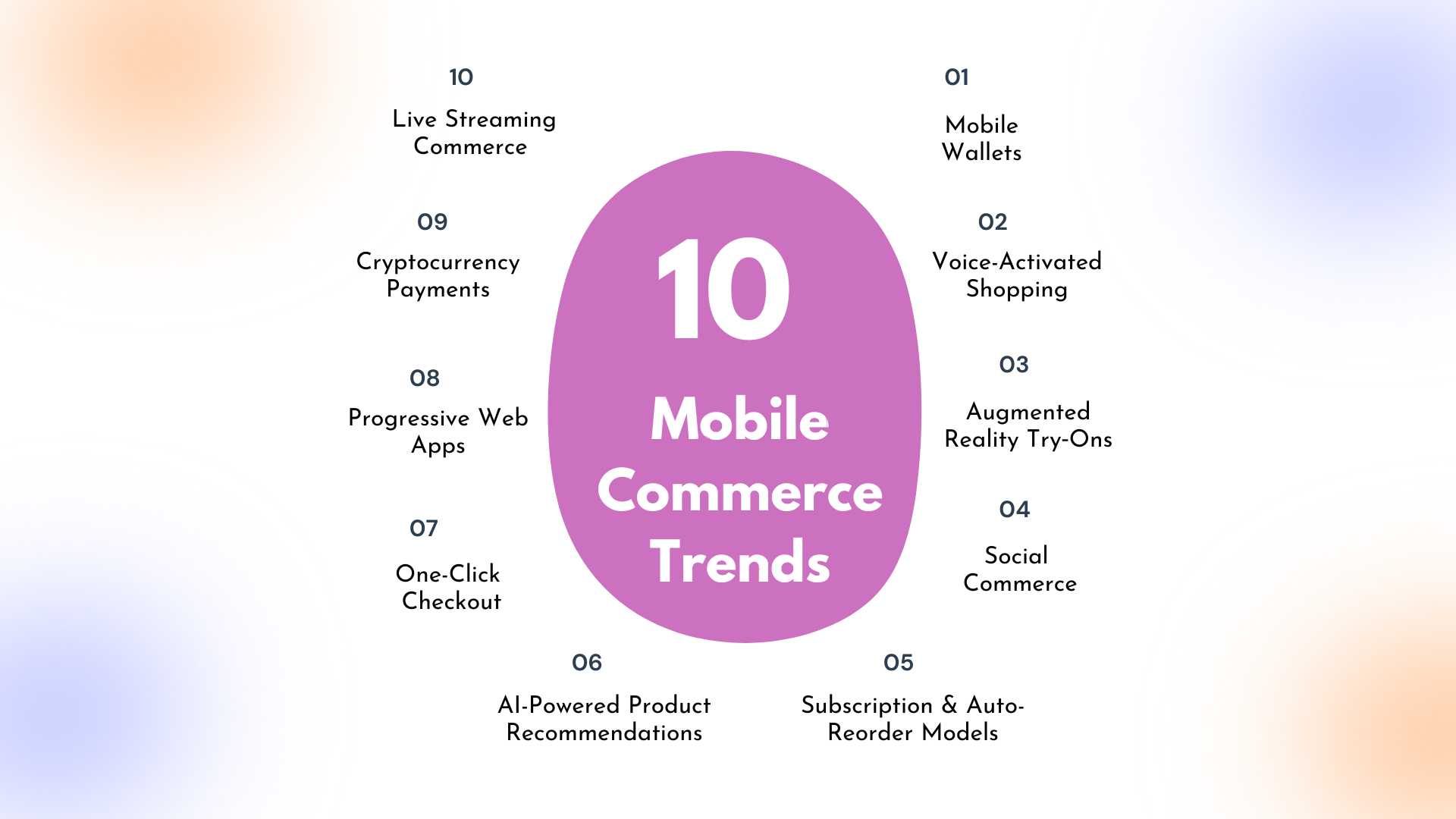
People are buying on their mobile phones in ways that make old strategies feel useless. These 10 mobile commerce trends show exactly what is happening and where you need to pay attention.
1. Mobile Wallets Replacing Traditional Payment Methods Everywhere
Look at your own checkout behavior for a second. When a mobile site shows a wallet button like Apple Pay or Google Pay right under the product price, you tap it. When it asks you to type 16 digits, billing address, expiration date, and CVV, you drop off.
That is exactly why wallets are becoming the default mobile payment method, and why roughly 4.5 to 5.2 billion people now use digital wallets worldwide.
This trend is about structural checkout redesign. Brands are reorganizing the mobile payment hierarchy, so wallets appear first, cards second. They are also measuring wallet-specific conversion rates separately instead of blending them into overall payment data. That shift alone changes budget allocation and integration priorities.
What is actively happening:
- Wallet buttons are placed on product pages, not only at final checkout
- Express checkout flows bypassing cart review screens
- Biometric authentication replacing password logins
- Wallet-linked loyalty rewards are auto-applied at payment
Another important shift includes wallets' influence on trust perception. Customers associate wallet payments with encryption and fraud protection. That psychological comfort increases completion rates, especially for higher-ticket items.
Best For
- Direct-to-consumer skincare brands
- Fast-fashion eCommerce stores
- Ticketing platforms
- Food delivery apps
- Digital subscription services
2. Voice-Activated Shopping Changing How Customers Place Orders
Voice commerce is changing how customers restock products they already use and love. It is the biggest with everyday essentials. When customers reorder coffee pods or pet food, they prefer speaking over typing.
This trend is driven by habit integration. Smart speakers and voice assistants connect directly to retail accounts. Once linked, customers can reorder in seconds without touching a screen. The interaction is immediate and task-focused.
Retailers adapting to this shift are reworking their product data and categorization systems. Customers say what they want, and the system pulls their usual preferences, sizes, delivery address, and payment info. Voice recognition depends on clean naming structures, whereas long and promotional product titles perform poorly in voice shopping environments.
What is changing operationally:
- Retail accounts syncing with smart assistants
- Simplified product naming for voice clarity
- AI is suggesting frequent reorders automatically
- Priority placement awarded to well-structured listings
Voice commerce narrows options for a better mobile shopping experience. Most of the time, customers get one main recommendation. And since 85% of consumers have accepted a voice assistant's top recommendation over their preferred brand, being first actually matters. Brands optimizing backend data get a higher position in spoken results.
Best For
- Grocery retailers
- Pet supply brands
- Cleaning product companies
- Vitamin and supplement sellers
- Office supply distributors
3. Augmented Reality Try‑Ons Turning Into An Essential Shopping Feature
Mobile shoppers want to see it before they buy it. Augmented reality lets them do just that. Rather than imagining how a product might look, customers point their phone camera and see it live.
This trend has moved beyond experimental marketing tools. It is now inside the core product pages, and brands track AR usage as a measurable performance metric for conversion and returns.
What is happening in this trend:
- 3D product modeling for mobile optimization
- Real-time lighting adjustment for accuracy
- In-app analytics tied to AR engagement
- AR previews inside social feeds before clicking through
When people can see a product clearly before buying, they become sure. And that means stronger conversion and fewer post-purchase surprises. AR also helps with merchandising. Brands see which virtual variations get the most interaction and then stock more of those.
Best For
- Cosmetics brands
- Eyewear retailers
- Furniture eCommerce stores
- Sneaker brands
- Jewelry companies
4. Social Commerce Turning Apps Into Instant Marketplaces
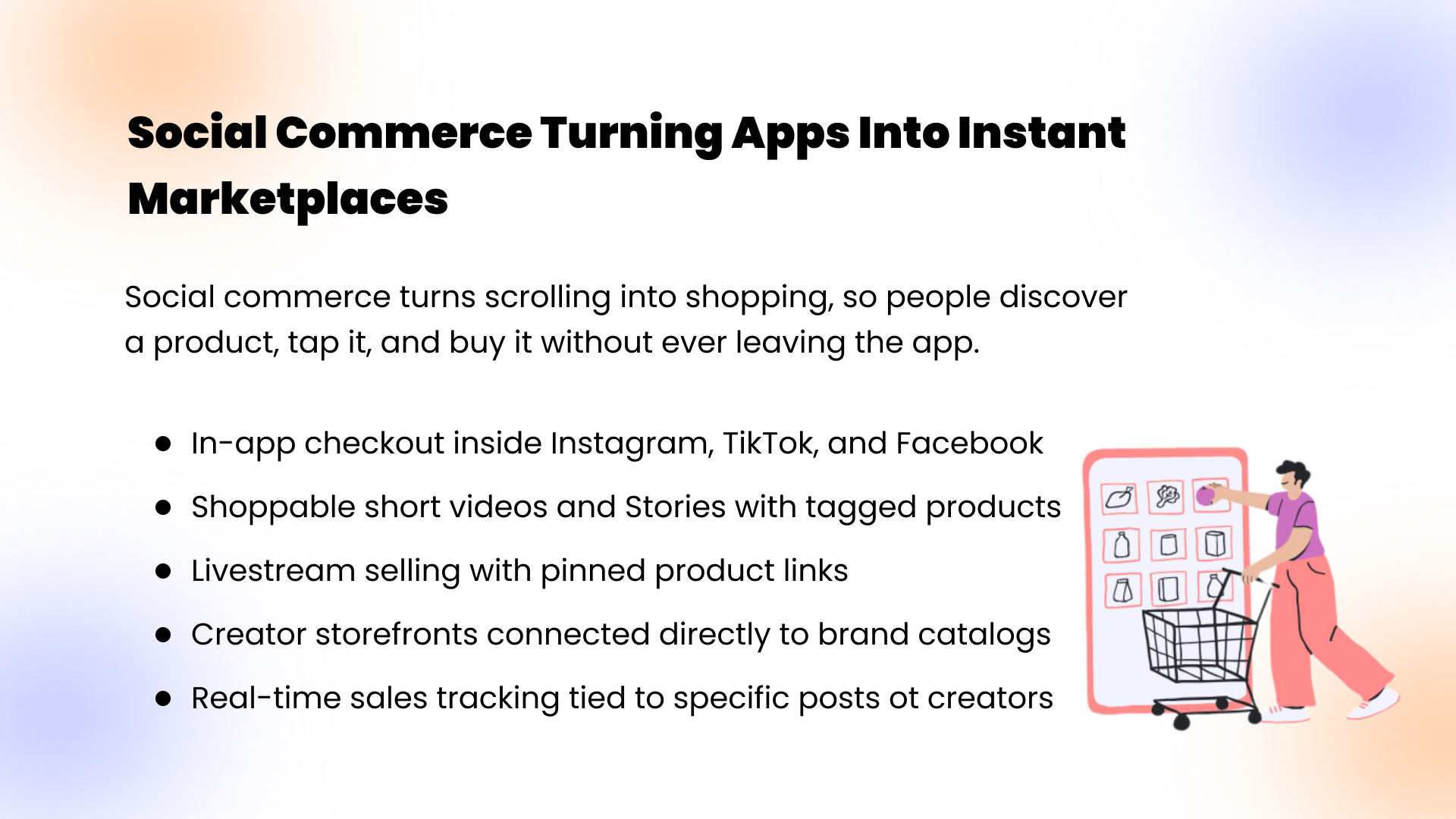
Open a social app today, and you will notice that they have become shopping malls that never close. People scroll for entertainment and end up buying without switching apps or opening a browser. No wonder 67% of online shoppers make a purchase through social media at least once a month.
Social commerce turns entertainment apps into full transaction environments. And the shift is structural and centered on compressed discovery. A customer sees a product inside a short video, taps the tagged item, reviews pricing, selects a variation, and pays without leaving the app.
Brands are rebuilding internal workflows for this shift. Content calendars now sync with inventory launches. Product metadata is formatted specifically for platform catalogs. Influencer campaigns have embedded SKUs rather than generic discount codes.
To make this work at scale, teams are setting up the Facebook BM account for catalog management and ad tracking, along with the TikTok Business Center to control shops, creators, and product feeds in one place. This turns social commerce from scattered posts into an organized sales system.
What is actively happening:
- Livestream selling with pinned and tappable products
- Creator storefronts linked directly to brand catalogs
- Native checkout inside social apps
- Real-time sales tracking per post or creator
This setup changes attribution tracking. Sales data flows directly from the platform dashboard. Brands can see which specific video or creator generated revenue, then reinvest accordingly.
Best For
- Streetwear labels
- Indie beauty brands
- Fitness gear companies
- Handmade accessory brands
- Tech gadget startups
Also Read: Complete Guide to Ecommerce App Development Cost in 2026
5. Subscription & Auto-Reorder Models Simplifying Repeat Purchases
Mobile shopping behavior favors convenience. Customers prefer automation over manual reordering when they have to buy the same product over and over. And with subscription and auto-replenishment models, repeat purchases become easier for them.
This trend focuses on predictability and customer retention. Instead of waiting for customers to remember, brands schedule deliveries based on usage cycles. And the mobile interface allows customers to adjust frequency or swap items in seconds.
What is happening operationally:
- Flexible frequency selection inside mobile accounts
- Push notifications before billing cycles
- Loyalty pricing that improves with longer commitment
- Bundled product subscriptions are increasing the average order value
Customer data also plays a major role here. Brands analyze usage patterns and purchase history to suggest optimal reorder intervals. That personalization strengthens lifetime value.
Best For
- Personal care brands
- Coffee and beverage companies
- Pet food retailers
- Household essentials brands
- Supplement companies
6. AI-Powered Product Recommendations Increasing Purchase Rates
Mobile screens offer limited space. And that constraint makes smart recommendations essential. AI-driven recommendation systems decide what appears first and next based on behavioral data rather than static merchandising rules. McKinsey research shows that AI-driven recommendations can lift revenues by ~5 to 8%.
Brands deploy algorithms for precision merchandising instead of showing generic “related items.” If a shopper lingers on a specific color or price range, the system updates suggestions instantly.
Key developments include:
- Real-time recommendation engines updating during sessions
- Cross-category suggestions based on behavioral similarity
- Dynamic homepage layouts tailored per user
- Predictive upsell offers triggered at checkout
The impact appears in average order value and session duration metrics. Personalized feeds increase engagement and encourage multi-item purchases.
Best For
- Large online marketplaces
- Fashion eCommerce brands
- Consumer electronics retailers
- Bookstores and media platforms
- Beauty and skincare brands
7. One-Click Checkout Simplifyies The Mobile Buying Process
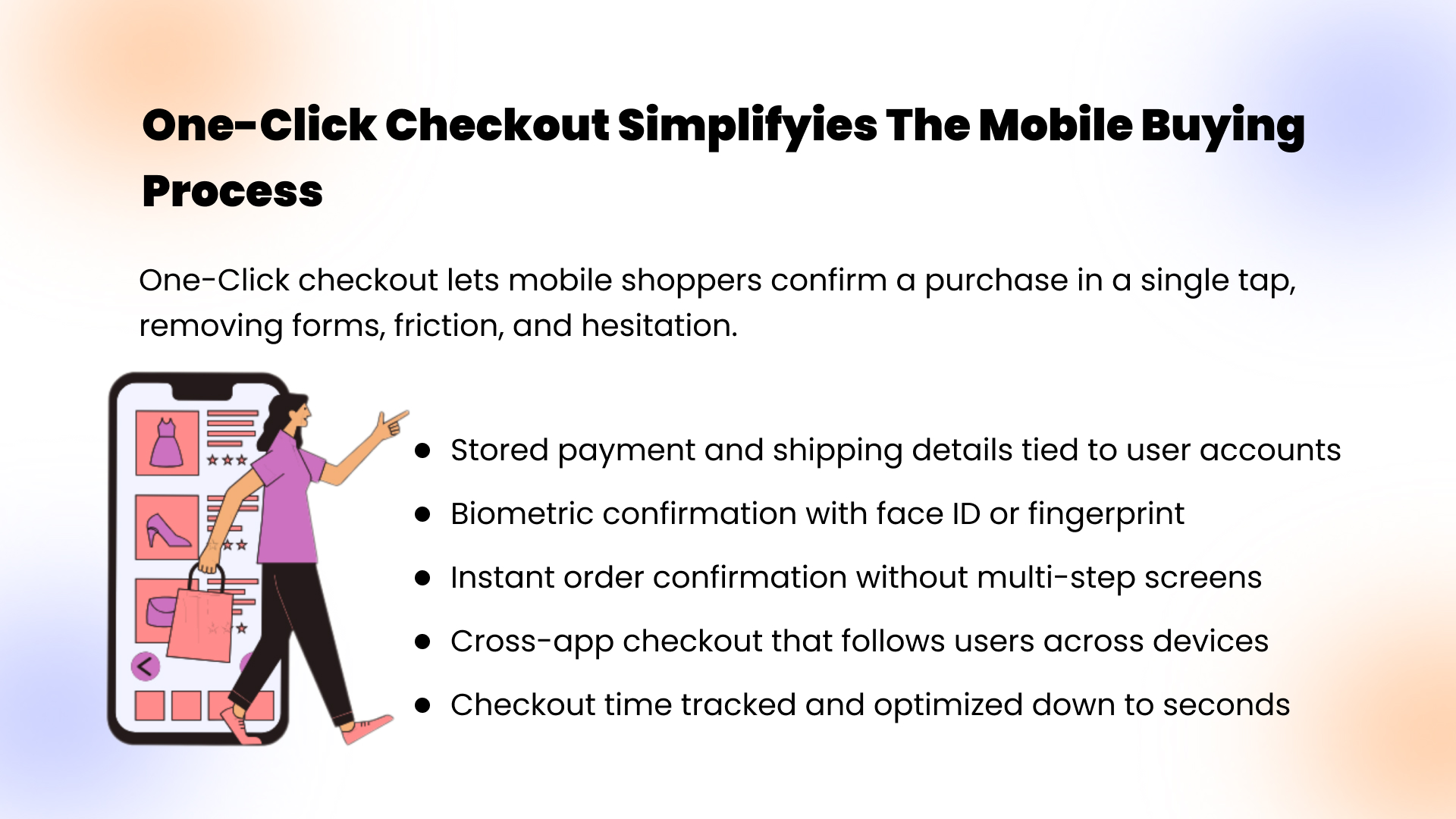
Mobile traffic values speed above all. One-click checkout compresses the buying process into a single confirmation tap.
The payment credentials and shipping information are stored and linked to user accounts. Once saved, customers can complete purchases almost instantly. The experience removes intermediate confirmation pages and reduces hesitation.
Mobile screens make long forms painful. So you have to redesign account creation flows if you want to adopt one-click systems. The goal is to encourage secure storage of payment and address data early in the customer journey.
What is happening inside this shift:
- Secure account-based payment storage
- Biometric confirmation replacing passwords and codes
- Instant order confirmation screens
- Cross-app checkout experiences that follow the user
Performance teams track checkout duration down to seconds. When the process shortens, completion rates increase consistently.
Best For
- Electronics retailers
- Online bookstores
- Specialty hobby stores
- Beauty eCommerce brands
- Gift retailers
8. Progressive Web Apps Delivering Faster, App-Like Experiences
A Progressive Web App (PWA) runs in a browser yet behaves like an installed m-commerce app. Customers can save it to their home screen and return to it instantly without an app store visit. That alone changes acquisition cost and friction.
PWAs rely on service workers that cache assets locally. That means previously visited pages load almost instantly. And in lower-bandwidth regions, that difference decides whether customers browse multiple products or exit.
Here is what brands are implementing:
- Background caching for faster repeat sessions
- Lightweight frameworks reduce server calls
- Push notifications triggered through browser permissions
- Instant transitions between product pages on the mobile web
PWAs also influence retention metrics. Because installation requires one tap, adoption rates increase compared to traditional mobile shopping apps. You will see higher return visits without depending on app store discoverability.
Best For
- Cross-border ecommerce brands
- Online ticketing platforms
- Budget travel aggregators
- Flash sale marketplaces
- Grocery ordering services
9. Cryptocurrency Payments Opens New Mobile Purchase Options
Mobile buyers increasingly hold digital assets. They connect external crypto wallets at checkout and authorize payment directly from their digital holdings. Transactions are confirmed on blockchain networks rather than through traditional mobile banking systems. Merchants usually receive settlement in local currency through integrated processors.
The motivation differs by audience. Some buyers prioritize privacy. Others value cross-border efficiency. For international eCommerce brands, crypto eliminates certain currency conversion friction.
Here is what is developing inside this shift:
- QR-based wallet payment authorization
- Real-time exchange rate conversion at checkout
- Blockchain confirmation tracking within the order status
- Expanded global reach without local banking barriers
Crypto remains a specialized mobile payment option, and it attracts high-intent customers who actively look for merchants that accept it.
Best For
- Digital art and collectibles platforms
- Tech hardware retailers
- International freelance marketplaces
- Gaming merchandise stores
- Luxury ecommerce brands
10. Live Streaming Commerce Creating Real-Time Buying Excitement
Real-time video selling has entered mainstream mobile commerce. Now it operates through scheduled broadcasts inside mobile apps or social platforms. Hosts demonstrate products and activate limited-time offers while viewers watch. Purchase links appear on screen, and checkout happens without interrupting the stream.
The format changes product storytelling. Instead of static descriptions, customers see scale and real-time feedback from other buyers. Urgency increases when inventory counters update live.
What is actively shaping this space:
- On-screen clickable product overlays
- Countdown timers tied to exclusive discounts
- Interactive polls influencing product focus
- Integrated mobile checkout during playback
Most of the money comes in during the live session, so you see clear revenue spikes around scheduled sessions.
Best For
- Streetwear drop brands
- Beauty product launches
- Sneaker resellers
- Limited-edition collectible sellers
- Consumer gadget brands
Now that we’ve seen what’s changing in mobile commerce, let’s look at strategies to turn these trends into measurable results.
Also Read: 8 Mobile App Retention Strategies to Turn Users Into Regulars in 2026
6 Practical Strategies To Make The Most Of Mobile Commerce Trends
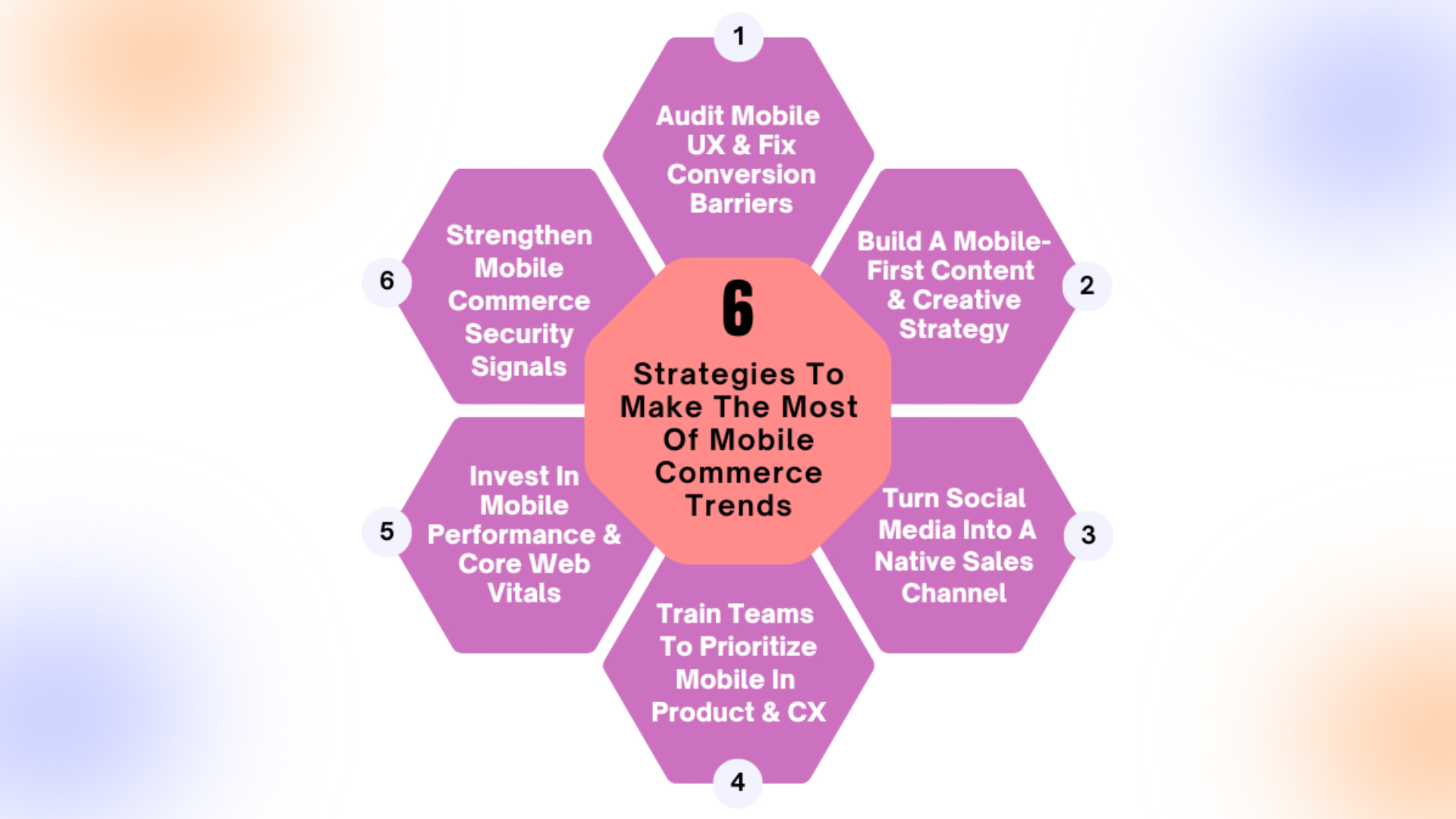
Trends alone won’t grow your mobile commerce sales; they only matter if you act on them. Here are six practical strategies to help you apply these trends and create measurable impact for your brand.
1. Audit Mobile UX & Fix Conversion Barriers Across The Funnel
Mobile funnels break in small places that teams rarely notice: A sticky header blocking buttons, a promo banner covering checkout, a keyboard hiding the submit button. These small issues stack up and kill conversions quietly. A proper mobile technology audit means you have to act like a distracted user on a phone and not a focused tester on a laptop.
Here’s what you need to do:
- Run thumb-zone testing and move key buttons into easy-to-reach areas.
- Use session replays to find rage taps and dead taps on mobile screens.
- Strip mobile forms down to essentials and rely on the operating system autofill.
- Add tap targets of at least 44px and remove overlapping UI elements.
2. Build A Mobile-First Content & Creative Strategy For Small Screens
Mobile content competes with notifications and endless feeds. Long copy blocks and wide visuals get skipped. Mobile-friendly content needs to communicate in seconds, not paragraphs. Design your mobile experience for quick scrolling and frequent interruptions, since users often glance, pause, leave, and return later.
Here’s what you need to do:
- Design ads and product visuals in vertical formats and test cropping on real devices.
- Use large text, clear hierarchy, and single-message screens.
- Use expandable accordions for secondary information instead of long scrolling blocks.
- Test 15-second vertical videos in paid ads and measure mobile click-through rate differences.
3. Turn Social Media Into A Native Mobile Sales Channel
Most brands still use social media as a billboard that pushes users to their website. On mobile, that extra step costs you sales. Social platforms already hold attention and product discovery behavior. When you force users to leave the app, you add friction that mobile buyers rarely tolerate. If you want to fully capitalize on mobile commerce trends, your social presence has to function as a direct commerce layer, not a teaser.
Here’s what you need to do:
- Set up native in-app shops on Instagram Shop and TikTok Shop, and sync inventory in real time to avoid overselling.
- Use platform-specific checkout features so users can complete purchases without being redirected to a browser.
- Tag products directly inside short-form videos and Stories so discovery and purchase happen in the same scroll session.
Repurpose product videos for YouTube Shorts and shoppable videos so you can reach more people on YouTube and capture mobile buyers who prefer longer-form product discovery.
4. Train Teams To Prioritize Mobile In Product & CX Decisions
Most teams still design for desktop computers and shrink for mobile. That approach doesn’t work. Mobile-first requires a behavior shift inside the company. Product, design, marketing, and support; all these teams need mobile constraints built into every workflow. That changes how features are scoped and how issues get triaged.
Here’s what you need to do:
- Require mobile prototypes and recordings in product reviews and sprint demos.
- Add mobile usability criteria to design and QA checklists.
- Give CX teams real mobile devices to replicate issues and log mobile-only bugs.
- Tie team KPIs to mobile conversion and retention metrics.
5. Invest In Mobile Performance & Core Web Vitals
Mobile users abandon fast. Heavy scripts, oversized images, and slow servers; they all destroy conversions before app users even see products. Performance work is revenue work on mobile. Mobile performance optimization has a compounding impact across acquisition and conversion.
Here’s what you need to do:
- Serve responsive images with WebP or AVIF and lazy-load everything below the fold.
- Remove non-essential trackers and third-party scripts on mobile.
- Use edge caching and server-side rendering for faster first content load.
- Track Core Web Vitals separately for mobile and set stricter thresholds.
6. Strengthen Mobile Commerce Security Signals To Build Buyer Trust
Mobile buyers decide quickly. They look for trust cues and bail if something looks risky. Small screens amplify this uncertainty because users can’t inspect details easily. And with 63% of US adults having experienced a cyberattack at least once, security signals need to be visible and backed by real protection.
Here’s what you need to do:
- Place payment logos and security badges directly near primary CTAs.
- Use biometric authentication for in-app payments and account actions.
- Show refund, support, and contact access on mobile checkout screens.
- Implement device fingerprinting and adaptive fraud checks to reduce false declines.
Trends and strategies are useful, but real success comes from seeing how top brands implement them in practice.
3 Mobile Commerce Case Examples You Can Model Your Strategy On
Trends become meaningful when you see them in action. Here are real brands using mobile commerce strategies that improve engagement, conversions, and customer experience.
1. Kulani Kinis

Kulani Kinis understands that most of their traffic comes from phones, especially from Instagram and TikTok. So they have built their store around that reality instead of adapting desktop layouts.
Click one of their Instagram-tagged products and notice what happens. The exact color or print featured in the Reel is already selected on the product page. That removes confusion instantly. No extra tapping around trying to match what you just saw.
Their mobile pages are structured for scroll stamina. Big imagery. Clear swatches. Sticky add-to-cart. Shipping time is displayed right below the price. You don’t have to look for essential information.
They also time product drops around social momentum. When a collection launches, traffic from social hits mobile first. The checkout flow supports express payments like Apple Pay and Shop Pay right at the top. That supports impulse buying triggered by short-form video.
What they are doing right:
- Aligning social content with exact product variants
- Designing product pages around thumb reach
- Reducing variation friction
- Prioritizing accelerated mobile checkout
If your growth engine depends on creators and short-form video, this is how you structure your mobile store to convert that attention immediately.
2. IceCartel
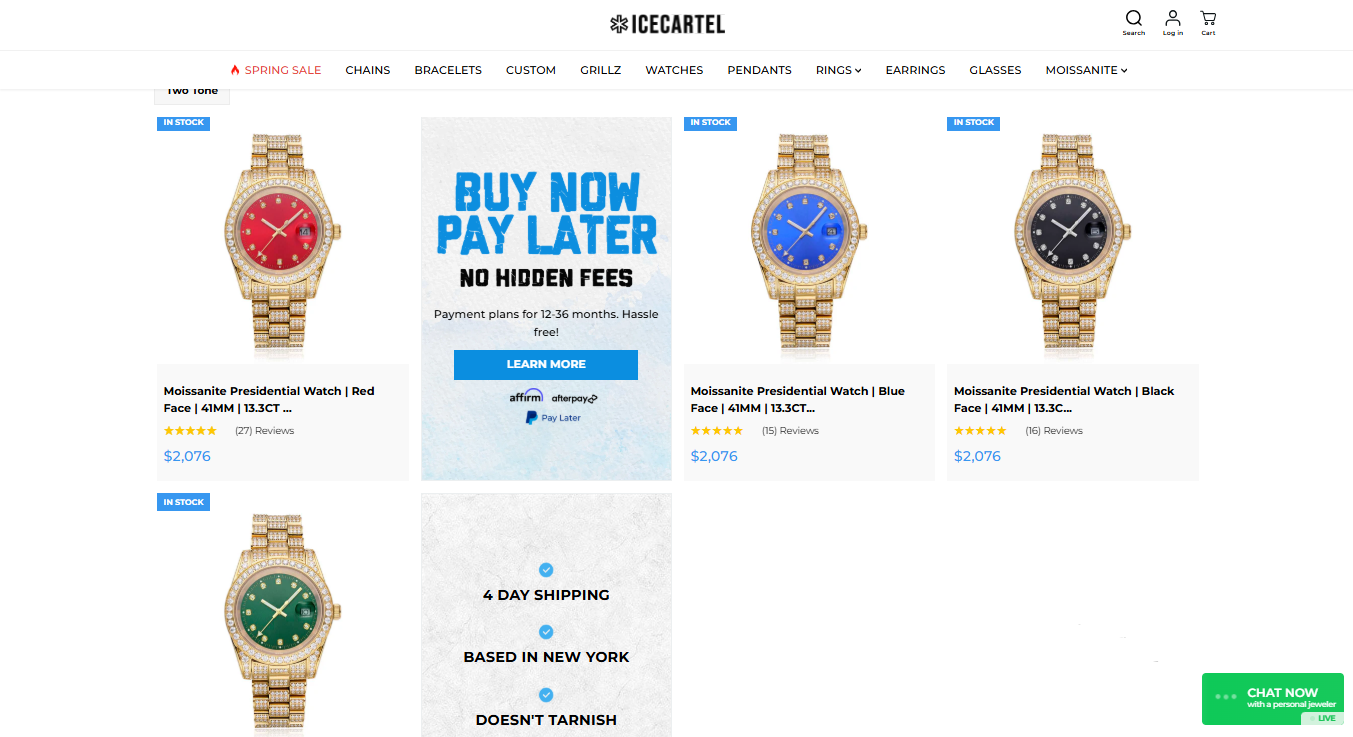
IceCartel sells iced-out watches in the $1,800–$2,500 range. That price range demands trust and flexible payments, especially on mobile.
When you open one of their product pages on your phone, the installment breakdown is visible immediately. The buyer sees the monthly cost before they even scroll. That supports faster decision-making on higher-ticket products.
Their mobile layout is visually heavy but structured. Reviews appear early. Variant selectors are simple. Security signals are near the CTA instead of hidden in the footer.
They also use mobile retargeting that deep-links back to specific SKUs. If someone clicks an ad for a gold watch, they land on that exact gold model. That reduces decision friction dramatically.
What they are doing right:
- Showing financing before hesitation builds
- Deep-linking ads to exact variants
- Reinforcing trust at the point of action
- Keeping checkout minimal and autofill-friendly
For brands selling aspirational products, this is a clear example of how to reduce mobile hesitation around price.
3. Ridge
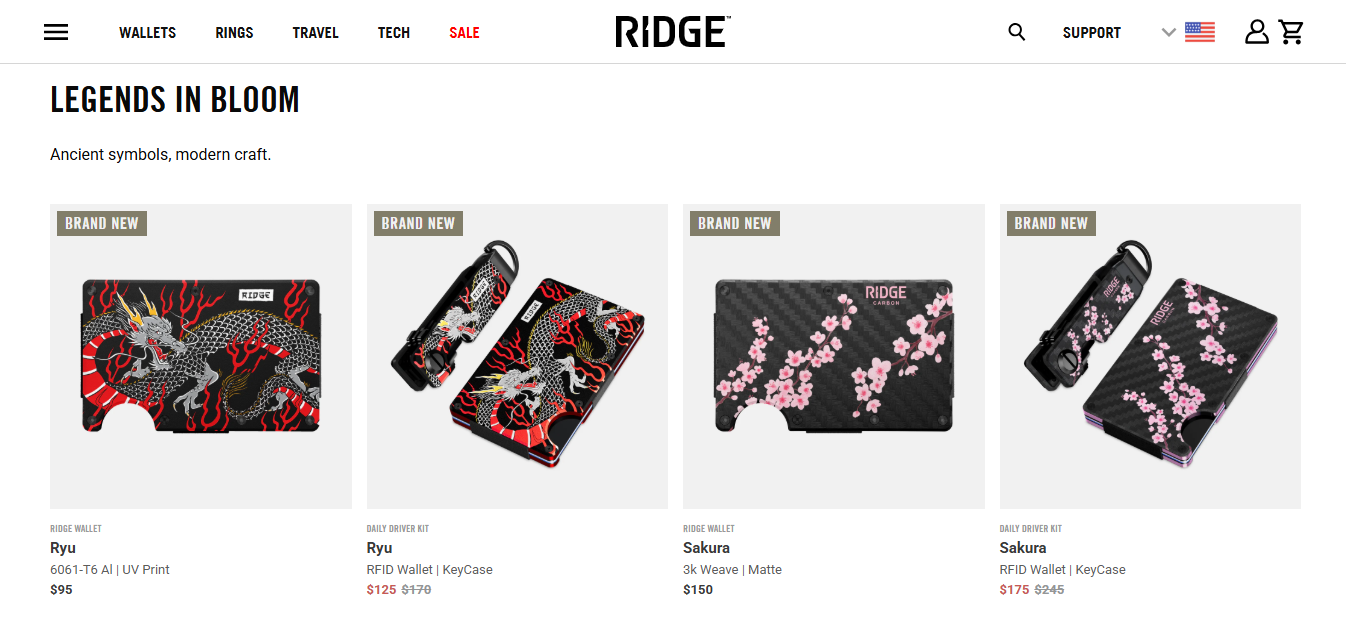
Ridge is known for minimalist wallets, but their mobile execution is what deserves attention. They treat mobile like a high-conversion environment.
Their product pages focus on fast comparison. Materials and finishes switch instantly without page reloads. Bundles are shown directly under the main product instead of in separate category pages. That increases average order value without adding navigation steps. In fact, bundles capture 85% of shoppers making impulse buys, according to the Tapcart BFCM 2025 report.
They also show warranty and guarantee messaging early in the scroll. On mobile, reassurance needs to be immediate because users move quickly. The cart preview updates dynamically without forcing a full-page redirect. That keeps momentum intact.
What they are doing right:
- Inline product switching without reload
- Bundled offers placed mid-scroll
- Visible guarantees during product evaluation
- Fast load performance across pages
Ridge shows how to combine performance optimization, upsell strategy, and frictionless interaction inside a mobile-first structure.
Having seen actionable examples, here’s how Appmaker can help your brand apply these trends efficiently and improve mobile engagement.
Also Read: 9 High-Impact Mobile Customer Engagement Strategies in 2026
Supporting Mobile Commerce Trends With AppMaker
Mobile commerce growth is driven by app-first shopping, faster checkout expectations, personalization, and re-engagement through notifications. For Shopify brands, adapting to these shifts often requires continuous app improvements, which can be difficult without dedicated development resources. Appmaker helps brands respond to these evolving mobile behaviors by enabling faster app creation, flexible design updates, and data-driven optimization.
Its capabilities directly support the practical execution of mobile commerce strategies:
- Real-time Shopify sync: Maintains accurate product, inventory, and pricing data across mobile apps.
- Push notifications: Help re-engage users during fragmented mobile shopping sessions.
- Rubik AI personalization: Enables targeted content and product recommendations based on user behavior and browsing patterns inside the app.
- Eidolon AI design generation: Converts screenshots or Figma files into reusable mobile app layouts, helping brands quickly adapt app design to evolving mobile shopping expectations.
- John AI analytics insights: Helps brands track user behavior, identify drop-offs, and improve mobile engagement using actionable performance data.
By simplifying app management and enabling continuous experience improvements, AppMaker supports brands adapting to mobile commerce trends.
Conclusion
Let’s be direct. Mobile already won. The debate is over. Mobile commerce trends you just read are simply the visible proof of how deeply buying behavior has shifted toward the phone. So you can't just brush them aside.
Start now, but you don't need to implement every trend at once. Identify the two or three that match your mobile strategy and customer profile. Then execute with precision. Measure impact. Refine. Expand.
At Appmaker, we help brands turn their existing online store into a fully branded native mobile app for iOS and Android. You keep your Shopify or Magento store as the backend, and we sync products, orders, customers, and inventory in real time, so your app stays updated automatically.
Our drag-and-drop builder and AI-assisted design tools let you launch faster without relying on developers, and our analytics and in-app AI assistant help you see what is working and act on it quickly. Book a demo with us and see how quickly your store can turn into a high-performing mobile app.
FAQs
1. What are the challenges mobile commerce brands face?
Brands struggle with small-screen design, slow load times, complex checkout flows, fragmented payment options, and high competition for attention. Ensuring security, seamless navigation, and personalized experiences while capturing micro-moments is key to avoiding drop-offs.
2. How does voice search impact mobile commerce strategy?
Voice search changes product discovery by favoring short, clear product names and structured data. Brands must optimize listings for conversational queries, enable quick reorders, and use AI to surface relevant products instantly for voice-driven buying.
3. What is the future of mobile commerce?
Mobile commerce will increasingly rely on AI personalization, immersive AR experiences, social and live commerce, frictionless payments, and micro-moments. Brands that adapt quickly to evolving mobile behaviors and integrate seamless experiences will stay ahead of the competition.
4. How should mobile commerce strategy differ between B2B and B2C businesses?
B2B mobile commerce focuses on bulk orders, account management, and complex pricing, while B2C emphasizes speed, impulse buying, personalized recommendations, and interactive experiences. Each requires different UX, content, and payment approaches tailored to user expectations.