























Mobile apps are no longer just tools people download and forget. For many brands, the app is where real relationships are built. It’s where users browse, buy, return, and decide whether they’ll come back again. But getting someone to install an app is only the first step. What really matters is what happens after that first open.
As users spend more time on their phones, expectations have changed. They want apps that feel fast, helpful, and relevant from the very first session. That’s why mobile customer engagement has become a serious growth driver. In fact, the global mobile engagement market is expected to reach $255 billion by 2029.
In this blog, we’ll discuss what mobile customer engagement really means, why it matters, and how brands can build it the right way.
Overview
- Mobile customer engagement is about meaningful, timely interactions across onboarding, in-app usage, post-purchase moments, and re-engagement.
- Strong engagement improves retention, repeat usage, and revenue, making installs alone an unreliable growth metric.
- A strategy must align goals, user intent, and channels to create consistent, personalized experiences throughout the app lifecycle.
- Tactics like behavioral push notifications, in-app messaging, real-time personalization, gamification, and exclusive experiences drive long-term loyalty.
- Tracking engagement, retention, feature usage, and experience quality metrics ensures continual optimization and measurable impact on app growth.
What Is Mobile Customer Engagement?
Mobile customer engagement is the ongoing process of keeping users actively interacting with your mobile app in ways that create value for both the customer and the business. It goes far beyond sending push notifications or running one-off campaigns. True app engagement is about relevance, timing, and experience.
Engagement happens across multiple moments, not a single action:
- Onboarding: The first few sessions are where users decide whether the app is worth keeping
- In-app interactions: Browsing, searching, saving, purchasing, or using features
- Post-purchase moments: Order tracking, recommendations, rewards, and follow-ups
- Re-engagement: Bringing users back after inactivity with contextual nudges
Mobile engagement differs slightly from web engagement in one important way: intent is immediate. Mobile users expect instant load times, context-aware personalization, and seamless session continuity. If content, messaging, or actions feel generic or delayed, users abandon within seconds.
Now that we understand where and how users engage with mobile apps, let’s explore why these interactions directly impact retention, revenue, and overall app growth.
Also Read: How to Create a Business Mobile App Easily in 2026
Why Mobile Customer Engagement Matters for App Growth?
Before looking at tactics, it’s important to understand why mobile customer engagement has a direct impact on growth metrics that matter.
Strong engagement improves retention by giving users reasons to return beyond a single purchase. When users form habits around an app, churn drops naturally. Engagement also drives repeat usage, which compounds over time as users explore more features and categories.
From a revenue perspective, engaged users convert more often and spend more per session. Additionally, app users spend 40% more on average compared to website-only customers. Over time, this increases lifetime value (LTV) without increasing acquisition costs. On the other hand, poor engagement creates hidden costs. Paid installs that never turn into active users drain budgets and inflate CAC.
This is why installs alone are a vanity metric. An app with 50,000 active users can outperform one with 500,000 downloads if engagement is strong.
Having seen the tangible benefits of engagement, the next step is crafting a strategy that connects user behavior to business outcomes effectively.
How to Develop a Mobile Customer Engagement Strategy?
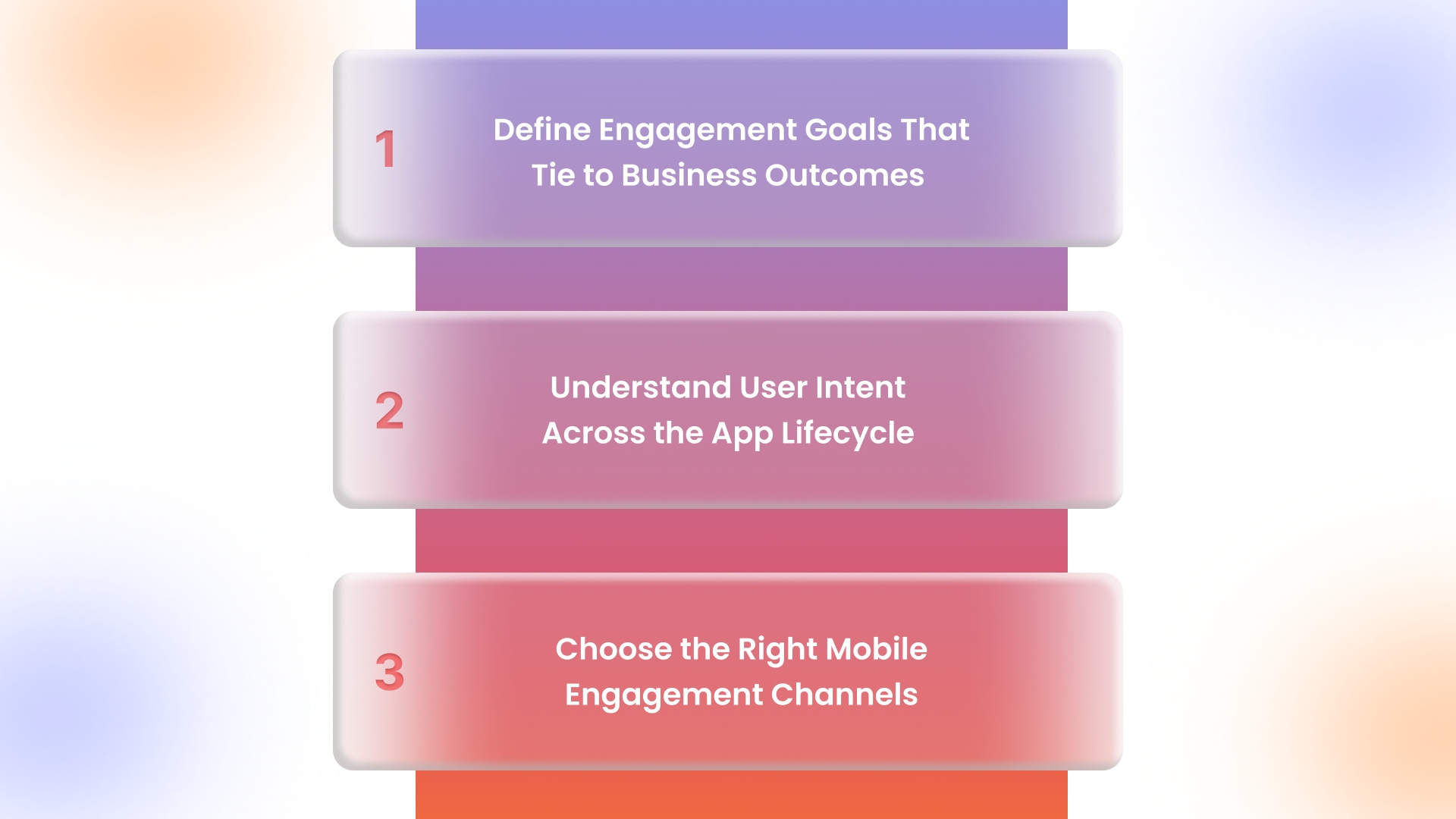
A mobile engagement strategy should connect user behavior with business outcomes. Instead of running isolated campaigns, this approach aligns goals, user intent, and channels into a single system. Here’s how to build a mobile engagement strategy:
1. Define Engagement Goals That Tie to Business Outcomes
Every engagement action should support a clear goal. Some apps focus too heavily on opens without considering what happens after.
Common goal categories include:
- Retention: Getting users to return weekly or monthly
- Conversion: Moving users from browsing to purchase
- Reactivation: Bringing inactive users back
Each goal maps to different touchpoints. For example, onboarding engagement supports retention, while post-purchase messages support repeat conversions. Defining this upfront prevents wasted effort.
2. Understand User Intent Across the App Lifecycle
Not all users behave the same way, and engagement fails when everyone is treated equally. Here’s what you should keep in mind:
- New users need clarity and quick value
- Returning users expect speed and relevance
- Power users respond to exclusivity and depth
- At-risk users need reminders tied to unfinished actions
Recognizing where users are in their lifecycle allows engagement to feel helpful instead of intrusive.
3. Choose the Right Mobile Engagement Channels
Different actions require different channels. For example:
- Push notifications work well for time-sensitive nudges
- In-app messaging supports discovery and education
- App UI personalization influences behavior silently, without messaging at all.
Mobile support and chat play a key role when users are stuck or uncertain. Email and SMS should support the mobile experience, not replace it. When channels are aligned, engagement feels consistent instead of scattered.
Once you’ve defined goals, mapped intent, and chosen channels, it’s time to implement concrete strategies that make engagement measurable and meaningful.
Also Read: Mobile App Native vs Hybrid: Differences, Pros & Best Choice in 2026
9 Proven Mobile Customer Engagement Strategies That Work
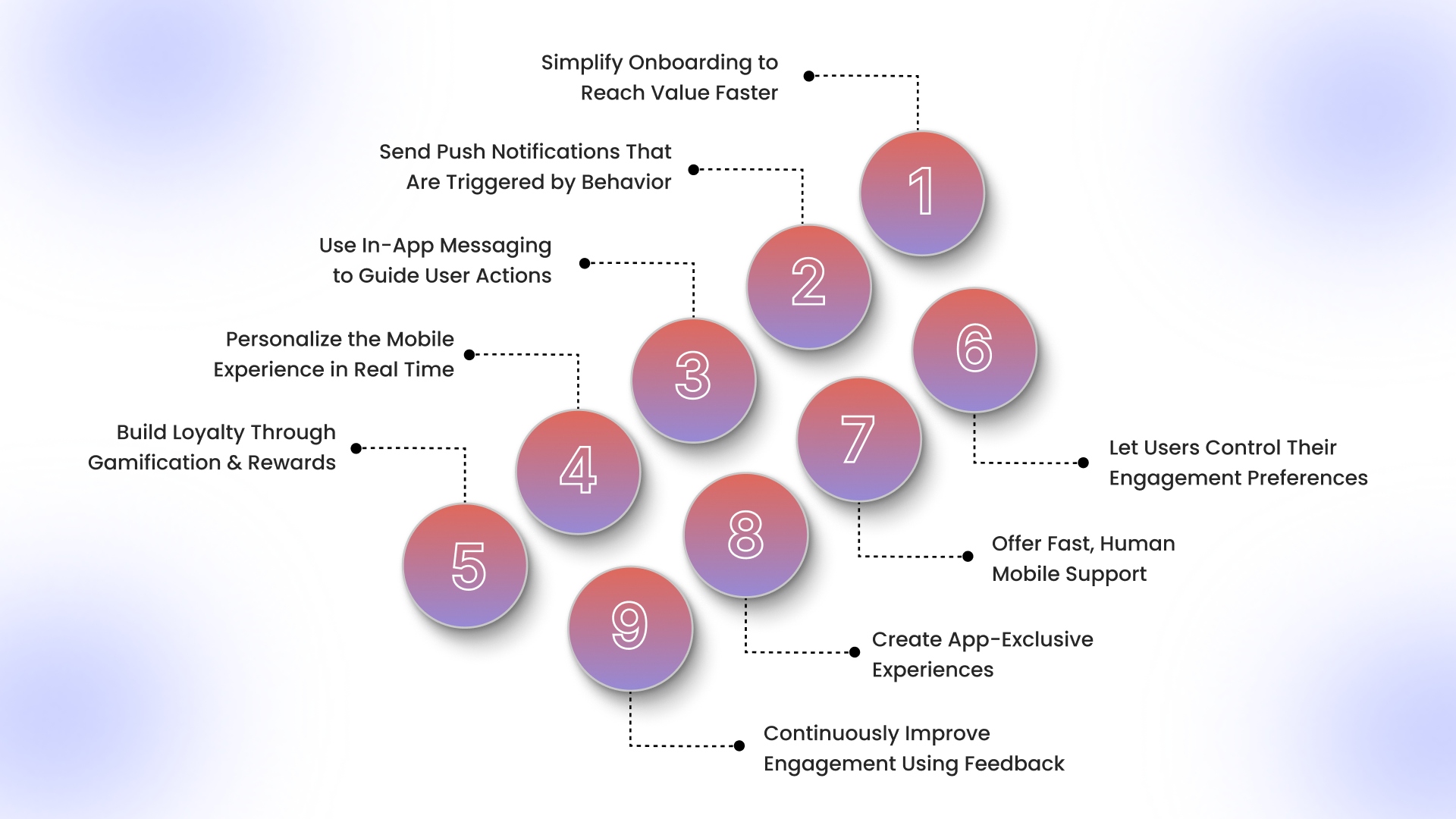
Mobile customer engagement succeeds when every interaction feels intentional, timely, and relevant. Apps that prioritize user behavior, contextual relevance, and measurable outcomes keep users returning, increase conversions, and strengthen long-term loyalty. The following strategies highlight practical ways to achieve this impact.
1. Simplify Onboarding to Reach Value Faster
Effective onboarding transforms first-time users into active adopters. By reducing friction and guiding users through essential features, you ensure they experience meaningful value quickly, setting the tone for long-term engagement.
Here’s what to focus on:
- Interactive walkthroughs: Step users through key features using tap-based prompts rather than static text, ensuring immediate comprehension.
- Progressive disclosure: Reveal advanced functionality only when users are ready, preventing confusion and cognitive overload.
- Early personalization: Collect preferences or interests upfront to dynamically tailor app content from the first session.
2. Send Push Notifications That Are Triggered by Behavior
Push notifications drive engagement only when aligned with user intent. Triggered by specific actions, they feel helpful rather than disruptive, nudging users toward completing meaningful tasks. In fact, they can achieve 85% higher engagement than email.
Here’s what to focus on:
- Abandoned actions: Prompt users to complete unfinished carts, incomplete profiles, or paused tutorials to recover potential conversions.
- Browse & purchase intent: Notify users about items they viewed, searched for, or added to wishlists, reinforcing interest.
- Timing + relevance best practices: Deliver notifications during high-activity periods or based on historical engagement patterns to maximize response.
3. Use In-App Messaging to Guide User Actions
In-app messaging keeps users focused within the app while highlighting features or guiding next steps. Effective messaging delivers education and discovery without interrupting the user experience.
Here’s what to focus on:
- Feature discovery: Promote underutilized but relevant functionalities based on current user behavior or session activity.
- Contextual nudges: Trigger messages aligned with user location in the app or recent interactions to encourage completion of actions.
- Education without interruption: Provide step-by-step tips, hints, or reminders inline to support tasks without modal pop-ups.
4. Personalize the Mobile Experience in Real Time
Real-time personalization ensures the app adapts to the user’s context and behavior. Personalized layouts, content, and recommendations make every session feel individually tailored. This depth of personalization matters because app users browse 4.6× more products and spend 1.8× more time than mobile web users, giving brands more opportunities to guide discovery and influence decisions through relevant content.
Here’s what to focus on:
- Layout personalization: Rearrange home screens, menus, or dashboards based on each user’s preferences and frequently accessed features. AppMaker’s Rubik AI enables real-time layout and content adjustments driven by user behavior, without redeploying the app.
- Product recommendations: Surface items dynamically using past purchases, browsing patterns, and predicted interests.
- Content prioritization: Highlight high-value or contextually relevant content, ensuring users immediately see what matters most to them.
5. Build Loyalty Through Gamification and Rewards
Gamification transforms routine actions into habit-forming behavior. By incentivizing engagement with meaningful rewards, apps create long-term retention and recurring usage.
Here’s what to focus on:
- Milestones: Reward users for achievements such as completing onboarding, making the first purchase, or engaging consistently.
- App-only perks: Provide exclusive benefits visible only within the app, encouraging regular usage.
- Habit-forming loops: Design recurring actions with progress tracking to reinforce daily or weekly engagement patterns.
6. Let Users Control Their Engagement Preferences
Encouraging users with choice improves satisfaction and reduces fatigue. When users control notifications and personalization, they remain engaged without feeling manipulated or overwhelmed.
Here’s what to focus on:
- Notification frequency: Allow users to set how often they receive alerts to maintain relevance without annoyance.
- Opt-in personalization: Offer granular control over recommendations and content types they want to receive.
- Trust & transparency: Clearly communicate how preferences influence app content, establishing confidence in privacy practices.
7. Offer Fast, Human Mobile Support
Quick, empathetic support keeps users satisfied and reduces churn. Combining automation for common queries with human assistance for complex issues ensures efficiency and reliability.
Here’s what to focus on:
- In-app chat: Provide real-time assistance directly within the app, reducing friction from switching channels.
- Conversational assistance: Human agents address nuanced problems, guiding users while maintaining a personalized touch.
- Automation vs human balance: Automate simple queries with AI while escalating complex questions to live support for optimal resolution.
8. Create App-Exclusive Experiences
Exclusive experiences incentivize consistent engagement and increase perceived value. Users return to the app to access benefits unavailable elsewhere, reinforcing loyalty.
Here’s what to focus on:
- Early access: Grant app users first access to products, content, or features before wider release.
- Exclusive launches: Offer limited-edition items or features only via the app to reward loyal users.
- Mobile-only offers: Deliver discounts, promotions, or perks visible exclusively in-app to drive repeat visits.
9. Continuously Improve Engagement Using Feedback
Feedback loops ensure engagement strategies scale with user behavior. Combining direct user insights with behavioral data allows iterative improvements that enhance relevance and retention.
Here’s what to focus on:
- In-app feedback: Prompt users to share immediate reactions to features or experiences contextually.
- Surveys & reviews: Collect structured insights to understand satisfaction, friction points, and content gaps.
- Iteration based on behavior: Analyze engagement patterns and refine features, messages, or content to maximize long-term retention.
After applying these strategies, understanding their impact is essential; tracking the right metrics ensures engagement efforts translate into retention, revenue, and app success.
How to Measure Mobile Customer Engagement Effectively?
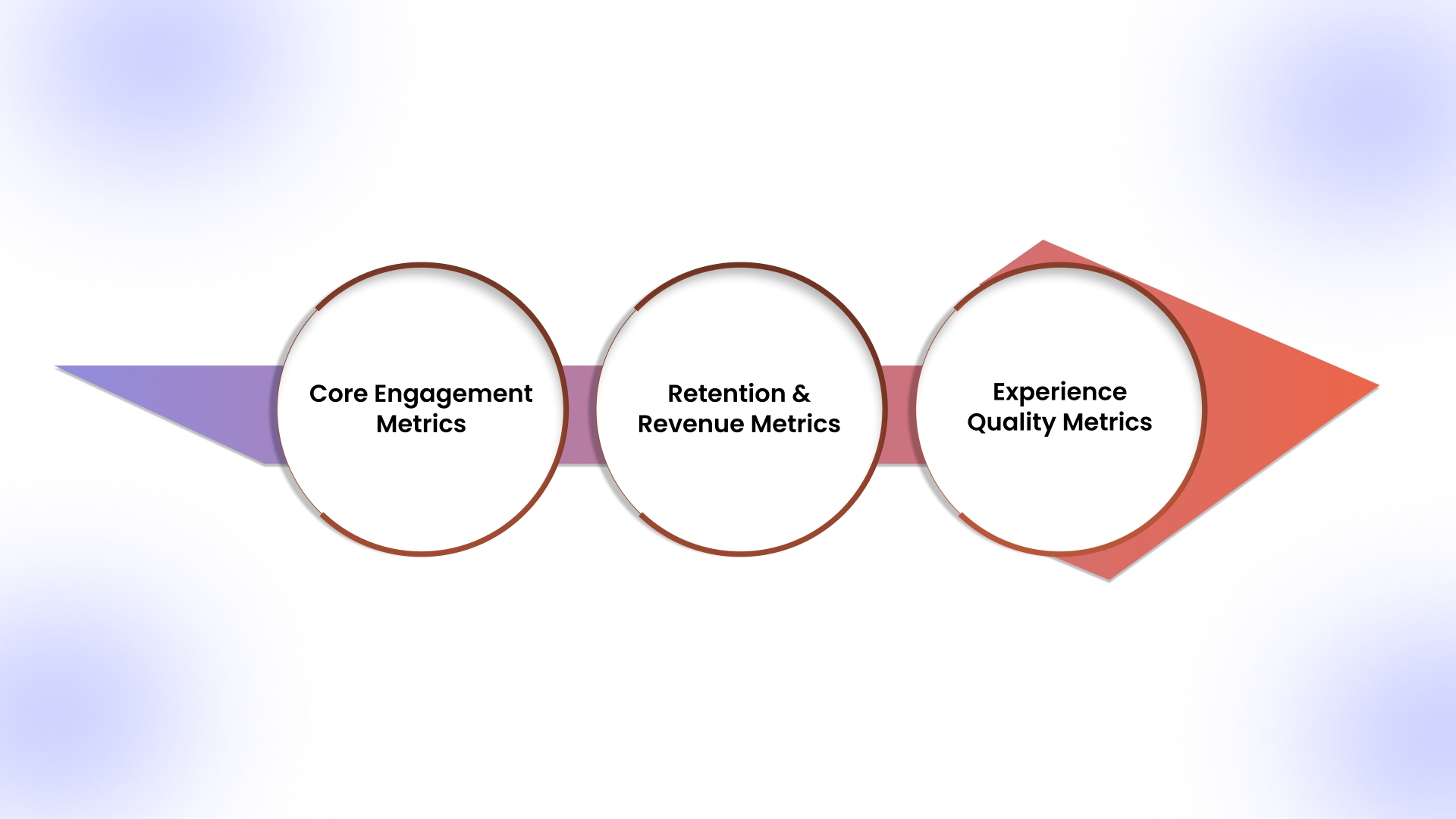
Measurement should guide strategy, not overwhelm teams. Focus on metrics that reveal user behavior, app performance, and revenue impact, enabling precise decisions to improve engagement and retention.
1. Core Engagement Metrics
- DAU/MAU: Measures how many users return daily versus monthly, revealing true app stickiness.
- Session frequency: Tracks how often individual users open the app, showing habit formation and engagement patterns.
- Feature usage: Identifies which features drive value, which are ignored, and where to prioritize improvements.
2. Retention and Revenue Metrics
- Retention rate: Percentage of users returning over time, showing the effectiveness of engagement strategies.
- Churn rate: Tracks users leaving the app, highlighting friction points and disengagement causes.
- Conversion rate & LTV: Links engagement to purchases and overall revenue, quantifying the financial impact of your tactics.
3. Experience Quality Metrics
- App store ratings & reviews: Measure user sentiment and identify recurring issues or praised features.
- Crash rate: Detects technical instability that interrupts engagement and reduces retention.
- Support response time: Reveals operational efficiency in resolving user problems, directly affecting satisfaction.
How to Use These Metrics to Optimize Engagement?
Metrics are only valuable when acted upon: prioritize high-value features, replicate campaigns that boost retention, fix friction causing churn, and eliminate tactics that add noise without measurable results. Properly implemented, these metrics can help you keep your customers hooked to your brand.
Tracking and analyzing these metrics gives you the insights to make smarter decisions. However. turning data into action at scale requires the right tools and automation.
Boost Engagement and Retention with AppMaker
Executing high-impact mobile engagement strategies consistently is challenging; real-time personalization, behavior-driven messaging, and data-driven insights all demand time, technical expertise, and constant monitoring. That’s where AppMaker comes in.
With AppMaker, ecommerce and D2C brands can turn every strategy into action without writing a single line of code while delivering custom UI/UX experiences, app-exclusive content, advanced commerce flows, and integrated loyalty programs built directly into the app.
We offer:
- AI-Powered Personalization: Rubik AI dynamically adjusts app layouts, content, and recommendations in real time based on each user’s behavior. It creates a hyper-relevant experience that keeps users coming back.
- Behavioral Insights and Analytics: John AI tracks engagement patterns, identifies drop-offs, and provides actionable recommendations to optimize campaigns and improve retention.
- Seamless Shopify Integration: Sync products, inventory, and user activity instantly, ensuring your engagement tactics act on real-time data.
- Push Notifications & In-App Messaging: Automate behavior-triggered messages that drive repeat visits, conversions, and revenue.
- No-Code Optimization: Test, iterate, and refine all engagement flows without relying on developers, so your app evolves as quickly as your users’ expectations.
With AppMaker, brands don’t just implement engagement strategies; they scale them efficiently, improve retention, and turn casual users into loyal advocates.
Also Read: 10 Mobile App Engagement Metrics That You Should Track in 2026
Conclusion
Mobile customer engagement drives app growth, retention, and revenue. By focusing on onboarding, push notifications, in-app messaging, personalization, and loyalty strategies, brands can turn casual users into active, repeat customers and maximize lifetime value.
AppMaker makes executing these strategies seamless for e-commerce brands. With AI-powered personalization, interactive onboarding, behavioral triggers, and real-time analytics, you can create fully customized, high-performing mobile apps without coding. Every feature is designed to increase engagement, reduce churn, and deliver experiences your customers won’t forget.
Ready to turn your Shopify store into a mobile app that drives results? Contact us today to see how AppMaker can boost retention, revenue, and customer loyalty.
FAQs
1. What is mobile customer engagement in simple terms?
Mobile customer engagement is how actively users interact with your app across their lifecycle. This includes onboarding, feature usage, purchases, support, and re-engagement through personalized, timely, and value-driven experiences.
2. How is mobile customer engagement different from retention?
Engagement measures how users interact and derive value inside the app. Retention measures whether they return. Engagement drives habit formation; retention is the outcome of consistently valuable engagement.
3. How often should brands send push notifications?
There’s no fixed frequency. Push notifications should be behavior-triggered, contextual, and lifecycle-aware to deliver value without causing notification fatigue or opt-outs.
4. What’s the biggest mistake brands make with mobile engagement?
Using one-size-fits-all messaging. Ignoring user intent, lifecycle stage, and behavior results in irrelevant experiences, lower engagement, and increased churn.
5. Can mobile engagement improve revenue without increasing ad spend?
Yes. Strong engagement boosts repeat usage, feature adoption, conversion rates, and customer lifetime value, driving revenue growth without additional acquisition or advertising costs.