
























Quick Answer
Subscriptions drive repeat purchases by removing the decision to reorder; mobile apps sustain that behaviour by removing the friction to transact and giving brands a direct, owned channel to push notifications to intervene at the exact moments customers churn. The economics compound because retention is dramatically cheaper than acquisition: a 5% lift in retention can raise profits by 25% to 95% (Bain & Company). On Shopify, the most reliable way to capture that is to run both halves as one connected system: a native app as the retention surface and a subscription platform as the recurring-revenue engine and churn-defence layer. That's exactly what the Loop Subscriptions integration with AppMaker delivers: browsing, reordering, subscription self-service, renewal reminders, and failed-payment recovery all in one place, so the subscription engine and the app's owned channel reinforce each other instead of running in separate silos.
Most e-commerce brands run two separate growth playbooks. One team chases subscriptions to lock in recurring revenue. Another debates whether a mobile app is worth building. The two conversations rarely meet.
They should. A subscription is a promise to buy again, but a promise is only as strong as the friction and the memory around it. A mobile app is the surface that removes the friction, keeps the brand on the customer's home screen, and hands you an owned channel to reach them the moment a renewal, a lapse, or a failed payment puts revenue at risk. Stacked together, a subscription program and a native app do something neither does alone: they turn a first purchase into a durable, compounding revenue stream.
The Math Nobody Escapes: Why Retention Beats Acquisition
Start with the number that reframes every marketing budget. Research by Frederick Reichheld of Bain & Company, popularised through Harvard Business Review, found that increasing customer retention by just 5% can increase profits by 25% to 95%. The same body of work established that acquiring a new customer is 5 to 25 times more expensive than retaining an existing one. Selling into your existing base is also simply more likely to work; the probability of selling to an existing customer sits around 60–70% versus 5–20% for a cold prospect (a benchmark from the marketing-metrics literature that has held up for two decades).
Why does a few points of retention swing profit so hard? Because the effect compounds. Retained customers buy more often, need less convincing, cost less to serve, and refer others. Existing customers are about 50% more likely to try a new product and spend roughly 31% more than first-timers (Invesp). And repeat behaviour is self-reinforcing: the hardest sale is the second one, but once a customer places that second order, the probability of a third climbs sharply. Everything you invest in earning the next purchase pays out across every purchase after it.
This is why customer lifetime value (CLV), the total margin a customer generates across their entire relationship with you, is the north-star metric this article optimises for. Acquisition determines how many relationships you start. Retention determines how much each one is worth. Subscriptions and mobile apps are the two levers that most directly move the second number.
A quick definition set
- Retention rate: the share of customers (or subscribers) still active after a given window (Day 30, Month 3, Year 1).
- Churn rate: the inverse: the share you lose in a period. Splits into voluntary (they chose to leave) and involuntary (a payment failed).
- Repeat purchase rate: the share of customers who buy more than once.
- Customer lifetime value (CLV): total contribution margin over the full relationship.
- Net revenue retention (NRR): revenue retained from an existing cohort over time, including upgrades and expansion, net of churn and downgrades. Above 100% means your existing customers grow revenue even before you acquire anyone new.
Why Subscriptions are the Strongest Repeat-Purchase Engine
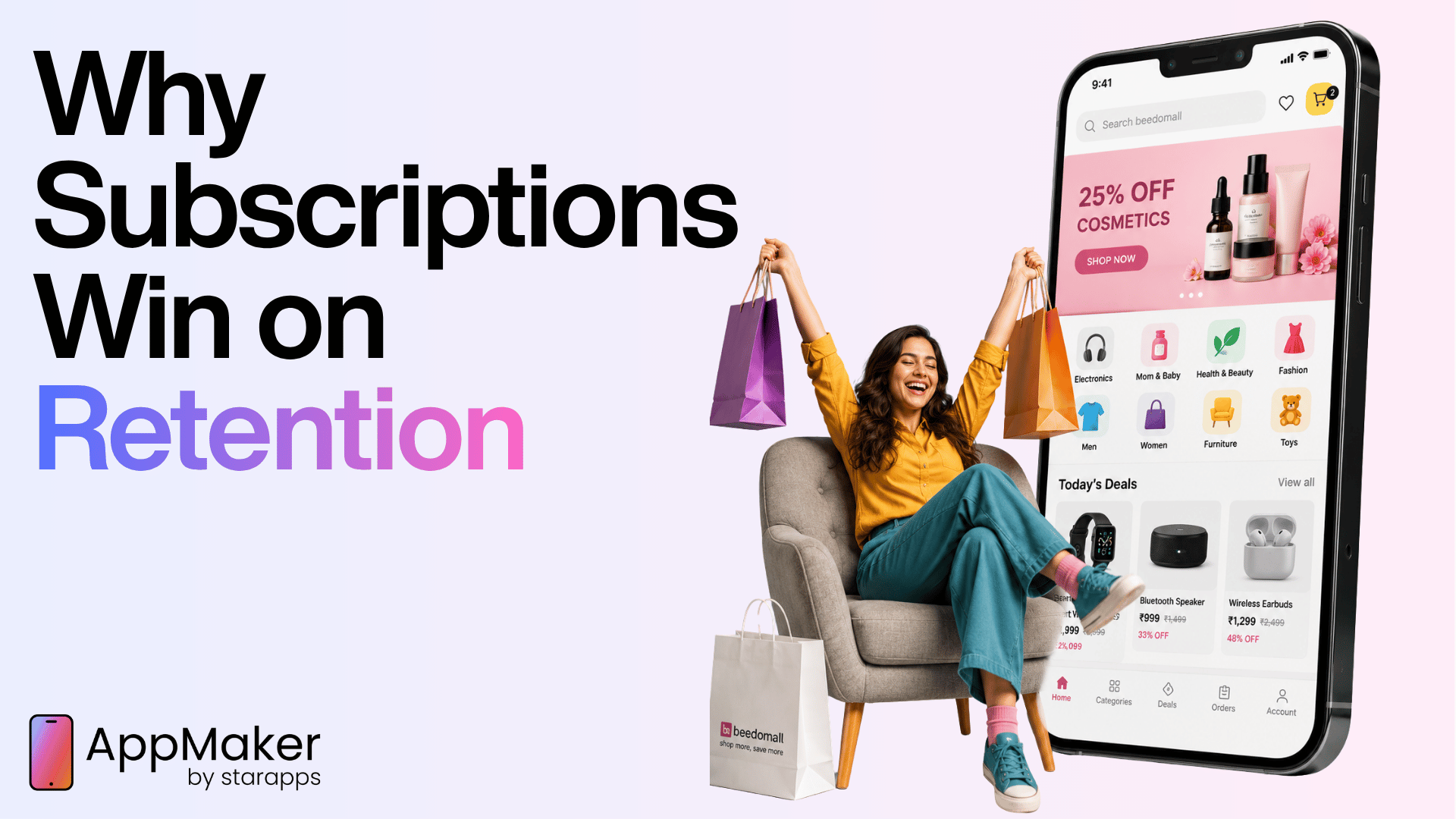
A one-time purchase asks the customer to re-decide every single time. A subscription flips the default: the customer decides once, and staying becomes the path of least resistance. That single change in default is why subscription revenue is so much more predictable and why the model has become a mainstream commerce channel rather than a niche.
The scale reflects it. The global subscription economy was valued at roughly $492 billion in 2024 and is projected to grow to about $1.5 trillion by 2033, a 13.3% compound annual growth rate (Grand View Research). For consumable and replenishable categories coffee, supplements, pet, beauty, household staples the fit is natural: customers were going to rebuy anyway, so a subscription simply removes the reorder chore and, done well, rewards them for staying.
The strategic payoff of subscriptions isn't just smoother cash flow. It's that a subscriber is a known, addressable, high-intent relationship. You know what they buy, how often, and when the next order lands. That predictability is the foundation everything else in this article builds on, including the app-based interventions that keep a subscriber from becoming an ex-subscriber.
But subscriptions come with a catch that too many brands discover only after they've scaled: recurring revenue is also recurring risk. Every billing cycle is another moment a customer can leave, and a meaningful slice of them leave without ever meaning to.
The Catch: Subscription Churn is a Leaky Bucket and Much of the Leak is Preventable
Churn is where subscription programs quietly bleed. The instructive part is that a large share of it is fixable, and it splits into two very different problems.
Voluntary churn is a decision. The customer cancels too much product piling up, a budget cut, a competitor, a lapse in perceived value. It shows up loudly: a cancellation click, an exit survey, a reason code.
Involuntary churn is an accident. A card expires, a bank's fraud filter trips, a checking account is briefly short. No one decided to leave; a billing system simply gave up after a retry or two and deactivated a customer who was still happy. It fails silently in the background, which is exactly why it's so under-managed. Industry analyses (ProfitWell/Paddle, Churnkey) put involuntary churn at an estimated 20–40% of total subscription churn, and Recurly's widely cited analysis projected that failed payments could cost subscription businesses on the order of $129 billion in 2025. Treat that headline as a vendor projection rather than an audited number. Recurly derived it from the average revenue lift its own customers see, but the direction is not in dispute: a large, recoverable chunk of subscription revenue disappears to payments that fail, not customers who quit.
Two facts make this the most attractive retention lever most brands are ignoring:
First, the math of monthly churn is brutal, so small improvements matter enormously. Even a seemingly modest 5% monthly churn compounds to losing nearly half your customers over a year (Churnkey); above 10% monthly, annual churn runs past 70%. Best-in-class subscription brands hold monthly churn under 3% (Recharge, 2025 State of Subscription Commerce), and the gap between top and bottom performers is driven less by product than by retention infrastructure.
Second, recovered subscribers are worth defending. Reactivating a failed payment doesn't just save one charge; it saves the whole future relationship. Stripe has reported that subscriptions recovered through smart retries continue to average for several more months. Every recovered payment is a downstream CLV rescue.
So the subscription model gives you predictable repeat purchases, but it also concentrates your revenue into recurring moments of risk: renewals, trial ends, delivery cadences, and card failures. The question becomes: what surface lets you actually intervene at those moments? That's where the mobile app stops being a "nice to have."
The Missing Surface: Why the Mobile App is Where Retention Actually Happens
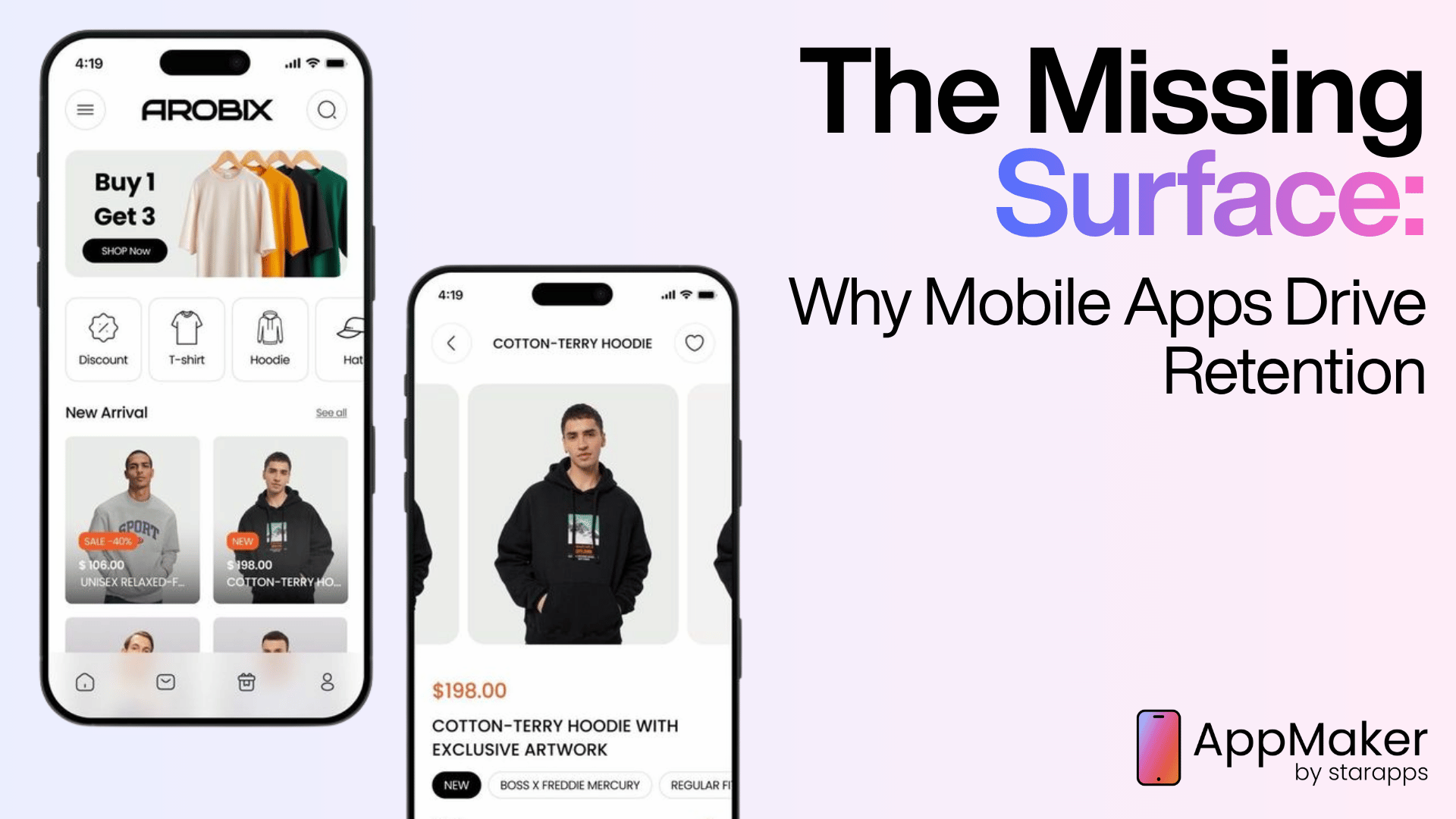
Here's the tension every operator is living with. Mobile is where commerce now happens: global mobile commerce hit roughly $2.51 trillion in 2025, about 59% of all retail e-commerce, on track for 63% by 2028 (Statista). For Shopify merchants, the skew is sharper still: Shopify's own reporting put about 77% of store visits on mobile devices in 2025. The phone is the primary storefront.
And yet the mobile web is where that demand goes to underperform. Contentsquare's Digital Experience Benchmark, built on tens of billions of sessions, measured mobile-web conversion at just 2.03% against 3.81% on desktop. Cart behaviour tells the same story: the documented average online cart-abandonment rate is roughly 70% (Baymard Institute), and mobile-web abandonment typically runs higher. Brands pay rising ad costs to funnel traffic to the exact channel least likely to convert it. That is the leak a native app is built to plug.
An app changes behaviour, not just the channel
The strongest evidence here is academic, not promotional. In a peer-reviewed Marketing Science study, Narang and Shankar used a difference-in-differences design on a real retailer's app launch and found that app adopters bought 33% more frequently, purchased 34% more items, and spent 37% more than non-adopters, for a combined 36% lift in net monetary value, appearing across both online and offline channels. The app didn't just move sales from web to app; it grew total spend. (A useful nuance from the same research: shoppers respond most to offers and rewards delivered through the app, and cramming in every possible feature can actually dampen results; favour a focused, reward-driven experience over an "all-in-one" one.)
Why does a native surface change behaviour? The reasons are structural, not marketing gloss. Assets and data live on the device, so it loads near-instantly. Login and payment details are stored, so checkout is one or two taps. Personalisation runs continuously against customer data. There are no browser tabs, competing ads, or re-authentication walls. For a subscriber managing a recurring order, that friction reduction is the difference between "I'll deal with it later" and "done in ten seconds."
Be honest about the ceiling, though: an app only helps the customers who install and open it. Early-stage retention is genuinely hard. Across categories, typical app retention lands near 25% on Day 1 and 5–6% by Day 30, and shopping apps sit close to that curve. The app is not a magic retention machine on its own; it's a high-potential surface that pays off only when you actively use its one irreplaceable capability.
Push notifications: the owned channel that makes the app pay
That capability is push. Unlike email, which fights spam filters and crowded inboxes and grows more expensive as deliverability tightens, a push notification lands directly on the lock screen, for free, on a channel you own outright.
The retention impact is large and well-documented. Airship's analysis of tens of millions of app users across roughly 1,500 apps found retention rates nearly 3x higher for users who received at least one push notification in their early lifecycle versus those who received none. And engagement is strong where it counts: for e-commerce specifically, Pushwoosh's 2025 benchmarks put push click-through rates around 3–3.8% with opt-in rates near 68%, comfortably above cross-industry norms.
Now connect that to the subscription risk moments from the previous section. A trial is about to convert to paid. A monthly delivery is three days out. A subscriber hasn't opened the app in two weeks. A card just failed. Each is a churn moment, and push is the only owned, cost-free channel that can reach the customer at that moment, on the device they actually check. Email can attempt it; push does it on the lock screen, instantly, without paying for reach.
The Retention Loop: How Subscriptions, Apps, and Retention Ops Compound
Treating subscriptions, apps, and churn defence as three projects is why most brands under-earn on all three. The insight is that they form a single, self-reinforcing cycle. Call it the Retention Loop: five stages that feed each other, so each turn of the loop raises lifetime value.
- Acquire: Win the first purchase through your existing channels. Acquisition is the top of the funnel, not the strategy.
- Subscribe: Convert the one-time buyer into a subscriber. This changes the default from "re-decide every time" to "staying is easier than leaving," and turns an anonymous transaction into a known, addressable relationship.
- Engage: Move the subscriber into your app. Now reordering, browsing, and subscription self-service are one or two taps, and you've opened an owned push channel to the person's home screen.
- Retain: Defend the recurring revenue at every risk moment. Use push to reach subscribers before renewals, trial ends, and lapses; recover failed payments with smart dunning; and offer pause/skip/swap instead of a binary cancel so a hiccup doesn't become a loss.
- Expand: Grow the value of the relationships you've kept. Upsell, cross-sell, bundle, and reward loyalty. The 60–70% resell probability to existing customers is where expansion revenue is cheapest to earn.
The loop compounds because each stage strengthens the next. A subscription makes the app more valuable (there's a recurring order to manage). The app makes the subscription stickier (self-service and push reduce both friction and churn). Retention ops protect the base the app engages. Expansion raises the CLV that justifies investing in the whole cycle. The brands pulling ahead aren't the ones with the flashiest storefront; they're the ones who built a closed loop their customers stay inside.
The natural next question for a Shopify operator: what does it take to run this loop in practice, without stitching together five disconnected tools?
The Answer for Shopify Brands: Mobile Apps and Subscriptions, Integrated
Running the Retention Loop takes two capabilities that most teams buy separately and never connect: an engagement surface the customer actually opens, and a subscription engine that runs recurring revenue and defends it. Neither replaces the other. The app without a subscription engine has nothing recurring to protect; the subscription engine without an app is stuck in the inbox, reaching customers on a channel that keeps getting more expensive and less reliable.
For Shopify and Shopify Plus brands that want both, the practical answer is to run two best-in-class platforms that are already built to work together: AppMaker for the app and its owned channel, and Loop Subscriptions for the subscription program and churn defence. Each is a specialist in its half of the loop, and because they're integrated, a subscriber's app experience and their subscription plan are the same system rather than two disconnected tools.
AppMaker: the app and the owned channel
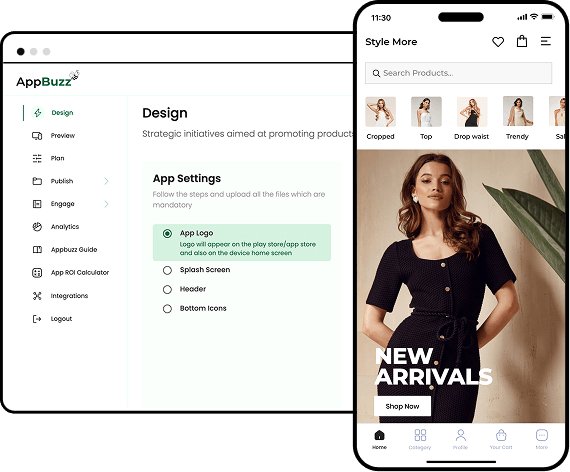
A Shopify mobile app builder turns your store into branded iOS and Android apps that stay in real-time sync with your catalogue, pricing, inventory, and orders, with no custom development cycle. AppMaker is built for scaling and established Shopify brands that have outgrown templated tools, and is recognised on the Shopify App Store for meeting Shopify's standards for performance, design, and integration. It pairs a no-code studio with deeper customisation and AI-assisted operations. The parts that matter for the loop:
- An owned push channel: Segmented, automated, behaviour-triggered push is the mechanism that lets you reach subscribers at renewal, trial-end, delivery, and lapse moments the churn moments that decide CLV.
- Deep personalisation: Conditional content driven by Shopify tags and metafields means a first-time buyer, a VIP, and an at-risk subscriber can each see a tailored experience the reward- and offer-driven engagement the Marketing Science research found drives app value.
- Operational leverage: AppMaker's in-app assistant, John AI, can draft and schedule push campaigns, build lifecycle flows like win-back and abandoned-cart recovery, and answer analytics questions in plain language so a lean team can run always-on retention marketing that used to require dedicated headcount.
Loop Subscriptions: The Recurring-Revenue Engine and Churn Defence
Loop is a retention-first Shopify subscription app used by a large base of DTC brands and holds Shopify's Built for Shopify recognition for performance and integration quality. Where many subscription tools stop at billing, Loop is designed around keeping subscribers. Its feature set maps almost one-to-one onto the Retain and Expand stages of the loop:
- Self-service that reduces friction and support load: A no-code customer portal lets subscribers pause, skip, swap, and manage deliveries themselves. Offering pause instead of cancel is one of the highest-leverage retention moves in subscriptions; it converts a would-be loss into a temporary hold.
- Failed-payment recovery (dunning): Smart retry logic and dunning workflows target the involuntary-churn problem directly: the 20–40% of subscription losses that are recoverable rather than chosen.
- Cancellation flows that save the saveable: Instead of a one-click exit, a cancel flow can surface a pause, a discount, or a swap based on the stated reason, defending revenue at the exact moment of highest intent to leave.
- Gamified retention and bundles: Rewards, streaks, and build-your-own bundles increase perceived value and average order value, feeding the Expand stage and lifting subscriber LTV.
What the AppMaker × Loop Integration Actually Unlocks
The impact isn't that you own two good tools; it's that the integration makes the loop run inside a single experience. In practice:
- Subscribers manage their plan inside your branded app, not through an email link to a separate portal. Pause, skip, swap, and reorder are a couple of taps on the home screen they already have.
- Loop's subscription events meet AppMaker's owned channel. A renewal, trial-end, or delivery reminder can arrive as a lock-screen push in the channel with nearly 3x the retention lift instead of only an email that may never open.
- Failed payments get recovered on two fronts at once. Loop's dunning runs the smart-retry and recovery sequence in the background while the app can prompt the subscriber to update their card in-app in seconds, closing the largest recoverable slice of churn.
- Cancellation meets an off-ramp, not a dead end. A cancel attempt in the app can trigger Loop's cancellation flow: a pause, a discount, a cadence change, turning intent-to-leave into a save.
- Expansion runs where subscribers already are. Loop's bundles and rewards surface inside the app, with AppMaker's personalisation routing the right offer to the right subscriber, the 60–70% resell probability captured on the surface people actually open.
That is the difference between a subscription program that leaks and one that compounds: Loop supplies the recurring-revenue logic and churn-defence workflows, AppMaker supplies the frictionless surface and the owned channel to activate them, and the integration makes them a single loop. It's why, for Shopify brands weighing mobile apps and subscriptions, "run them together" is not a compromise between two vendors; it's the design.
For brands mapping the broader stack, it's worth seeing how mobile commerce apps and essential Shopify Plus apps fit around these two anchors, since the app surface and the subscription engine are the pieces the rest of your tooling plugs into.
The Retention Playbook: Tactics Mapped to Churn Moments
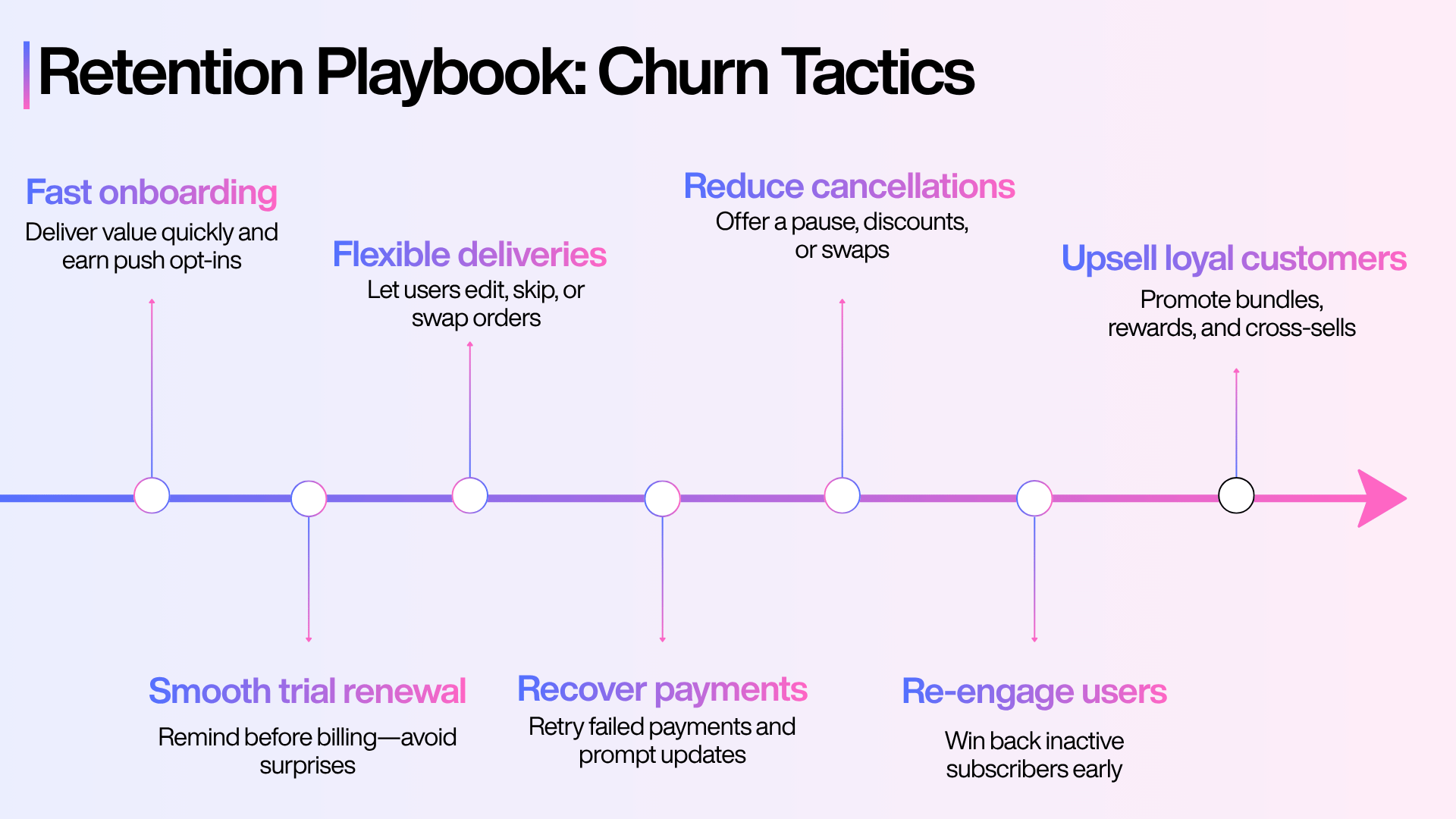
Frameworks are only useful if they translate into actions. Here is how to run each risk moment in the loop, grounded in the mechanisms above.
Onboarding win the first session: Most app users churn in the first days, so get a new subscriber to their first value fast: one clear next action, saved preferences, and a reason to enable push. The users who receive early push retain nearly 3x better, so treat the opt-in as a first-session priority, framed as value ("delivery reminders, restock alerts, subscriber-only drops"), not as spam.
Trial end, reduce the surprise: Send a value-led push before a trial converts, not a silent charge. A customer who knows what's coming and why churns far less than one caught off guard.
Delivery cadence reinforces value: Ahead of each recurring order, remind subscribers what's arriving and let them edit, skip, or swap in a couple of taps from the app. Frictionless editing prevents the "too much product" cancellation before it starts.
Card failure recovery automatically, prompt gently: Combine platform-level dunning (smart retries, backup cards, timed sequences) with an in-app prompt to update payment. Because involuntary churn is 20–40% of losses and much of it is recoverable, this is often the single fastest retention win available.
Cancellation offers an off-ramp, not an exit: Replace a binary cancel with a flow that offers pause, a discount, a smaller cadence, or a swap based on the reason. Pausing beats losing on every dimension of lifetime value.
Inactivity win back before they're gone: Trigger a win-back push (a personalised offer, a "we saved your bundle" nudge) for subscribers who've gone quiet, rather than waiting for a formal cancellation.
Expansion sell to the base you kept: With a 60–70% resell probability to existing customers, route your best cross-sells, bundles, and loyalty rewards to active subscribers through the app the cheapest revenue you'll book.
The through-line: Every tactic pairs a subscription-engine capability (Loop's dunning, cancel flow, pause, and portal) with the app's owned channel (AppMaker's push, in-app prompts, and personalised surface). That pairing one platform for each half, integrated into one flow is the loop in motion.
The Metrics That Matter
You can't run this system on vanity numbers. Track the ones that expose CLV and churn honestly:
- Cohort retention curves: Follow each monthly cohort's survival at Month 1, 3, 6, and 12. Aggregate churn hides the truth; cohorts reveal it.
- Churn, split into voluntary and involuntary: If you can't separate the two, you can't measure the ROI of fixing either, and involuntary churn is usually the more recoverable half.
- Net revenue retention (NRR): The clearest single read on whether your existing base grows on its own. Above 100% means expansion is outpacing churn.
- Repeat purchase rate: The share buying more than once, the leading indicator that acquisition is turning into relationships.
- Customer lifetime value (CLV): The scoreboard. Every lever in the loop should move it.
- Push and app engagement (opt-in rate, CTR, DAU/MAU): Your owned-channel health and the habit signal behind it.
A practical rule: if your team can't pull a clean cohort table, split voluntary from involuntary churn, and attribute revenue to the app's push channel, you're optimising on incomplete data and, per the retention research, that's precisely where the top and bottom performers separate.
A Note on the Data (and How to Read Retention Statistics)
Retention is one of the most statistic-saturated corners of e-commerce, and much of what circulates is recycled, undated, or sourced from aggregators rather than primary research. A few principles guided this piece, and should guide your own benchmarking:
- Prefer primary and peer-reviewed sources. The strongest claims here the profit impact of retention (Bain/HBR), the behavioral lift from apps (Marketing Science), the push-retention effect (Airship) come from named research, not blog telephone.
- Flag projections as projections. The $129 billion failed-payment figure is a modeled vendor estimate, not an audited total. It's directionally useful and widely cited, but shouldn't be quoted as a hard fact.
- Use ranges where sources disagree. Involuntary churn as a share of total churn is best expressed as 20–40%, not a false-precision single number, because it varies by category, price point, and payment mix.
- Benchmark against your own cohorts. External benchmarks orient you; your cohort data decides your roadmap.
Written and reviewed jointly by the AppMaker growth team and the Loop Subscriptions retention team, drawing on primary research from Bain & Company, Harvard Business Review, Grand View Research, Statista, Contentsquare, Baymard Institute, Marketing Science (Narang & Shankar), Airship, Pushwoosh, Recurly, Churnkey, and Recharge, combined with AppMaker's operating experience building native apps for scaling Shopify brands and Loop's experience running subscription retention for a large base of DTC merchants.
The Bottom Line
The mobile question for e-commerce brands was settled years ago: your customers are already on their phones. The retention question is what's live now. A subscription creates the intent to buy again; a mobile app removes the friction and hands you an owned channel to defend that intent at every moment it's at risk. Run them as two disconnected projects and you'll under-earn on both. Run them as one loop: acquire, subscribe, engage, retain, expand, and each turn raises the value of every customer you keep.
If you're scaling on Shopify and want both mobile apps and subscriptions, the practical move is to run them as one integrated system. Build the app and its owned channel with AppMaker, run your subscription program and churn defense with Loop Subscriptions, and let the integration close the loop. Book an AppMaker demo to see the app side, and explore Loop for the subscription side; together, they're how you turn a first purchase into a compounding one.