























Mobile commerce is reshaping how the world shops online. Mobile devices now account for over half of global e‑commerce sales, with their share steadily increasing from 43 % in 2018 to 63 % by 2028. The perceived cost barrier keeps profitable brands stuck on the mobile web, losing conversions and customer lifetime value daily.
But you don't need a six-figure custom build to compete with major DTC brands anymore. You need to choose the right approach that aligns with your revenue stage, technical resources, and growth goals.
In this article, you'll learn which mobile app development options deliver real ROI without draining your budget, how to evaluate cost vs. capability, and which approach fits your Shopify store's current stage.
Key Insights
- Traditional custom development requires significant upfront investment and lengthy timelines, making it suitable primarily for established brands with substantial budgets.
- No-code platforms provide native app functionality at a fraction of the cost of custom development while maintaining professional quality.
- The total investment includes more than just initial development: ongoing maintenance, app store fees, and platform updates must be factored into your decision.
- Modern, affordable solutions include advanced capabilities such as push notifications, AI tools, real-time syncing, and complete customization.
- Your development choice should align with current revenue, team capabilities, and the speed at which you need to capture mobile conversions.
- Speed-to-market often matters more than perfect features; launching sooner means generating revenue while competitors are still planning.
Why Mobile App Development Costs Vary So Dramatically?
Custom-coded apps require frontend developers, backend engineers, and designers working for months. You're paying for human hours at a per-hour rate, depending on location and expertise.
No-code platforms eliminate most of that labor. You're subscribing to pre-built infrastructure instead of building from scratch.
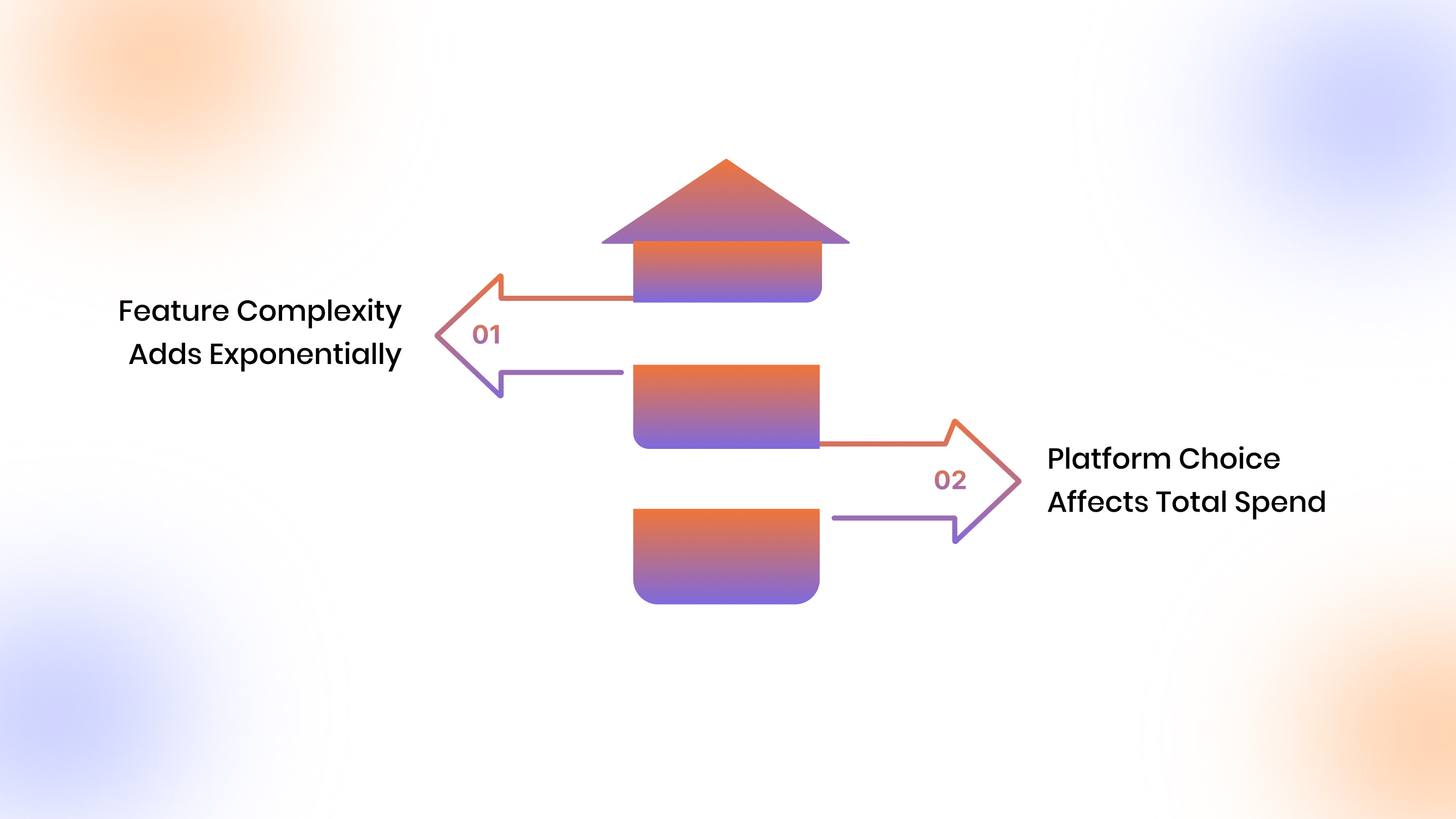
Feature Complexity Adds Exponentially
A basic product catalog with checkout costs is far less than advanced features such as AR try-ons, subscription management, or loyalty program integrations. Each additional capability multiplies development time.
Platform Choice Affects Total Spend
Building separately for iOS and Android doubles traditional development costs. Cross-platform frameworks reduce this, but still require significant technical work. Native no-code solutions handle both platforms simultaneously.
Traditional Custom Development: When It Makes Sense?
Suppose you're looking at a minimum of 4–6 months from discovery to launch. Factor in:
- $15K–$40K for initial design and UX research
- $30K–$100K for frontend development (iOS + Android)
- $20K–$60K for backend infrastructure
- $5K–$15K for quality assurance testing
Important Note: These are rough estimates; pricing can vary significantly depending on your requirements. The figures above are based on ideal scenarios.
Custom apps also require ongoing maintenance that adds substantial annual costs for updates, security patches, and OS compatibility.
When Custom Makes Business Sense
Choose custom development if you're:
- Generating $10M+ annually with budget for a 12–18 month project
- Building proprietary features that differentiate your brand significantly
- Operating in a niche that requires unique integrations unavailable elsewhere
Most Shopify merchants in the $1M–$10M range don't meet this threshold. You need a mobile now, not next year.
If custom development timelines don't align with your growth goals, explore Appmaker's no-code platform to launch native apps in weeks, with similar quality at a fraction of the cost.
No-Code Platforms: Maximum Value for Shopify Merchants
No-code mobile app builders like Appmaker significantly reduce development costs while delivering fully native apps.
How No-Code Stays Affordable
These platforms provide pre-built components that handle product sync, checkout flows, and core eCommerce functions. You customize the layout and branding instead of coding from scratch.
Updates happen automatically. When iOS 18 launches, you're not hiring developers to maintain compatibility; the platform handles it.
What You Actually Get
Modern no-code solutions include:
- Real-time Shopify inventory and order syncing
- Native push notification capabilities
- Payment processing integration
- Analytics dashboards
- Multi-language support
You're not sacrificing quality for affordability. You're choosing efficient infrastructure over custom reinvention.
The Speed Advantage
Launch timelines shrink from 6+ months to 2–4 weeks. That speed-to-market translates directly to ROI; you start capturing mobile conversions immediately instead of watching competitors pull ahead.
Comparing Your Affordable Mobile App Development Options
Here's how different approaches stack up for Shopify brands prioritizing budget efficiency.
Remember, these are approximate estimates. Actual pricing may vary significantly depending on your requirements, and the figures above are based on ideal scenarios.
The Hidden Costs Nobody Mentions
Every option carries ongoing expenses beyond the initial build:
- App store fees: $99/year (Apple) + $25 one-time (Google)
- Maintenance: Custom apps require continuous investment for updates and bug fixes
- Updates: Required quarterly minimum for security and OS compatibility
No-code platforms bundle most maintenance into subscription pricing, eliminating surprise invoices.
How to Build a Cost-Effective Mobile App: Your Practical Roadmap
Start with a clear scope definition. List your must-have features versus nice-to-haves. Most merchants need:
- Product catalog with filtering
- User accounts and order history
- Push notifications
- Secure checkout
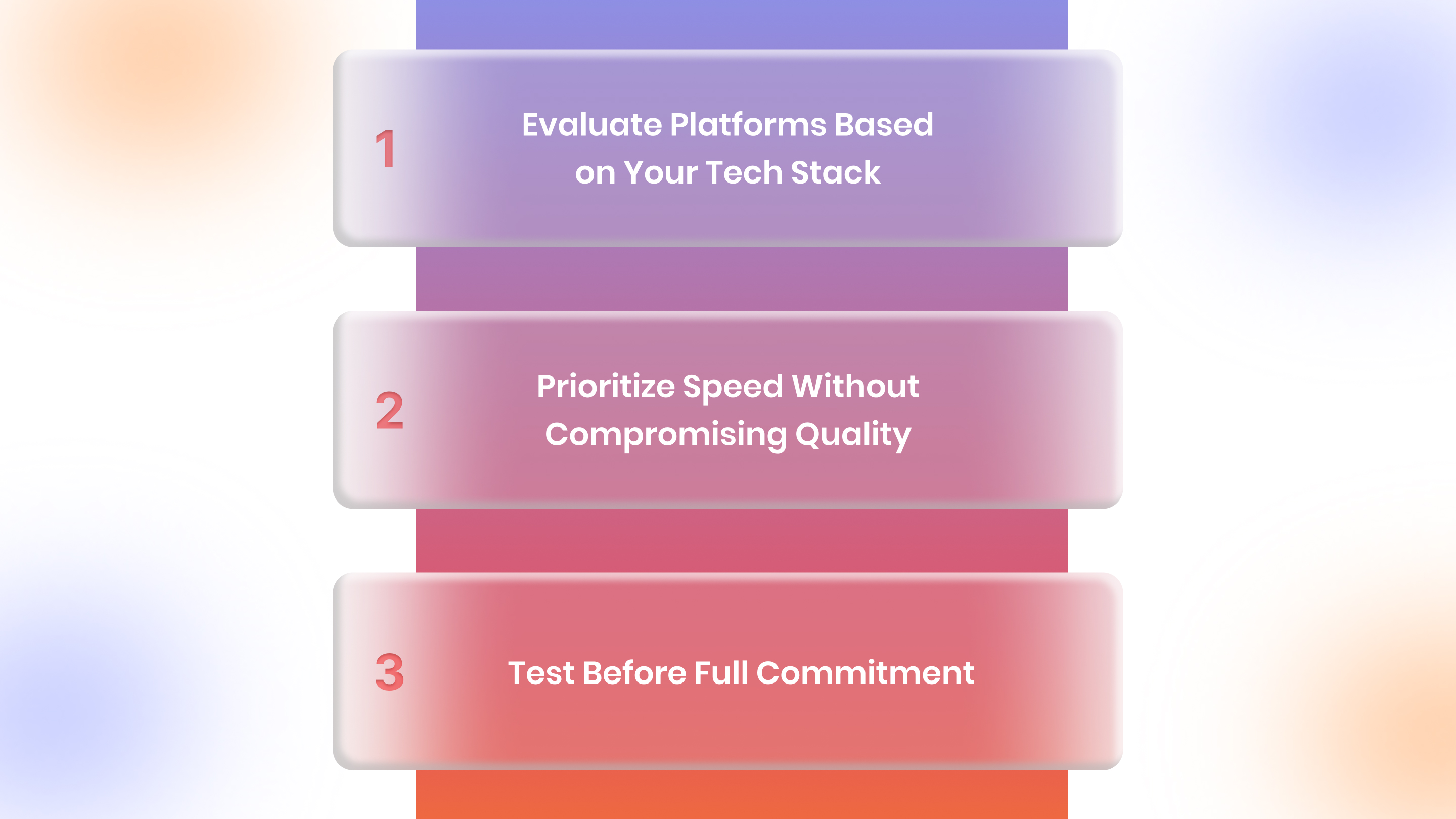
Evaluate Platforms Based on Your Tech Stack
If you're on Shopify, choose solutions built specifically for Shopify. Generic app builders force workarounds that cost you later, in the form of functionality gaps and sync issues.
Check integration requirements. Does the platform automatically connect to your existing tools? Check if the platform connects automatically to your existing tools. Appmaker, for example, offers pre-built integrations across common apps
Prioritize Speed Without Compromising Quality
The fastest launch isn't always the smartest. But extended timelines kill momentum and waste competitive windows.
Look for platforms offering:
- Pre-built templates you can customize
- Drag-and-drop editors that don't require code
- Automatic OS updates
- Built-in analytics
Balance speed with professional design. Your app represents your brand—it needs to feel premium even if the development process was efficient.
Test Before Full Commitment
Many affordable platforms offer free trials or low-cost pilot programs. Launch a basic version to 10% of your customer base and measure:
- App download conversion rate
- Mobile app purchase rate vs. mobile web
- Push notification engagement
- Customer feedback quality
Real usage data beats theoretical planning every time.
Key Features That Make Affordable Mobile Apps Successful
Not all affordable mobile app solutions deliver the same capabilities. Understanding which features actually drive conversions helps you evaluate platforms effectively.
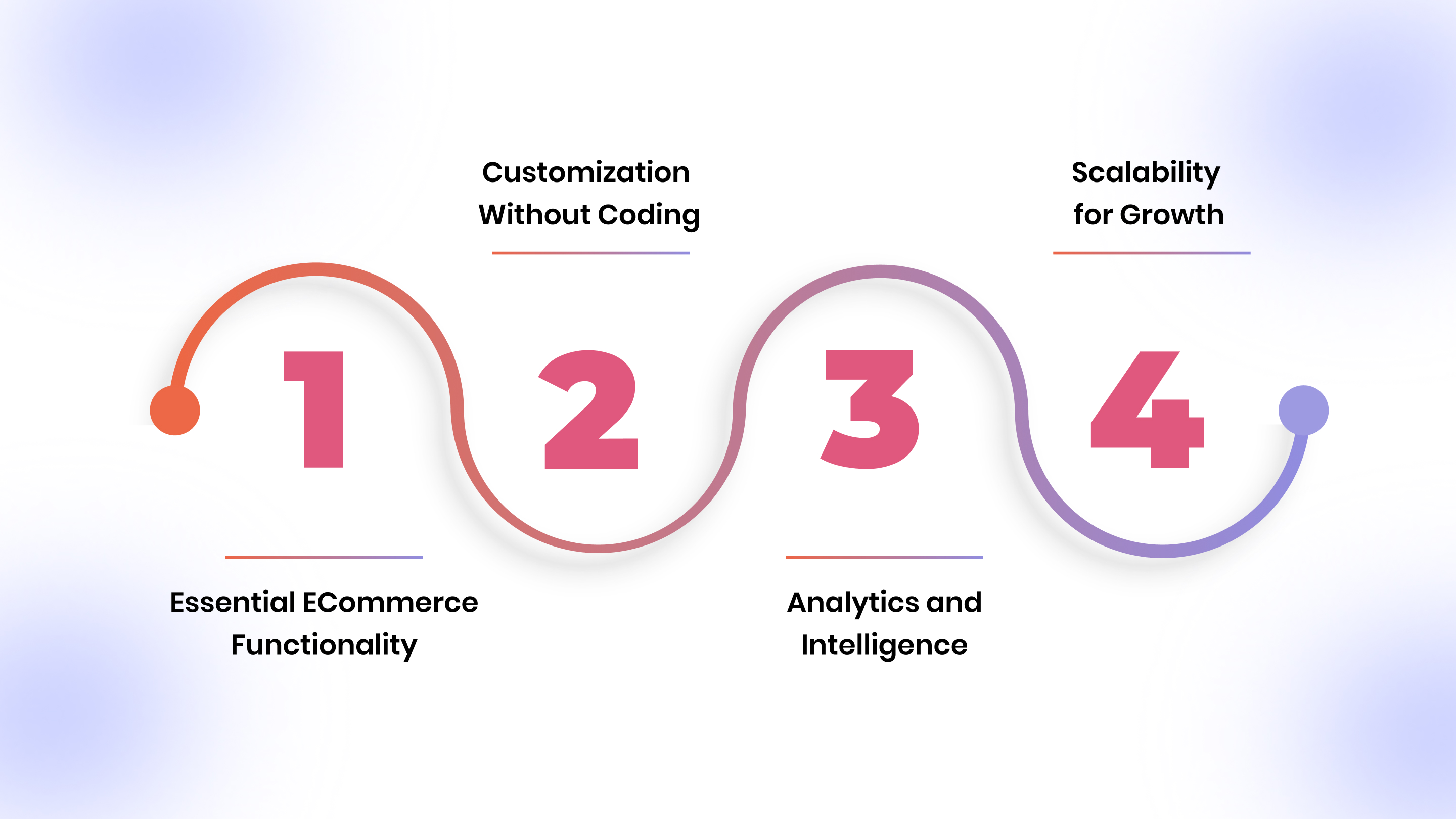
Essential eCommerce Functionality
Your mobile app needs seamless Shopify integration that syncs products, inventory, and orders in real-time. Customers expect their cart, wishlist, and account information to stay current across all touchpoints.
Push notification systems give you direct access to customers without relying on email deliverability or social media algorithms. This owned channel becomes your most cost-effective retention tool. Platforms like Appmaker offer push notification features to help manage campaigns and engagement efficiently.
Customization Without Coding
Drag-and-drop builders let you control design, layout, and user experience without technical skills. You should be able to match your brand identity completely, including colors, fonts, imagery, and navigation structure.
Conditional logic capabilities allow you to personalize experiences based on customer segments, purchase history, or behavior patterns. This level of customization traditionally required custom development. Platforms like Appmaker provide pre-built conditional blocks that simplify this process.
Analytics and Intelligence
Built-in analytics dashboards show you exactly how customers interact with your app. Track screen views, conversion funnels, push notification performance, and revenue attribution.
AI-powered insights can automatically analyze patterns and suggest optimization opportunities, giving you enterprise-level intelligence without hiring data analysts. For example, Appmaker’s John AI reads your app data and delivers actionable insights in plain language, helping you make smarter decisions faster
Scalability for Growth
Your affordable solution should grow with your business. Look for platforms that handle increased traffic, support multiple languages, and offer developer access when you eventually need custom integrations.
The right platform eliminates the need to rebuild as you scale, saving both money and the disruption of migrating customers to a new app.
Get all these features without compromise, see how Appmaker combines affordability with enterprise capabilities for Shopify stores ready to scale.
Build Your Shopify Mobile App Without the Enterprise Price Tag
Appmaker eliminates the traditional cost barrier while delivering native iOS and Android apps that convert.
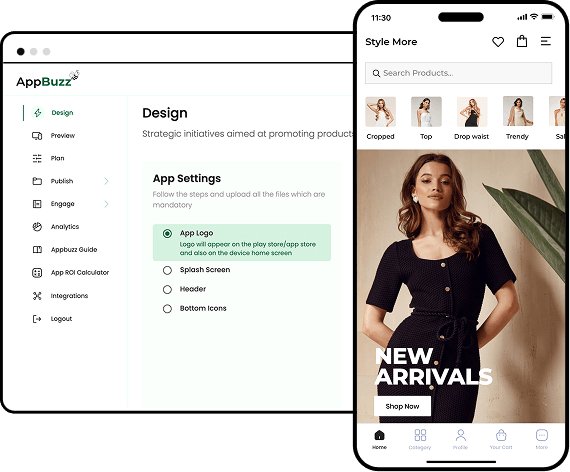
Appmaker Studio gives you a drag-and-drop interface to design your app without code. Customize screens and user flows to match your brand with native app performance. Everything stays in sync with Shopify in real time, from products to orders and customer data.
Eidolon AI instantly transforms your existing Figma designs or app screenshots into functional mobile app layouts, eliminating hours of manual setup. This AI-powered tool lets you launch with your exact brand aesthetic without tedious configuration.
John AI acts as your built-in analytics assistant, providing sales insights, revenue forecasts, and optimization recommendations directly in your dashboard, delivering enterprise-level intelligence without consulting fees or complex reporting tools.
Push notifications and Campaign Management come fully integrated, letting you segment customers, schedule targeted messages, and drive repeat purchases through your owned mobile channel. Create sophisticated campaigns without additional marketing platforms or per-message costs.
Code Blocks and Conditional Blocks enable reusable components and logic-based personalization that adapts your app experience based on customer behavior, purchase history, or cart value, all without custom development.
Analytics dashboard tracks every interaction, conversion, and revenue metric in one place. When you eventually need specialized functionality, developer access remains available for custom integrations, and you're never locked into limitations as your business scales.
Conclusion
Affordable mobile app development isn't about finding the cheapest option; it's about maximizing ROI at your current revenue stage. Shopify merchants generating $1M–$10M annually don't need six-figure custom builds. You need native apps that launch quickly, sync perfectly, and convert visitors into loyal customers.
No-code platforms deliver enterprise capabilities at SMB budgets. You get push notifications, AI-powered analytics, real-time Shopify syncing, and complete design control, without hiring development teams or waiting months for launch.
Appmaker turns your Shopify store into a conversion-optimized mobile experience in weeks, not months. Explore how no-code mobile app development can transform your mobile revenue. Start your free trial today.
FAQs
1. What's the most affordable way to build a mobile app for my Shopify store?
No-code platforms explicitly designed for Shopify offer the best value. You get native iOS and Android apps with real-time syncing, push notifications, and complete design control without hiring developers.
2. How long does it take to build an affordable mobile app?
No-code solutions launch in 2–4 weeks from start to app store approval. Custom development requires 6–12 months. The faster launch means you start generating mobile app revenue immediately, rather than losing conversions while competitors capture your mobile audience.
3. Do affordable mobile apps sacrifice quality or features?
Modern no-code platforms deliver fully native apps with enterprise features like AI-powered design tools, advanced analytics, push notification segmentation, and custom code access. You're not compromising quality, you're choosing efficient development infrastructure over expensive custom builds.
4. What ongoing costs should I expect after launching my mobile app?
No-code platforms typically bundle maintenance, updates, and hosting into monthly or annual subscriptions ($250–$1,500/month). Add $124/year for app store fees ($99 Apple + $25 Google). Custom apps require ongoing investment for maintenance, security updates, and OS compatibility fixes.
5. Can I migrate from an affordable solution to custom development later?
Yes, most no-code platforms allow data export and offer developer APIs if you eventually need highly specialized features. However, many established brands continue using no-code solutions because they scale efficiently without the maintenance burden of custom code. Start affordable and scale up only if the business truly demands it.