






















Online shopping has become a habit for many people in the United States. While many stores focus on first-time buyers, the real impact comes from those who return. Returning customers are more valuable; studies show they spend about 67% more than new buyers over time, boosting profits without extra marketing.
Higher repeat purchases help stores plan inventory better, rely less on paid ads, and build steadier revenue. Brands can also create stronger experiences and lasting relationships.
Understanding these patterns can turn occasional buyers into regular ones, supporting long-term growth. In this blog, we’ll explain what the repeat customer rate is, how to calculate it, why it matters, and strategies to improve it.
Overview
- Repeat customer rate measures how many first-time buyers return for a second purchase within a defined period, revealing loyalty, demand consistency, and revenue predictability.
- The average repeat customer rate for online retailers in 2026 is 28.2%, but top-performing categories like CBD reach 36.2%.
- Factors such as product type, pricing, customer experience, fulfillment reliability, brand trust, personalization, loyalty programs, and purchase frequency directly influence repeat buying behavior.
- Monitoring repeat customer behavior with surveys, sales analysis, loyalty participation, retention comparisons, and Net Promoter Score provides actionable insights into why customers return or churn.
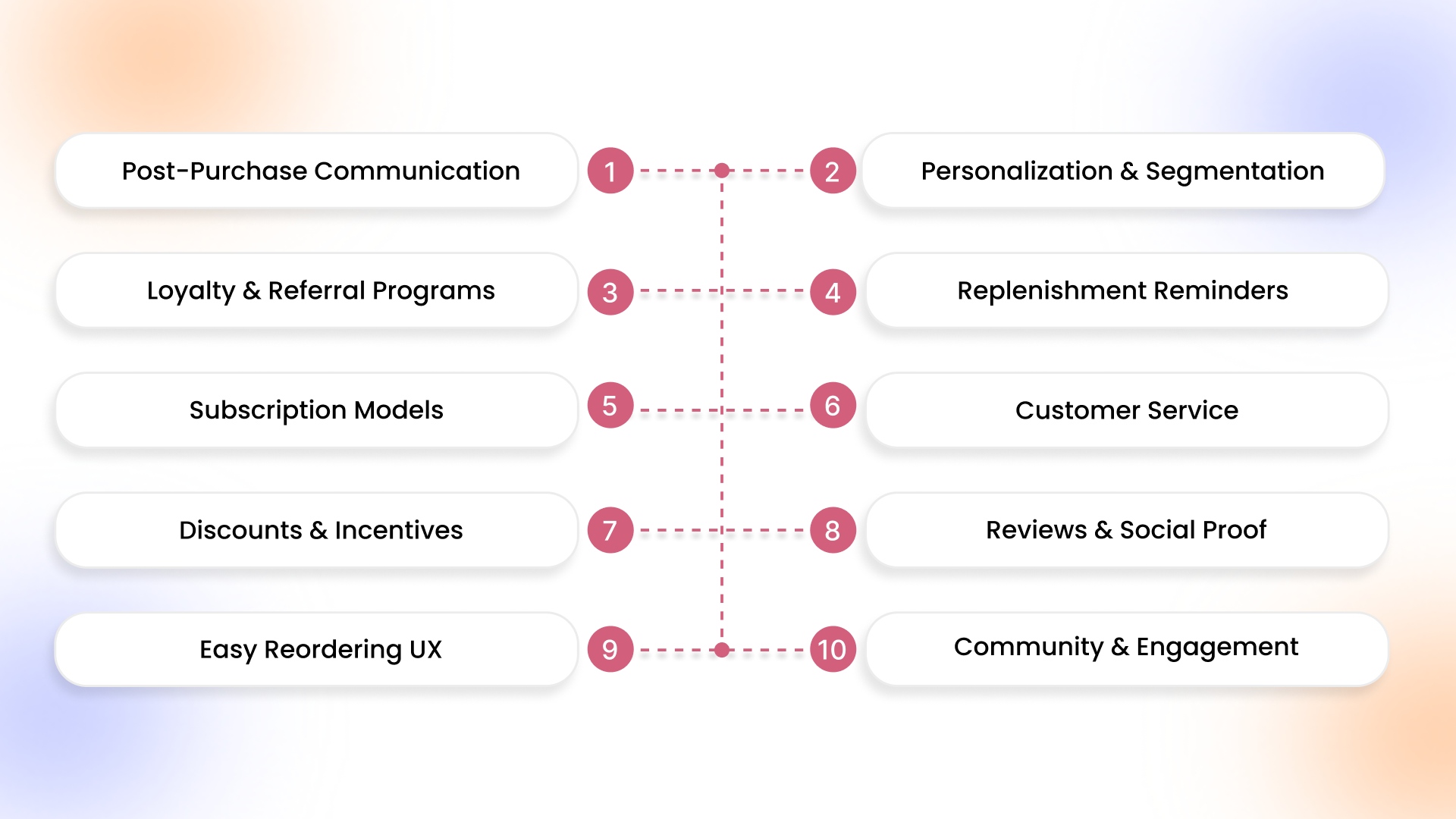
- Implementing strategies like post-purchase communication, segmentation, loyalty programs, replenishment reminders, subscription models, responsive customer service, discounts, social proof, easy reordering, and community engagement ensures higher repeat purchase rates.
What is the Repeat Customer Rate?
Repeat customer rate shows how many first-time buyers come back and purchase again within a defined period. In 2026, when ad costs are high and switching brands is effortless, this metric reveals real loyalty, demand consistency, and whether your store is building predictable revenue or chasing one-time sales.
Why Repeat Customer Rate Matters for Ecommerce Growth?
Repeat purchases directly influence how efficiently your ecommerce store grows. A strong repeat customer rate reflects satisfaction, trust, and sustainable demand. It helps brands reduce dependency on constant acquisition while improving profitability and forecasting accuracy.
Here’s how repeat customers drive measurable growth:
- Higher profitability: Returning buyers cost less to convert since awareness and trust already exist, allowing brands to improve margins without increasing marketing spend.
- Customer Lifetive Value (CLV) growth: Repeat purchases extend the customer lifecycle, increasing average order frequency and boosting overall lifetime value without requiring continuous acquisition efforts.
- Reduced Customer Acquisition Cost (CAC): When existing customers buy again, brands rely less on paid ads, lowering customer acquisition costs and improving overall marketing efficiency.
- Brand loyalty: Consistent repeat purchases indicate emotional connection and satisfaction, helping ecommerce brands build stronger relationships that competitors struggle to disrupt.
- Word-of-mouth & advocacy: Loyal customers naturally recommend products, generating organic referrals that expand reach while maintaining higher trust and conversion rates.
- Product feedback: Repeat buyers provide richer insights through reviews and interactions, enabling brands to refine products, messaging, and overall customer experience.
- Revenue stability: A reliable base of returning customers creates predictable sales patterns, helping brands plan inventory, manage cash flow, and forecast growth with confidence.
Having established why repeat customers are valuable, the next step is knowing exactly how to quantify their impact with a clear, actionable formula.
Also Read: How Much Does It Cost to Build a Shopify App in 2026?
How to Calculate the Repeat Customer Rate Formula?
There is a simple formula used to calculate the repeat customer rate, helping you understand how many buyers return after their first purchase.
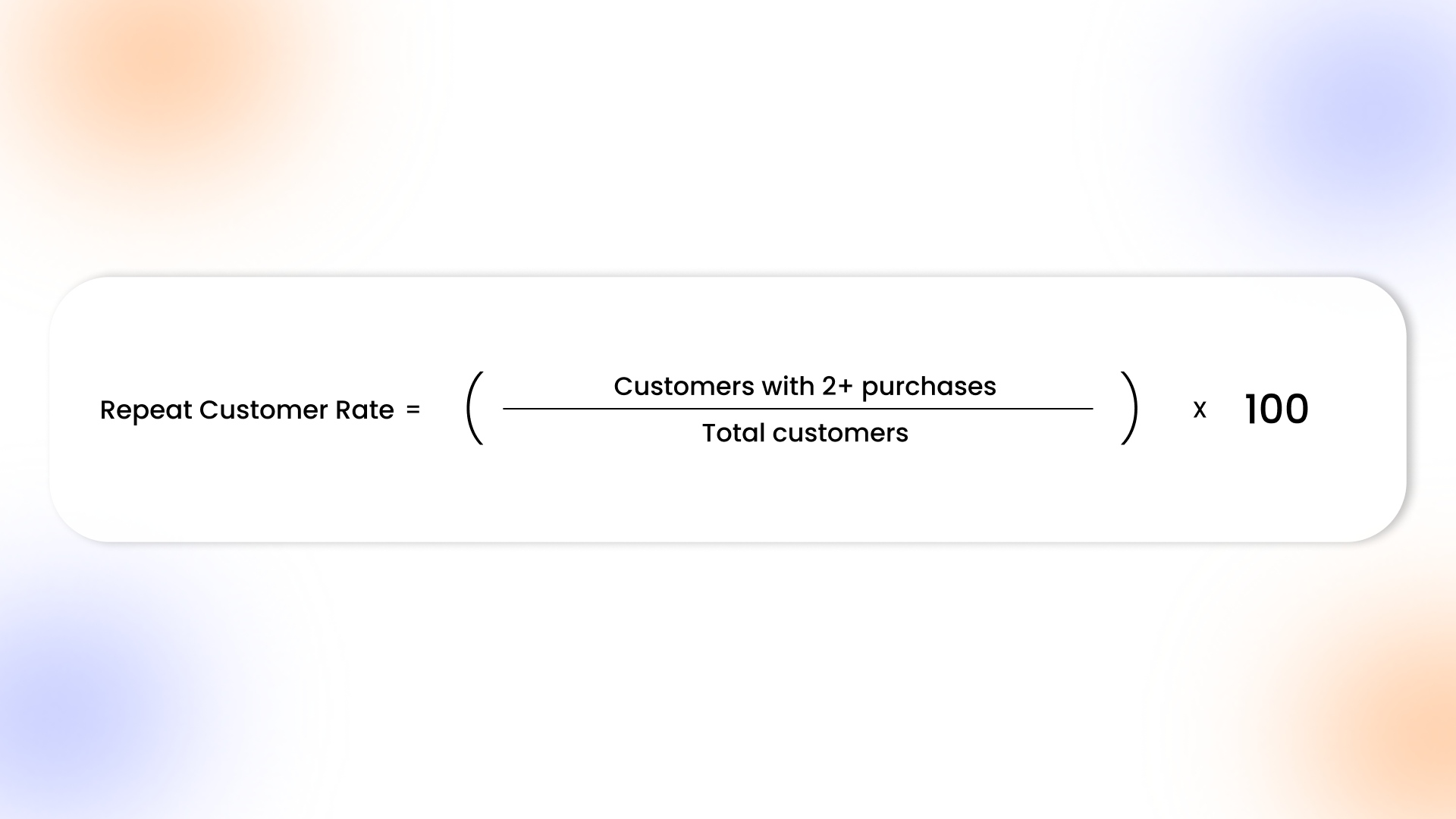
Repeat Customer Rate = (Customers with 2+ purchases ÷ Total customers) × 100
This calculation can be pulled directly from analytics tools like the Shopify analytics dashboard or Google Analytics, where customer purchase frequency and returning buyer data are already tracked.
To calculate it manually, follow the steps below:
- Start by selecting a clear timeframe (for example, one month or quarter).
- Next, count the total number of unique customers who made a purchase during that period.
- Then identify how many of those customers placed two or more orders within the same timeframe.
- Divide repeat customers by total customers and multiply the result by 100 to convert it into a percentage.
For example, if your store recorded 1,000 unique customers in a month and 280 of them purchased more than once, your repeat customer rate would be:
(280 ÷ 1,000) × 100 = 28%, showing that over a quarter of buyers returned.
Common Calculation Mistakes to Avoid:
- Counting orders instead of customers: Repeat customer rate measures unique buyers, not total transactions. Using order volume inflates loyalty metrics and hides real retention performance.
- Mixing timeframes: Comparing total customers from one period with repeat purchases from another creates distorted percentages and unreliable trend analysis.
- Including subscription renewals blindly: Auto-renewals can exaggerate true customer intent. Separate recurring billing from voluntary repeat purchases to measure authentic loyalty.
- Ignoring guest checkout duplication: Multiple emails or guest checkouts split customer identities, making repeat buyers appear new and underreporting retention.
- Failing to clean customer data: Duplicate profiles, canceled orders, or refunds can skew results, leading to inaccurate repeat rates and flawed growth decisions.
Once you know how to calculate the repeat customer rate, it’s important to benchmark your results against realistic, industry-informed expectations.
What Is a Good Repeat Customer Rate?
A healthy repeat customer rate varies depending on your business model and the products you sell. On average, online retailers see about 28.2% of customers returning for a second purchase, but top-performing categories exceed this benchmark.
CBD products consistently lead, with returning buyers reaching 36.2%, while high-performance sports and athletic accessories see around 33%. Consumables such as meal deliveries and supplements hover near 29%, reflecting frequent use and ongoing demand.
One-off purchases, including apparel and standalone food items like tea, tend to have lower repeat rates, with some as low as 20.9%, highlighting the impact of product type and usage patterns on loyalty.
After identifying what success looks like, let’s dive into the key factors that drive or affect repeat purchases for your ecommerce store.
Factors That Influence Repeat Customer Rate
Repeat purchases rarely happen by accident. They reflect how well your product fits ongoing needs, how frictionless the buying journey feels, and whether customers trust your brand enough to return without heavy incentives. Here’s what drives repeat purchases:
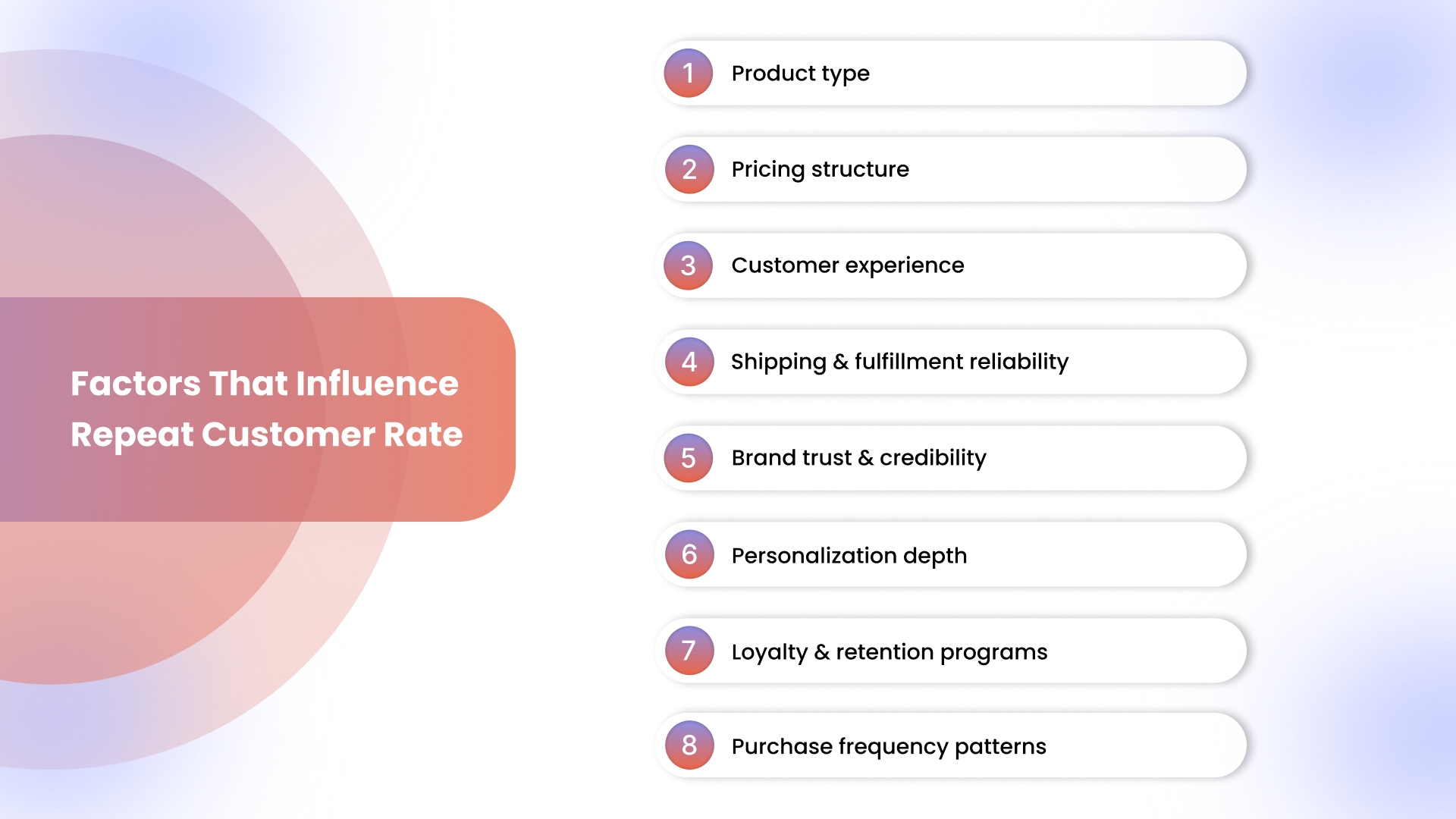
- Product type: Consumables, skincare, supplements, and fashion basics naturally generate higher repeat behavior. Meanwhile, high-ticket electronics or furniture depend on lifecycle-driven repurchase windows.
- Pricing structure: Transparent pricing, value-for-money perception, and strategic discounting influence whether customers view your brand as a long-term option or a one-time purchase.
- Customer experience: Smooth navigation, fast checkout, proactive support, and post-purchase communication determine whether the first purchase builds confidence or hesitation.
- Shipping and fulfillment reliability: Delays, damaged deliveries, or unpredictable timelines create friction that discourages second purchases even when product satisfaction remains high.
- Brand trust and credibility: Authentic reviews, consistent product quality, transparent policies, and reliable communication reduce perceived risk and increase repeat buying confidence.
- Personalization depth: Tailored product recommendations, behavior-based email flows, and relevant offers make customers feel understood, accelerating second and third purchases.
- Loyalty and retention programs: Rewards, points, referrals, and exclusive perks create switching barriers and provide customers with tangible reasons to stay within your ecosystem.
- Purchase frequency patterns: Products tied to routines, replenishment cycles, or lifestyle habits naturally encourage repeat transactions, making lifecycle timing critical for re-engagement strategies.
With the drivers of repeat buying in mind, the next step is learning how to track behaviors and why customers return or churn.
Ways to Track and Evaluate Repeat Customer Behavior
Calculating the repeat customer rate shows the outcome, but evaluating behavior explains why customers return or disappear. These methods reveal intent signals, satisfaction gaps, and early loyalty indicators beyond raw transaction data.
1. Customer surveys and feedback
Customer feedback often reveals the emotional and functional reasons behind repeat purchases. Patterns across reviews and post-purchase surveys can highlight satisfaction drivers, lingering frustrations, and subtle experience gaps shaping a customer’s willingness to return.
2. Sales and purchase data analysis
Purchase history tends to expose behavioral rhythms that aggregate metrics overlook. Reorder intervals, product pairings, and cohort movement gradually illustrate how customers integrate products into routines and where repeat buying momentum weakens.
3. Loyalty program participation insights
Engagement with loyalty programs frequently signals developing brand attachment. Redemption behavior, reward accumulation, and tier progression reflect whether customers view incentives as occasional perks or as part of an ongoing purchasing relationship.
4. Retention rate comparison
When the repeat customer rate is viewed alongside retention patterns, a clearer narrative emerges. The comparison helps distinguish customers maintaining steady engagement from those briefly reappearing before disengaging again.
5. Net Promoter Score as a predictive signal
Net Promoter Score captures sentiment that often precedes behavioral change. Variations in repeat purchasing across promoters and detractors can indicate advocacy-driven buying patterns while also revealing early warning signs of declining loyalty.
Now that you can monitor customer actions, let’s focus on proven strategies to convert insights into higher repeat purchase rates and stronger loyalty.
Also Read: 8 Mobile App Retention Strategies to Turn Users Into Regulars in 2026
Proven Strategies to Improve Repeat Customer Rate
Improving the repeat customer rate is rarely driven by discounts alone. It emerges from intentional lifecycle design, friction removal, and behavioral reinforcement across the post-purchase journey. The strategies below focus on practical retention mechanics that shape buying habits, reduce switching behavior, and convert first-time transactions into predictable revenue streams.
1. Post-Purchase Communication
The period immediately after delivery is where satisfaction, confusion, or regret shapes future purchase intent. Structured post-purchase communication helps customers extract value faster, prevents silent dissatisfaction, and keeps your brand relevant during product usage moments when repeat demand naturally builds.
How to implement:
- Send delivery-triggered emails with product usage walkthroughs and care tips
- Align follow-ups with expected product experience milestones, not generic timelines
- Surface troubleshooting guides before customers encounter friction
- Embed dynamic reorder links based on purchased SKU
- Use SMS selectively for time-sensitive replenishment prompts
2. Personalization & Segmentation
Repeat purchases rarely happen from mass messaging. They emerge when communication reflects product affinity, price sensitivity, and lifecycle stage. Behavioral segmentation ensures customers see relevant recommendations and prevents overexposure to promotions that weaken perceived product value.
How to implement:
- Build segments based on first-purchase category and price tier
- Track reorder intervals to predict replenishment windows
- Recommend complementary SKUs tied to actual usage patterns
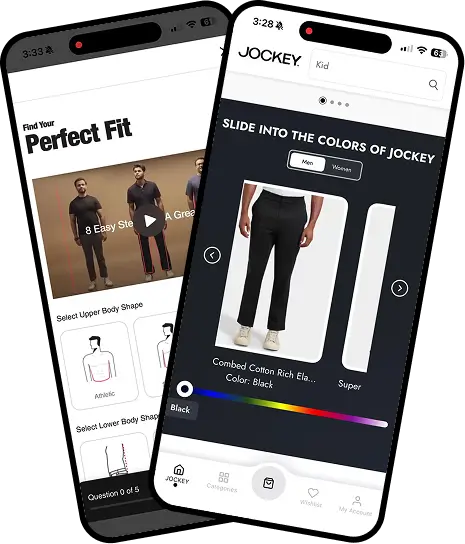
- Add dynamic in-app personalization using tools like AppMaker to display product recommendations based on past purchases and browsing behavior.
- Suppress campaigns for customers already in active repurchase cycles
3. Loyalty & Referral Programs
Well-designed loyalty programs shift customer perception from transactional buying to cumulative value accumulation. When rewards feel achievable and visible, customers delay competitor exploration and remain engaged through milestone progression and referral-driven validation.
How to implement:
- Tie point earning to repeat purchases rather than sign-up actions
- Display reward progress visibly across the app and checkout touchpoints
- Offer experiential perks like early product access instead of only discounts
- Reward referrals after verified second purchase, not first
- Simplify redemption to avoid perceived reward friction
3. Replenishment Reminders
Many repeat purchases depend on consumption timing rather than brand loyalty. Replenishment reminders act as behavioral nudges at depletion moments, reducing cognitive effort and preventing competitor substitution when customers realize they need the product again.
How to implement:
- Estimate depletion windows using SKU-level purchase frequency data
- Trigger reminders slightly before expected consumption exhaustion
- Include one-click reorder links prefilled with prior configurations
- Highlight inventory scarcity for frequently repurchased items
- Offer small refill incentives to reinforce habitual purchasing behavior
4. Subscription Models
Subscription models convert irregular repeat purchases into structured consumption cycles by embedding products into routines. Flexibility and transparency determine adoption, as rigid subscriptions often create resistance rather than convenience-driven loyalty.
How to implement:
- Allow adjustable delivery frequency based on consumption variability
- Provide skip, pause, and swap controls without penalty friction
- Offer subscription bundles for complementary repeat items
- Communicate billing and renewal timelines clearly in advance
- Reward long-term subscribers with tier-based benefits rather than recurring discounts
5. Customer Service
Support interactions significantly influence repeat intent because they reveal how brands respond when expectations break. Efficient, empathetic resolution prevents dissatisfaction from turning into churn and often strengthens trust beyond the original purchase experience.
How to implement:
- Maintain defined first-response and resolution time benchmarks
- Encourage agents with refund or replacement decision authority
- Follow up post-resolution to confirm product satisfaction
- Track repeat purchase behavior among customers with prior complaints
- Identify recurring support issues to prevent systemic churn triggers
6. Discounts & Incentives
Incentives can boost second purchases when aligned with lifecycle timing, but excessive promotions train customers to delay buying. Strategic discounting reinforces value perception without eroding brand positioning.
How to implement:
- Offer time-bound second purchase incentives after the first delivery satisfaction window
- Deploy win-back discounts only for inactive customer cohorts
- Use bundle pricing to increase perceived savings without markdown dependency. According to the Tapcart BFCM report 2025, bundles capture 85% of shoppers making impulse buy.
- Introduce spend-based tier incentives rather than flat discounts
- Limit the frequency of blanket promotions that condition price sensitivity
7. Reviews & Social Proof
Returning customers often explore new categories within the same brand, where uncertainty resurfaces. Social proof reduces hesitation by validating product credibility through real customer experiences and visible satisfaction signals.
How to implement:
- Highlight repeat customer testimonials, emphasizing long-term usage outcomes
- Surface-verified reviews tied to similar buyer profiles
- Feature user-generated content demonstrating real product context
- Promote top-rated products in lifecycle remarketing journeys
- Respond publicly to reviews to reinforce transparency and accountability
8. Easy Reordering UX
Repeat intent can disappear if the reordering process introduces friction. Simplified purchase paths reduce effort and support impulse repurchasing, especially on mobile devices, where convenience heavily influences buying behavior.
How to implement:
- Create dedicated “Buy Again” sections inside customer accounts
- Store payment and shipping preferences securely for returning buyers
- Enable express checkout options optimized for mobile users
- Reduce checkout steps for authenticated customers
- Optimize page speed across repeat purchase touchpoints
9. Community & Engagement
Community-driven engagement strengthens emotional attachment beyond product utility. Customers who feel part of a brand ecosystem often demonstrate stronger repeat behavior and organic advocacy without requiring constant promotional triggers.
How to implement:
- Build private communities centered around product usage and outcomes
- Encourage customer-generated content and peer interaction
- Feature loyal customers in brand storytelling initiatives
- Offer limited releases for engaged audience segments
- Facilitate conversations around product experiences and results
After exploring retention tactics, it’s essential to monitor complementary metrics that reveal which customers consistently drive revenue and respond best to engagement.
Also Read: Push Notification Strategy: 9 Best Practices to Drive Engagement in 2026
Related Metrics to Track with Repeat Customer Rate
Repeat customer rate alone doesn’t reveal which behaviors drive revenue or which segments require attention. By combining it with complementary metrics, you can pinpoint which customers consistently spend more, buy faster, and respond best to loyalty strategies, turning raw retention data into actionable insights.
Monitoring these metrics helps you design smarter campaigns, optimize product offers, and improve repeat purchase predictability:
- Customer Lifetime Value: Evaluate how much revenue each repeat customer contributes over time to prioritize high-value segments for retention campaigns.
- Average Order Value (AOV): Track the typical spend per order among repeat buyers to uncover upsell opportunities and adjust bundling or pricing strategies.
- Purchase Frequency: Measure how often customers repurchase within defined intervals to detect early churn risks or optimize replenishment reminders.
- Retention Rate: Monitor the percentage of customers who continue buying across months, providing insight into loyalty program effectiveness and post-purchase customer engagement.
- Customer Acquisition Cost: Compare acquisition spend with repeat purchase returns to ensure marketing investment is efficiently turning new buyers into profitable repeaters.
Once you know which metrics matter, let’s examine how AppMaker equips brands to turn insights into actionable, repeat-driving mobile experiences.
How AppMaker Can Help You Boost Repeat Customer Rate
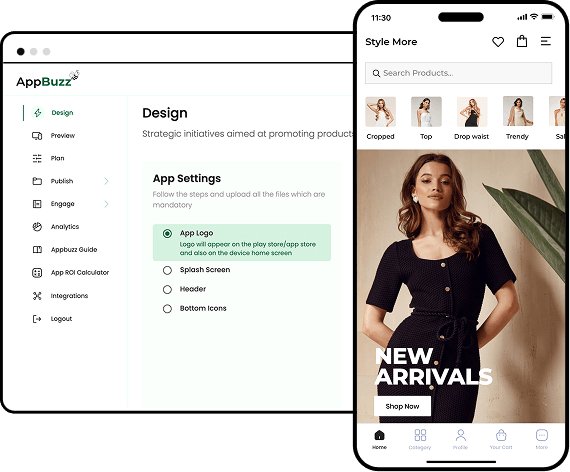
Turning first-time buyers into loyal customers depends on creating experiences that feel personal, timely, and effortless. AppMaker gives brands the tools to do this on mobile, helping you engage customers with the right message at the right moment. As a no-code platform, it allows even non-technical teams to quickly adapt and optimize their app experience, ensuring every interaction encourages repeat purchases and long-term loyalty.
AppMaker’s features work together to make this possible:
- Deep Customization: Design app layouts, banners, and product displays that emphasize high-value items for returning buyers.
- John AI: Access real-time insights into purchase patterns, top products, and customer engagement to inform targeted campaigns.
- Push Notifications: Automate timely reminders, promotions, and personalized offers based on actual customer behavior.
- Eidolon AI: Convert designs or screenshots into reusable app layouts, speeding up rollout of new campaigns.
- Code Blocks & Conditional Blocks: Add reusable logic and custom conditions to tailor experiences for different customer segments.
By combining these tools, brands can create mobile experiences that anticipate customer needs and naturally encourage them to come back.
Conclusion
Brands that focus on repeat customer rate see measurable growth in revenue, purchase frequency, and customer loyalty. Tracking buying patterns, segmenting audiences, and sending timely incentives can turn occasional shoppers into regular, high-value customers. Small changes in retention strategy often yield outsized returns on repeat purchases and overall profitability.
AppMaker can play an important role in this process. Our tools allow brands to deliver tailored experiences, timely engagement, and actionable insights that naturally encourage repeat purchases. We help businesses create mobile apps that align with customer expectations and buying habits without requiring technical expertise.
If you want to see exactly how AppMaker can help your brand drive loyalty and repeat purchases, reach out to us today!
FAQs
1. What are the pros of tracking the repeat customer rate?
Tracking repeat customer rate helps brands identify loyal buyers, optimize retention strategies, and measure the effectiveness of personalized campaigns. It highlights which products and engagement tactics encourage recurring purchases and long-term value.
2. What are the limitations of the repeat customer rate as a metric?
Repeat customer rate doesn’t capture purchase frequency, order value, or why customers return. It can overlook new buyer acquisition and may be skewed by bulk or subscription orders if not tracked carefully.
3. What is the difference between the repeat purchase rate and the retention rate?
Repeat purchase rate measures the proportion of customers making multiple purchases, while retention rate tracks the percentage of customers continuing to buy over time. Both indicate loyalty, but one emphasizes behavior, the other consistency.
4. What are the most common reasons customers don’t make a second purchase?
Customers may skip a second purchase due to a poor delivery experience. They may also skip if there's a lack of product relevance, weak follow-up communication, complicated checkout, or inadequate incentives to return, even if they initially liked the brand.