

























Paid ads keep getting more expensive, while repeat purchases remain harder to predict across your Shopify store. Mobile traffic dominates your sessions, yet conversion rates and retention often fail to match that volume. In the United States, e-commerce sales rose 5.1% year over year from Q3 2024 to Q3 2025, according to the U.S. Census Bureau.
Adjusted e-commerce sales reached $299.9 billion in Q1 2025, accounting for 16.1% of total retail sales nationwide. Growth at that scale means competition intensifies, and brands without stronger mobile ownership risk losing high-intent customers. In this article, you’ll understand how mobile app development can help turn mobile traffic into consistent, retention-driven revenue for your Shopify brand.
Quick Overview
- Mobile app development turns mobile traffic into higher conversions, stronger retention, and direct customer ownership beyond paid ads.
- Shopify brands generating steady revenue benefit most when mobile web conversions lag behind growing mobile traffic.
- Native apps outperform mobile web with higher conversion rates, faster checkout, push notifications, and personalized shopping experiences.
- AppMaker enables fast, no-code mobile app development with real-time Shopify sync, AI-driven personalization, and built-in revenue tools.
What Is Mobile App Development?
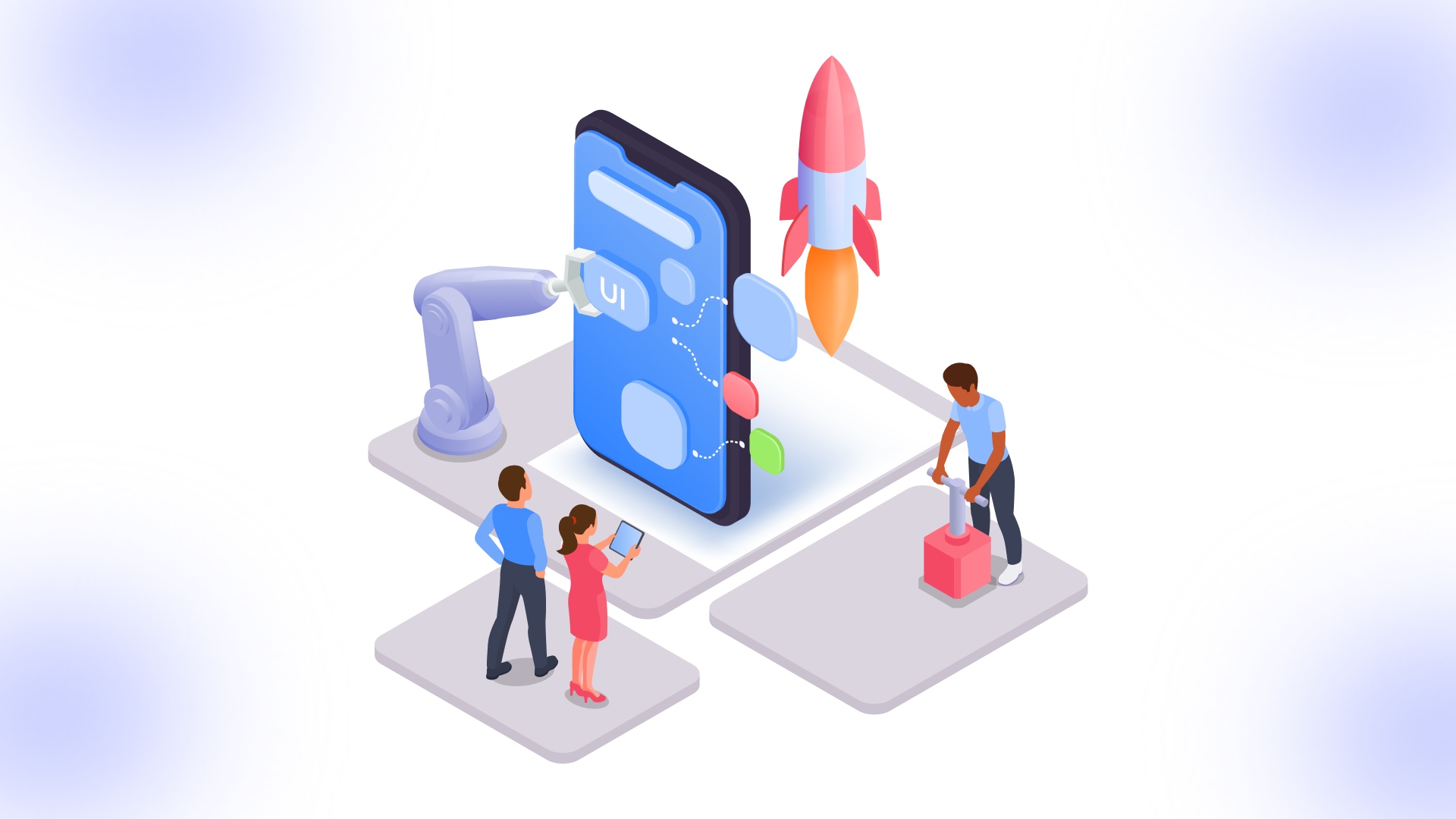
Mobile app development refers to the process of creating a native application that runs directly on smartphones and tablets. For a Shopify brand, it means building an app that connects to your store, syncs products, and enables smoother mobile purchasing.
Instead of relying only on a mobile website, mobile app development gives your brand a dedicated space for faster checkout, personalization, and direct customer engagement.
Why Shopify Brands Are Going Mobile First?
Mobile app development has become a strategic growth decision for Shopify brands facing rising acquisition costs and weaker mobile web conversions. Here are the key reasons driving this shift toward a mobile-first strategy.
- The Appmakers study report on the importance of mobile apps shows that nearly 9 out of 10 visitors shop through their mobile devices, making mobile performance critical to revenue stability.
- The study has also found that mobile apps outperform mobile web at every step, with mobile web converting around 0.5% to 1.5% compared to apps converting 3% to 8%.
- Higher conversion rates through mobile application development help reduce reliance on expensive paid advertising channels.
- Push notifications allow direct communication with customers, increasing repeat purchases without additional acquisition spend.
- Faster checkout experiences within mobile apps development reduce cart abandonment and improve average order value.
- Personalized experiences in developing mobile applications strengthen loyalty and extend customer lifetime value.
- Real-time data sync between store and app ensures consistent pricing, inventory accuracy, and smoother purchase journeys.
- Brands investing in mobile software development gain stronger ownership over customer relationships instead of depending on third-party platforms.
Recognizing the opportunity is important, yet timing matters just as much when deciding whether to invest in an app.
Signs Your Shopify Store Is Ready for an App
Scaling brands often explore mobile app development when growth slows despite steady traffic and ad spend. Here are clear signals that developing a mobile app makes strategic and financial sense.
- Consistent monthly revenue above seven figures indicates operational stability needed to support mobile apps development efforts.
- Mobile traffic accounts for most sessions, yet conversion rates remain lower than expected on the mobile web.
- Repeat purchase rates plateau despite strong acquisition campaigns and growing customer databases.
- Rising customer acquisition costs reduce margins, creating urgency for retention-driven mobile application development strategies.
- High cart abandonment on mobile suggests checkout friction that native mobile software development can reduce.
- Loyal customers frequently return to browse products, showing demand for faster access through a dedicated mobile app dev solution.
- Promotional campaigns generate short spikes in revenue but fail to sustain engagement without push notification capabilities.
- Operational workflows already handle consistent order volumes, allowing focus on developing mobile applications for long-term retention growth.
At this stage, AppMaker helps turn your Shopify store into a fully branded mobile app without developers, long timelines, or high upfront costs.
Custom Development vs App Builders
Choosing the right mobile app development path impacts cost, speed, control, and long-term scalability for your Shopify brand. Below is a direct comparison to help evaluate both approaches clearly.
Cost and timelines are only part of the equation, because the real impact comes from the features that actually drive revenue.
Features That Actually Drive Revenue
Not every feature in mobile app development increases profit, so focus should remain on functions that directly improve retention and conversions. Here are the revenue-driving features that matter most for your Shopify brand.
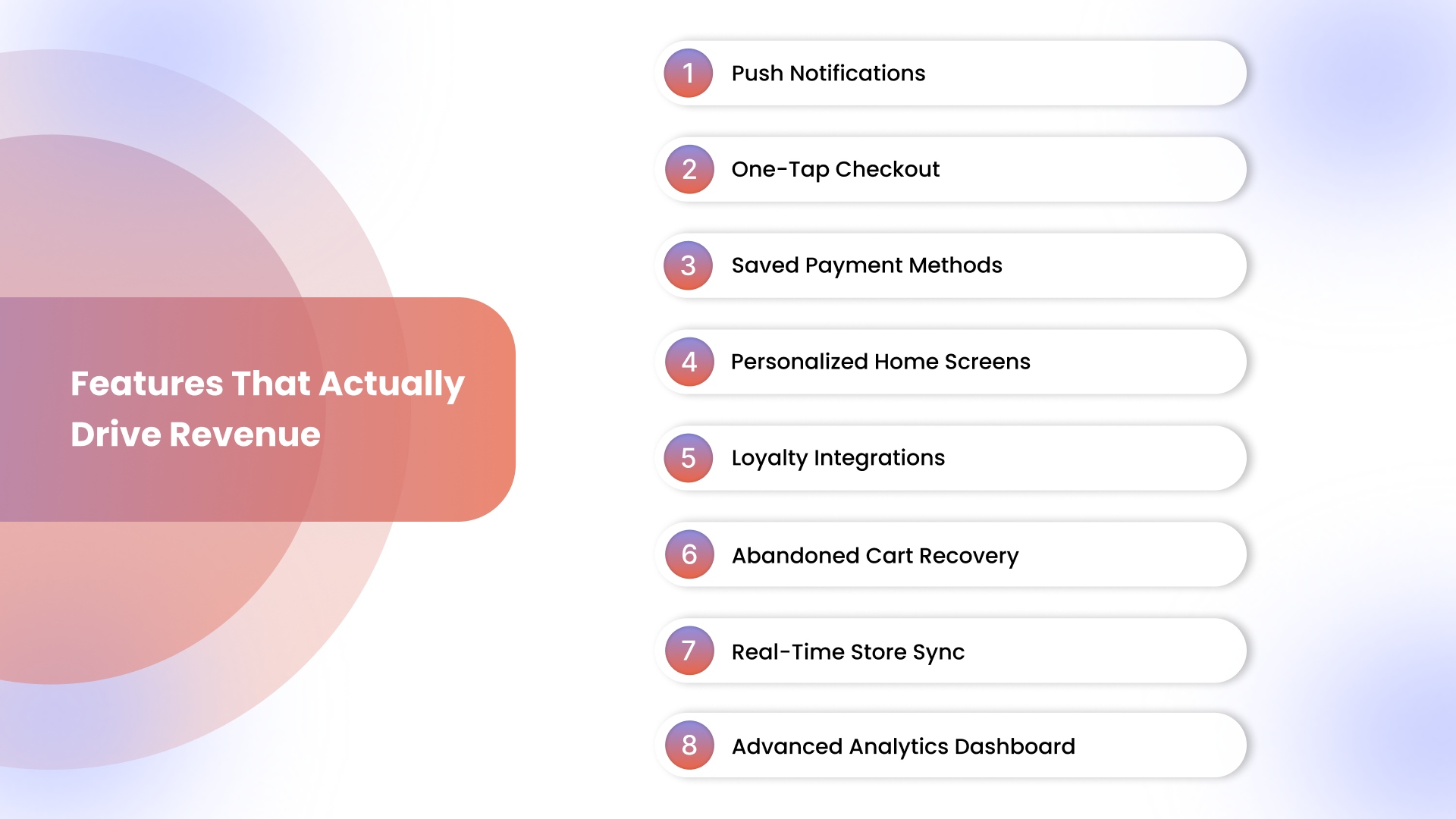
- Push Notifications: Direct messaging increases repeat purchases by re-engaging customers without additional advertising spend.
- One-Tap Checkout: Faster checkout in mobile apps development reduces friction and improves completed purchase rates.
- Saved Payment Methods: Stored payment details shorten buying cycles and increase impulse purchases during promotions.
- Personalized Home Screens: Dynamic content in mobile application development improves product discovery and boosts average order value.
- Loyalty Integrations: Built-in rewards systems encourage repeat transactions and extend customer lifetime value.
- Abandoned Cart Recovery: In-app reminders outperform email by capturing high-intent buyers in real time.
- Real-Time Store Sync: Accurate inventory and pricing prevent purchase drop-offs caused by mismatched product data.
- Advanced Analytics Dashboard: Data insights from mobile app dev efforts help refine campaigns and improve long-term revenue performance.
Knowing which features matter is one thing, but execution determines whether your app delivers measurable results.
Step-by-Step Path to Launching Your App
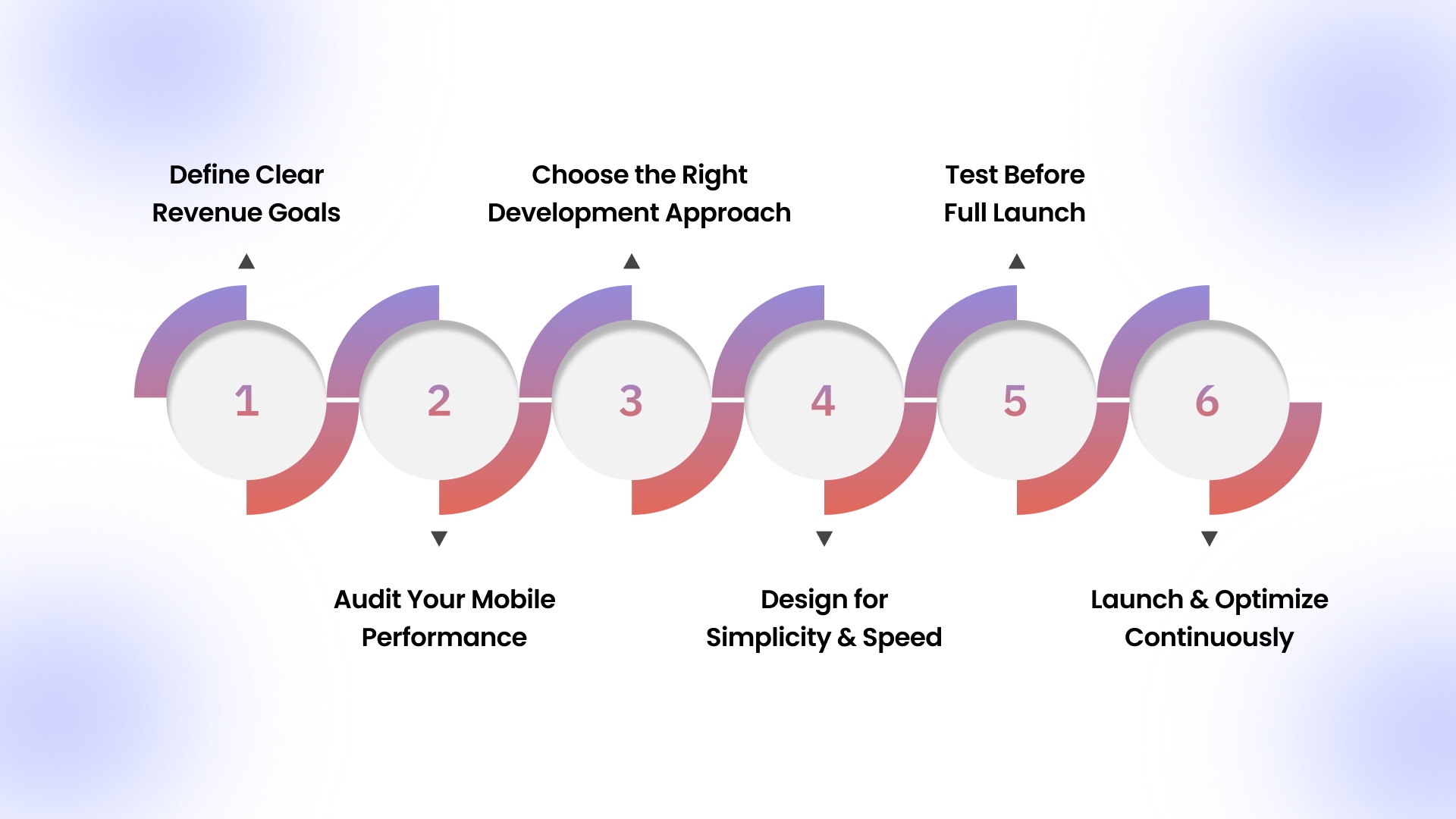
Launching a mobile app requires structured planning to ensure mobile app development delivers measurable revenue growth. Here is a practical roadmap to move from idea to execution without unnecessary delays.
Step 1: Define Clear Revenue Goals
Clear objectives ensure mobile app development supports measurable growth instead of becoming a side experiment. Here are the first actions to take before developing mobile applications.
- Identify revenue targets tied to retention, repeat purchases, and higher average order value.
- Analyze current mobile conversion rates to set realistic performance benchmarks.
- Calculate acceptable acquisition cost reductions through mobile app development strategies.
- Align internal teams around specific outcomes expected from mobile software development efforts.
Step 2: Audit Your Mobile Performance
A detailed audit reveals whether mobile traffic underperforms due to friction, slow checkout, or limited personalization. Below are key areas to examine before mobile application development begins.
- Review mobile conversion rates compared to desktop performance over recent quarters.
- Examine cart abandonment trends affecting revenue from high-intent mobile visitors.
- Assess loading speed issues impacting the development of mobile app performance on smartphones.
- Evaluate repeat purchase frequency among customers browsing primarily through mobile devices.
Step 3: Choose the Right Development Approach
Selecting the correct path prevents overspending and avoids unnecessary complexity during mobile app dev planning. Consider these evaluation factors carefully.
- Compare custom development costs against scalable no-code mobile app development solutions.
- Assess internal technical capabilities before committing to complex mobile software development projects.
- Evaluate launch timelines to ensure faster execution aligns with growth goals.
- Prioritize flexibility for updates without relying heavily on external development agencies.
Step 4: Design for Simplicity and Speed
User experience determines whether developing mobile applications converts visitors into repeat buyers. Focus on these core design priorities.
- Streamline navigation to reduce friction during product discovery and checkout.
- Implement one-tap purchasing to shorten the buying cycle significantly.
- Personalize home screens based on browsing behavior and purchase history.
- Maintain brand consistency across web and mobile app development channels.
Step 5: Test Before Full Launch
Controlled testing reduces risk and protects brand reputation during mobile app development rollouts. Apply these steps before public release.
- Conduct beta testing with loyal customers to gather actionable usability feedback.
- Monitor performance metrics during initial mobile app dev soft launches.
- Identify checkout or navigation errors impacting conversion rates early.
- Refine push notification timing to maximize engagement without overwhelming users.
Step 6: Launch and Optimize Continuously
Launching marks the beginning of revenue refinement rather than the end of developing mobile app efforts. Follow these optimization practices consistently.
- Track retention, conversion rates, and average order value after launch.
- Adjust push notification strategies based on real engagement data.
- Introduce feature updates gradually to test performance improvements.
- Use analytics insights to refine long-term mobile application development strategy.
Even with a solid roadmap, early missteps can delay growth and reduce returns, so let's look into that.
Common Mistakes First-Time Brands Make
Many Shopify brands rush into mobile app development without fully understanding cost, timing, or strategic priorities. Here are the most common mistakes that slow growth and reduce returns from developing mobile applications.
- Launching too early without stable revenue often leads to underutilized mobile app development investments.
- Treating the app as a website clone limits engagement and wastes mobile application development potential.
- Hiring expensive agencies without evaluating no-code mobile app development options increases financial risk unnecessarily.
- Ignoring retention metrics results in mobile app dev efforts that fail to improve lifetime customer value.
- Overbuilding features during early stages delays launch and complicates mobile software development cycles.
- Neglecting a push notification strategy reduces the primary revenue advantage of developing mobile apps.
- Skipping performance testing before launch damages user experience and lowers early adoption rates.
- Failing to align mobile application and development goals with long-term profitability weakens the overall growth strategy.
Avoiding these mistakes clears the path, which is where the right platform begins to make a difference.
Why AppMaker Is Built for Shopify Brands?
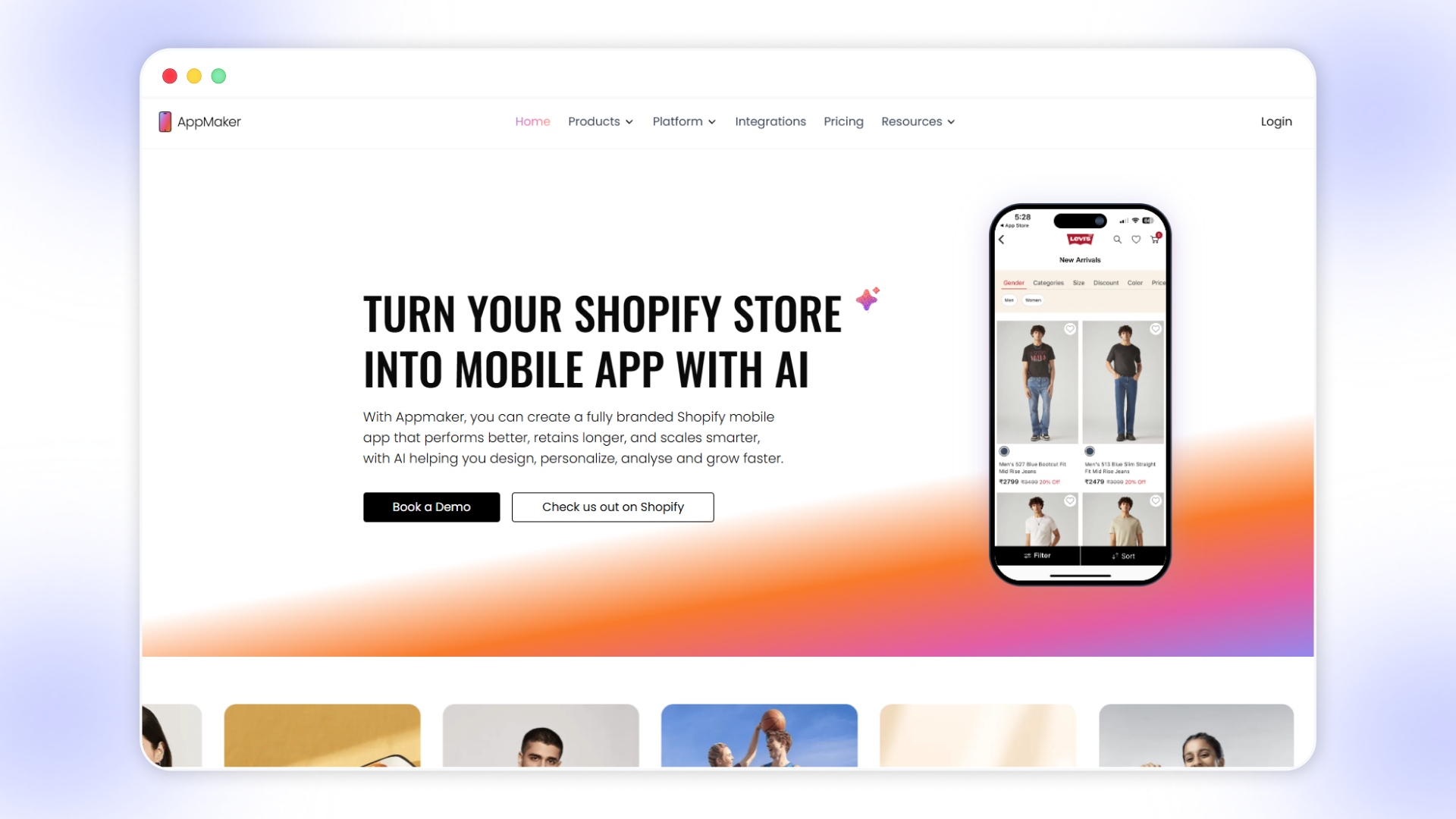
Growing Shopify brands need mobile app development solutions that reduce complexity while increasing retention and repeat revenue. Here is how AppMaker directly supports scaling ecommerce businesses like yours.
- No-Code Native App Builder: Launch fully branded iOS and Android apps without hiring developers or managing complex mobile software development cycles.
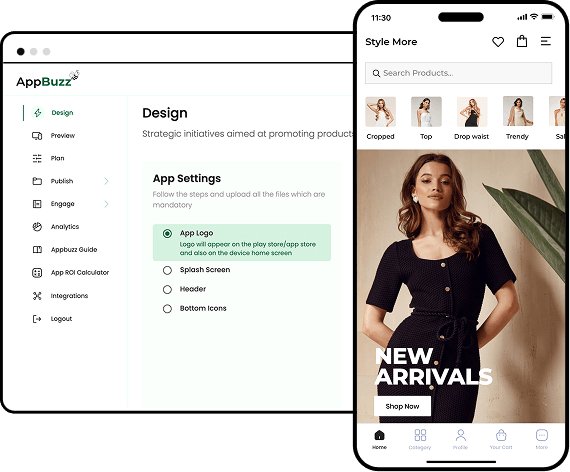
- AppMaker Studio: Control layouts, banners, product sections, and checkout flows using a drag-and-drop interface designed for non-technical teams.
- Real-Time Shopify Sync: Sync products, inventory, pricing, and customer data instantly to prevent mismatches during mobile app development.
- Eidolon AI Design Engine: Convert Figma files or screenshots into reusable app layouts, accelerating mobile application development without design bottlenecks.
- John AI Analytics Assistant: Access real-time sales insights, product trends, and customer behavior data directly integrated with Shopify analytics.
- Proven Revenue Impact: Brands across fashion, pet supplies, and personal care categories report up to 3x higher conversion rates and 70% app revenue contribution after launching with AppMaker.
- Rubik’s AI Personalization: Dynamically adjust layouts, product recommendations, and content based on user behavior to increase conversions and retention.
- Push Notification Campaigns: Drive repeat purchases through automated promotions, cart reminders, and product restock alerts without extra ad spend.
- Conditional and Code Blocks: Implement advanced customization and reusable logic blocks to support complex development of mobile application strategies.
- Pre-Built Extensions Marketplace: Add sticky carts, countdown timers, loyalty modules, and other revenue-focused tools without custom coding.
- Analytics and Insights Dashboard: Track conversion rates, average order value, retention metrics, and performance data to refine mobile app dev decisions.
- Developer-Friendly Access: Enable custom subscriptions, loyalty checkouts, and integrations while maintaining control over mobile application and development workflows.
- Rapid Launch and Iteration: Deploy faster than traditional mobile app development timelines and test updates in real time without dependency on agencies.
Choosing the right mobile app development partner determines whether your Shopify brand scales efficiently or remains stuck in slow, expensive growth cycles.
Wrapping Up
Mobile app development is no longer optional for scaling Shopify brands competing in a mobile-dominated market. Stronger retention, higher conversion rates, and direct customer ownership now define sustainable ecommerce growth.
AppMaker helps convert your Shopify store into a fully branded mobile app with faster launches, real-time sync, and built-in revenue-driving tools.
Ready to turn mobile traffic into predictable repeat revenue? Book a demo with AppMaker today and see how mobile app development can accelerate your Shopify growth strategy.
FAQs
How much does mobile app development cost for Shopify?
Mobile app development costs vary widely, ranging from high custom agency fees to affordable subscription-based platforms. App builders significantly reduce upfront investment compared to traditional custom development.Is mobile app development worth it for ecommerce brands?
Mobile app development becomes valuable when retention, repeat purchases, and customer lifetime value matter to your growth strategy. Native apps often outperform mobile websites in engagement and conversion rates.How long does it take to develop a mobile app for Shopify?
Custom development can take several months, depending on complexity and technical requirements. No-code platforms allow faster launches within weeks instead of quarters.Do I need a developer for mobile application development?
Developers are required for fully custom mobile software development projects. Modern no-code platforms allow non-technical teams to build and manage apps independently.What features should a Shopify mobile app include?
Revenue-focused features such as push notifications, personalized home screens, one-tap checkout, and loyalty integrations drive stronger results. Prioritizing retention tools ensures better long-term returns from mobile app development.