
























Running a Shopify store often feels like progress when traffic is steady, and products keep landing in carts. But for many merchants, that momentum breaks before checkout is complete. Shoppers browse, compare, add items, and then disappear.
Across ecommerce, studies show that the average cart abandonment rate sits around 70.22%, and Shopify stores are not immune to this pattern. With more mobile-first shoppers and faster buying decisions, even small checkout issues can cause high-intent customers to leave.
Unexpected shipping costs, slow checkout flows, or missing payment options quietly interrupt the purchase journey. Over time, these exits stack up and turn into lost revenue that’s easy to overlook.
In this blog, we’ll discuss how cart abandonment works on Shopify, why shoppers leave, and what you can do to reduce and recover lost sales effectively.
Overview
- Cart abandonment occurs before checkout and reflects browsing behavior, while checkout abandonment happens after contact details are entered, showing stronger purchase intent.
- Mobile traffic and unexpected costs, friction, or missing trust signals are the primary drivers of cart abandonment.
- Prevention strategies like simplifying checkout, showing shipping/taxes upfront, offering preferred payment methods, and adding trust signals reduce abandonment before recovery.
- Recovery campaigns using email, SMS, and push notifications are most effective when aligned with shopper intent, timing, and personalized messaging.
- Incentives and urgency work best when targeted to high-intent shoppers, avoiding default discounts and maintaining margin integrity.
What Is Shopify Cart vs Checkout Abandonment?
Shopify tracks cart and checkout abandonment separately because they signal very different buying intent. Cart abandonment happens before checkout and reflects browsing behavior, while checkout abandonment occurs after contact details are entered, indicating high purchase intent and stronger recovery potential.
Cart Abandonment vs Checkout Abandonment:
Now that you understand the difference between cart and checkout abandonment, it’s time to quantify the problem.
Also Read: Mobile App Conversion Rate: Key Insights and Strategies
How Big Is the Shopify Cart Abandonment Problem in 2026?
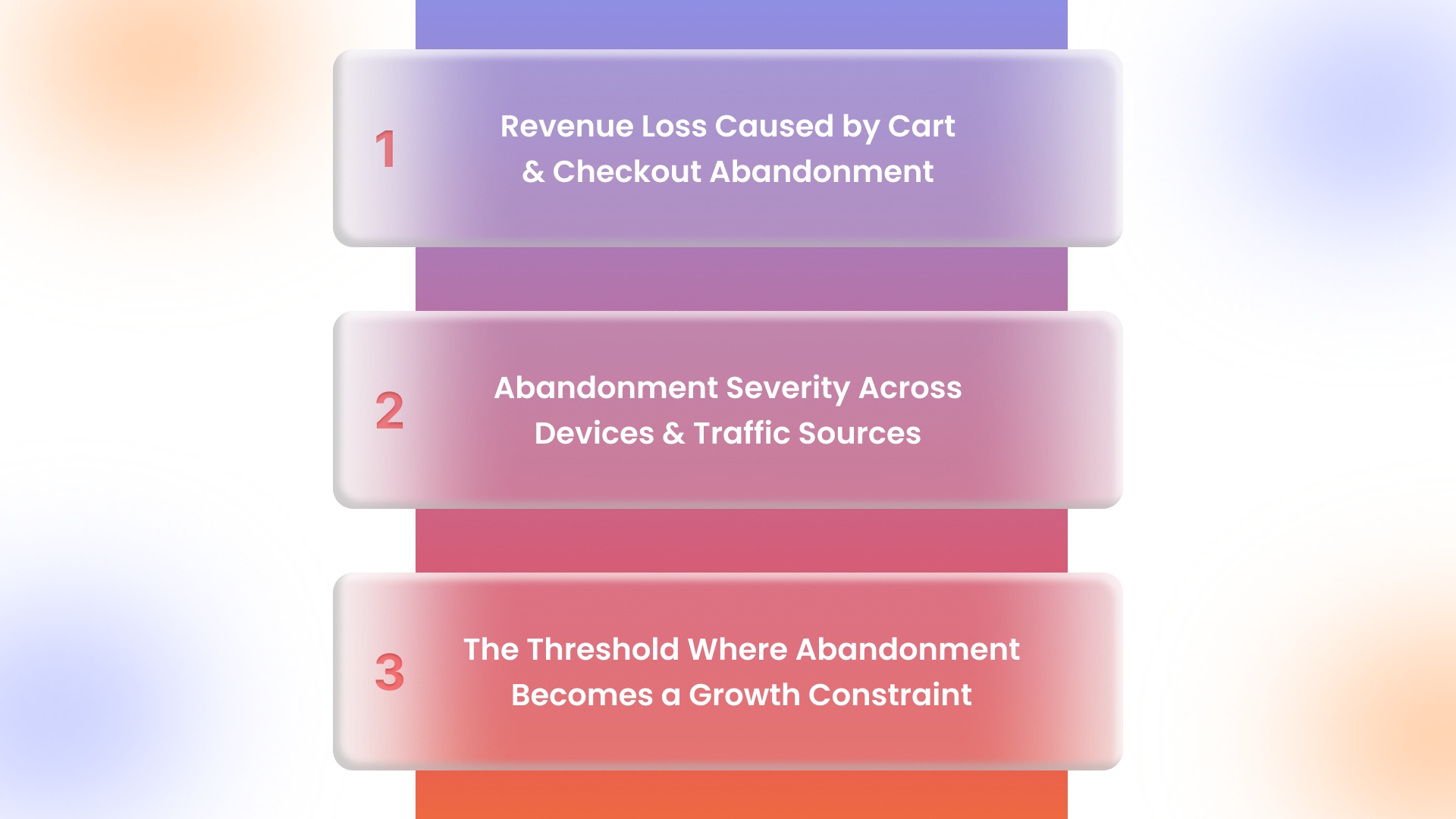
Cart abandonment becomes costly when lost checkouts compound faster than recovered ones. In 2026, rising mobile traffic and higher acquisition costs make abandonment less forgiving, especially for stores scaling paid channels or international shipping.
1. Revenue Loss Caused by Cart and Checkout Abandonment
Most Shopify stores lose 65–75% of cart value before checkout and 45–55% of initiated checkout revenue before payment completion. For a store generating $1M annually, unresolved abandonment typically represents hundreds of thousands in unrealized revenue.
2. Abandonment Severity Across Devices and Traffic Sources
Mobile accounts for the highest abandonment, often exceeding 80% at the cart level, while desktop converts more consistently. Paid traffic abandons less frequently than cold traffic, but each drop-off is more expensive due to sunk acquisition costs.
3. The Threshold Where Abandonment Becomes a Growth Constraint
Abandonment turns into a growth issue when high-intent users exit repeatedly at the same checkout step or when recovery rates remain flat despite increased traffic. At this stage, additional spend amplifies inefficiency instead of driving net revenue.
Having established the scale of lost revenue, the next focus is on why shoppers abandon their carts and what specific friction points drive these exits on Shopify.
Why Shoppers Abandon Carts on Shopify?
Cart abandonment on Shopify is usually friction-based, not intent-based. Most shoppers start with buying intent but exit when cost clarity, speed, or trust breaks at critical moments in the cart or checkout flow.
1. Unexpected Costs and Shipping Surprises
Abandonment spikes when shipping fees, taxes, or delivery timelines appear for the first time inside checkout. International duties, variable shipping rates, or slow fulfillment estimates often cause immediate exits because the final price no longer matches the expectation set on product pages.
2. Checkout Friction and Slow Mobile Experience
Mobile users abandon when checkout requires too many taps or reloads. Extra form fields, account creation prompts, payment redirects, or slow checkout rendering increase drop-offs, especially on Shopify themes that are not optimized for one-page or checkout flows.
3. Payment and Trust Breakdowns at Checkout
Shoppers leave when their preferred payment method is unavailable or when trust signals are missing. Lack of digital wallets, unclear refund policies, or weak security indicators cause hesitation at the payment step, where confidence matters more than persuasion.
4. Distractions and Low Purchase Urgency
Many Shopify carts are abandoned simply because shoppers get interrupted. Without a strong reason to return immediately, such as low stock, delivery cutoffs, or saved-cart reminders, the purchase fades from short-term memory and never resumes.
With the causes of abandonment clear, it’s important to examine Shopify’s built-in abandoned checkout automation and how it captures high-intent shoppers for recovery.
Shopify’s Abandoned Checkout Automation (What It Does and Doesn’t Do)
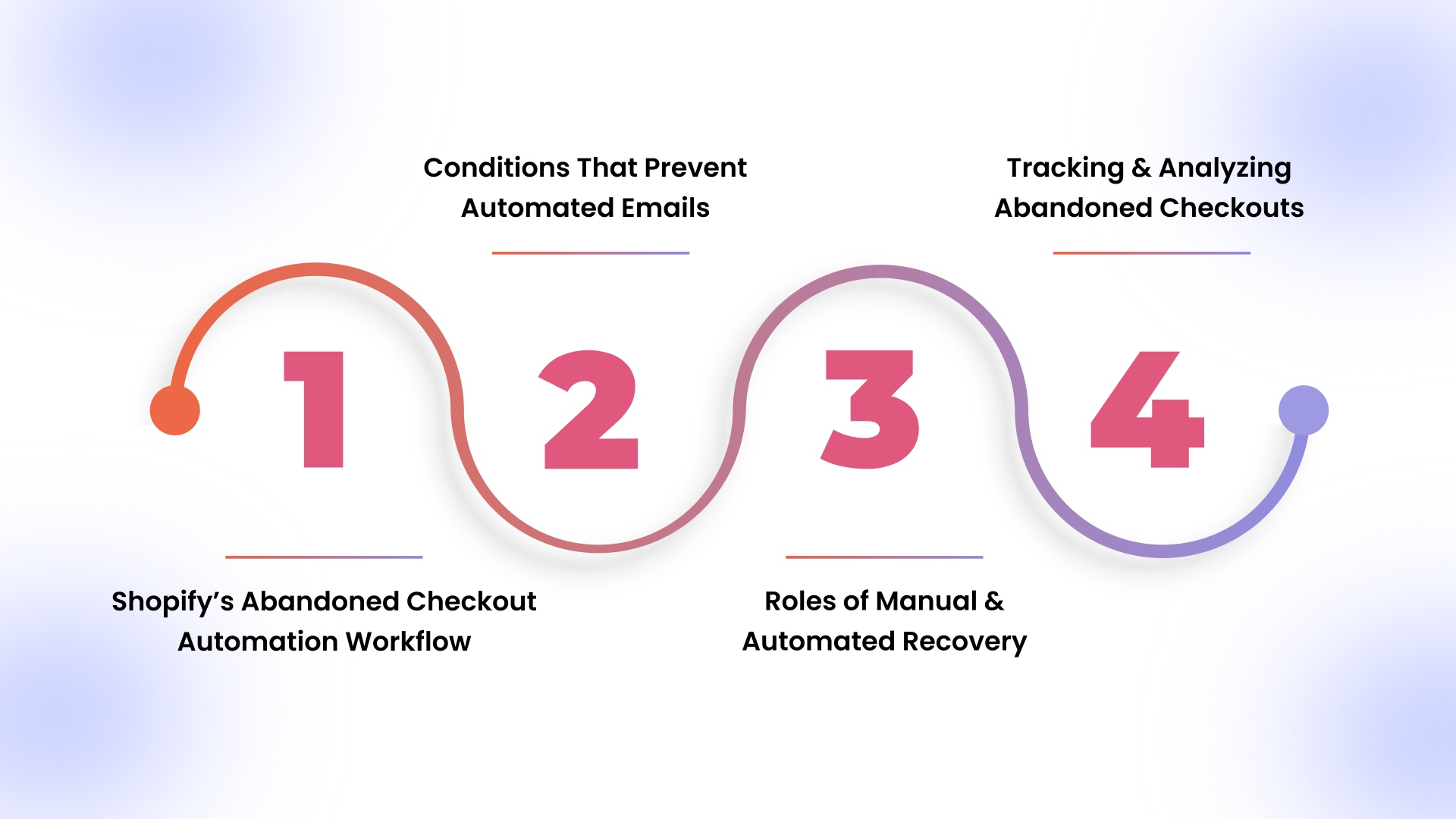
Shopify’s native automation captures high-intent abandoners and triggers recovery emails, but does not address all friction points or recover every lost checkout. Effective recovery requires combining automation with targeted fixes and strategic follow-up.
Shopify’s Abandoned Checkout Automation Workflow
When a shopper enters checkout and leaves without completing payment, Shopify generates an abandoned checkout record. Automated emails link directly to the pending checkout, reducing friction and encouraging return visits.
Conditions That Prevent Automated Emails
Recovery emails are skipped if the shopper does not provide contact information, completes checkout before the send window, opts out of marketing, or uses third-party checkout/payment flows that bypass Shopify’s tracking.
Roles of Manual and Automated Recovery
Manual recovery targets high-value or complex orders where personal outreach improves conversion. Automated flows handle volume efficiently. Using both methods strategically ensures maximum recovery while retaining control over high-impact checkouts.
Tracking and Analyzing Abandoned Checkouts
Shopify dashboards show abandoned checkout counts, email delivery status, and recovered revenue. Patterns of repeated drop-offs at the same checkout step indicate friction points. Overall recovery metrics highlight workflow effectiveness and areas for improvement.
Understanding automation sets the stage for proactive prevention. Let’s dive into step-by-step methods to reduce cart abandonment before even sending recovery reminders.
How to Reduce Shopify Cart Abandonment?
Prevention outperforms reminders. Fixing the barriers that make shoppers exit ensures that when recovery campaigns run, they target only recoverable high-intent users, maximizing ROI while protecting margins. Here are some steps you must follow to stop cart abandonment:
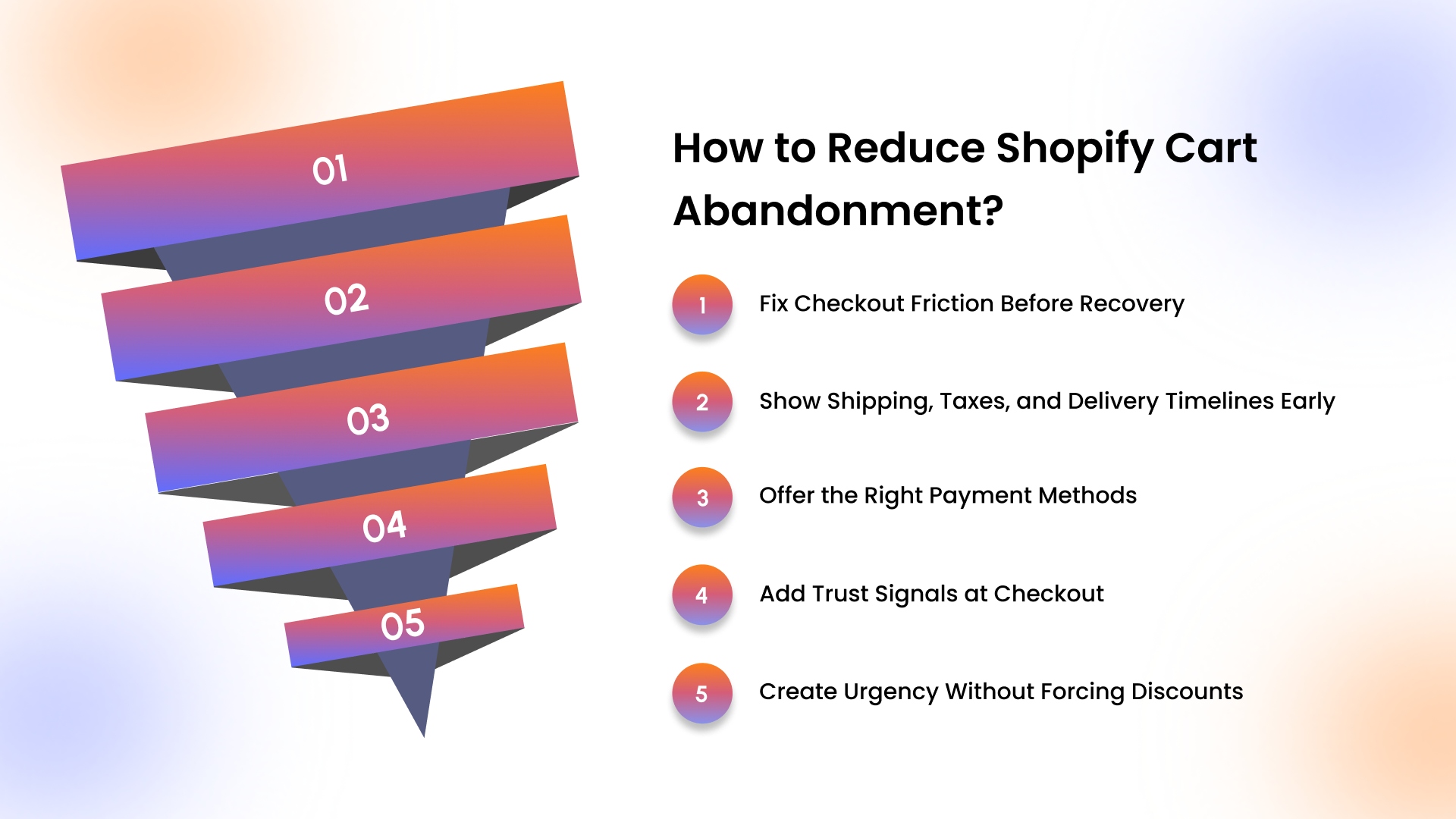
Step 1: Fix Checkout Friction Before Recovery
Complex checkout flows, mandatory account creation, and extra form fields are common friction points that frustrate shoppers, especially on mobile, leading to high-intent drop-offs. Simplifying the process improves flow and reduces avoidable abandonment.
Here’s how to execute it:
- Enable guest checkout
- Limit form fields to essentials
- Remove unnecessary pop-ups or step redirects
- Optimize checkout speed for mobile
Step 2: Show Shipping, Taxes, and Delivery Timelines Early
Unexpected costs are the top abandonment trigger. Late-stage tax, duty, or shipping revelations break trust and prompt exits, making transparency at the earliest touchpoint critical for purchase confidence.
Here’s how to execute it:
- Display estimated shipping on product and cart pages
- Show tax/duty estimates for international shoppers
- Add expected delivery ranges per item
- Highlight any shipping promotions upfront
Step 3: Offer the Right Payment Methods
Abandonment spikes when shoppers cannot use their preferred payment options. Aligning available methods with audience preferences, including mobile wallets and installment plans, ensures smoother conversions and higher order values.
Here’s how to execute it:
- Include Apple Pay, Google Pay, and other digital wallets
- Offer Buy Now Pay Later options for higher AOVs
- Show accepted payment logos prominently
- Test region-specific payment methods for international buyers
Step 4: Add Trust Signals at Checkout
Shoppers hesitate when they perceive risk. Missing return policies, unclear support links, or absent security indicators can derail intent even after checkout initiation. Visible trust elements reinforce confidence and reduce friction.
Here’s how to execute it:
- Display return/refund policies on checkout page
- Add live chat or support contact links
- Show SSL and security badges
- Highlight buyer protection or money-back guarantees
Step 5: Create Urgency Without Forcing Discounts
Discount-driven urgency erodes margins and conditions buyers to delay purchases. Subtle triggers like stock scarcity, delivery deadlines, or timed bonuses create immediate motivation without compromising profitability.
Here’s how to execute it:
- Use “only X left in stock” indicators
- Show order cutoffs for fast delivery
- Offer free gifts or bonuses tied to timing
- Avoid default percentage discounts
Once checkout friction and transparency issues are addressed, the next step is designing effective recovery campaigns using email, SMS, and push notifications.
Also Read: Mobile App Native vs Hybrid: Differences, Pros & Best Choice in 2026
How to Recover Abandoned Carts Using Email, SMS, and Push?
Recovery works only when the right channel meets the shopper’s stage and intent. Timing, relevance, and context determine whether the reminder nudges a purchase or becomes ignored, wasted effort, or even a negative brand impression.
1. Abandoned Cart Emails – Timing and Content That Converts
The first recovery email should highlight the exact products left in the cart, provide a direct checkout link, and briefly address potential concerns like shipping or returns. Early helpful emails outperform immediate discount-driven messages and preserve margins.
2. SMS Recovery – When It Works Best
SMS drives conversions for high-intent shoppers who have opted in. Short, actionable messages with direct checkout links create urgency without friction, making them ideal for limited-stock alerts or same-day shipping reminders on mobile devices.
3. Push Notifications for Cart Recovery
Push notifications target returning users who have granted app or browser permissions. These notifications are shown to achieve 85% higher engagement than email. They are subtle, non-intrusive reminders for items left behind, ideal for nudging repeat buyers without relying on email or SMS, especially for app-engaged customers.
Each channel works differently. Email handles broad, first-touch recoveries. SMS triggers immediate responses for urgent or high-value abandonments. Push drives repeat-purchase engagement.
Besides, recovery campaigns become more effective when paired with the right incentives. The following strategies ensure abandoned carts convert without eroding margins unnecessarily.
Incentives That Actually Convert Abandoned Carts
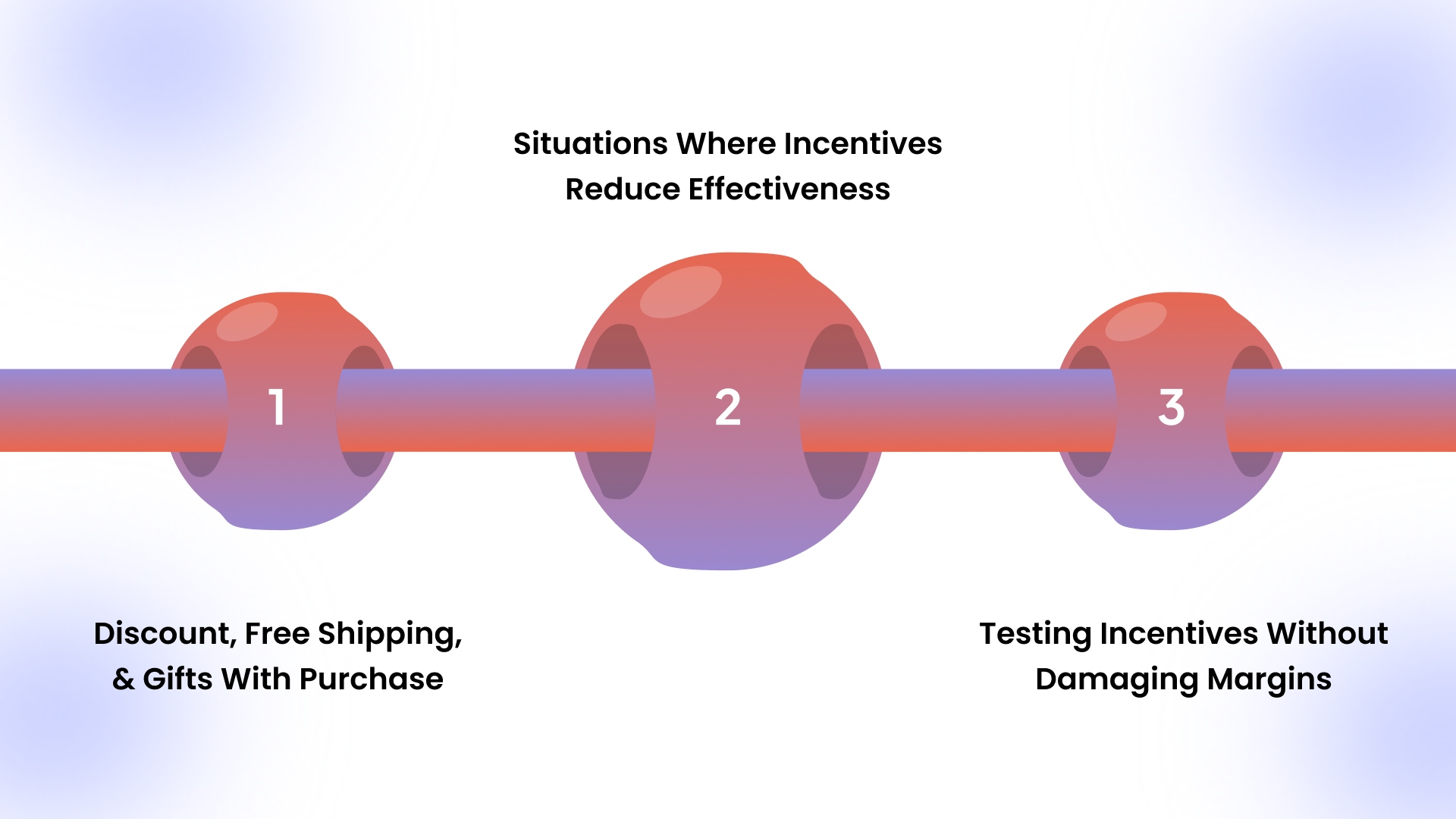
Incentives work only when aligned with shopper behavior. Misused incentives encourage deliberate abandonment, erode margins, and condition buyers to wait for offers rather than convert on intent. Here’s how each one helps:
1. Discount, Free Shipping, and Gifts With Purchase
Free shipping drives higher conversion for mid-ticket orders, while gifts increase perceived value for lifestyle or branded products. Percentage discounts are best reserved for high-value, high-intent abandoners, avoiding habitual reliance and margin erosion.
2. Situations Where Incentives Reduce Effectiveness
Low-margin items, first-time browsing, or fast-moving stock rarely benefit from incentives. In these cases, clarity on pricing, delivery, and product benefits outperforms discounts or gifts and maintains normal purchasing behavior.
3. Testing Incentives Without Damaging Margins
Selective incentive testing involves tracking recovered revenue, repeat purchase patterns, and post-recovery engagement. If recovery occurs only when discounts appear, the approach signals dependency and requires adjusting thresholds or alternative value-adds.
With incentives optimized, we can now talk about flow optimization; tuning timing, personalization, and testing to ensure every recovery effort yields measurable, repeatable revenue gains.
Optimizing Your Abandoned Cart Recovery Flow
Recovery optimization drives sustained revenue improvements. Fine-tuning timing, sequencing, messaging, and personalization ensures high-intent shoppers return without oversaturating channels or eroding margins, creating measurable, repeatable gains over time.
1. Recovery Timing and Sequencing
Effective flow space communications are strategically, avoiding simultaneous email, SMS, or push sends. Early reminders target high-intent abandoners, while follow-ups are staggered to prevent fatigue and maximize engagement, aligning with checkout behavior patterns and device usage.
2. Personalization Beyond First Name
Shoppers respond to references that tie directly to their abandoned products, categories, or intended use. Highlighting specifics like product features, collections, or previous purchase patterns creates relevance and increases the likelihood of return and completion.
3. A/B Testing Recovery Messages
Testing one element at a time, message timing, subject line, tone, or incentive, allows clear attribution of impact. Iterative improvements compound, revealing optimal combinations that consistently increase recovered revenue and enhance shopper experience without over-communication.
Nevertheless, recovery optimization performs best when friction is removed at the platform level, not just the message level.
How AppMaker Helps Reduce Shopify Cart Abandonment?
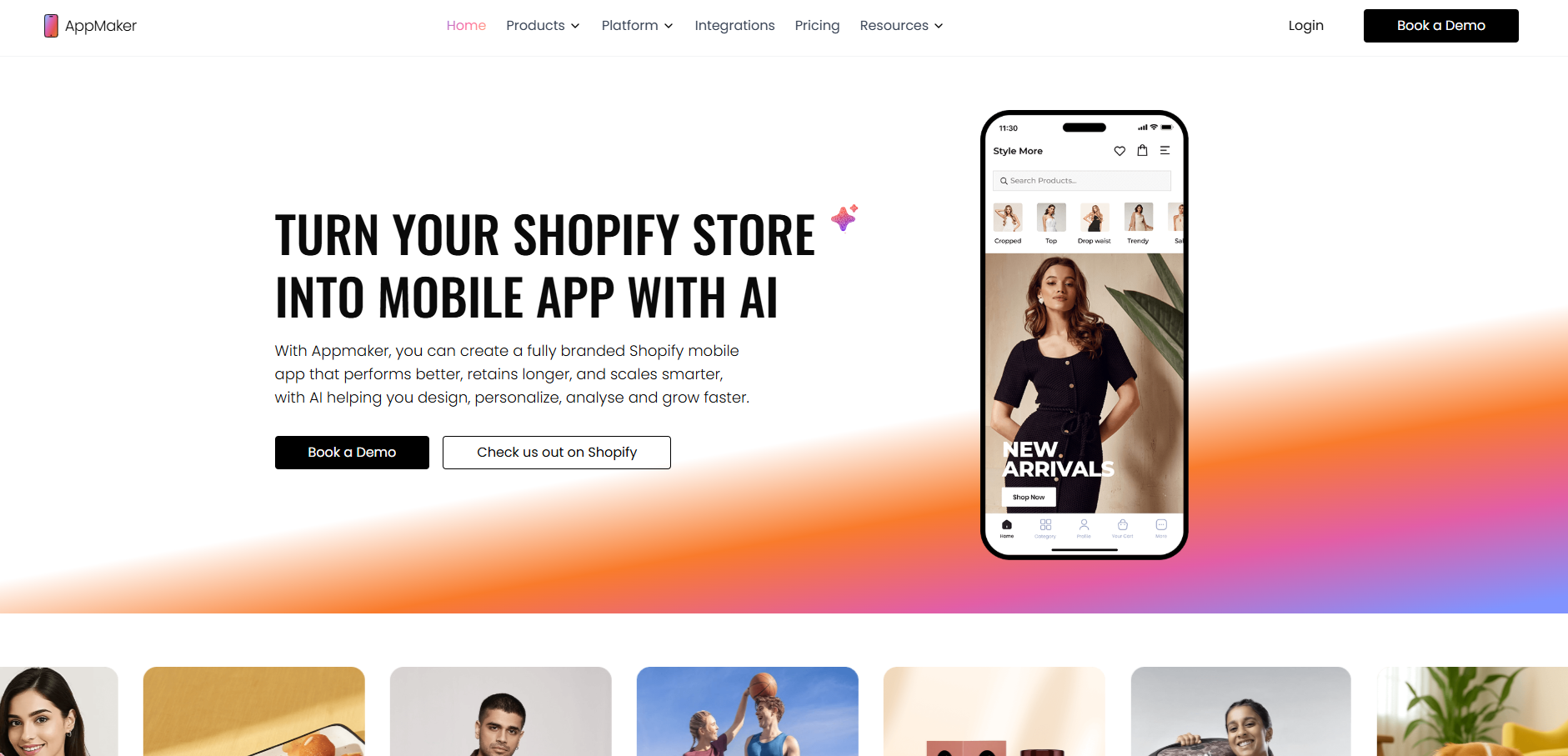
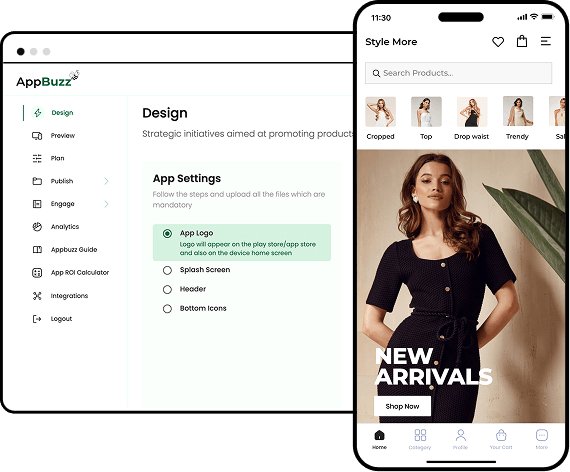
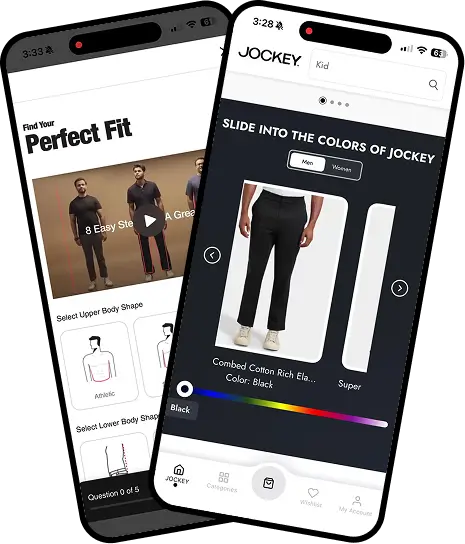
AppMaker helps Shopify brands reduce cart abandonment by turning their stores into fast, conversion-focused mobile apps. In 2025, AppMaker-powered apps generated over ₹1,000 Cr+ in GMV, showing how app-led shopping removes mobile friction and brings high-intent shoppers back to checkout.
- Native mobile app checkout: Transforms your Shopify store into a high-speed app flow that reduces mobile drop-offs and checkout friction
- Abandoned cart push notifications: Send timely, behavior-triggered reminders that bring shoppers back at peak intent moments
- Real-time Shopify sync: Keeps carts, inventory, pricing, and checkout status instantly aligned between store and app
- Personalized recovery journeys: Uses shopper behavior to tailor messages, timing, and product reminders for higher recovery rates
Instead of losing high-intent shoppers at checkout, AppMaker helps Shopify brands win them back before the sale slips away.
Also Read: Complete Guide to Ecommerce App Development Cost in 2026
Conclusion
Cart and checkout abandonment on Shopify is high, with mobile traffic driving higher rates. Understanding intent, identifying friction points, and targeting recoverable shoppers allows merchants to prevent losses, optimize flows, and maximize recovered revenue without eroding margins.
AppMaker enhances this process by converting Shopify stores into fully branded native apps with automated push notifications, SMS/email integration, real-time Shopify product sync, and behavior-driven personalization. Shoppers see tailored layouts, product recommendations, and timely reminders based on their interactions, reducing checkout friction and complementing existing recovery campaigns for measurable increases in completed orders and overall revenue.
To recapture lost sales and simplify abandoned cart recovery, contact us today and turn your Shopify store into a mobile-first experience that maximizes every checkout opportunity.
FAQs
1. What is the cart abandonment rate for Shopify?
Shopify stores typically experience 65–75% cart abandonment, with checkout abandonment slightly lower at 45–55%. Rates are higher on mobile, for complex checkouts, or when shipping and taxes appear late.
2. What are Shopify's abandoned cart recovery features?
Shopify offers automated abandoned checkout emails, recovery tracking dashboards, and manual recovery options. These tools link shoppers back to their pending checkout, enabling both automated and targeted outreach for high-intent abandoners.
3. How do I protect cart abandonment on my Shopify store?
Prevent abandonment by simplifying checkout, showing shipping and taxes upfront, offering preferred payment options, adding trust signals, and creating urgency. Combine prevention with recovery emails, SMS, or push notifications for best results.
4. How do I A/B test different ETA messages on my Shopify store to find what reduces cart abandonment?
Run controlled tests varying estimated delivery messages across sessions, track completed checkouts, and compare recovery rates. Test one variable at a time to identify which ETA phrasing or timing drives the most conversions.