

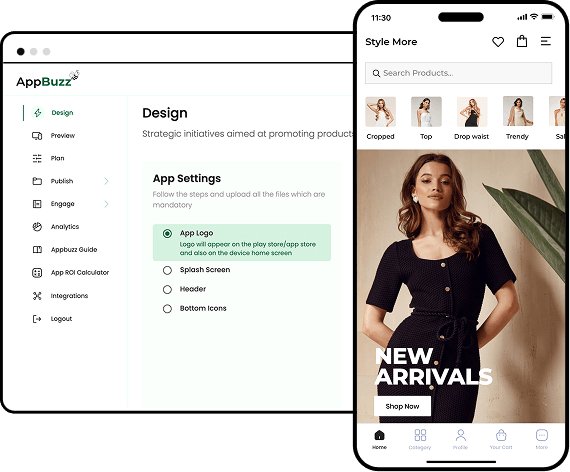
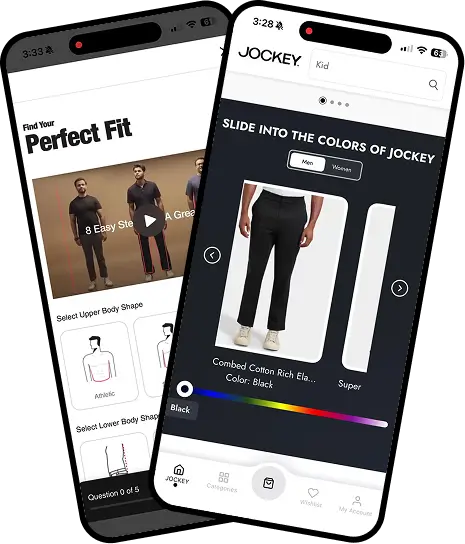
























E-commerce is growing fast, but scaling a brand has never felt tougher. Online sales worldwide are expected to cross $36 trillion by 2026, and most of that spending is happening on mobile.
The reason is simple. Customers have more choices, less patience, and higher expectations. Paying for new clicks keeps getting expensive, while loyalty is earned only by brands that feel fast, relevant, and easy to buy from every single time. In this environment, adding more traffic is not the same as building real momentum.
Scaling today means creating a business that grows through habit and repeat behavior, not constant reacquisition.
In this blog, you’ll learn what scaling an ecommerce business actually means in 2026, the core pillars behind sustainable growth, the key trends shaping e-commerce, and a practical framework you can use to grow revenue more predictably and profitably.
Key Takeaways
- Scaling an e-commerce business means increasing revenue without increasing costs at the same rate, by using retention, automation, and owned channels to create predictable, repeat purchases instead of constantly buying new traffic.
- Long-term growth now depends more on customer lifetime value than one-time conversions, so brands that focus on loyalty, subscriptions, and repeat buying cycles scale more profitably.
- Owned channels, especially mobile apps, give brands direct access to customers, reduce dependence on paid ads, and create faster, more frictionless buying experiences that encourage habit.
- AI-driven, real-time personalization improves conversion and average order value by adapting the shopping experience to each user’s behavior instead of relying on static segments or manual merchandising.
- Sustainable scaling requires strong operational systems, continuous testing, and cohort-based measurement so growth stays efficient, reliable, and margin-positive as volume increases.
What Does Scaling an E-commerce Business in 2026 mean?
Many brands use “growth” and “scaling” as if they mean the same thing. They don’t. Growth is selling more by spending more. Scaling is selling more while improving efficiency, margins, and repeatability. When you’re scaling an e-commerce business, revenue rises faster than your costs because your systems, channels, and customer relationships start doing the heavy lifting for you.
This distinction shapes every strategic decision. If you chase growth alone, you add more ads, more tools, more people, and hope revenue keeps up. If you focus on scaling, you build an engine where each new customer is easier to serve, more likely to return, and more valuable over time.
Growth vs Scaling: Key Differences
At a surface level, both look similar because revenue goes up. The difference sits underneath the numbers:
Once this difference is clear, the next step is understanding the foundations that make scalable growth possible.
5 Core Pillars For Scaling An E-commerce Business in 2026
Scaling in 2026 looks very different from simply tracking more traffic or running bigger campaigns. The brands that grow consistently are the ones that build systems that keep working even when ad costs rise or demand fluctuates.
The following pillars explain what those systems are built on, and why they matter if you want revenue to become more predictable, margins to stay healthy, and growth to compound instead of resetting every quarter.
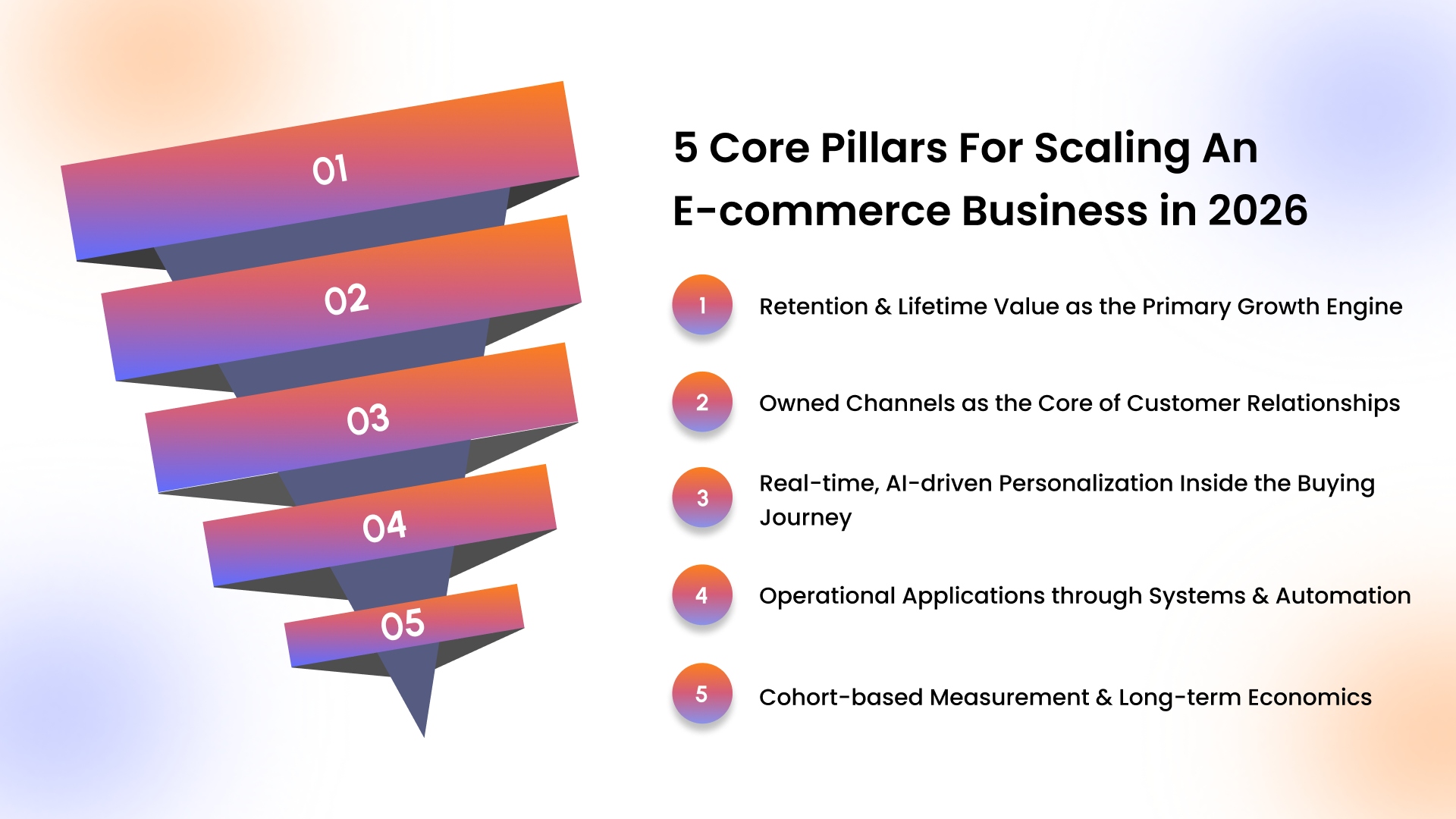
1. Retention and Lifetime Value as the Primary Growth Engine
In scalable businesses, revenue growth comes from depth, not just reach. The first purchase only proves interest. Real scale shows up when customers return regularly and spend more over time.
This is why lifetime value, not conversion rate alone, becomes the defining metric. When repeat behavior carries a larger share of revenue, growth becomes less sensitive to ad costs, seasonality, and channel volatility. Without this multiplier, every gain has to be bought again.
2. Owned Channels as the Core of Customer Relationships
Scalable brands do not rely on rented attention. Marketplaces, ads, and social platforms help with discovery, but they do not create durable leverage.
Owned channels create that leverage. Email lists, SMS, and especially mobile apps give brands direct access to customers on their own terms. Among these, apps stand out because they combine identity, habit, and low-friction access in a single surface. When engagement lives in owned channels, growth compounds instead of restarting with every campaign.
3. Real-time, AI-driven Personalization Inside the Buying Journey
Personalization has evolved from static segments to moment-by-moment decisions. Instead of showing the same experience to broad groups, modern e-commerce adapts to each user’s current behavior and history.
AI now sits inside the journey, shaping what products appear, what content is shown, and when communication happens. This shift increases relevance without manual effort and turns raw data into immediate action. The result is higher conversion, stronger average order values, and more consistent repeat purchases, all achieved through continuous optimization rather than periodic campaigns.
With platforms like AppMaker, this shift is built directly into how the app works. Tools such as Eidolon AI let brands turn design inputs like screenshots or Figma files into reusable, adaptive layouts, while John AI connects behavior, performance data, and recommendations into one feedback loop. Together, they allow the app to personalize what each user sees and when they see it, without relying on static segments.
4. Operational Applications through Systems and Automation
Revenue growth without operational capacity creates obstacles that erode customer trust. True scale requires systems that absorb higher demand without proportional increases in cost or complexity.
Automation across merchandising, fulfillment, and customer communication turns repetitive work into reliable processes. When updates, messages, and inventory flows run through standardized systems, the business can handle larger volumes while protecting speed and experience. Operational leverage is what lets revenue rise faster than overhead.
5. Cohort-based Measurement and Long-term Economics
Short-term performance can look healthy while long-term value deteriorates. Scalable brands measure success across time, not just campaigns.
Cohort-based measurement reveals whether customers acquired today behave better or worse than those acquired last quarter. It connects acquisition, retention, and margin into one economic story. When decisions are anchored in lifetime value and contribution margin, growth becomes predictable instead of reactive.
These pillars describe how scalable e-commerce businesses are built in 2026.
Suggested read: Complete Guide to Ecommerce App Development Cost in 2026
With these core principles in place, you can translate them into a practical, repeatable framework for day-to-day execution.
6 Strategies for Scaling an E-commerce Business in 2026
Scaling is a continuous loop that captures intent, converts it smoothly, and turns each purchase into the next one. In 2026, the brands that scale well run this loop deliberately across owned channels, with real-time personalization and tight measurement.
Instead of chasing fresh traffic every week, they build systems that make existing customers more active, more loyal, and more valuable over time.
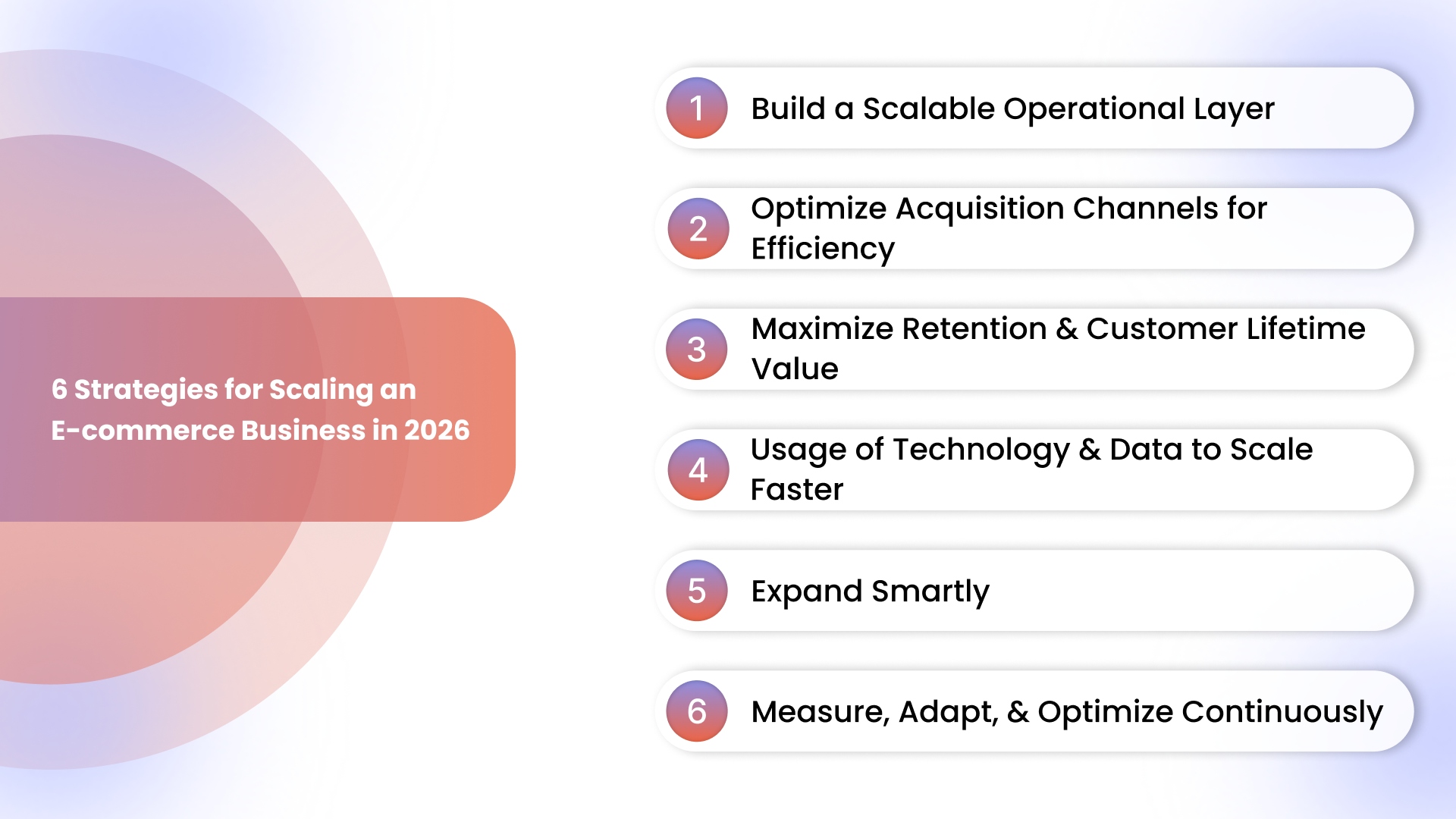
1. Build a Scalable Operational Layer
Before focusing on expanding your customer base or reaching new markets, you need to establish a solid operational foundation. If your internal systems and processes aren’t scalable, scaling will be hard to sustain. In 2026, automating and streamlining operations are crucial for efficient scaling.
Actionable Steps:
- Automate Order Fulfillment: Efficient order fulfillment is a key part of scaling. Implementing an automation tool that connects your e-commerce platform to third-party logistics (3PL) services or warehouse management systems can streamline this process.
- Smart Inventory Management: Automation in inventory management ensures you never run out of stock at critical moments. Implement inventory forecasting tools that use historical sales data to predict future demand.
- Standard Operating Procedures (SOPs): Create documented procedures for every core business function: order handling, customer support, returns, and inventory checks. This ensures consistency and speed, especially as your team grows. With clear SOPs, new team members can be onboarded faster, and you avoid operational bottlenecks as demand increases.
- Cloud-Based Infrastructure: As your business scales, having a cloud-based infrastructure is crucial for flexibility. This allows you to manage resources based on demand without investing in expensive hardware or IT teams.
2. Optimize Acquisition Channels for Efficiency
While scaling, businesses often focus on acquiring more customers. However, the real key to scaling efficiently in 2026 is improving the efficiency of your acquisition channels. Acquiring customers at a higher cost per acquisition (CAC) is unsustainable in the long run. Focus on targeted acquisition through high-ROI channels and creating scalable, cost-efficient systems to attract and convert leads.
Actionable Steps:
- Map Customer Journeys: Understand where your high-value customers are coming from. Track where they interact with your brand, from social media to product pages. Knowing the full customer journey allows you to focus your marketing spend on channels that drive the most conversions.
- Prioritize High-ROI Channels: With data-driven marketing, you can allocate your budget to channels that give you the best return.For instance, if paid search (Google Ads) delivers the highest conversion rate at a lower cost compared to Facebook ads, prioritize it. Similarly, use organic channels like SEO and email marketing to reduce CAC.
- Optimize Conversion Rate: Implement tools to improve your conversion rate optimization (CRO). A/B test your landing pages, checkout flows, and product pages to reduce friction.For example, simplifying the checkout process or introducing one-click checkout can significantly increase conversion rates and make your acquisition efforts more efficient.
- Use Segmentation and Personalization: Personalized marketing creates a tailored experience for users. Use customer segmentation to target specific groups with relevant messages, offers, or recommendations. Tools like Klaviyo for email marketing and personalized pop-ups can help engage customers in meaningful ways.
3. Maximize Retention and Customer Lifetime Value (LTV)
Retaining customers and increasing their lifetime value (LTV) is the most profitable scaling strategy. Acquiring new customers is expensive, and by focusing on retention, you not only reduce future marketing costs but also build a loyal customer base that can drive repeat revenue.
Actionable Steps:
- Launch a Loyalty Program: Implement a customer loyalty program that rewards repeat purchases, product reviews, and social shares. With AppMaker, you can easily create branded mobile apps with integrated push notification systems, ensuring that loyal customers are consistently engaged.
- Create Subscription Models: Subscription services create predictable, recurring revenue streams. Whether it’s for consumables or exclusive offers, subscriptions increase customer retention and LTV.
- Use Behavioral Data for Retargeting: Use data to retarget customers who have shown interest but have not converted. Automated retargeting ads or push notifications can remind customers about abandoned carts, special offers, or new arrivals tailored to their past purchases.
4. Usage of Technology & Data to Scale Faster
In 2026, scaling comes down to how well you actually use your data and technology. E-commerce brands that incorporate data-driven decision-making, AI, and automation will scale more efficiently, optimize their marketing efforts, and improve the customer experience.
Actionable Steps:
- Adopt AI-Powered Personalization: AI tools can dynamically personalize product recommendations based on customer behavior. AppMaker’s AI tools, like Eidolon AI, allow businesses to personalize the user experience by automatically generating layouts that cater to the customer’s preferences.
- Track Core Metrics with Dashboards: Use real-time analytics to monitor key performance indicators (KPIs) like conversion rate, AOV, and CAC. Use AppMaker's Analytics & Insights Dashboard to track key metrics like conversion rate, AOV, and retention, and easily query insights with John AI for plain-language responses to understand performance trends without needing advanced data analysis skills.
- Real-Time Data Analytics: AppMaker integrates directly with Shopify, pulling real-time analytics into the mobile app. This data can be used to make data-driven decisions, allowing businesses to fine-tune their strategies based on actual customer behavior.
5. Expand Smartly
Once you’ve built a solid foundation and optimized your operations, it's time to scale beyond your initial market. Expansion should be done strategically, focusing on high-potential markets and channel opportunities that align with your brand’s strengths.
Actionable Steps:
- Test International Markets: If expanding internationally, start by testing a small segment of your market to understand demand and consumer preferences. AppMaker’s support for multi-language mobile apps can be a game-changer for businesses looking to expand into international markets. With a single platform, brands can localize their apps to cater to global audiences, offering tailored experiences that improve conversion rates across regions.
- Apply Omnichannel Selling: Sell through multiple channels (e.g., social media, marketplaces, and mobile apps) but ensure that your brand message and customer experience remain consistent across all platforms.
- Partner with Influencers or Other Brands: Collaborate with influencers or brands that already have access to your target audience. Co-branded campaigns and affiliate programs can help you expand your reach quickly.
- Use Headless Commerce: For scaling, headless commerce allows you to provide customized shopping experiences across various channels (apps, websites, kiosks) while keeping the backend efficient and scalable.
6. Measure, Adapt, and Optimize Continuously
The market, technology, and consumer behavior change rapidly, so your scaling strategy should be iterative. Consistently measure, refine, and optimize your business to stay ahead of the competition.
Actionable Steps:
- Set Clear KPIs and Benchmarks: Track your scaling progress by setting key performance indicators (KPIs). Regularly assess your goals (e.g., LTV, AOV, and CAC) and adjust strategies based on the data.
- Refine Your Offerings Based on Feedback: Collect feedback through surveys, product reviews, and direct customer engagement to understand what needs to be improved or innovated.
- Leverage A/B Testing: Constantly test and optimize marketing campaigns, landing pages, pricing strategies, and checkout flows to find what works best and refine accordingly.
Also read: E-commerce Mobile App Development: A 2026 Guide
While this framework shows how to operate, it’s equally important to understand the larger shifts shaping e-commerce right now.
5 Founder-led Trends Shaping How E-Commerce Businesses Will Scale in 2026
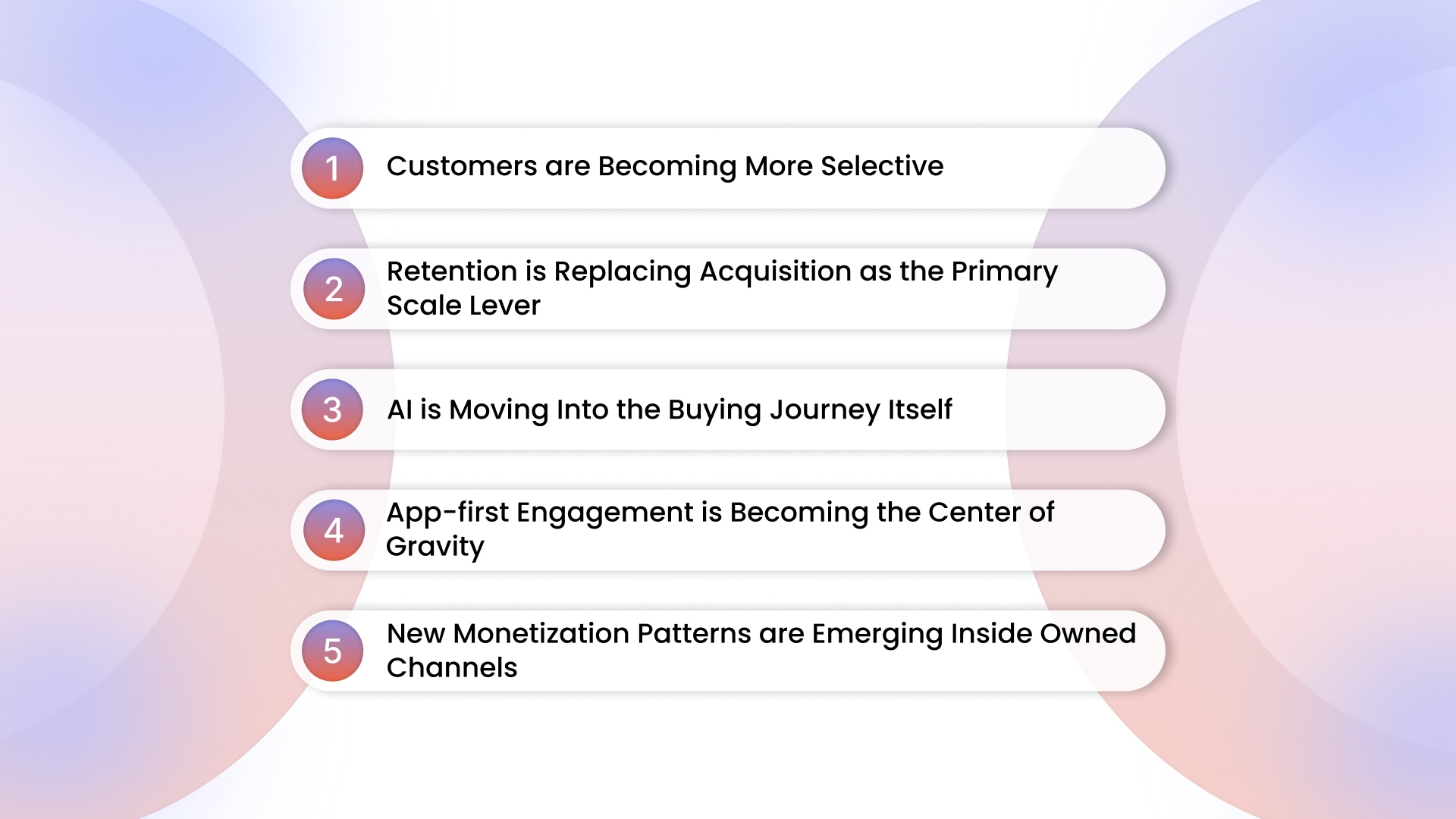
When you line up perspectives from operators across categories, a clear pattern emerges. E-commerce is not changing through a single new channel or tool. It is being rebuilt around retention, owned experiences, and intelligent use of data. These trends reflect a deeper shift in how sustainable scale is achieved:
1. Customers are Becoming More Selective
The biggest behavioral change is not where customers discover brands, but where they choose to stay.
Founders consistently point to the same pattern: shoppers are reducing the number of brands they buy from and concentrating their spend on those that feel easy, familiar, and reliable. Smooth experiences, fast checkout, and relevance are no longer differentiators. They are the baseline for earning repeat business.
This selectivity means scale now comes from becoming one of a customer’s few default choices, not from being briefly visible to many.
2. Retention is Replacing Acquisition as the Primary Scale Lever
Across categories, leaders agree that growth at all costs has run its course. What matters now is how efficiently revenue compounds from existing customers.
Metrics like repeat purchase rate, ROI, and contribution margin are shaping decisions more than raw topline growth. Retention and unit economics are no longer downstream metrics. They define whether growth is sustainable at all. Brands that keep reacquiring the same customer are finding scale expensive and fragile. Brands that build repeat cycles are finding scale predictable.
3. AI is Moving Into the Buying Journey Itself
Another consistent theme is how AI is being used. It is no longer confined to reports or dashboards.
AI is shifting into real-time decision-making. It now shapes what customers see, when they see it, and how offers are presented across apps and owned channels. This includes discovery, pricing cues, content, and communication timing. The impact is not just better conversion. It is a lower CAC and more efficient monetization of existing demand.
4. App-first Engagement is Becoming the Center of Gravity
Multiple founders point to the same conclusion: owned, app-first ecosystems are where retention compounds most effectively.
Apps allow brands to control experience, reduce friction, and personalize interactions across the full lifecycle. This is framed as a long-term advantage. In categories with longer purchase cycles, trust and familiarity built through app-first engagement drive far higher lifetime value than repeated paid reacquisition.
5. New Monetization Patterns are Emerging Inside Owned Channels
Beyond apps and AI, new formats are gaining traction because they strengthen retention and cash flow.
One example is the rise of e-vouchers as prepaid demand. One such example is vouchers as a new form of e-commerce currency, benefiting both brands and consumers. For brands, they unlock committed spend and better cash flow. For customers, grounded value replaces abstract discounts. These mechanisms work best inside owned environments where redemption and repeat use are frictionless.
What These Trends Collectively Signal?
Viewed together, these perspectives describe four layers of the same shift:
- Success is being defined by profitability, retention, and predictability, not speed alone.
- Customers are choosing fewer brands that respect their time and remember them.
- AI is becoming the connective tissue between intent and action in real time.
- Owned channels, especially apps, are where trust and lifetime value compound.
Brands that internalize this shift will not just scale in 2026. They will set the benchmark for how scaling works going forward.
How AppMaker Is Helping E-commerce Brands Scale in 2026
As mobile commerce moves from being a supporting channel to the main revenue driver, one thing is becoming clear: brands that scale in 2026 will do it through apps. Mobile apps create habit, reduce friction, and give brands a direct line to customers without paying for every interaction again.
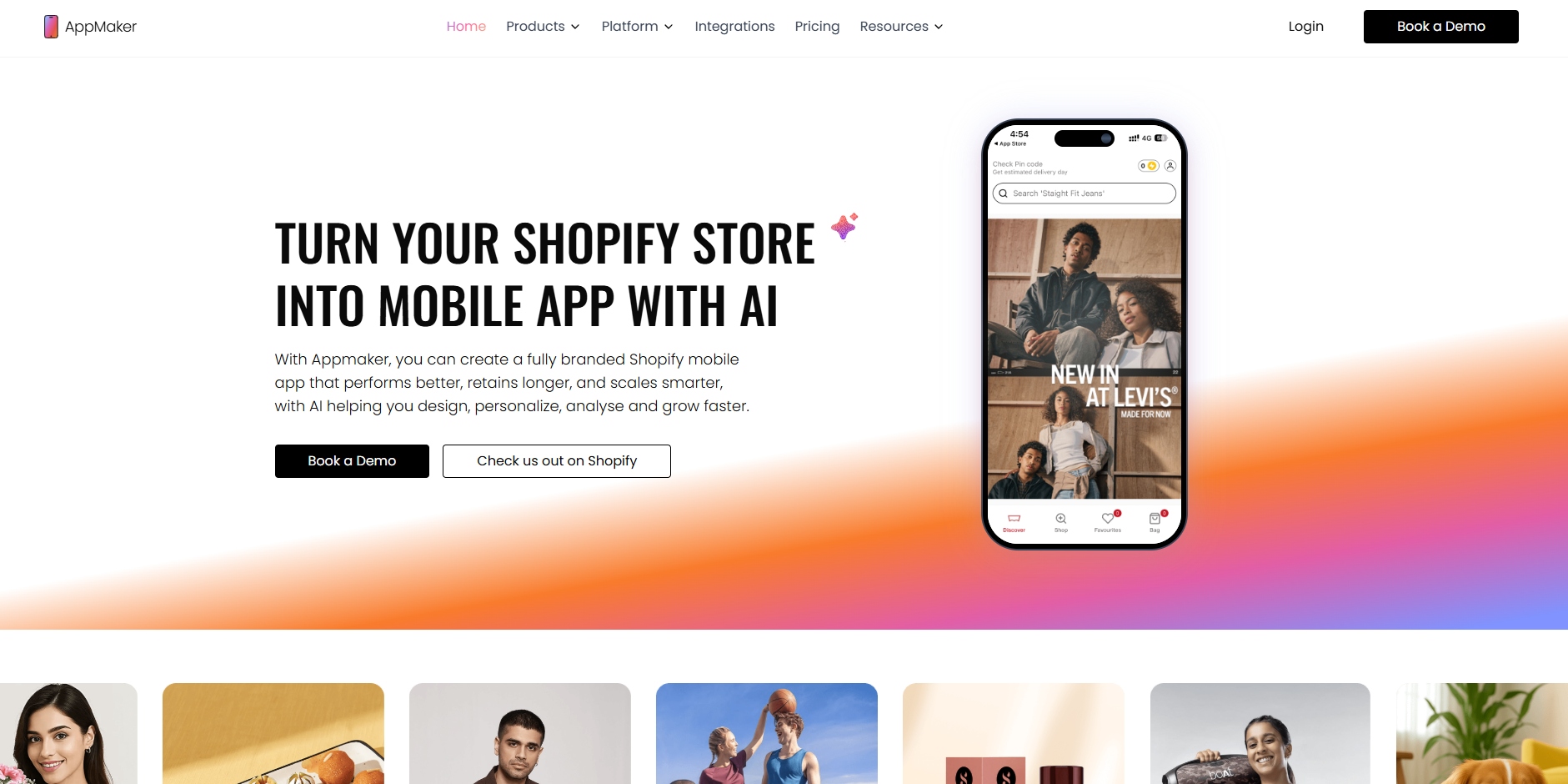
AppMaker is built around this exact shift.
- Built for app-first scaling: AppMaker is designed for brands that see their app as a primary revenue channel. The platform supports retention, repeat purchasing, and habit formation rather than simply mirroring the web store inside an app shell.
- True no-code, without long-term limitations: Teams can launch and manage native iOS and Android apps without engineering resources, while still retaining the ability to evolve the app over time. Unlike rigid builders, AppMaker does not lock brands into fixed layouts or flows that become constraints later.
- Deep AI-driven personalization inside the app experience: John AI helps teams understand performance, behavior, and trends in plain language, turning data into decisions without complex analysis. Eidolon AI enables design-led customization by converting screenshots or Figma designs into reusable app layouts, allowing brands to personalize experiences without rebuilding screens manually.
- Developer flexibility through code blocks: When brands need logic beyond no-code capabilities, AppMaker supports developer code blocks. This allows custom checkout flows, integrations, experiments, or advanced UX patterns without switching platforms or rebuilding the app elsewhere.
- Multilingual and global readiness: AppMaker supports multilingual app experiences, making it easier for brands to scale across regions while keeping one unified app strategy. This is especially valuable for businesses expanding internationally or serving diverse customer bases.
- Advanced push notifications: AppMaker enables behavior-based push notifications that support cart recovery, re-engagement, launches, and personalized campaigns. These notifications work as a direct retention engine instead of one-off promotional blasts.
- Proven revenue impact at scale: In 2025 alone, AppMaker-powered mobile apps supported over ₹1,000 Cr+ in GMV, driven largely by repeat purchases and app-first engagement rather than constant paid acquisition.
Together, these capabilities make AppMaker less about building an app quickly and more about building a mobile growth engine that can scale with the business through 2026 and beyond.
Conclusion
Scaling an e-commerce business in 2026 is about doing the right things consistently. The brands that pull ahead won’t be the ones buying the most traffic, but the ones customers naturally return to because buying feels quick, personal, and reliable every time.
This is where an app-first approach makes a real difference. With a fully branded, high-performance mobile app, you control the experience, personalize every interaction, and stay connected to customers without paying to reach them again and again.
If you’re serious about scaling, not just growing, it’s time to build an app that works as your primary growth engine. That’s exactly what AppMaker is built for: turning your existing store into a powerful, custom mobile app that drives retention, repeat purchases, and predictable revenue at scale.
Get in touch with the AppMaker team today to see how your Shopify store can start scaling the right way.
FAQs
1. How do I know if my business is ready to scale and not just grow?
You are ready to scale when your repeat customers generate a meaningful share of revenue and your lifetime value is consistently higher than your customer acquisition cost. If every sales increase requires the same proportional jump in ad spend and resources, you are still in growth mode, not scale mode.
2. How long does it typically take to see results from a retention-focused strategy?
Most brands start seeing measurable improvements in repeat purchase rate and revenue stability within a few months, but the real compounding effect appears over 6–12 months as cohorts stack and buying habits form.
3. Do small or mid-sized e-commerce brands really need a mobile app?
If a significant portion of your customers buy more than once, an app can centralize their relationship with your brand and make repeat purchases faster and easier. Even smaller brands can benefit because the value comes from frequency and loyalty, not sheer traffic volume.
4. What role does customer support play in scaling?
Fast, consistent support directly impacts repeat buying and trust. As order volume grows, standardized and automated support workflows prevent delays and frustration that would otherwise reduce retention and lifetime value.
5. Can scaling work without expanding to new markets or channels?
Yes. Many brands scale first by increasing purchase frequency, order value, and retention within their existing customer base. Market and channel expansion become far more effective once the core repeat purchase engine is strong and predictable.