


























Are you planning a mobile app for your Shopify store but unsure which option will actually drive meaningful revenue growth?
Many scaling brands face this decision when mobile traffic rises, yet conversions and retention fail to improve as expected. Choosing between native vs. hybrid apps for Shopify stores becomes critical when every second of speed impacts customer behavior and sales outcomes.
In the United States, retail mobile commerce sales crossed $577 billion in 2025, proving that mobile is now the primary revenue channel. This figure is expected to reach nearly $840.5 billion by 2029, which means competition will increasingly depend on app performance.
Globally, mobile commerce is projected to account for 63% of total ecommerce sales, making experience quality a direct growth driver. As a result, the type of app you choose directly influences how effectively you capture, convert, and retain this growing mobile audience.
In this article, you will understand how native vs. hybrid apps for Shopify stores impact performance, retention, and scalability. The goal is to help you choose the approach that aligns with your current growth stage and long-term revenue strategy.
Key Takeaways
- Native apps deliver faster performance, smoother experiences, and stronger retention, directly improving conversions and repeat purchases.
- Hybrid apps reduce upfront cost and launch time but may limit speed, responsiveness, and scalability as your store grows.
- Mobile commerce is dominating, with U.S. sales at $577B in 2025 and projected to reach $840.5B, making app performance critical.
- Native apps suit scaling brands focused on LTV, personalization, and campaigns, while hybrid apps fit early-stage testing and budget constraints.
- Hidden costs like performance issues, rework, and lower retention make hybrid apps expensive long-term despite lower initial investment.
What is a Native App?
A native app is a mobile application built specifically for platforms like iOS or Android, delivering a fast and seamless user experience. For Shopify stores, native apps connect deeply with device features such as push notifications, smooth navigation, and optimized checkout flows.
This level of performance and reliability helps you reduce friction, improve conversions, and create a premium shopping experience for your customers.
What is a Hybrid App?
A hybrid app is a mobile application built using a single codebase that runs across both iOS and Android platforms. For Shopify stores, hybrid apps offer a faster and more cost-effective way to launch a mobile presence without building separate apps.
However, this approach may limit performance, responsiveness, and advanced user experience features that directly impact conversions and retention.
Why Shopify Brands Are Moving to Mobile Apps?
Mobile apps are becoming a core growth channel for Shopify brands looking to improve conversions, retention, and overall customer experience beyond what mobile websites can deliver.
Here are the key reasons driving this shift:
- Higher conversion rates: Mobile apps offer faster load times and smoother navigation, helping reduce drop-offs and improve purchase completion rates.
- Stronger customer retention: With apps installed on user devices, your brand stays accessible, increasing repeat visits and long-term engagement.
- Direct re-engagement through push notifications: You can recover abandoned carts, promote offers, and bring users back without relying on paid channels.
- Improved revenue performance: According to the Appmaker study, using a mobile app sales channel can result in an average increase of around 29% in net new revenue.
- Better control over user experience: Apps allow you to design personalized journeys, optimize checkout flows, and create a more consistent brand experience.
- Reduced dependence on external platforms: Mobile apps give you more ownership over customer interactions without relying heavily on third-party algorithms or channels.
- Faster checkout and fewer friction points: Features like saved preferences, one-tap logins, and simplified navigation help customers complete purchases quickly.
- Actionable customer insights: Mobile apps provide deeper data on user behavior, helping you refine campaigns, product positioning, and overall growth strategy.
This shift toward mobile makes the choice more important, so it helps to break down how each option performs in real scenarios.
Native vs Hybrid Apps for Shopify Stores: Core Differences That Matter
Understanding the real differences between native and hybrid apps helps you choose an approach that directly impacts performance, conversions, and long-term growth.
Here are the core differences that matter for your Shopify store:
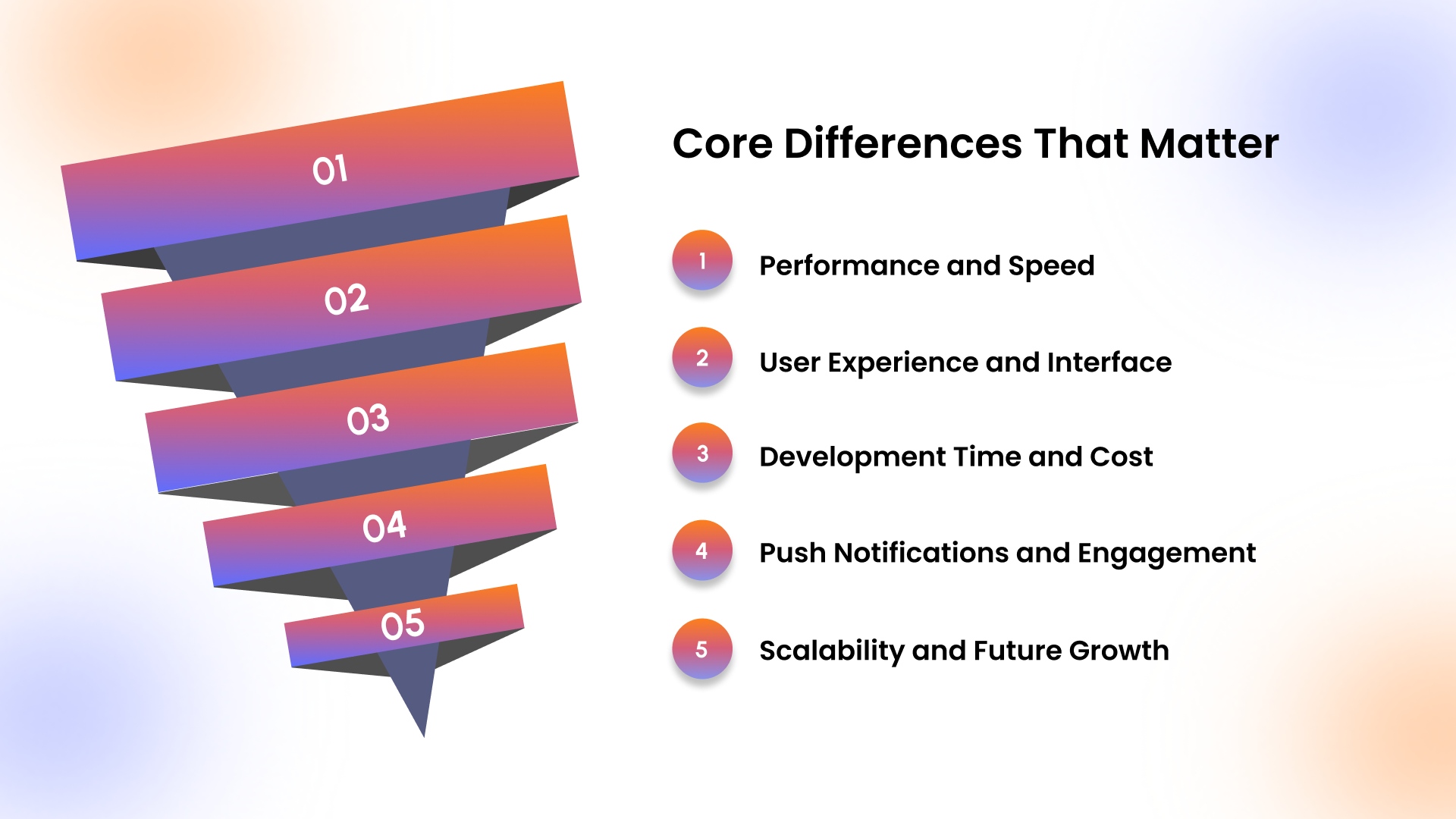
1. Performance and Speed
App performance directly influences how quickly users browse, interact, and complete purchases on your store.Here is how native and hybrid apps compare in terms of speed and responsiveness:- Native apps: Deliver faster load times and smoother interactions, creating a frictionless browsing and checkout experience.
- Hybrid apps: May experience delays due to additional layers between the app and device, affecting responsiveness.
- Conversion impact: Even slight delays can increase bounce rates, especially when users expect instant interactions during product discovery.
- Traffic reality: Mobile devices accounted for 62.54% of global website traffic in 2025, making speed a critical factor in retaining users.
User Experience and Interface
User experience determines how customers perceive your brand and whether they continue shopping or drop off.Here is how both app types differ in delivering a seamless shopping experience:- Native apps: Offer highly responsive interfaces with smooth animations and intuitive navigation tailored to each platform.
- Hybrid apps: Can feel less fluid, sometimes resembling a mobile website rather than a fully optimized app experience.
- Brand perception: A polished experience builds trust and encourages users to explore more products and complete purchases.
- Consistency: Native apps maintain consistent performance across devices, reducing usability issues that frustrate users.
Development Time and Cost
The cost and time required to build your app influence how quickly you can enter the mobile commerce space.Here is how native and hybrid approaches compare from a development perspective:- Native apps: Require separate development for iOS and Android, leading to higher upfront investment and longer timelines.
- Hybrid apps: Use a single codebase, reducing initial costs and enabling faster deployment across platforms.
- Long-term investment: Native apps often provide better returns over time due to improved performance and higher engagement.
- Scalability costs: Hybrid apps may require additional fixes or rework as your store grows and demands more advanced features.
Push Notifications and Engagement
Customer engagement plays a major role in driving repeat purchases and improving lifetime value.Here is how both app types support re-engagement and communication:- Native apps: Provide reliable and timely push notifications, helping you re-engage users with offers, reminders, and updates.
- Hybrid apps: May face limitations or delays in notification delivery, impacting campaign effectiveness.
- Retention impact: Consistent engagement through notifications increases repeat visits and purchase frequency.
- Campaign flexibility: Native apps allow more precise targeting and personalization of user interactions.
Scalability and Future Growth
As your Shopify store grows, your app must support increasing traffic, features, and customer expectations.Here is how native and hybrid apps handle long-term scalability:- Native apps: Easily support advanced features, integrations, and high user volumes without compromising performance.
- Hybrid apps: Can face limitations when adding complex functionalities or handling large-scale traffic efficiently.
- Growth readiness: Native apps are better suited for brands aiming to scale beyond initial growth stages.
- Future flexibility: Investing in performance early reduces the need for costly rebuilds later.
A quick side-by-side comparison makes it easier to evaluate which approach aligns with your current stage and growth goals.
If you want native-level performance without complex development, Appmaker lets you build high-converting Shopify mobile apps with a no-code, scalable approach.
Seeing these differences side by side makes things clearer, but examples often make the decision easier to relate to.
Native and Hybrid Apps Examples

Looking at real-world examples helps you understand how each app type performs across different business stages and use cases.
Here are clear distinctions with relevant examples:
Native App Examples
Native apps are typically used by brands that prioritize performance, personalization, and long-term scalability.
- High-performance retail apps: Brands like Nike and Amazon use native apps for fast browsing, seamless checkout, and advanced personalization.
- Loyalty-driven D2C brands: Businesses with strong repeat purchase behavior rely on native apps for push notifications and tailored user journeys.
- Feature-rich commerce apps: Apps with advanced filters, dynamic recommendations, and smooth transitions benefit from native architecture.
Hybrid App Examples
Hybrid apps are commonly used by brands looking for faster deployment and lower initial investment.
- Early-stage Shopify brands: Businesses testing mobile apps often choose hybrid solutions to launch quickly with minimal resources.
- Content-focused apps: Apps that prioritize browsing over complex interactions can function effectively with hybrid frameworks.
- Budget-conscious implementations: Brands with limited budgets use hybrid apps to establish a mobile presence before scaling further.
- Transitional use cases: Many brands begin with hybrid apps and later switch to native as performance and growth demands increase.
Examples give context, but choosing the right path depends more on your current stage and how your store is growing.
When Should You Choose Native Apps for Shopify?
Choosing native apps makes sense when your focus shifts from just launching an app to driving consistent performance, retention, and long-term revenue growth.
Here are the situations where native apps are the right choice:
- Scaling beyond early growth stages: Brands generating consistent revenue need faster, more reliable app performance to support increasing traffic and transactions.
- High repeat purchase behavior: If your customers return frequently, native apps help you engage them better through seamless experiences and timely interactions.
- Focus on retention and lifetime value: Native apps enable stronger re-engagement through push notifications and personalized journeys, improving long-term customer value.
- Running performance-driven marketing campaigns: With U.S. ad spend projected to hit $42.4 billion by 2027, converting paid traffic efficiently becomes critical.
- Need for advanced personalization: Native apps allow dynamic product recommendations, tailored layouts, and behavior-based experiences that improve conversions.
- Complex product catalogs or features: Stores with multiple categories, filters, or custom functionalities benefit from native app stability and responsiveness.
- Long-term scalability goals: Native apps are better suited for brands planning to expand, experiment, and add advanced features without performance trade-offs.
Not every brand needs that level of investment immediately, which is where hybrid apps can still play a role.
When Should You Choose Hybrid Apps?
Hybrid apps are a practical choice when your priority is to launch quickly, test mobile as a channel, and manage costs in the early stages.
Here are the situations where hybrid apps make sense:
- Early-stage or testing phase: If your store is exploring mobile apps for the first time, hybrid apps help validate the channel without heavy investment.
- Limited upfront budget: Hybrid development reduces initial costs by using a single codebase for both iOS and Android platforms.
- Faster time to market: When speed is critical, hybrid apps allow you to launch quickly and start acquiring users sooner.
- Lower dependency on advanced features: Stores that do not require complex personalization or high-performance interactions can operate effectively with hybrid apps.
- Smaller product catalogs: Businesses with simpler catalogs and fewer navigation layers may not face performance limitations immediately.
- Short-term campaigns or experiments: Hybrid apps can support temporary initiatives where long-term scalability is not the primary concern.
- Resource constraints: Teams without access to dedicated developers or technical support may find hybrid apps easier to manage initially.
At first glance, hybrid apps may seem like the easier option, but there are a few trade-offs that often go unnoticed.
Hidden Costs Most Shopify Brands Overlook
While hybrid apps may seem cost-effective at first, several hidden factors can impact performance, customer experience, and long-term revenue.
Here are the hidden costs most Shopify brands often overlook:
- Performance-related revenue loss: Slower load times and laggy interactions can increase drop-offs, directly affecting conversions and overall sales.
- Rework and migration costs: Many brands eventually switch from hybrid to native, leading to additional development time and duplicated investment.
- Lower customer retention: A subpar user experience can reduce repeat visits, increasing your dependence on paid acquisition channels.
- Impact on app store ratings: Poor performance or inconsistent UI can lead to lower ratings, which affects visibility and installs.
- Limited scalability: As your store grows, hybrid apps may struggle to support advanced features, requiring further upgrades or rebuilds.
- Reduced campaign effectiveness: Delays or limitations in push notifications can weaken engagement and reduce the impact of marketing efforts.
- Higher long-term maintenance efforts: Fixing performance issues and adapting to new requirements can increase ongoing costs over time.
Once these hidden gaps are clear, the next step is finding a way to get strong performance without adding unnecessary complexity.
Building High-Performance Shopify Mobile Apps Without Complexity
Choosing between native and hybrid apps often forces you to compromise between performance, cost, and speed of execution.
Appmaker removes this trade-off by helping you achieve native-level performance without adding development complexity or slowing down your growth.
Here is how you can achieve native-level performance without taking on the usual development complexity:
- Native performance without development overhead: Appmaker lets you build fully native iOS and Android apps without managing separate codebases or hiring developers.
- No-code simplicity for faster execution: You can design, launch, and manage your app using a drag-and-drop interface without technical expertise.
- Built for scaling Shopify brands: The platform is designed for businesses generating between 1 million and 10 million dollars annually.
- Real-time Shopify sync: Your products, orders, and customer data stay updated automatically, avoiding inconsistencies between web and app.
- AI-powered design and speed: Eidolon AI converts Figma files or screenshots into reusable app layouts, reducing design and development time.
- Performance with personalization: Tools like John AI and upcoming capabilities like Rubik’s AI help deliver tailored experiences based on user behavior.
- Retention-driven features: Built-in push notifications allow you to re-engage users with offers, reminders, and updates effectively.
- Flexibility without limitations: Code blocks and conditional blocks enable advanced customizations typically associated with native development.
- Data-backed decision making: Analytics dashboards provide insights into conversion rates, retention, and user behavior in real time.
- Faster launch without trade-offs: You can go live quickly while still delivering a high-performance, scalable mobile experience.
- Proven impact across industries: Appmaker drives measurable results across categories, contributing up to 70% of app revenue, increasing conversion rates by up to 4 times, and improving repeat purchase rates by up to 3 times.
Wrapping Up
The difference between native and hybrid apps is not just technical; it directly shapes how your customers experience your brand and how often they return. Making the right choice early helps you avoid performance gaps, retention issues, and costly rebuilds as your store scales.
Appmaker helps you skip the trade-offs by delivering native app performance with a no-code, scalable approach built for growing Shopify brands.
Ready to build a high-performing Shopify mobile app without unnecessary complexity? Book a Demo with Appmaker and start driving better conversions and retention today.
FAQs
Is it worth investing in a native app for a Shopify store?
Yes, native apps are worth it when your focus is on improving performance, retention, and long-term revenue growth. They deliver a smoother experience that directly impacts conversions.Why do some Shopify brands still use hybrid apps?
Many brands choose hybrid apps for faster launch and lower upfront costs. They are often used during early testing stages before scaling further.Do mobile apps really increase Shopify store revenue?
Yes, mobile apps can increase revenue by improving conversion rates, enabling push notifications, and encouraging repeat purchases. They create a more controlled and engaging shopping experience.What is the biggest limitation of hybrid apps for ecommerce?
The biggest limitation is performance inconsistency, which can affect user experience and conversions. As traffic grows, these issues become more noticeable.Can a no-code platform build a native Shopify app?
Yes, no-code platforms can build fully native apps while removing the need for development resources. This allows faster launches without compromising performance.