
























Most ecommerce brands don’t lose customers because of bad products. They lose them because mobile shopping still feels slow, forgettable, and disposable. A customer visits, scrolls, leaves, and never comes back.
The problem gets sharper as ecommerce grows. Global ecommerce sales are expected to rise from $6.42 trillion in 2025 to $7.89 trillion by 2028. More brands are fighting for the same attention, and the mobile web alone can’t support repeat buying, fast checkout, or personalized experiences at scale.
This is why serious ecommerce teams are moving toward native mobile apps and choosing app builders that don’t just launch apps, but help them grow.
In this blog, we’ll break down what actually makes an ecommerce mobile app builder worth using in 2026. We will also compare the leading platforms and show how the right builder turns apps into long-term revenue channels, not just another storefront.
Overview
- An ecommerce mobile app builder must deliver native performance, real-time sync, built-in retention, fast iteration, and predictable costs to scale without operational drag.
- AppMaker, Fuego, Tapcart, Plobal Apps, and Shopney serve brands focused on retention and growth, while Appy Pie, Mowico, and Mobiloud support multi-platform flexibility and custom app setups.
- The most effective builders combine no-code control, AI-assisted design, extensibility, and native iOS and Android performance rather than relying on webview-based apps.
- Compared to agencies, ecommerce app builders enable faster launches, easier scaling, and continuous iteration without long-term developer dependency.
- Native ecommerce apps are replacing mobile web by driving higher conversion, push-based re-engagement, personalization, and faster checkout.
What Makes an Ecommerce Mobile App Builder Worth It in 2026?
An ecommerce mobile app builder is worth it in 2026 only if it delivers native performance, real-time store sync, and built-in retention tools. It must also offer fast iteration and lower long-term costs than custom development.
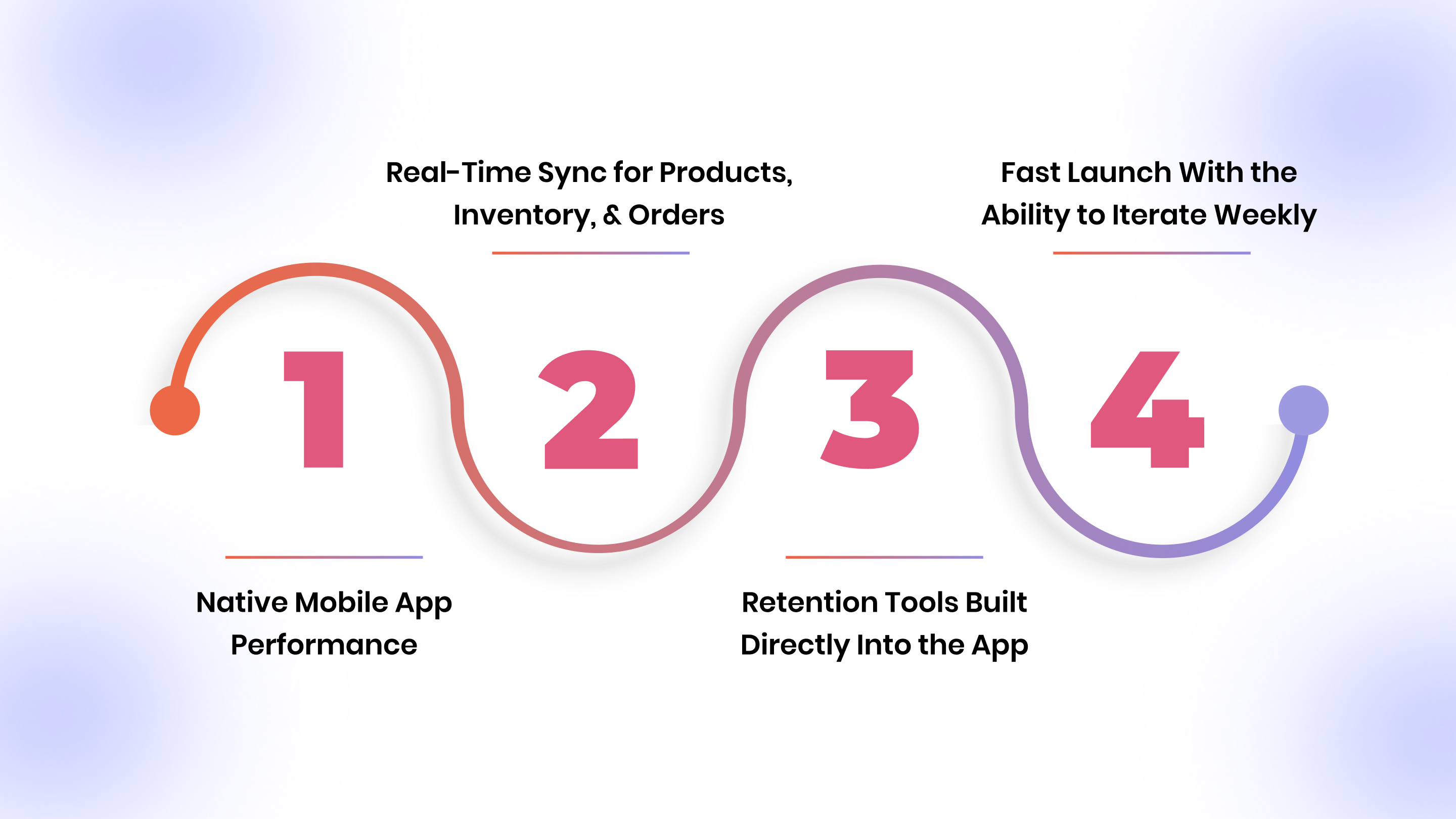
Key Capabilities That Matter the Most:
1. Native Mobile App Performance
Webview apps wrap your mobile site and slow down under real traffic. Native mobile apps built with frameworks like React Native load faster, handle complex navigation, and keep checkout stable during high-volume sales.
2. Real-Time Sync for Products, Inventory, and Orders
If your app doesn’t update instantly, customers see wrong prices or sold-out items. Strong builders sync products, variants, inventory, orders, and customer data in real time without manual updates or rebuilds.
3. Retention Tools Built Directly Into the App
An app without retention is just another storefront. Builders with native push notifications, personalization, and conditional logic help brands re-engage users based on behavior without relying on multiple third-party tools.
4. Fast Launch With the Ability to Iterate Weekly
Launching an app quickly matters, but weekly iteration matters more. Strong builders reduce launch friction by turning existing design assets into app-ready layouts, cutting down design and build time.
AppMaker's Eidolon AI turns Figma files or screenshots into reusable layouts, while Rubik AI adapts product visibility and content based on user behavior, letting teams test, iterate, and refine before launch without developer dependency.
Now that we’ve clarified what actually makes an app builder valuable in 2026, the next step is understanding how different builders are fundamentally structured.
Also Read: Mobile Shopping Revolution: Your Ultimate Guide to Consumer Preferences
Types of Ecommerce Mobile App Builders
Not all ecommerce mobile app builders serve the same purpose. Understanding these categories helps brands avoid choosing tools that don’t match their operating model.
1. Shopify-Native Ecommerce App Builders
These platforms are designed specifically around Shopify’s data model, APIs, and workflows. They offer deep sync, faster launches, and built-in ecommerce intelligence. For most Shopify brands, this category delivers the fastest ROI with the least friction.
2. Platform-Agnostic / From-Scratch App Builders
These builders support multiple ecommerce systems and CMS platforms, offering flexibility for mixed or multi‑store setups. However, they may need more configuration and integrations to match the depth of Shopify‑centric tools.
3. Managed App Development & Agencies
Agencies build fully custom apps from the ground up. While powerful, they are slower to launch, expensive to maintain, and heavily dependent on engineering resources. This option typically makes sense only for large enterprises with complex, non-standard requirements.
Once you understand these builder categories, it becomes much easier to evaluate real platforms side by side and see which ones truly fit Shopify growth-stage brands.
8 Best Ecommerce Mobile App Builders for Shopify Brands
Not all apps are built similarly, but they have their own strength. Below is a practical comparison of the leading ecommerce mobile app builders, based on real-world usability, scalability, and ecommerce relevance.
1. AppMaker
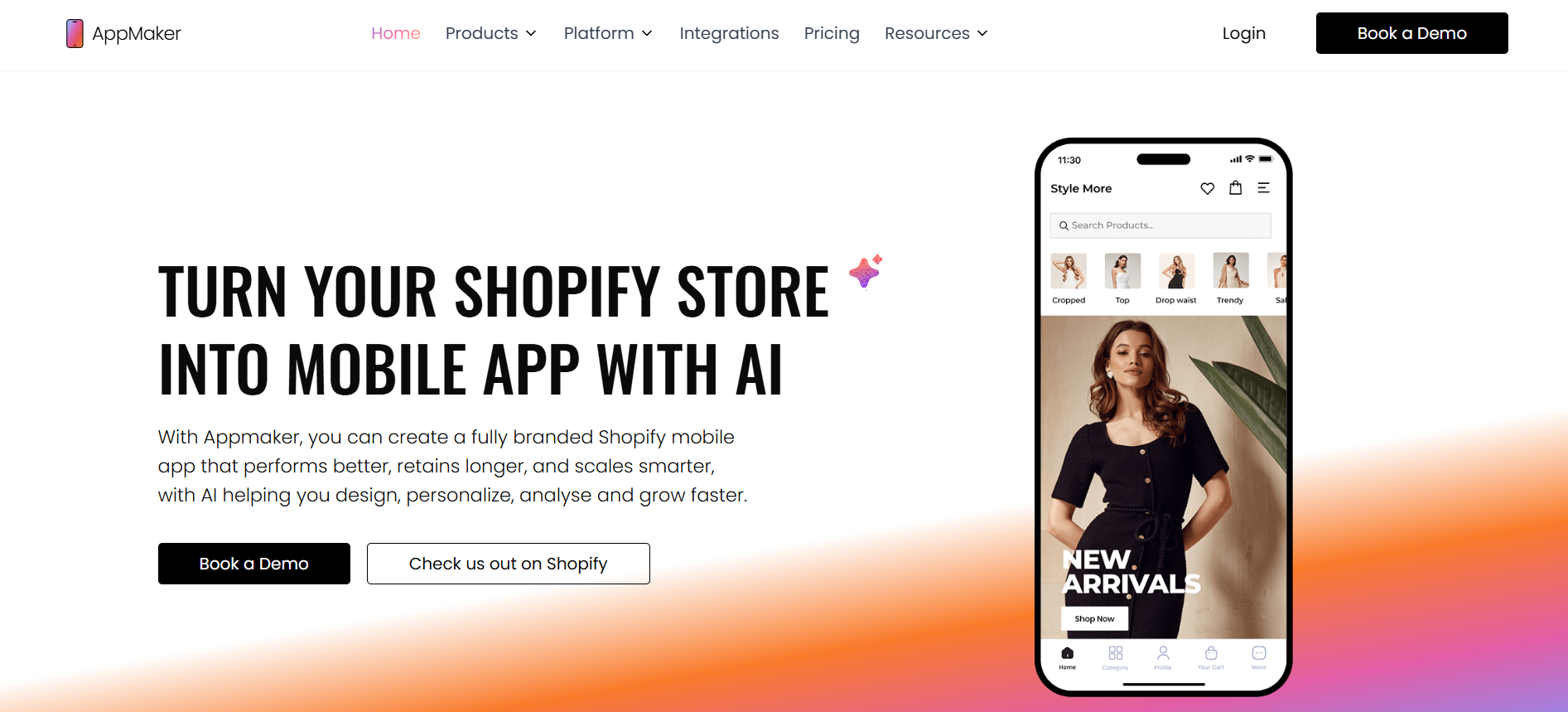
AppMaker enables ecommerce teams to build native apps with no-code control for marketers, developer extensibility, and real-time Shopify sync. Designed for $1M–$10M DTC brands, it drives post-install engagement, repeat purchases, and long-term customer retention.
Key strengths:
- True app-level customization (not template-based): Unlike most mobile app builders that rely on fixed templates, AppMaker allows brands to fully customize app layouts, components, and user flows using reusable blocks and conditional logic.
- AppMaker Studio: A drag-and-drop CMS that lets teams manage home layouts, banners, PDPs, and content without code.
- Eidolon AI: Converts Figma files or screenshots into reusable app layouts, reducing design-to-launch time.
- John AI: A plain-English analytics assistant that answers questions like “Which products drive the most repeat purchases?”
- Push notifications and conditional blocks: Enable behavior-based messaging and personalized experiences.
- Code blocks and extensibility: Allow teams to add custom logic and advanced workflows when needed, without rebuilding the app.
- Integration support (160+): Works with a wide range of ecommerce, marketing, analytics, and loyalty tools to fit existing tech stacks.
- Multi-lingual support: Enables localized app experiences for brands selling across regions or international markets.
- Native iOS and Android apps: Built on React Native for performance and scalability.
Best for: US-based Shopify brands focused on increasing AOV, repeat purchases, and long-term customer value that need real app customization beyond templated mobile app builders, without adding engineering overhead.
Pricing: Starts at $599 per month + 2% of in-app sales and a 14-day free trial option.
2. Fuego
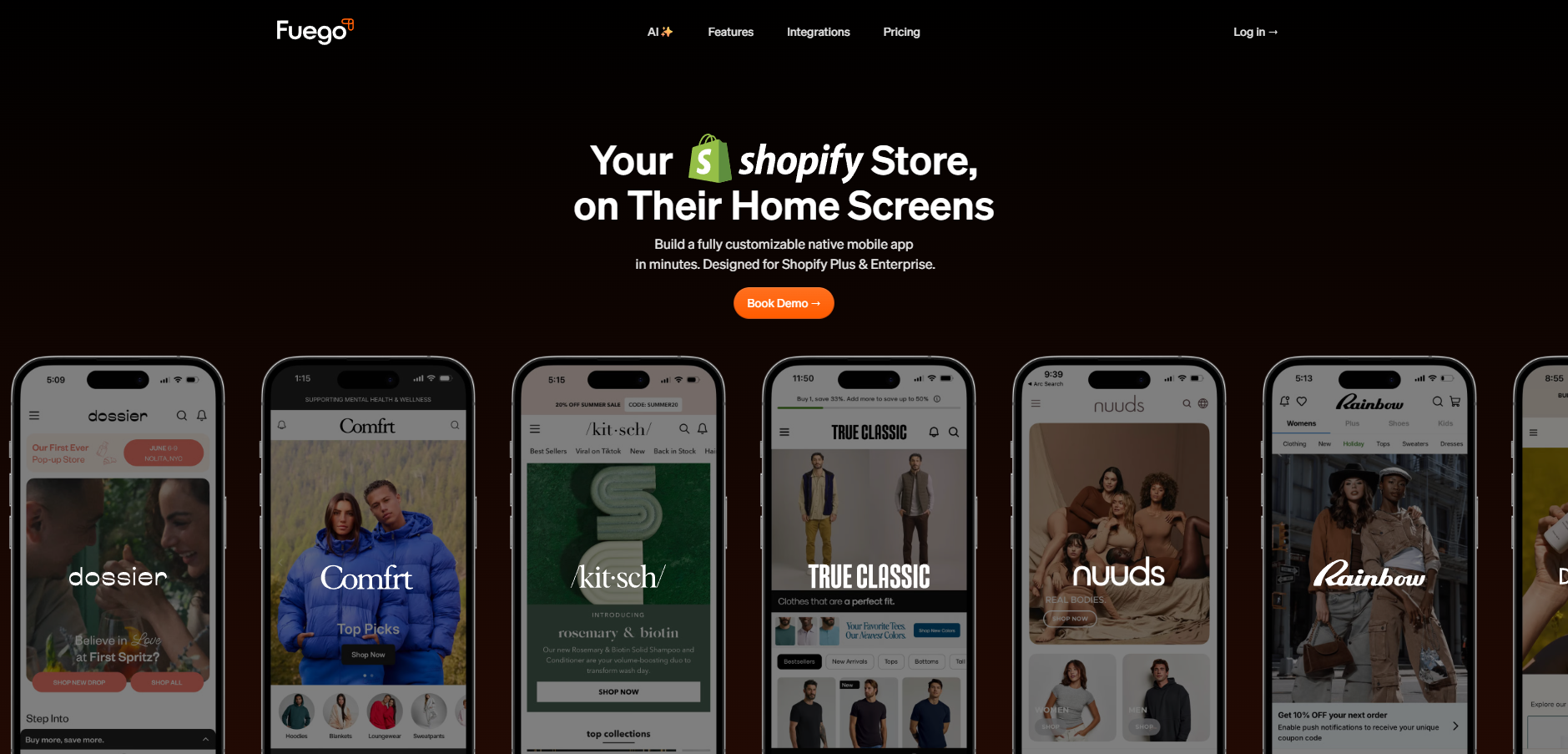
Fuego is an ecommerce mobile app builder that lets Shopify merchants launch customizable native iOS and Android apps with engagement and analytics tools designed to enhance mobile commerce and customer retention.
Key strengths:
- Native mobile app experience: Builds fully customizable iOS and Android mobile apps for Shopify stores without code.
- Engagement and retention tools: Supports unlimited push notifications, scheduling and segmented campaigns, and community engagement features.
- Customization and design: Drag-and-drop builder with flexible screen and block layouts tailored to brand needs.
- AI-enhanced features: Includes AI-assisted creative tools to help generate app content and UI elements.
- Analytics and ecosystem: Provides real-time analytics and integrates with numerous Shopify apps and third-party services.
Best for: Shopify merchants (commonly Plus and higher-growth brands) that want a customizable native mobile app with advanced engagement features and are comfortable evaluating the onboarding and setup effort.
Pricing: Starts at $999/month
3. Tapcart
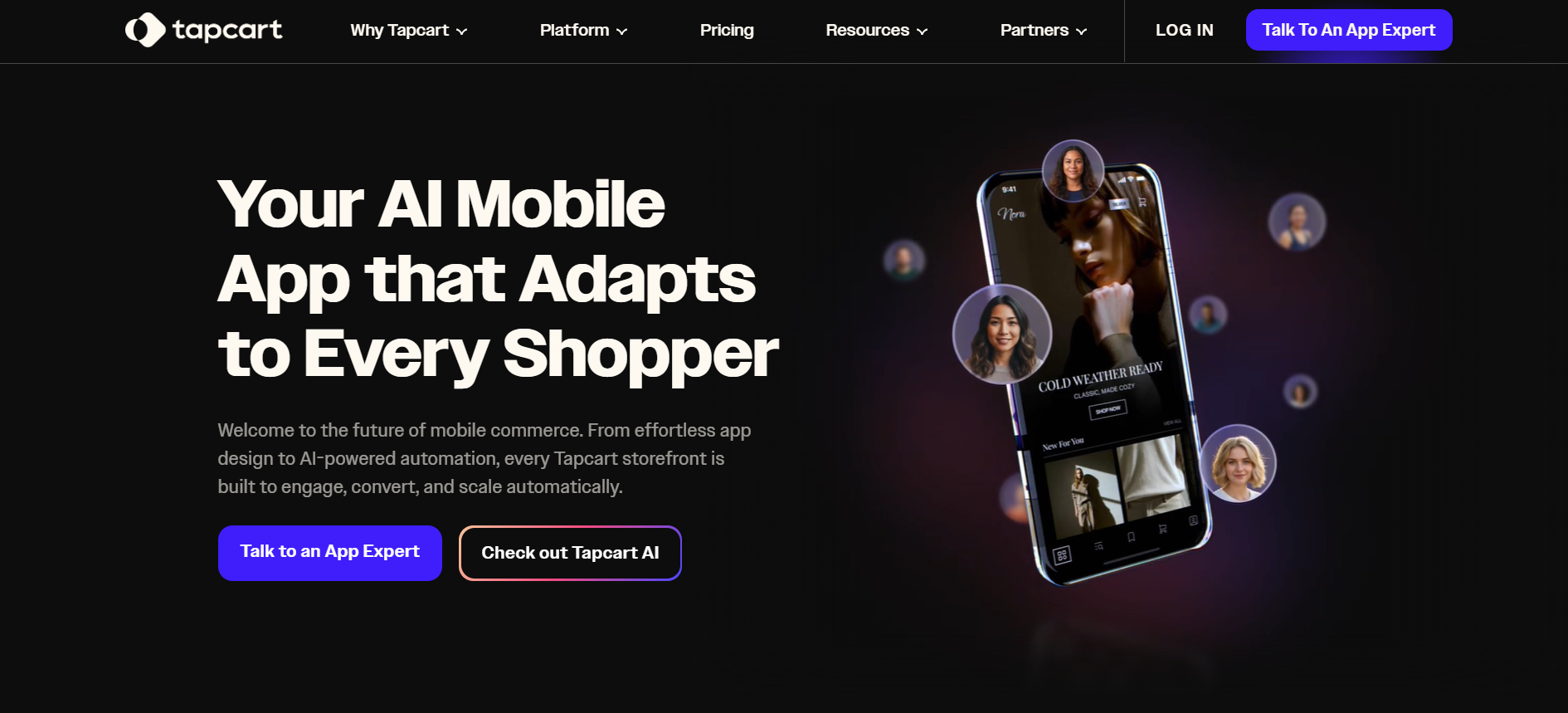
Tapcart is a template-led ecommerce app builder designed for speed and simplicity. It allows brands to quickly launch native apps with pre-built layouts, making it ideal for smaller teams or merchants prioritizing fast time-to-market.
Key strengths:
- Predefined templates: Ready-to-use layouts for home screens, product pages, and carts to reduce launch time.
- Drag-and-drop CMS: Simple interface for marketing teams to update banners, content, and promotions without coding.
- Push notifications: Supports basic retention campaigns for promotions, offers, and abandoned cart reminders.
- Quick deployment: Optimized for rapid app launch with minimal setup effort.
- Cross-platform support: Native iOS and Android apps built with standard frameworks for consistent performance.
Best for: Small to mid-market Shopify brands seeking a fast, easy app launch with minimal technical overhead, but with limited customization for advanced workflows or complex retention strategies.
Pricing: Starts at $250/month
4. Plobal Apps
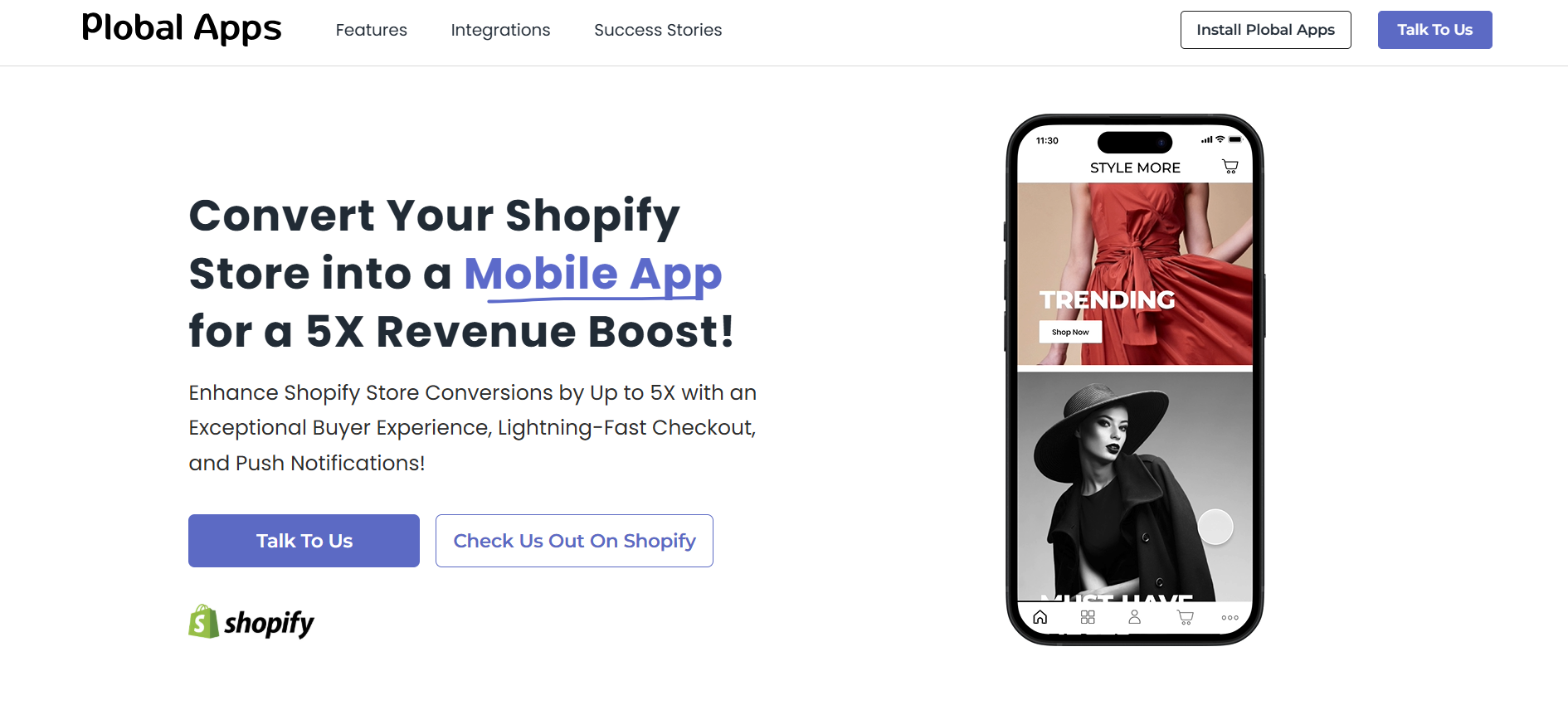
Plobal Apps is an ecommerce app builder designed around retention-first features, including push notifications, segmentation, and in-app campaigns. It combines Shopify integration with advanced retention tools for brands ready to invest in setup.
Key strengths:
- Retention-focused workflows: Supports segmented push campaigns, behavior-driven messaging, and loyalty triggers to drive repeat purchases.
- Shopify sync: Integrates with products, orders, and customer data for accurate inventory and checkout flows.
- Customizable app experience: Offers flexible home layouts, banners, and product pages to match brand identity.
- Analytics & insights: Provides reporting on engagement, conversions, and customer retention for data-driven decisions.
- Marketing-friendly updates: Drag-and-drop interface allows content, offers, and layouts to be modified without developers.
Best for: Mid-market Shopify brands that prioritize structured retention campaigns and personalized experiences, are comfortable with a longer onboarding process to use advanced features.
Pricing: Custom Pricing
5. Shopney
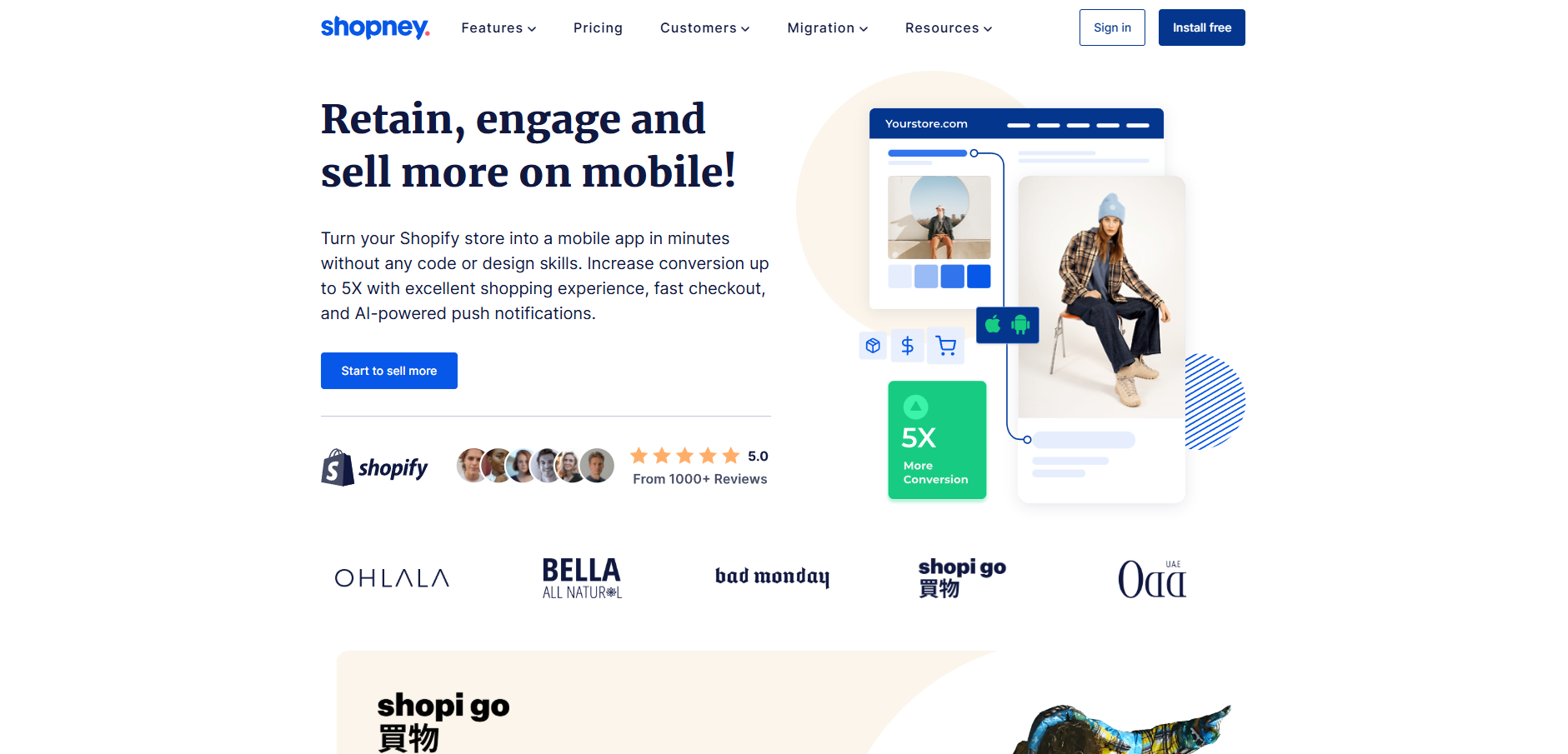
Shopney is an ecommerce mobile app builder that converts Shopify stores into fully branded iOS and Android mobile apps with no coding required. It’s designed to help Shopify merchants increase conversions, improve retention, and reduce marketing costs through native app experiences and advanced engagement features.
Key strengths:
- No-code drag-and-drop design: Easy visual editor lets merchants build and customize app layouts, themes, and product showcases without design skills.
- Unlimited push notifications: Run unlimited automated push campaigns to engage users and boost conversions without additional costs.
- Shopify sync & integrations: Real-time sync with Shopify products, orders, and collections, plus support for popular apps like loyalty, reviews, and analytics solutions.
- In-app marketing & chat: Built-in in-app chat and marketing automation help brands engage users directly and shorten the path to purchase.
- Mobile-first features: Includes back-in-stock notifications, abandoned cart alerts, multi-language & currency support, and live selling capabilities (on higher plans).
Best for: Mid-market to high-growth Shopify brands that want a customizable, feature-rich mobile app with strong engagement and retention tools without needing technical development resources.
Pricing: Starts at $ 149 /month
6. OneMobile
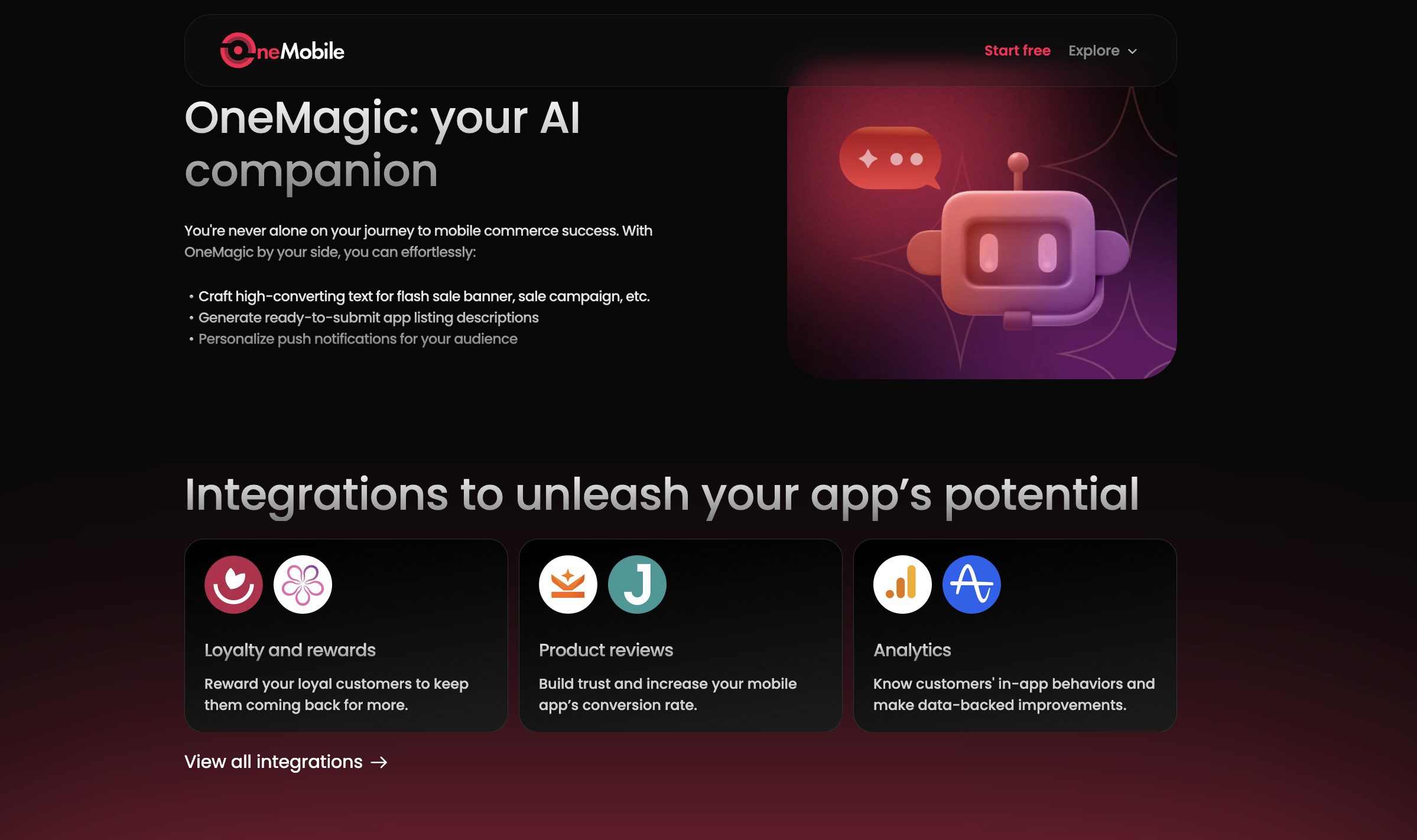
OneMobile is a Shopify-focused ecommerce mobile app builder designed to help brands launch fast, conversion-driven native apps with minimal operational complexity. It emphasizes performance, retention tooling, and streamlined setup for merchants who want an app-first growth channel without heavy technical lift.
Key strengths:
- Native iOS and Android apps: Builds fully native apps optimized for speed, stability, and smooth checkout experiences under real traffic.
- Shopify-first architecture: Real-time sync for products, collections, inventory, and customer data ensures pricing and availability stay accurate without manual intervention.
- Built-in retention features: Supports push notifications, automated campaigns, and behavior-triggered messaging to drive repeat purchases.
- Customizable design system: Flexible layouts and visual components allow brands to align the app with their identity without deep development work.
- Fast onboarding workflow: Structured setup process reduces launch friction and helps brands move from store to app quickly.
- Analytics compatibility: Integrates with common tracking and marketing tools to support performance measurement and optimization.
Best for: Shopify brands that want a performance-focused native mobile app with built-in retention tools and a fast launch path, without relying on a complex multi-platform stack.
Pricing: Starts at $99/month
7. Appy Pie
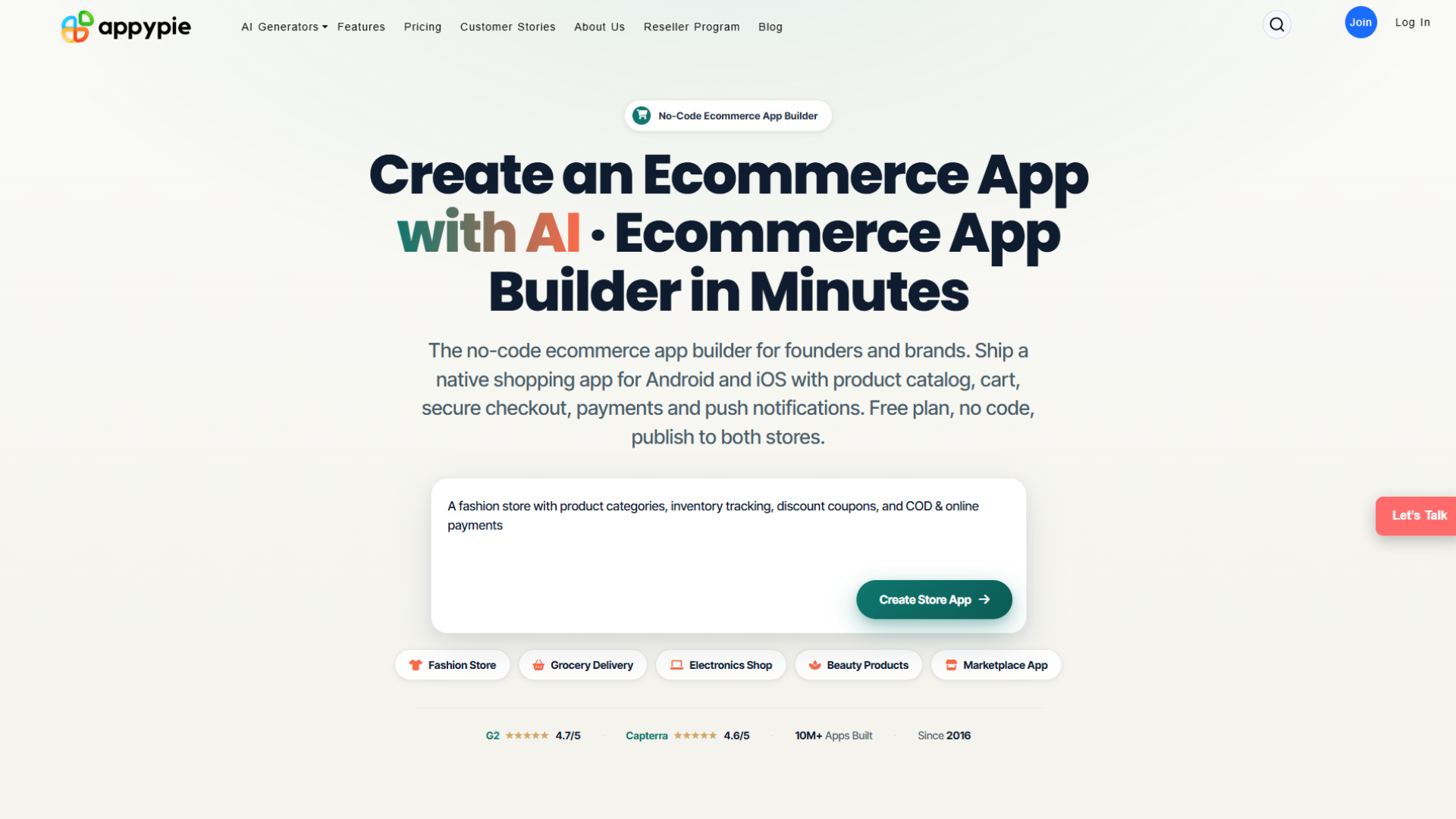
Appy Pie’s e-commerce app builder helps businesses turn their online stores into mobile apps without requiring extensive coding knowledge. It enables businesses to create customized Android and iOS ecommerce apps with features designed to improve shopping experiences, customer engagement, and mobile sales.
Key strengths:
- Native mobile app experience: Create customized Android and iOS ecommerce apps for online stores without coding.
- Ecommerce functionality: Supports product catalogs, shopping carts, secure payments, order management, and customer accounts.
- Engagement tools: Helps businesses connect with customers through push notifications and personalized mobile experiences.
- Customization and design: Lets businesses customize app layouts, branding, colors, and features to match their online store.
- AI-powered app creation: Uses AI to simplify app development and help businesses turn their ecommerce ideas into functional mobile applications.
Best for: Ecommerce businesses, startups, retailers, and online store owners that want to launch a branded mobile shopping app without investing heavily in traditional app development.
Pricing: Free to build and preview, with paid plans available for publishing and advanced app features.
8. MobiLoud
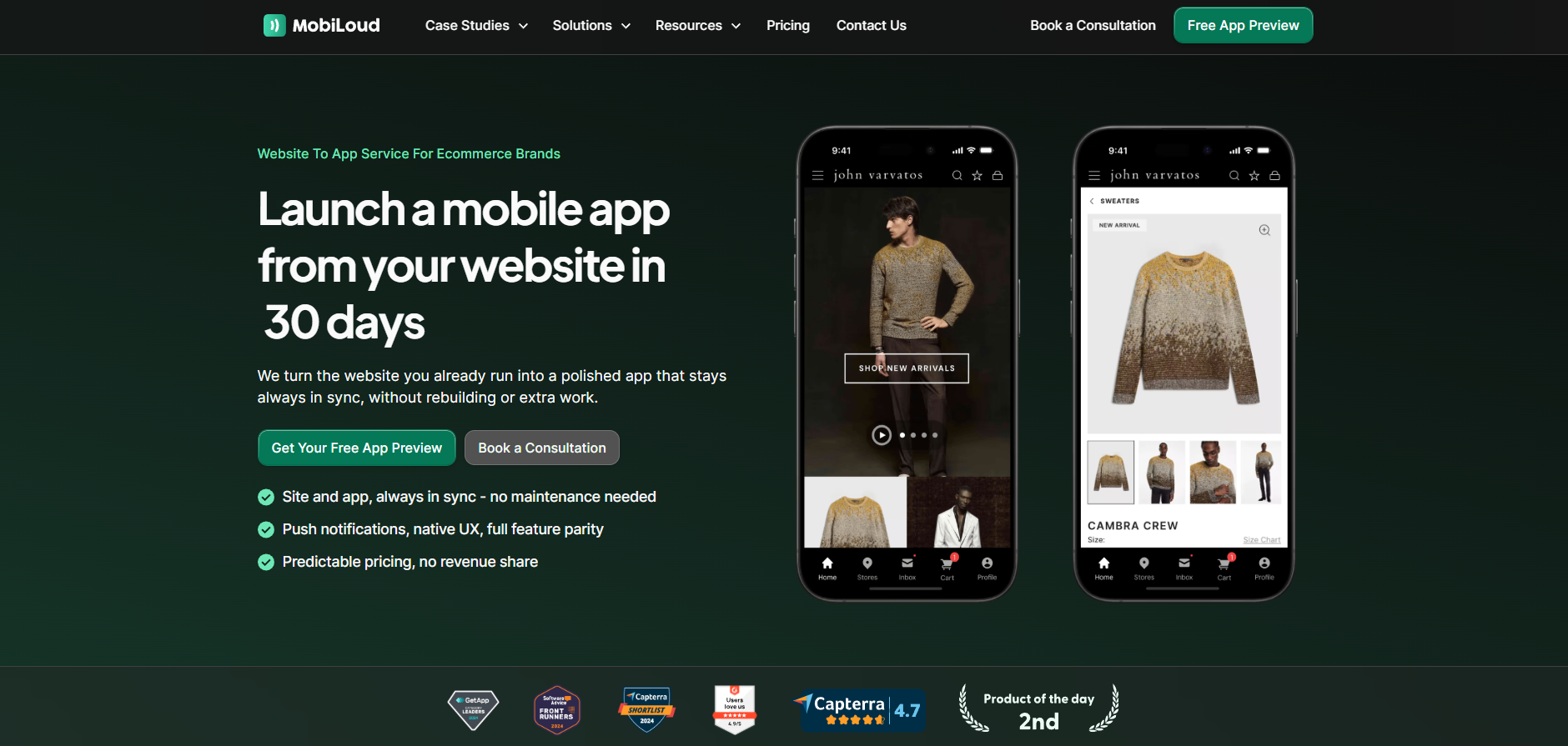
MobiLoud is a managed ecommerce app builder that converts your Shopify store (or any existing ecommerce site) into fully native iOS and Android mobile apps without rebuilding your store from scratch. It focuses on seamless real-time sync, ongoing support, and high engagement through native features.
Key strengths:
- Website-powered native apps: Use your existing Shopify site as the app foundation. This means all your products, collections, checkout flows, and customizations carry over in real time without duplicate content or separate CMS work.
- Push notifications & engagement: Includes automated push messages for cart recovery, order updates, and inactive user re-engagement to drive repeat purchases.
- Fully managed build & launch: The MobiLoud team handles app setup, publishing to Apple & Google app stores, maintenance, and ongoing updates, reducing internal workload.
- Deep integration & custom support: Works with custom themes, third-party tools, headless setups and advanced Shopify workflows with minimal restrictions.
- One storefront to maintain: Because the app is powered by your live website, updates you make online automatically appear in the app without separate rebuilds.
Best for: Mid-market to enterprise ecommerce brands that want a native mobile app built from their existing Shopify site with managed setup, ongoing support, real-time sync, and engagement tools.
Pricing: Starts at $399/month
Comparing tools is only half the decision. The bigger question is whether a builder is the right model at all or if a custom app agency makes more sense.
Ecommerce App Builder vs App Development Agency: What Growing Brands Miss
Many ecommerce brands explore agencies first, assuming custom development equals flexibility. In reality, agencies introduce longer timelines, higher coordination overhead, and ongoing dependency for even small app changes. Here’s a clear differentiator between them:
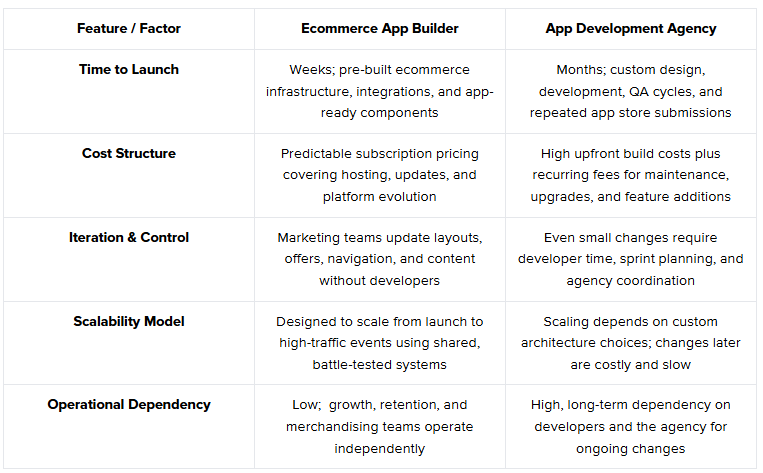
With the builder-versus-agency trade-offs clear, the final decision comes down to alignment: your revenue stage, team structure, growth goals, and technical needs.
Also Read: Tips to Improve Customer Loyalty with A Shopify Mobile App
How to Choose the Right Ecommerce Mobile App Builder for Your Brand?
Choosing a builder means judging whether it can support how your business runs today and how it needs to scale tomorrow.
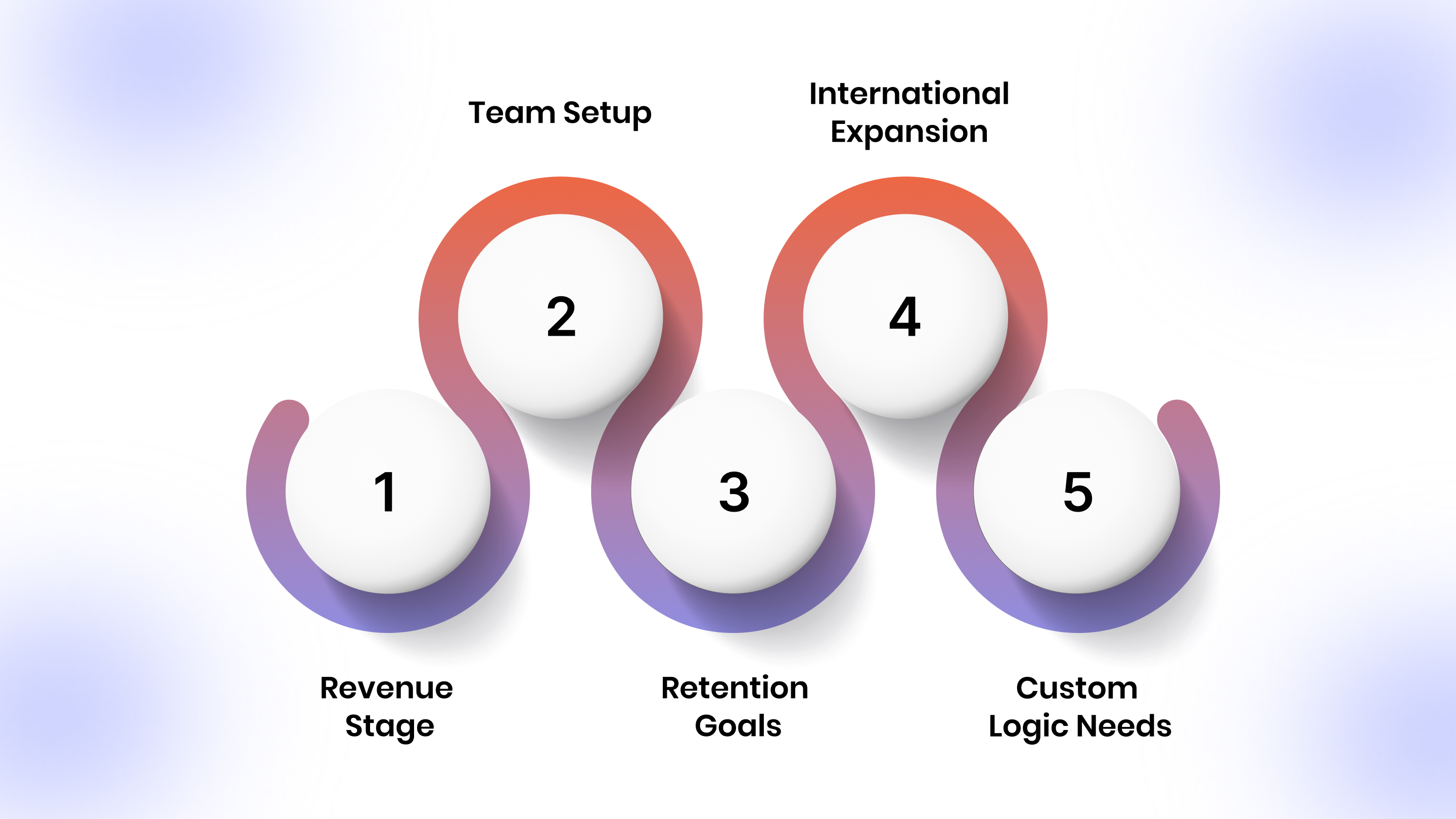
A practical decision framework includes:
- Revenue stage: $1M–$3M brands need fast time-to-market and weekly iteration; $5M–$10M brands need stable infrastructure that supports high-traffic launches and repeat buyers.
- Team setup: Marketing-led teams benefit from no-code control to manage layouts, campaigns, and content without engineering bottlenecks.
- Retention goals: The builder should support push notifications, personalization, and behavior-driven flows that increase repeat purchases and lifetime value.
- International expansion: Multi-currency pricing, localized content, and region-specific checkout experiences are essential as cross-border demand grows.
- Custom logic needs: Support for conditional logic and extensibility prevents rework when workflows, offers, or customer journeys become more complex.
Not every builder covers all of these needs together. AppMaker is structured around no-code iteration, real-time sync, and retention, which aligns well with how growth-stage ecommerce teams operate. Once the right builder is chosen, the strategic shift many brands make next is moving away from mobile web altogether and toward native, app-first experiences.
Why Ecommerce Brands Are Replacing Mobile Web With Native Apps?
Native apps outperform mobile web because they’re built for repeat buyers, not one-time sessions. In fact, 50% of U.S. online consumers regularly use mobile shopping apps to browse and purchase.
They offer:
- Higher conversion rates through native performance, smoother navigation, and faster product-to-checkout flows.
- Push-driven re-engagement that brings customers back based on behavior, not inbox fatigue.
- App-only offers that incentivize loyalty, repeat purchases, and higher lifetime value.
- Faster checkout with saved addresses, payment methods, and preferences.
- Personalization powered by in-app behavior, purchase history, and real-time interactions.
Conclusion
The best ecommerce mobile app builders in 2026 aren’t defined by feature volume alone. They're defined by how well they help brands move faster, retain customers, and scale without operational drag. As mobile becomes the primary repeat-purchase channel, ownership, performance, and iteration speed matter more than ever.
AppMaker combines no-code flexibility for marketers with AI-assisted design and native iOS and Android performance. It supports real-time Shopify sync, personalization based on behavior, and frequent updates without relying on developers.
If your goal is to turn your mobile app into a repeat-revenue channel, AppMaker offers a clear, scalable path forward. Contact us now to see how AppMaker helps growing ecommerce brands build, optimize, and scale high-performing mobile apps!
FAQs
1. What is the best ecommerce mobile app builder for Shopify in 2026?
For Shopify brands prioritizing retention, speed, and ownership, AppMaker leads in 2026 with real-time Shopify sync, native performance, AI-assisted design, and no-code control.
2. Are no-code ecommerce app builders scalable?
Yes, when built on native frameworks like React Native and backed by extensibility. No-code ecommerce apps support high-traffic events. They offer frequent releases and grow without degrading performance.
3. How long does it take to launch a Shopify mobile app?
Most Shopify brands can launch an AppMaker-powered app in 2-4 weeks, depending on design inputs, content readiness, and app store approvals.
4. Ecommerce app builder vs custom app development: what’s better?
App builders win for most growth-stage brands by enabling weekly iteration, predictable costs, and built-in ecommerce intelligence. Custom development fits only highly specialized enterprise cases.
5. Do ecommerce apps really improve retention and repeat purchases?
Yes. Native apps drive higher repeat revenue through push notifications, behavior-based personalization, faster checkout, and app-exclusive experiences that mobile web can’t replicate.