

























Most small businesses are seeing a clear shift in how customers browse, engage, and make purchase decisions on mobile devices. Mobile apps are no longer limited to large brands, as smaller businesses are using them to create faster and more personalized shopping experiences. That shift is changing how customers interact with businesses on a daily basis.
At the same time, relying only on marketplaces or websites does not give full control over customer relationships and repeat purchases. In the United States, about three-quarters of small businesses selling on Amazon generate less than 30 percent of their sales through the marketplace. Even in 2025, 23% of professionals reported earning only 11 to 15% of their total sales from Amazon.
In this article, a clear breakdown explains the benefits of mobile apps for small businesses and why they are becoming essential in 2026. The insights shared here will help you understand how mobile apps can drive higher sales, stronger retention, and long-term business growth.
Key Takeaways
- Mobile apps shorten the path to purchase with saved details and faster checkout, reducing drop-offs and improving conversions.
- App-driven channels can increase net new revenue by around 29% while driving more consistent repeat purchases.
- App users engage up to 4X more and spend nearly 7 minutes per session, increasing purchase intent and interaction.
- Higher conversion rates, including cases reaching around 9%, show how apps outperform mobile websites in real buying scenarios.
- Building a mobile app can cost $20,000 to $150,000 with custom development, while no-code options start around $599 per month, making it more accessible.
Why Mobile Apps Matter More for Small Businesses in 2026?
Customer expectations around speed, convenience, and personalization have changed, making mobile apps a direct driver of revenue and repeat purchases. Here is why mobile apps are becoming essential for small businesses:
- Customers expect instant buying experiences: Apps remove loading delays, repeated logins, and checkout friction, which directly reduces drop-offs during purchase.
- Revenue is shifting toward owned channels: Appmaker study found that using a mobile app sales channel results in an average increase of around 29% in net new revenue.
- Repeat purchases depend on visibility: Apps keep the brand present on a customer’s device, increasing the chances of frequent visits and faster buying decisions.
- Customer journeys are shorter inside apps: Saved preferences, addresses, and payment methods reduce steps between discovery and purchase.
- Marketing becomes more direct and predictable: Notifications and in-app messaging reach users instantly without depending on external platforms or timing algorithms.
- Small businesses are competing on experience, not just price: Faster browsing, smoother navigation, and personalized offers make apps a clear differentiator in crowded markets.
Recognizing the shift is useful, but timing matters just as much when deciding to act on it.
When Is the Right Time to Launch a Mobile App?
The right moment to launch a mobile app appears when growth starts getting limited by experience, engagement, and conversion gaps. Here are clear signals that show a mobile app can unlock the next stage of business performance:
- Repeat customers drive a meaningful share of revenue: A growing base of returning buyers signals demand for faster access, saved preferences, and frictionless repeat purchases.
- Mobile traffic dominates but conversions lag behind: High mobile visits combined with inconsistent purchases indicate experience gaps that apps can reduce effectively.
- Customer acquisition costs keep increasing steadily: Rising spend on ads or marketplaces makes retention and lifetime value more important for maintaining profitability.
- Product catalog becomes harder to navigate on web: Expanding inventory creates discovery challenges that require structured browsing and faster in-app navigation.
- Users interact but do not return frequently: Strong initial engagement with weak repeat visits suggests the need for a persistent and accessible channel.
- Marketing efforts show inconsistent performance across channels: Fluctuating results highlight the need for a direct communication layer that ensures consistent visibility.
Once the timing becomes clear, the next step is understanding what kind of outcomes a mobile app can actually deliver.
Benefits of Mobile Apps for Small Businesses in 2026
Mobile apps give small businesses a faster, more direct way to drive sales, retention, and customer engagement. These benefits go beyond convenience and directly impact conversions, repeat purchases, and overall revenue growth.
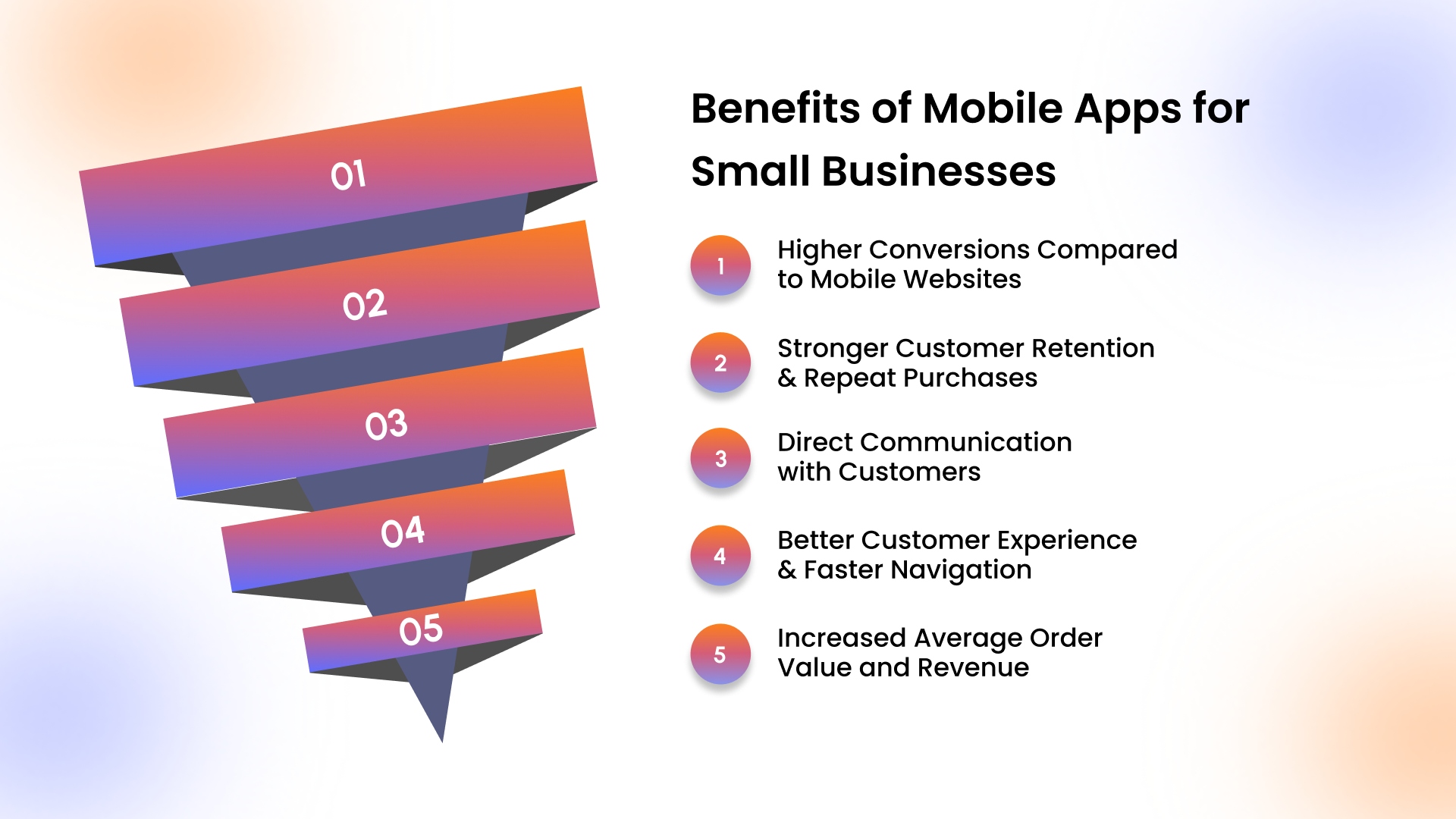
Higher Conversions Compared to Mobile Websites
Mobile apps reduce friction in the buying process, making it easier for users to complete purchases without interruptions. A faster and more controlled experience directly improves conversion rates compared to mobile websites.- Faster checkout experience: Saved payment details and addresses reduce the number of steps required to complete a purchase.
- Fewer drop-offs during purchase: Apps avoid redirects and slow-loading pages that often lead to cart abandonment.
- Consistent user sessions: Users can continue their journey without losing progress, improving completion rates.
Stronger Customer Retention and Repeat Purchases
Mobile apps create consistent touchpoints that make it easier for customers to return and engage regularly. Frequent interaction increases the likelihood of repeat purchases over time.- Push notifications for re-engagement: Timely updates on offers, carts, and restocks bring users back without active effort.
- Habit-driven usage: Regular app interaction builds familiarity, making it a preferred shopping channel.
- Improved customer loyalty: Consistent engagement strengthens long-term retention and repeat buying behavior.
Direct Communication with Customers
Mobile apps provide a direct communication channel without relying on third-party platforms or visibility controls. This allows businesses to reach users consistently and with greater relevance.- No dependency on algorithms: Messages reach users directly without being affected by feed rankings or platform limitations.
- Instant communication: Notifications are delivered immediately, increasing the chances of quick action.
- Personalized messaging: Communication can be tailored based on user behavior and preferences.
Better Customer Experience and Faster Navigation
Apps are built for speed and simplicity, making it easier for users to browse and complete actions without delays. A smoother experience reduces friction and keeps users engaged throughout their journey.- Faster load times: Apps deliver content instantly without repeated page loading.
- Seamless browsing experience: Structured layouts help users find products quickly and easily.
- Saved preferences: Stored details reduce effort for repeat actions and improve convenience.
Increased Average Order Value and Revenue
Mobile apps create more opportunities to guide users toward higher-value purchases during their shopping journey. A controlled environment allows businesses to present relevant products and offers at the right moment.- Upselling opportunities: Apps highlight related or complementary products during browsing.
- Personalized offers: Targeted promotions encourage users to add more items to their cart.
- Focused in-app experience: Fewer distractions keep users engaged and increase purchase value.
These advantages become more meaningful when compared directly with how mobile websites perform in similar scenarios.
Mobile App vs Mobile Website: Which Performs Better?
Performance differences between mobile apps and websites directly shape conversion rates, engagement depth, and long-term customer value. The comparison below highlights how both channels perform across critical business metrics:
The comparison makes the gap visible, but choosing how to build an app brings another layer of decision-making.
Build vs No-Code: What Small Businesses Should Choose
The choice between custom development and no-code platforms directly impacts how quickly a business can launch, test, and scale its mobile strategy. Here is how both approaches compare in real business scenarios:
- Custom app development approach:
- High upfront investment covering design, development, testing, and deployment across multiple platforms
- A longer time to market often delays growth opportunities and experimentation cycles
- Greater control over advanced features, but requires continuous developer involvement for updates and fixes
- Higher maintenance effort, as every change requires technical resources and a longer implementation time
- No-code app building approach:
- Lower initial cost with pre-built components that reduce development overhead and speed up launch timelines
- Faster deployment cycles, allowing businesses to test ideas, campaigns, and features without long delays
- Easier content updates and iteration without depending on developers, enabling quicker response to user behavior
- Built-in integrations and tools reduce complexity while still supporting customization where required
- Impact on scaling and decision-making:
- Custom builds suit businesses with highly complex requirements and long-term technical investment capacity
- No-code solutions support faster scaling, quicker experimentation, and more efficient use of resources for growing businesses
The approach you choose influences both cost and speed, which makes understanding the financial side equally important.
How Much Does It Cost to Build a Mobile App for a Small Business?
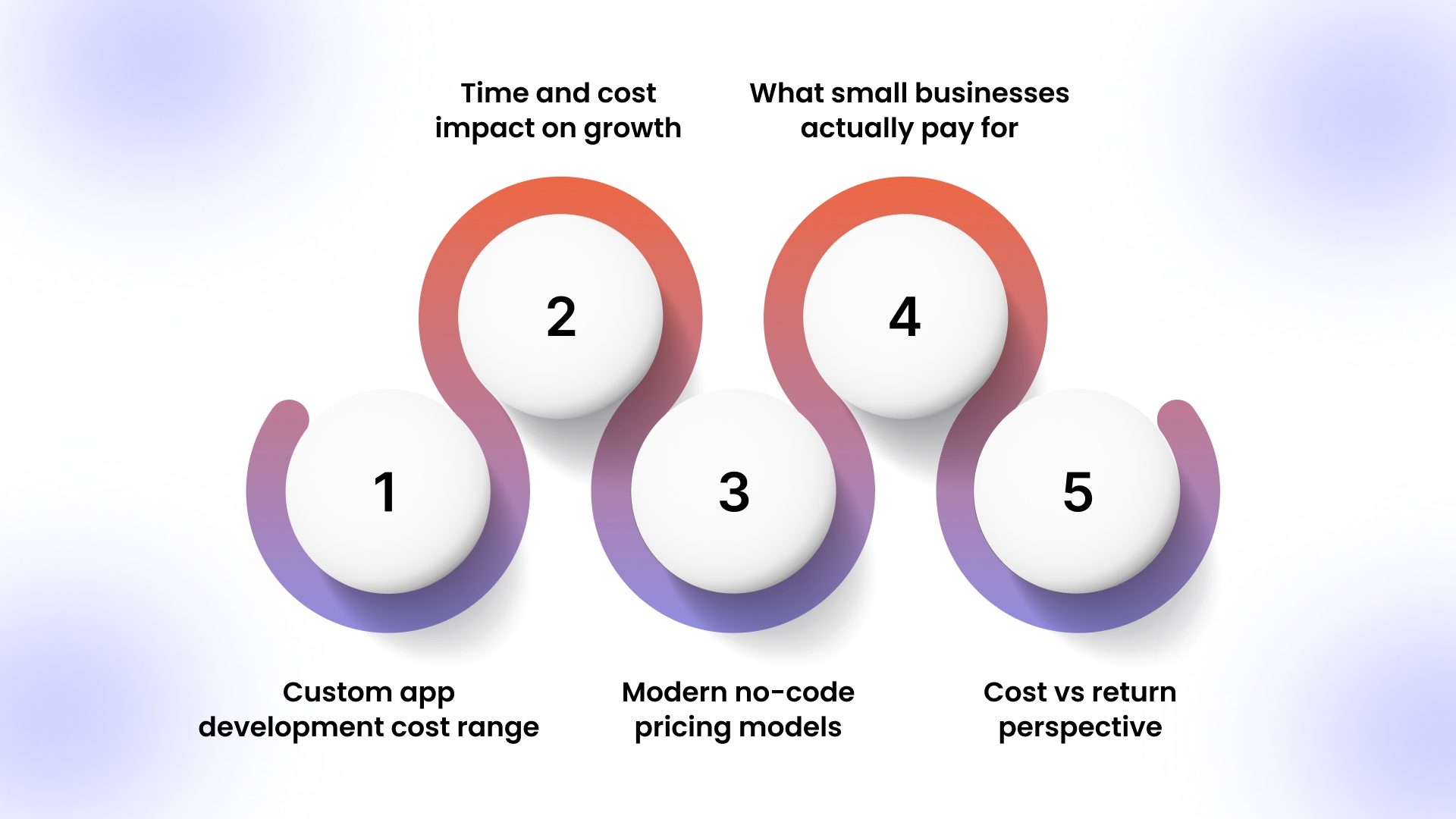
The cost of building a mobile app depends heavily on the approach chosen, with traditional development requiring a large upfront investment while modern platforms offer more flexible pricing. Here is how costs compare and what small businesses should realistically expect:
Custom app development cost range
- $20,000 to $150,000+, depending on features, platforms, and overall complexity
- Separate builds for iOS and Android increase both cost and time to launch
- Ongoing maintenance, updates, and fixes add recurring costs over time
Time and cost impact on growth
- Longer development cycles delay go-to-market and revenue generation opportunities
- High upfront investment increases risk without guaranteed adoption or return
- Iteration becomes slower, making it harder to respond to customer behavior quickly
Modern no-code pricing models
- Subscription-based pricing removes the need for a large upfront investment
- For example, Appmaker plans can start around $599 per month, with a small percentage of in-app sales
- Scaling plans offer deeper customization and personalization with pricing aligned to business growth
What small businesses actually pay for
- Core features like real-time sync, push notifications, and app management tools
- Personalization, automation, and analytics that directly impact conversions and retention
- Ongoing updates, support, and improvements without rebuilding the app from scratch
Cost vs return perspective
- Lower upfront cost, combined with faster launch, improves chances of early revenue generation
- Subscription models align cost with performance, reducing financial risk during scaling
- The ability to iterate quickly often delivers better long-term returns than one-time builds
Cost explains feasibility, but actual performance data shows what businesses can expect once the app is live.
Real Impact of Mobile Apps on Business Growth
Real-world app data shows clear improvements in engagement, session time, and conversions, which directly influence how small businesses grow through mobile channels. Here is how mobile apps are impacting actual business performance:
- Deeper engagement and longer sessions:
- MobiLoud found that app users engage with brands 4X more on average
- Users spend nearly 7 minutes per session inside apps
- Longer sessions increase product discovery and purchase intent
- Higher conversion performance:
- One ecommerce app reported a 9% conversion rate within the app
- This is significantly higher than typical mobile website conversion rates
- Reduced friction and faster checkout contribute directly to this increase
- Strong adoption in competitive markets:
- The Fashion Nova app saw around 250,000 downloads in the United States in February 2025
- High download volumes reflect growing customer preference for app-based shopping
- Sustained growth across ecommerce segments:
- Revenue is forecast to increase by $665.91 billion across all ecommerce categories in the United States by 2029
- Businesses adopting mobile-first channels are better positioned to capture this growth.
With clear outcomes established, the focus shifts to how businesses can achieve these results without added complexity.
How Appmaker Helps Small Businesses Build and Scale Mobile Apps?
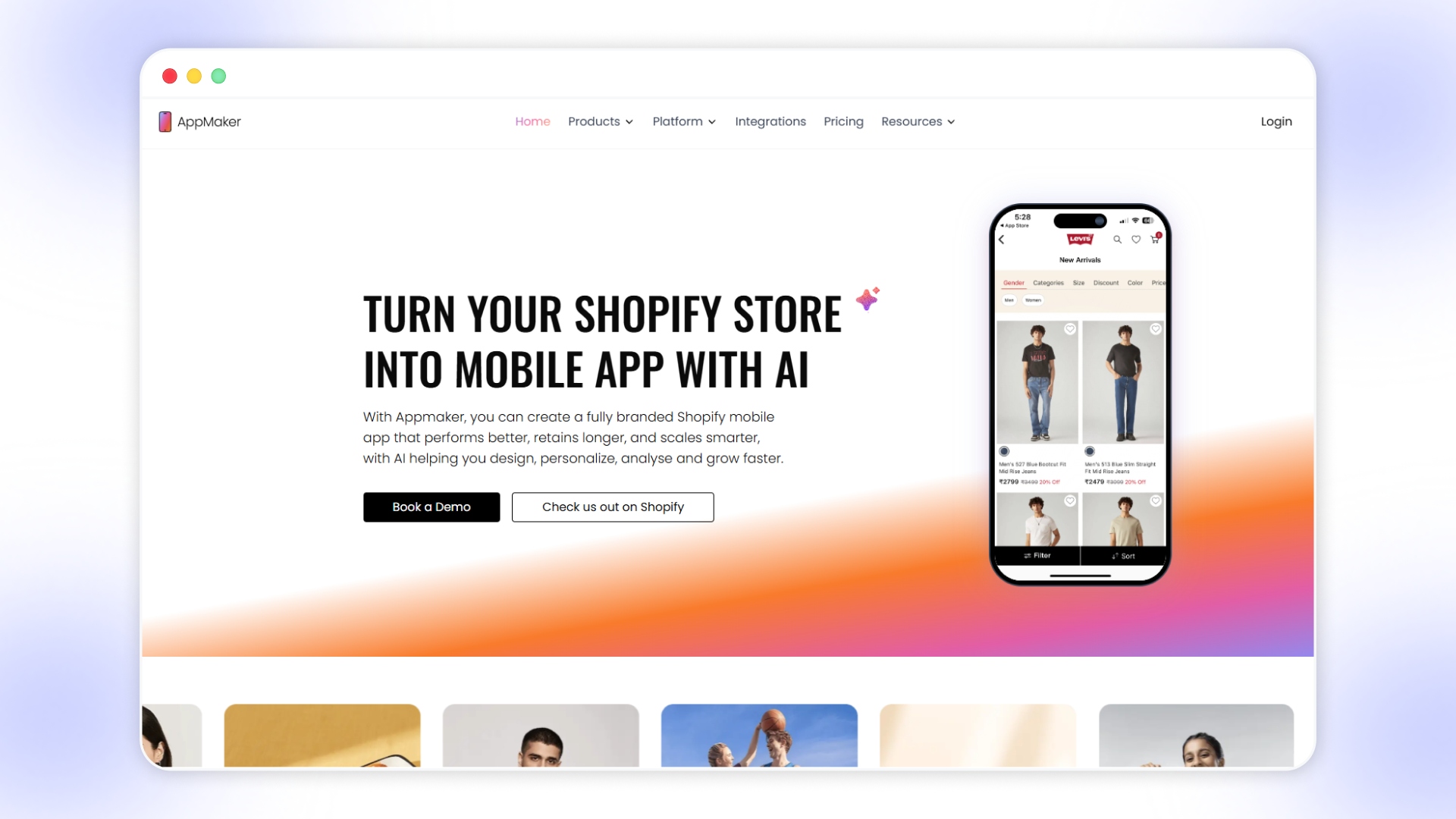
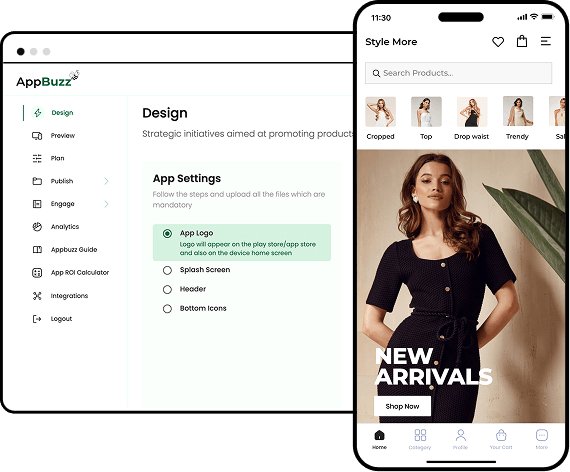
Building and managing a mobile app no longer requires technical expertise or long development cycles when the right platform is in place. Appmaker gives small businesses a faster way to launch, manage, and grow their mobile apps without complexity.
- No-code app builder for faster launches: Create fully branded iOS and Android apps using a drag-and-drop interface without writing code or hiring developers.
- Real-time Shopify sync: Products, orders, and customer data stay updated automatically, removing manual effort and ensuring consistency across channels.
- AI-powered design and personalization: Tools like Eidolon AI convert Figma files or screenshots into app layouts, while Rubik’s AI adapts content, layouts, and recommendations based on user behavior.
- Smarter insights with John AI: Get real-time answers on sales trends, product performance, and customer behavior to make faster and more informed decisions.
- Push notifications for retention and sales: Send targeted campaigns for abandoned carts, promotions, and restocks to bring users back and increase repeat purchases.
- Flexible customization with Studio and Code Blocks: Add banners, videos, product sections, and custom features while keeping full control over app functionality.
- Proven results across industries: Brands across fashion, pet supplies, personal care, and food see up to 70% app revenue contribution, 4x higher conversions, and up to 3x repeat purchase rates.
- Built for growth-focused businesses: Designed for scaling brands, Appmaker supports higher engagement, better conversions, and stronger customer retention through mobile-first experiences.
Wrapping Up
Mobile apps are no longer an optional add-on for small businesses, as they directly influence how customers engage, purchase, and return. Businesses that move toward app-first experiences gain better control over growth, customer relationships, and long-term revenue.
Turning that shift into real results requires the right platform that simplifies building, managing, and scaling your app without slowing your business down.
Book a Demo with Appmaker to see how you can launch your mobile app faster, improve conversions, and build a stronger, more direct connection with your customers.
FAQs
How much does it cost to build a mobile app for a small business?
The cost varies depending on features, design, and development approach, but traditional app development can range from thousands to tens of thousands of dollars. No-code platforms reduce this cost significantly by removing the need for large development teams and long build cycles.Do small businesses really benefit from having a mobile app?
Small businesses benefit from mobile apps through improved customer engagement, faster purchase journeys, and better retention. Apps also create a direct channel that helps increase repeat purchases and overall customer lifetime value.How long does it take to build a mobile app for a business?
Traditional app development can take several months due to design, coding, and testing requirements. Modern app-building platforms allow businesses to launch much faster, often within weeks, depending on complexity.What features should a small business mobile app include?
A strong mobile app should include features like easy navigation, fast checkout, push notifications, and personalized product recommendations. Integration with existing systems and real-time updates also play an important role in improving performance.Is it better to have a mobile app or a website for a small business?
Websites remain important for discovery, but mobile apps provide a faster, more personalized experience for repeat users. Businesses often see better engagement and higher conversions when customers interact through an app.