





















People don’t open shopping apps just to browse. They open them to pick up where they left off. They expect the app to remember their choices, their likes, and their habits. When that doesn’t happen, the experience feels slow and disconnected.
In fact, 58% of smartphone users feel more positive about brands whose apps remember them and their past actions. That small detail changes how people shop, how long they stay, and whether they return.
This shift has pushed e-commerce apps to move beyond one-size-fits-all experiences. Today, winning apps adapt screens, products, messages, and timing to each shopper.
In this blog, we will discuss how mobile app personalization works, the strategies brands use, common challenges, and how to measure what actually works.
Overview
- Mobile app personalization tailors content, product recommendations, and app layouts based on user behavior, preferences, and context for each shopper.
- Effective personalization boosts engagement, encourages repeat purchases, and strengthens loyalty by showing users what matters most to them.
- Core approaches include content adaptation, UI/UX adjustments, push notifications, location-based targeting, lifecycle messaging, and AI-driven predictive recommendations.
- Data collection, segmentation, personalization engines, multi-channel delivery, and continuous testing are essential to implement precise, actionable personalization strategies.
- Tools like AppMaker’s Eidolon AI, John AI, and Rubik’s AI help dynamically adapt layouts, insights, and recommendations to create real-time, individualized shopper experiences.
What is Mobile App Personalization?
Mobile app personalization is the practice of customizing every user’s app experience based on their behavior, preferences, purchase history, and context, such as location or time of day. For e-commerce brands, it means showing each shopper products, offers, and content that matter most to them rather than generic recommendations. This approach increases engagement, encourages repeat purchases, and strengthens loyalty.
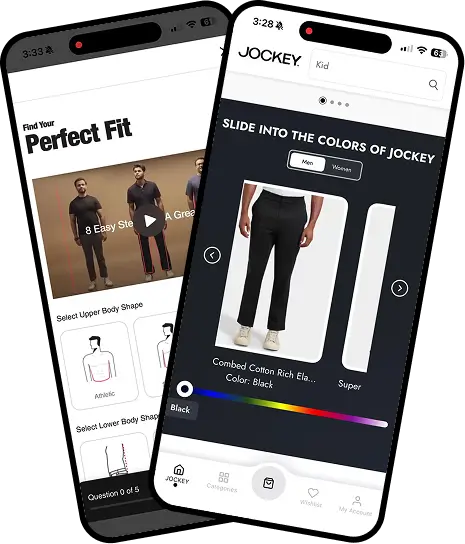
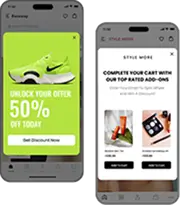
For instance, a fashion app can automatically highlight new arrivals in a user’s preferred size and style, while a beauty brand can showcase products similar to past purchases. Seasonal or location-based promotions can also appear automatically, making each interaction feel intentional and increasing the likelihood of conversion.
Now that you understand what mobile app personalization entails, let’s explore why tailoring experiences is important for engagement, conversions, and long-term success in e-commerce.
Why Mobile Personalization is Important for E-commerce?
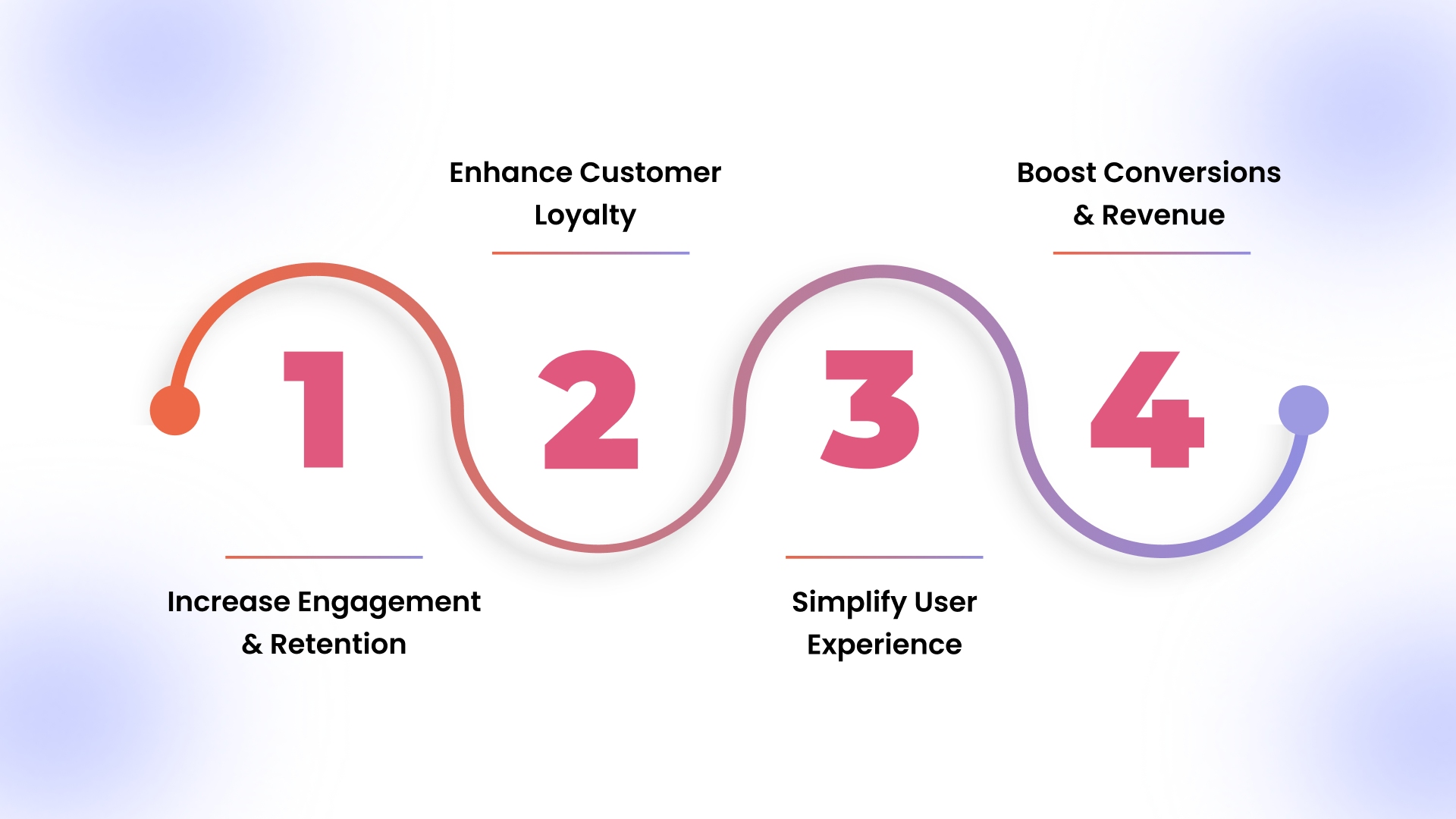
In e-commerce, every extra tap, scroll, or screen counts toward revenue. Mobile app personalization ensures users see products, promotions, and content that match their behavior, preferences, and shopping patterns. Here are several reasons why personalization matters:
1. Increase Engagement & Retention
Apps that surface products based on browsing history, past orders, and interaction patterns keep users returning. For example, a fashion retailer can automatically feature trending sneakers in the user’s size and color preference.
2. Enhance Customer Loyalty
Personalized rewards, milestone achievements, and early-access offers make users feel recognized. It supports long-term loyalty and encourages repeat engagement.
3. Simplify User Experience
Apps that reorder categories or highlight relevant products reduce friction and decision fatigue. This allows faster discovery and a smoother, more intuitive user experience.
4. Boost Conversions & Revenue
Targeted campaigns like abandoned cart notifications or recommended add-ons increase purchase likelihood. A beauty app, for instance, can trigger a 24-hour discount on products frequently browsed but not purchased, lifting conversion rates.
Having seen the benefits, it’s essential to examine the different types of personalization that bring these results to life across apps and user interactions.
Core Types of Personalization in Mobile Apps
Mobile app personalization takes multiple forms, each focusing on a specific aspect of the user experience. These include tailoring content, customizing app layout and navigation, sending push notifications, using location, lifecycle, and predictive AI.
1. Content Personalization
Content personalization delivers products, banners, and videos based on the user’s browsing, purchase history, and preferences. For example, a fashion app can show trending jackets in a user’s size, color, and preferred style automatically.
2. UX/UI Personalization
UX/UI personalization adapts layouts, category order, and navigation for intuitive browsing. A multi-category e-commerce app can prioritize the user’s favorite sections, hide irrelevant items, and surface frequently purchased products first.
3. Push Notifications & In-App Messaging
Behavior-triggered messages maintain engagement without spamming. For instance, a cosmetics app can notify users when a favorite product is back in stock or send a time-sensitive discount for abandoned carts.
4. Location & Contextual Personalization
Location-based personalization targets users with offers relevant to their region or behavior. A sneaker retailer can highlight store pick-ups, local promotions, or geo-specific product launches based on user location data.
5. Lifecycle Personalization
Lifecycle personalization grows as users progress. New users see simplified onboarding, while returning VIPs unlock milestone rewards, loyalty points, or early access to seasonal sales. This increases sustained engagement and repeat purchases.
6. Predictive & AI-Driven Personalization
Predictive personalization anticipates user preferences using AI. Tools like AppMaker’s Rubik AI adjust layouts, product recommendations, and banners in real-time based on browsing patterns, clicks, and purchase behavior to boost conversion rates.
With these personalization approaches in mind, let’s break down how e-commerce apps can implement them effectively, step by step, to drive real results.
How Mobile App Personalization Works: Step-by-Step
Understanding the mechanics behind mobile app personalization allows e-commerce brands to systematically deliver tailored experiences that increase engagement, conversions, and loyalty. The following steps show you how to do that exactly:
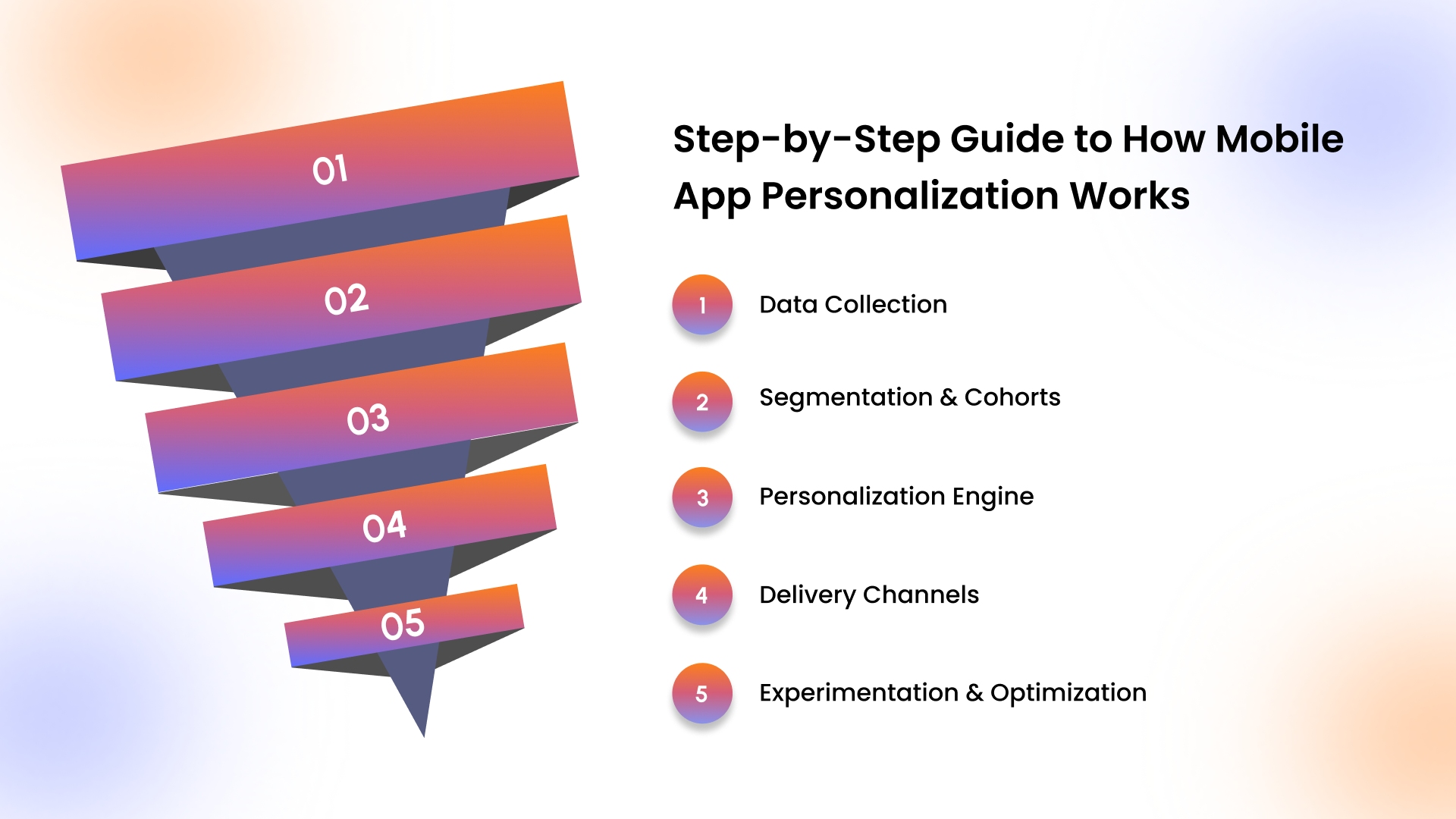
1. Data Collection
Collecting explicit preferences, in-app interactions, and transaction histories builds a complete picture of shopper behavior, intent, and engagement patterns for personalized recommendations.
How to do it:
- Gather zero-party data such as interests and preferences.
- Track first-party behavior like searches, clicks, and dwell time.
- Record purchase frequency, value, and engagement trends.
- Centralize all data for analysis and actionable insights.
2. Segmentation & Cohorts
Segmenting users based on behavior, purchase patterns, and lifecycle stage allows targeted content, promotions, and experiences for distinct groups with shared traits.
How to do it:
- Identify core attributes like product interests, browsing habits, and spending levels.
- Create dynamic, auto-updating segments reflecting changing behavior.
- Assign users to cohorts based on lifecycle stage and engagement.
- Adjust groups continuously to capture growing preferences.
3. Personalization Engine
A personalization engine applies rules or AI models to determine the most relevant content, products, or layouts for each user in real-time.
How to do it:
- Map user segments to content, layout, or promotion rules.
- Use AI to predict preferences and recommend products.
- Automate dynamic updates triggered by behavior or cohort changes.
- Ensure alignment with user lifecycle and engagement history.
4. Delivery Channels
Delivering personalized experiences across in-app screens, push notifications, SMS, and email ensures messages reach users in the right context at the right time.
How to do it:
- Map content to optimal channels per segment.
- Synchronize messaging across app, push, SMS, and email.
- Schedule delivery based on peak engagement times.
- Maintain a consistent, seamless experience across channels.
5. Experimentation & Optimization
Continuous testing and refinement ensure personalization strategies remain effective, improving engagement, retention, and conversions through iterative insights.
How to do it:
- Run A/B and multivariate tests on recommendations and layouts.
- Track engagement, retention, and conversion metrics.
- Refine segmentation rules, content prioritization, and recommendations.
- Repeat iterations to enhance personalization performance over time.
Once you understand the mechanics, we can explore advanced strategies that make personalization smarter, more dynamic, and impactful across user behaviors and channels.
Advanced Personalization Strategies for E-commerce Apps
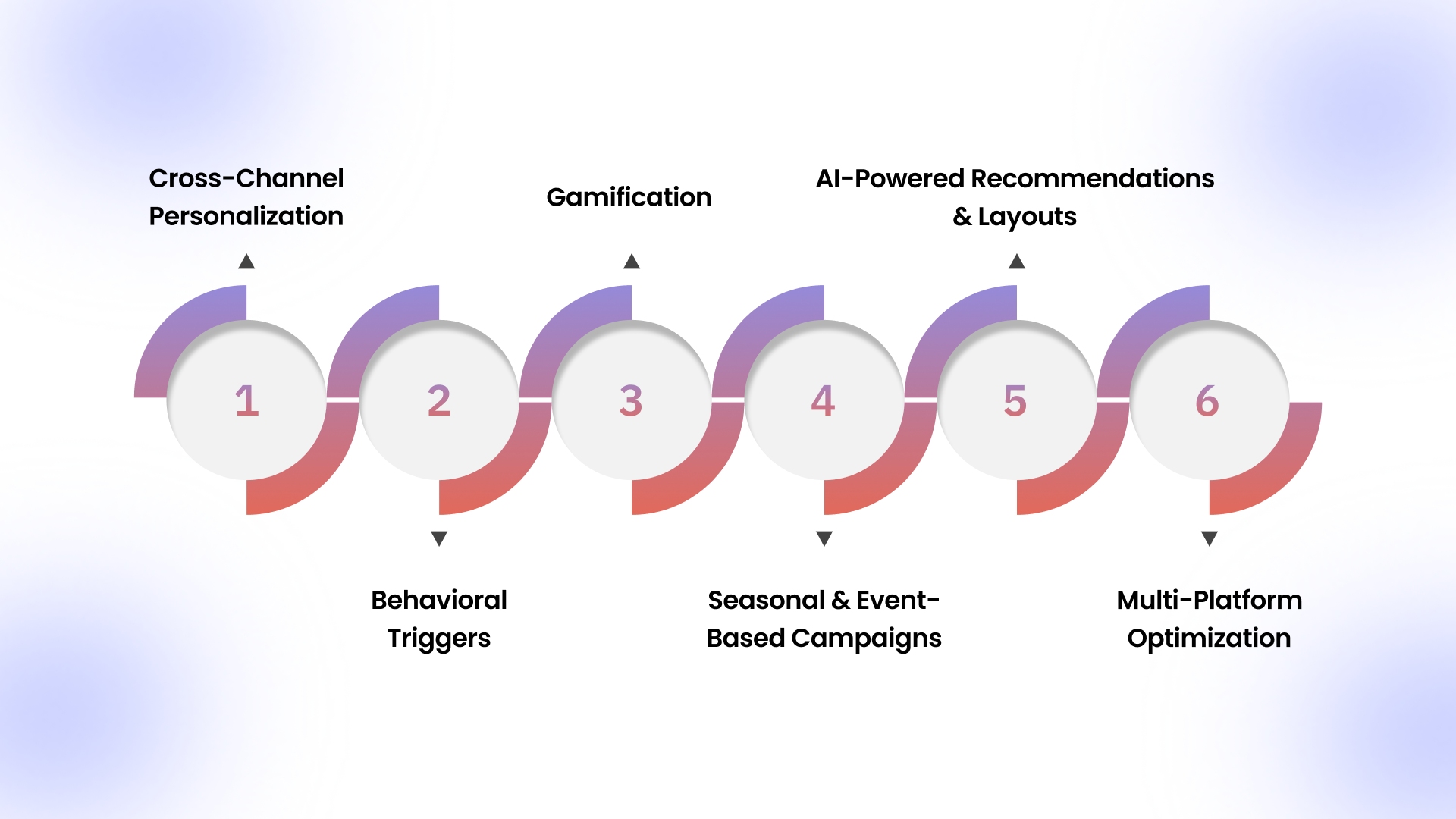
Mobile users respond best when apps anticipate their needs and provide relevant content at every interaction. Let’s dive into strategies that deliver these experiences.
1. Cross-Channel Personalization
Synchronizing app, email, and website interactions ensures users receive cohesive, timely messaging and offers across all touchpoints for seamless brand engagement.
How to implement:
- Integrate user behavior data across app, web, and email platforms.
- Trigger relevant messages based on actions taken on any channel.
- Maintain consistent product recommendations, promotions, and branding across all platforms.
- Use unified analytics to track cross-channel engagement and optimize campaigns.
2. Behavioral Triggers
Real-time campaigns respond to user actions such as product views, wishlists, or abandoned carts, ensuring timely engagement and relevant offers.
How to implement:
- Identify key user actions that indicate purchase intent.
- Set automated triggers for notifications or in-app content.
- Prioritize actions with high conversion potential.
- Continuously refine triggers using engagement and conversion metrics.
3. Gamification
In-app challenges, reward tiers, and interactive elements motivate users to engage more deeply with the app and complete desired actions.
How to implement:
- Define user actions to reward (e.g., purchases, reviews, referrals).
- Structure reward tiers that encourage repeat engagement.
- Incorporate progress tracking and achievement notifications.
- Test incentive formats and adjust to maximize participation.
4. Seasonal & Event-Based Campaigns
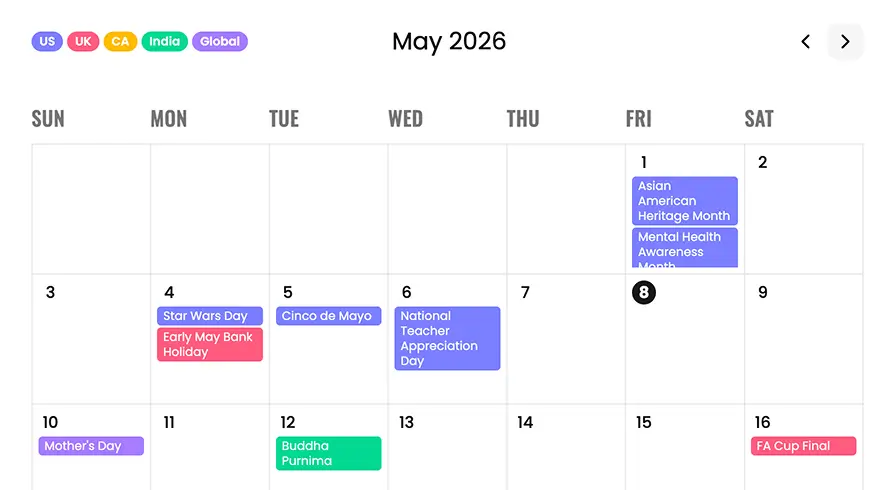
Timed campaigns aligned with holidays, regional events, or customer milestones make offers relevant and increase urgency for conversions.
How to implement:
- Map the calendar with seasonal, regional, and personalized events.
- Automate campaigns for each period or milestone.
- Adjust offers and messaging based on user behavior trends.
- Measure campaign impact and optimize timing and content.
5. AI-Powered Recommendations & Layouts
Machine learning dynamically delivers the most relevant products, promotions, and app layouts, adapting in real-time to each user’s preferences and behavior.
How to implement:
- Use AI to analyze behavior patterns and predict preferences.
- Dynamically adjust product recommendations and app layouts.
- Use tools like AppMaker’s Eidolon AI to turn Figma or screenshot designs into dynamic app layouts that automatically adapt to each user’s behavior in real time.
- Continuously retrain AI models with updated engagement data.
6. Multi-Platform Optimization
Tailoring personalization to platform-specific behaviors ensures iOS and Android users receive content, layouts, and offers optimized for their device interactions.
How to implement:
- Analyze engagement patterns separately for iOS and Android users.
- Adjust app layouts, recommendations, and push timing per platform.
- Test platform-specific variations for engagement and conversion impact.
- Maintain feature parity while optimizing experience for device behaviors.
Having covered these strategies, it’s time to see how data, analytics, and AI power predictive insights that deliver personalization in real time.
Data, Analytics, and AI: Powering Personalized Experiences
Data, analytics, and AI turn raw user behavior, transactions, and engagement into predictive insights. They enable e-commerce apps to dynamically deliver highly relevant content and offers.
Key ways data, analytics, and AI enhance personalization:
- Analyze user browsing, purchase patterns, and session metrics to predict preferences and anticipate product or promotion needs.
- Segment customers dynamically using engagement trends, lifecycle stage, and spending behavior to deliver tailored recommendations.
- Optimize in-app layouts, banners, and product feeds in real time based on changing user activity and interest signals.
- Track campaign performance, engagement metrics, and conversion rates to continuously refine content strategies and personalization rules.
- Forecast buying intent, identify high-value users, and prioritize predictive campaigns to maximize retention, upsells, and revenue growth.
- Tools like AppMaker’s John AI help assist by summarizing useful insights in plain language.
Understanding how AI and data enable personalization. However, we must also address the common challenges brands face and how to overcome them effectively.
Common Challenges and How to Overcome Them
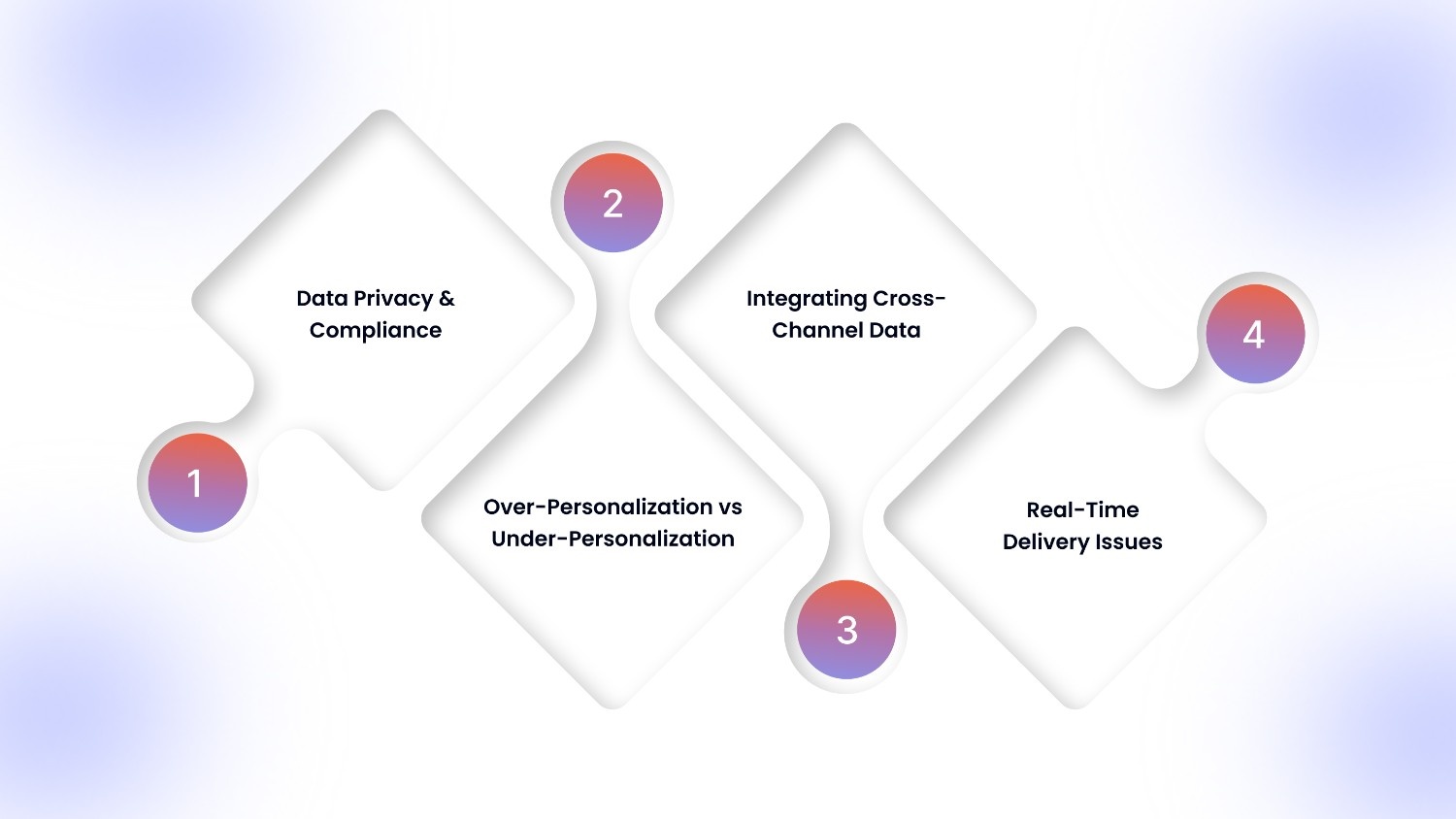
Personalizing a mobile app for e-commerce is highly effective, but it comes with challenges. Brands must look after privacy regulations, maintain relevance without being intrusive, integrate cross-channel data, and deliver experiences in real time to keep users engaged and satisfied.
1. Data Privacy & Compliance
Collecting actionable insights while respecting regulations, the CCPA is challenging, as users may hesitate to share personal information. Clear consent prompts and transparent data usage policies build trust, while anonymized analytics can still power personalized recommendations without compromising compliance.
2. Over-Personalization vs Under-Personalization
Too much targeting can feel invasive, while generic content risks disengaging users. Using AI-driven thresholds to determine which recommendations to display balances relevance with privacy, ensuring the app feels helpful, not pushy. Iteratively testing message frequency and personalization depth refines the approach.
3. Integrating Cross-Channel Data
Consolidating data from web, app, and email platforms is complex, often resulting in fragmented user views. Using APIs and centralized dashboards allows brands to unify behavior and purchase data, creating seamless, consistent personalization across all touchpoints.
4. Real-Time Delivery Issues
Delivering outdated or slow recommendations frustrates users and reduces engagement. Implementing AI-powered engines with real-time analytics ensures content, offers, and layouts update instantly based on user behavior, keeping interactions relevant and timely.
Now that challenges are clear, let’s examine the metrics and indicators that show whether your personalization efforts are driving engagement, loyalty, and revenue.
How to Measure Mobile App Personalization?
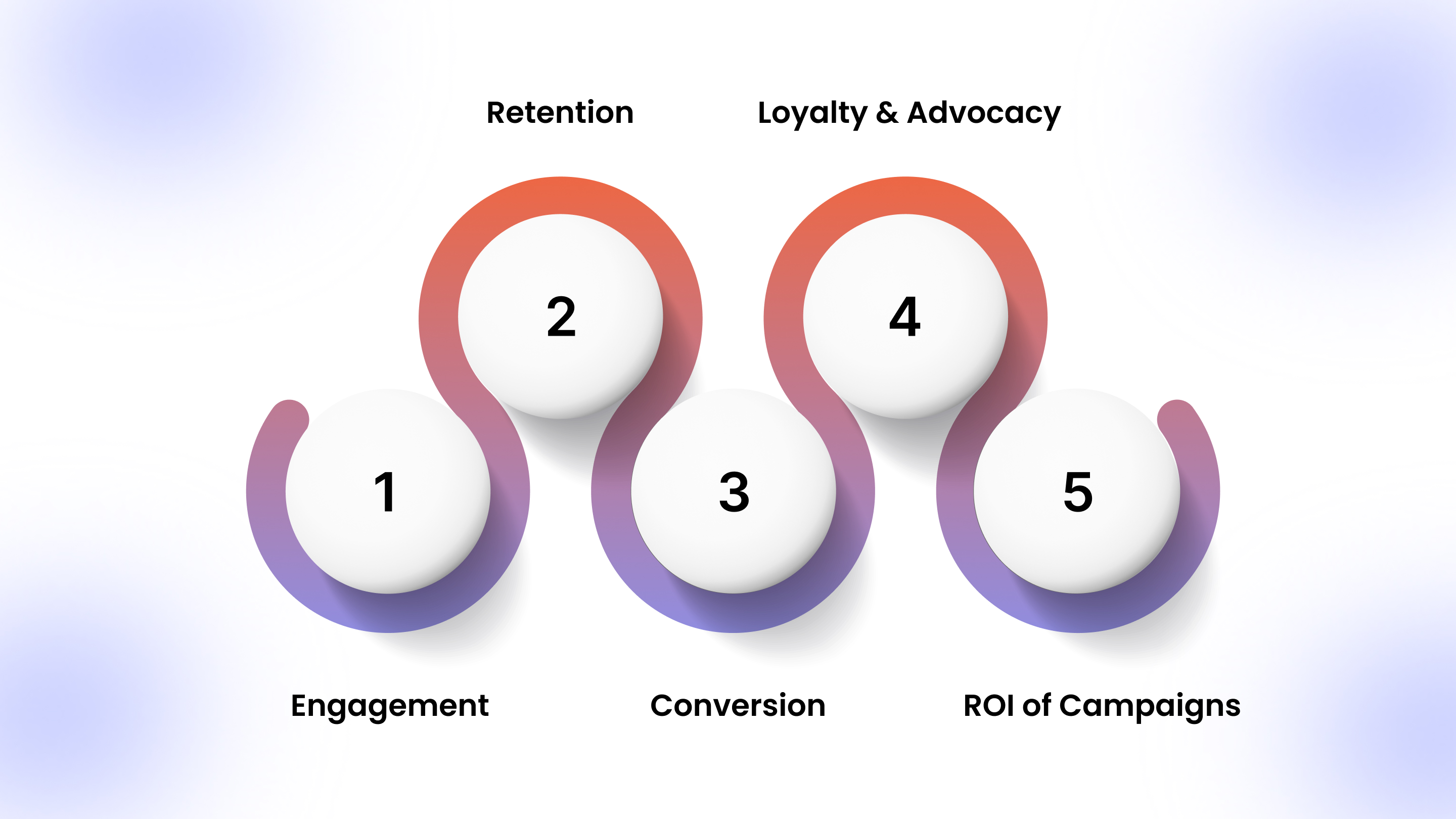
Measuring personalization helps e-commerce brands understand whether tailored experiences drive engagement, conversions, retention, and loyalty while optimizing campaigns for maximum revenue impact. Here’s what you must measure:
- Engagement: Track session length, screens visited, and feature interactions to identify which personalized elements capture user attention and drive meaningful app activity.
- Retention: Monitor DAU/MAU ratios, churn reduction, and repeat sessions to evaluate whether personalized experiences keep users consistently returning to the app.
- Conversion: Measure in-app purchases, upsell success, and coupon usage to determine how personalization directly influences revenue and buying behavior.
- Loyalty & Advocacy: Analyze repeat purchase rates, referral activity, and app review sentiment to gauge long-term customer satisfaction and brand advocacy.
- ROI of Campaigns: Compare revenue from personalized campaigns versus standard promotions to assess financial impact and optimize future personalization strategies.
Once measurement is understood, it’s time to see how a robust platform like AppMaker can help e-commerce brands implement effective, real-time personalization across every interaction.
Make Every Shopper Experience Unique with AppMaker
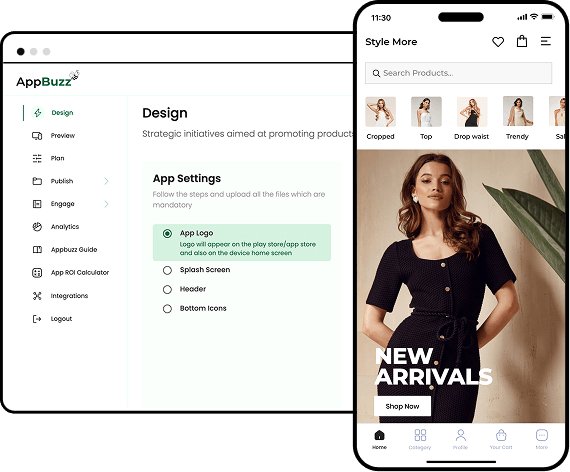
For e-commerce brands, personalization drives engagement, conversions, and loyalty. AppMaker turns your Shopify store into a fully branded mobile app that adapts to every shopper in real time, making each interaction relevant and impactful. Unlike generic apps, our platform ensures content, product recommendations, and offers reflect individual browsing behavior, purchase history, and lifecycle stage.
Key features for e-commerce personalization include:
- Eidolon AI: Converts Figma files or screenshots into dynamic layouts, showing products based on user preferences.
- John AI: Provides clear insights on top-selling items, engagement trends, and user behavior to optimize campaigns.
- Rubik’s AI: Adjusts product feeds, banners, and recommendations in real time for each shopper.
- Push & In-App Messaging: Sends targeted alerts for abandoned carts, restocks, or promotions.
- Conditional Blocks: Display different content or offers for VIP shoppers versus first-time users.
- Analytics Dashboard: Tracks engagement, retention, and conversions to refine personalization strategies continuously.
With AppMaker, every shopper sees what matters to them, creating experiences that feel custom and drive measurable results.
Conclusion
Mobile app personalization changes the way e-commerce brands connect with their shoppers, making each interaction relevant, engaging, and revenue-driven. By using behavioral data, AI, and real-time insights, apps can boost conversions, retention, and customer loyalty while reducing friction in the buying journey.
AppMaker provides the tools to make this possible. With features like Eidolon AI for dynamic layouts, John AI for actionable insights, and Rubik’s AI for real-time recommendations, brands can create a mobile experience that adapts to each shopper’s preferences. Push notifications, in-app messaging, and conditional blocks further ensure every user sees what matters most to them.
Ready to enhance your e-commerce app? Contact us today and start delivering personalized experiences that convert every shopper.
FAQs
1. How can e-commerce apps collect data responsibly for personalization?
Apps should request explicit consent, use transparent privacy policies, and focus on first-party or zero-party data collection. This way, they ensure user trust while gathering insights for accurate, relevant personalization.
2. What are the best practices to avoid over-personalization?
Limit the frequency of messages, avoid intrusive recommendations, and use AI thresholds to moderate content delivery, keeping experiences relevant, helpful, and non-disruptive for each user segment.
3. How does AI enhance mobile app personalization?
AI predicts user behavior, dynamically adjusts layouts, recommends products, and optimizes timing for messages. This makes every interaction feel relevant, personalized, and tailored to shopper preferences.
4. Can personalization improve both retention and revenue?
Yes. Timely notifications, personalized recommendations, and loyalty rewards increase engagement, reduce churn, encourage repeat purchases, and boost conversions across the entire customer journey.